
May 18, 2012

A Mental Exercise: What I’d Do If I Lost Everything

I started thinking about people who lose everything, or what Charlie Munger calls returning “to Go”, as in the Monopoly board.  

Once you are rich, your primary motivation shouldn’t be to get richer, it should be to avoid wipeout risk, or returning to go.  But as a training exercise, I decided to contemplate what I would do if I woke up tomorrow and the last ten years had been a dream.  What would my first course of action be to rebuild until I got my affairs in order?

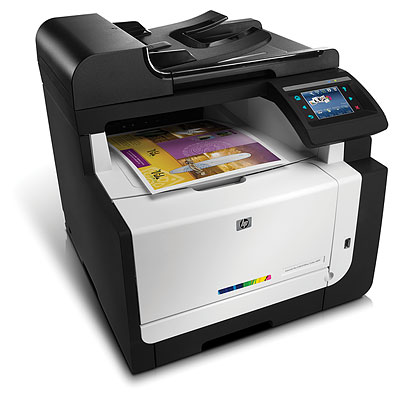
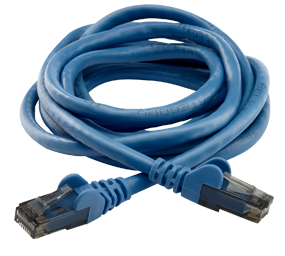
It occurred to me that I only need five things, which could be purchased for less than $10,000 in startup costs.  I’d need a 27″ iMac with a lot of memory, a copy of Adobe Creative Suite Master Collection, a high quality color printer, an incredibly faster Internet and ethernet connection, and a trading platform from a major broker so that I could begin making investments from the cash I generated from my online operations.  I’d focus on building some sort of retail site that let me tap into vendor capital and earn at least 50% to 80% gross margins – a real sub-specialty that no one else had thought of and in which there was little competition.

My guess is it would take 24 to 36 months to get to the point where the company could put me in a decent house, with a good car and a few thousand dollars a month in spending money without using any debt.  If Aaron were working with me, in that same time period, I could probably get our combined household income up to at least $100,000 if we did all of the grunt work ourselves.  That would be a big enough base, if we were staying in a tiny apartment or something, to put money to work.  Before long, we’d be collecting rent and dividends.  I’d force us both to go get jobs so that 100% of the company’s money could be investment capital.  That would let us put away $40,000 to $50,000 per year after taxes for me to compound.  From there, I could start thinking about doing something seriously, but I’d do it without a lot of pressure.  I’d do it in secret so no one knew I was building something.  It would be stealth wealth in the truest sense of the word.

The thing is – the most valuable asset I have is the knowledge that exists in my head.  You could give these same tools to someone else and they wouldn’t do much good.  The tools are only as useful as the craftsman utilizing them.

27 Inch iMac

Adobe Creative Suite 5 Master Collection
HP LaserJet Pro CM1415 Color Multifunction Printer series - Laser Multifunction Printers

Cat6 Ethernet

Streetsmart Trading

Related posts:

  1. Mental Model: The Micawber Principle
  2. Mail Bag – Have You Ever Lost Confidence In an Investment You’ve Made Because a Change in the Annual Report?
  3. The Concept of Mental Models Goes Back Thousands of Years
  4. Mental Model: The Revolution of Satisfied Expectations
  5. Mental Model: Veblen Goods
  6. Mental Model: Social Loafing
  7. Mental Model: The Illusion of Choice

  • peterpatch

    Josh,

    I think it is safe to say that when you started your operating businesses you had already had a great deal of experience in the retail industry through your family’s business. Do you think that someone without your background in that line of business could do something similar starting from scratch in a similar amount of time ie a niche retailer with high margins and extreme employee efficiencies? I have started four businesses in my time on this earth and I have had to shut them all down for various reasons, regulatory issues, marketing issues, time issues, and with the first business I just hated the line of work. These weren’t failures to me but learning experiences, I know now that I don’t want any business partners except maybe my wife and future children, I know to pursue something that can keep my interests and to thoroughly know your marketing/sales, product and financial situation prior to pulling the trigger. I know so much now through my experiences and would I ever love to do it again some day! Some of my strongest memories are from starting those micro businesses and dealing with all the stuff that came with them.

    • http://www.joshuakennon.com Joshua Kennon

      That is a really intelligent question, peterpatch.

      First, it is hard to say. But if I had to guess, I’d say no because the far more valuable knowledge set is that of an investor, which no one in my family knew before I became obsessed with it and started preaching the proverbial gospel. I’ve said before, that the most important place to start is the DuPont return on equity analysis. In other words, a lot of people say, “I’m going to start this business because I think I can make money doing it.” I look at it the other way around, “I’m going to make money and I think this particular business can do it by driving [x] inventory turns [x] leverage ratio and [x] profit margin”. I don’t see “a business”, I see the three components of ROE and structure everything around it. If I can’t make it fit within the formula, I abandon it quickly even if that means shutting it down.

      My personality doesn’t lend itself to utilizing a lot of leverage, so that really restricts me to two of the three DuPont ROE components – profit margin and turnover. That really narrows the universe of potential opportunities unless I have access to a lot of capital (and in this scenario, I wouldn’t).

      An example may help. The average bottle of bath gel and other products at Bath & Body Works costs somewhere around 90 cents if I remember correctly (it’s been several years since I last researched that industry). Yet, it retails for $10.50 or so, generating gross margins of 91%+. If I were to formulate a limited product line, like the Caldrea fragrance company, I would only have to sell 10% of my inventory to recapture 100% of my investment, meaning I could fail 90% of the time and I’d still breakeven because I’d be relying on the margin component of ROE. Anything above the initial 10% would be pure profit, which I could then use to expand or invest in something else that required a lot of capital.

      In such a situation, I could fail to sell 90 out of every 100 bottles I had formulated and I’d still be out nothing. And I know I could sell ice to an eskimo. It is a high return / low risk proposition. If I didn’t have any overhead and worked out of my house or apartment, it would only take selling 14 bottles a day to earn $50,000 in profit per year. In a major metropolitan area, that should be easy.

      I don’t know of very many people that think that way. Invariably, they say, “I want to sell ice cream because my town doesn’t have an ice cream parlor.” That may be true, but a lot of the return from a store like that comes from the total capital invested. If you don’t have the cash, you would have to rely too heavily on the leverage component of ROE and would be subject to wipeout in an economic downturn whereas someone who had a lot of extra cash could easily make money with an ice cream parlor.

      My risks were always greatly reduced because I looked at the ROE components *relative to my own personal opportunity costs and resources at the time*. That is absolutely vital, I think.

    • http://www.joshuakennon.com Joshua Kennon

      P.S. I should point out that it is entirely possible my mind is geared toward retail because for some reason I “get it”. Warren Buffett was notoriously bad at retail. If he had to run Borsheim’s, I think it would be broke in a few years!

      So, thinking about your question further, I’m not sure everyone could do what I did or take the path that I did. But I do think they could drastically increases their chances of success by combining their natural talents with an eye on the DuPont ROE analysis. Like I said, I rely heavily on profit margins and turnover. I have a knack for cutting costs without cutting quality – like switching to VoIP phone systems, reducing our call center costs by 90% and coding automation scripts to do a lot of manual work that would otherwise require a human to do. I mean, if I needed someone to go through our server and pull all files modified after a random date, like September 17th, 2007, that were more than 8 megabytes I would take ten minutes to code a quick script and then let the process run itself. Someone without those skills would have to hire someone to do it on payroll.

      So, no, I don’t think everyone could do it the way I do it. But I couldn’t make money the same way other people do. I’d be a terrible auto mechanic or electrician. So I do think you have to play to your individual strengths. If I tried to be a plumber, there’s no question I’d fail. My skill set and temperament just aren’t complimentary to that type of profession, noble as it is and as vital as it is for civilization to function. I’m just not cut out for it. So I don’t compete in that industry. Knowing what to avoid is just as important as knowing a good opportunity when you see it.

      • peterpatch

        Joshua,

        Thank you for the prompt and high quality replies!

        I think we are similar in that I am also the type who likes to semi or fully automate human processes, typically through computerized means as opposed to automating physical tasks through robotics and such which I am much less suited for. In fact I have credentials as a computer programmer/analyst so I know what you mean by being able to easily implement efficiencies that others simply cannot see, for whatever reason.

        I am putting DuPont ROE analysis on my list of things to study. I am currently studying for my management accounting designation here in Canada so this will fit in nicely I think.

        It’s funny how small a world it is. I was doing a quick Google search for the interest coverage ratio to verify some work I was doing for a case study and lo and behold the second Google search result was from your about.com article (http://beginnersinvest.about.com/od/incomestatementanalysis/a/interest-coverage-ratio.htm) in regards to this ratio.

  • Frat Man

    Hey Joshua. Along these lines, what’s been your general approach towards keeping an emergency fund? Have you been the type of person who says, “I want six months wages in cash on hand,” or “I’ll contribute 2% each pay period to cash reserves… or has your attitude been of the ‘I’m young, now’s the time to go for broke, I’ll just keep a little money on the side’?

  • Frat Man

    And with the bath gels you can get 90% margins on, how on earth do you find reputable Chinese dealers? I just googled Chinese manufacturers, and it’s hard for me to gauge the reliability and weed out the scams.

    • peterpatch

      Frat Man,

      I don’t know what Josh will say but one of the businesses I started was a business importing products, not anything related to bath gels, from China. If you want to import something from China then you should get samples and check them out. You have to do your “due diligence” which I am not going to explain but I am sure you can Google it. I don’t know anyone who made any money wholesale shopping over the Internet from a Chinese company without doing a full due diligence process. One of my best friends is a sales manager for a Chinese company and his customers, corporate buyers, are constantly flying into China to see the factories, products, warehouses etc. The company he works for is probably the largest manufacture of air conditioners in the world and procurement departments still have to see it all first hand before they cut a P.O. So again do your due diligence so you mitigate all the import risks. There is a lot of opportunity in China but there are also a lot of downside risk, in these waters be sharks be very careful :-)

    • http://www.joshuakennon.com Joshua Kennon

      The company I looked into was an enormous Australian distributor for some of the world’s biggest chemical companies and sold everything end-to-end. I don’t recall the name off the top of my head but when you get into basic commodities, there is no advantage to going to China. Copper is copper is copper; same concept.

p-Y58mABW--6DvJ