


With the death of Whitney Houston a few days ago, I was doing a case study of her life and the lessons that can be learned from her successes and failures (update: I have written a case study on Dolly Parton’s business success, which you can read here). One of the big ones has little to do with Whitney Houston per se, and more to do with her connection with Dolly Parton. For someone in business or the arts, it is a life changing warning if you heed it well. Let me explain.
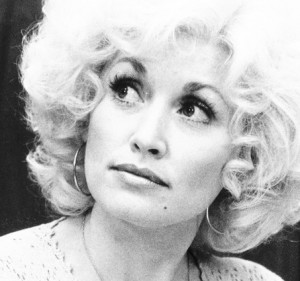
Dolly Parton, who has seen her song I Will Always Love You go to the number one spot on the charts three times so far, once turned down Elvis Presley’s request to record it based on a demand he take a 50% interest in the publishing royalties. That took courage.
I Will Always Love You was composed by Dolly Parton. She wrote it in 1973 for her mentor, Porter Wagoner, who had worked with her, done duets, and produced her music. Parton knew it was time to move on from the professional relationship, but she wanted to wish Wagoner the best, letting him know she still loved him and hoped he got everything he wanted in life. She sang it to him in his office. It was the final song they did together before Dolly struck out on her own. It was released in the 1970’s and became a #1 hit.
Then, in 1975, Linda Ronstadt covered a rock version of the ballad. Not a #1 hit this time, but still well-received.
Later, in 1982, Dolly Parton used the song in the movie The Best Little Whorehouse in Texas, launching it, once again, to a #1 hit.
A decade after the second go-around on the charts as a #1 hit, Whitney Houston covered the song for the movie The Bodyguard and it went to the #1 spot on the chart for 14-weeks in a row.
[mainbodyad]This was the third time Parton’s composition was the bestselling song on the market and the fourth time it had generated large royalty checks for her. That money added to her earnings streams, providing a source of financial independence to continue doing what she loved, composing and performing.
Now, with the death of Whitney Houston, some speculate I Will Always Love You will once again enter the charts. It wouldn’t surprise me if it did.
All of that success wouldn’t have happened if Dolly Parton hadn’t turned down what seemed to be one of the greatest opportunities of her life. According to Chris Willman in Stop the Presses, Elvis Presley was going to record the song late in his career:
Parton thought it was a dream come true when Presley decided to cut the song, and she was even slated to visit him in the studio when he did. Then she was informed that Elvis wouldn’t be recording it unless he got half the publishing royalties — a mercenary custom instigated by manager Colonel Tom Parker that, sadly, kept Presley from getting to record a lot of great material later in his career. Parton refused the deal, which was heartbreaking at the time but ultimately served her well. “‘I think stories like that are the reason why younger female artists say I’ve influenced them,” she said.
Here, a successful but by no-means mainstream (yet) artist had the courage of conviction to know that she wasn’t willing to give up half of her income stream. The song was hers. She created it. The intellectual property belonged in her portfolio and, if it was good enough, people should want to perform it. The self-assuredness it takes to turn down and offer like that, and live with the consequences if it turns out to be a mistake, is what makes a strong leader. This case study is very similar to the one about Songwriter Franke Previte, who still, to this day, collects six-figure royalty checks each year on his intellectual property after refusing to sell it at a bargain basement price.
Whether you are a software developer or an artist, a novelist or a start-up, don’t give up the farm out of fear of losing your chance. Even if you are successful, what good does it do if all the fruits go to another person or group? It takes talent, skill, and dedication to create something of value. Don’t sell yourself short.
The thing that makes Parton’s actions more remarkable is this: Tom Parker sprung the news on her the day before the recording session. The studio had been booked. Elvis was ready to go. The musicians had been hired. Her friends had all traveled into town to see it happen as Dolly had been invited to come watch and was bringing them along. Parker called her on the phone and, in Dolly’s words, told her, “You do know that Elvis is recording your song and Elvis don’t record anything he don’t publish or get half the publishing on …” She responded, “I can’t do that. This song’s already been a hit for me … I can’t give you half the publishing ’cause that’s stuff that I’m leavin’ for my family.” Parker responded, “Well then we can’t record the song.” Parton says, “I was just heartbroken. I said, ‘Well, I’m really sorry, but I can’t do that.'” (Update: In a 2015 interview, the interviewer says, “Dolly Parton, that took guts”. She immediately says, “Well it didn’t to me, it seemed to be the thing to do. It hurt me because I was so disappointed I was going to have to tell my friends Elvis didn’t record it … but I just knew that was not right.”) Too many people give into social pressure or inertia … the ball starts rolling and fearing embarrassment or conflict, they go along with things that they’re going to regret for the rest of their lives. Don’t do it! The sooner it’s solved, the easier and quicker the cleanup. Bite the bullet, put your foot down, and be happy in the long-run. Until you’ve put paper to pen, you always have the right to change your mind or refuse to the terms of an agreement. Never forget this. Do not be bullied into anything.
[mainbodyad] And one final thing: Just because you are shrewd and respect yourself enough to demand a price you think fair, doesn’t mean you can’t be kind. Before her old partner Wagoner died, there were rumors that he was facing severe financial hardship. In response, Parton calculated the residual earnings on all of the recordings and projects they had done together, even though she had bought out his interest in the portfolio years earlier, and paid him anyway. She had no obligation to do that. She was entitled to every penny, but she chose to be generous far beyond what anyone had a right to expect. That is an excellent example to emulate.
For the stock investors among you, that is like allowing the old owner of your stocks, from whom you purchased the shares, to keep all of the dividends you had ever collected because you saw they were having trouble putting food on the table.
