
Mental Model: Satisficing

Charlie Munger Mental Models

By adding concepts to what Charlie Munger calls his "mental model" collection, one can take advantage of them (or guard against them) throughout life.

Satisficing: A psychological and economic phenomenon that results from consumers choosing a product that meets criteria at an adequate level, rather than expending a great deal more time to find a fully optimal solution.

Put another way, people are not looking for optimal solutions in their life.  They are looking for a combination of “just good enough” or “better than average” weighted by the total effort or cost expenditure necessary to acquire said solution.  People don’t want a better mouse trap, they want a mouse trap that works at the lowest price or effort.

This ties in with our mental models related to brands and marketing: For those who lack knowledge of a specific industry, such as fine watches or cars, brand names serve as a proxy to communicate information and serve as a type of insurance against making both errors of omission and commission.  If one wants a fine watch and knows nothing about the industry, it is a fair bet that a Rolex is going to be wildly known, respected, and live up to its reputation.  The newly wealthy, for example, would not be aware of brands such as A. Lange & Söhne.  Likewise, a doctor who wants a good piano isn’t going to be able to tell the difference in touch and action from a row of piano brands so purchasing a Steinway & Sons is going to suffice for his needs, ensuring that he will be respected and get quality for his piano choice.  Even though additional research could provide better savings or an even better brand of piano, satisficing results in him saying, “I want to be done with it and this works.” (more…)

By Charlie Munger (Warren Buffett’s partner at Berkshire Hathaway)
Speech at Harvard Law School (1995)

Transcription of The Psychology of Human Misjudgment, comments [in brackets] by Whitney Tilson.  Note from Joshua Kennon: I’ve written a lot about Charlie Munger over the years, especially the influence he has had on my life and how we run my companies by using our own mental models.  This is one of the best speeches Munger ever gave … which may be why my family owns about a dozen copies of various editions of Poor Charlie’s Alamanack, including an autographed first edition that sits in my office.

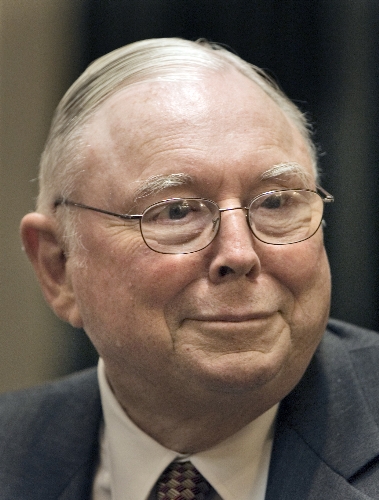
Charles Munger, Vice Chairman of Berkshire Hathaway

Charles Munger, Vice Chairman of Berkshire Hathaway

Charlie Munger: Although I am very interested in the subject of human misjudgment — and lord knows I’ve created a good bit of it — I don’t think I’ve created my full statistical share, and I think that o­ne of the reasons was I tried to do something about this terrible ignorance I left the Harvard Law School with.

When I saw this patterned irrationality, which was so extreme, and I had no theory or anything to deal with it, but I could see that it was extreme, and I could see that it was patterned, I just started to create my own system of psychology, partly by casual reading, but largely from personal experience, and I used that pattern to help me get through life. Fairly late in life I stumbled into this book, Influence, by a psychologist named Bob Cialdini, who became a super-tenured hotshot o­n a 2,000-person faculty at a very young age. And he wrote this book, which has now sold 300-odd thousand copies, which is remarkable for somebody. Well, it’s an academic book aimed at a popular audience that filled in a lot of holes in my crude system. In those holes it filled in, I thought I had a system that was a good-working tool, and I’d like to share that o­ne with you.

And I came here because behavioral economics. How could economics not be behavioral? If it isn’t behavioral, what the hell is it? (more…)


Looking for something?

Use the form below to search the site:

Still not finding what you're looking for? Drop a comment on a post or contact us so we can take care of it!