

I’ve made no secret of my love of employee-owned businesses. If you want to find the best working conditions, the highest pay, the best employee benefits, and the most cohesive strategies, all else equal, you are going to find them working for a company that has no outside shareholders and is instead owned by the workers themselves. If you own part of a business and you see a co-worker stealing, you aren’t going to sit back and let it happen. After all, it is your money!
[mainbodyad]Some employee-owned businesses structure themselves on a profit-sharing arrangement, where you get a check based on some criteria that might involve years worked or overall pay. Others structure themselves through an employee stock ownership plan, where you accumulate shares that generate dividends during your time at the firm, and have to sell them when you quit or retire.
The big appeal of an employee-owned business is that the money that would have gone to shareholders and Wall Street instead goes to the workers themselves. A perfect example is PCL Construction Enterprises, the $4+ billion construction firm in Denver, Colorado. The firm has 2,200 employees, with the average salary coming in at around $94,500. That alone is impressive but it gets better: Many employees receive dividend checks larger than their salary.
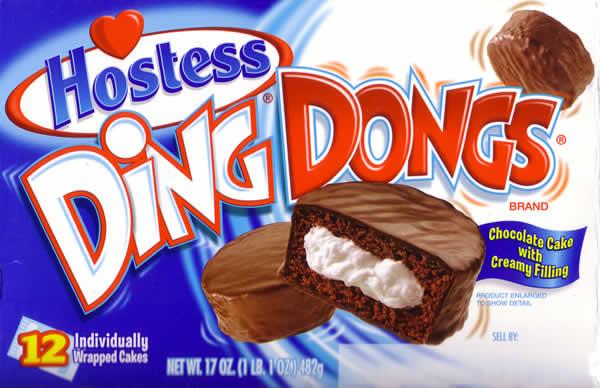
Hostess Brands Could Have Avoided Bankruptcy After Management and The Teamsters Reached an Agreement But One Tiny Union Called the Bakery, Confectionery, Tobacco Workers, and Grain Millers International Union Refused to Join
I have followed Hostess Brands for most of my life – though back then, it was known as Interstate Bakeries and was based out of Kansas City. I still remember one of the regional products, Butter-Nut Bread, on the store shelves of the little locally-owned corner grocery in the farm town where I grew up. Going through the SEC filings, it was clear they were in trouble but I studied them to understand why they were a “bad” business and someone like Kraft was a “good” business; the former had terrible returns, horrible economics, and lousy results, while the latter minted money for everyone involved. By the time I was in college, the situation had grown so dire that it spiraled out of control, the stock lost more than 90% of its value, and then the inevitable bankruptcy filing followed.
The behavior of the union in the Hostess Bakery liquidation is a perfect case study of, “cutting off your nose to spite your face”.
What transpired was the longest bankruptcy in United States history. Interstate Bakeries took five years, between 2004 and 2009, to emerge from bankruptcy protection. It was an absolute nightmare. A private equity fund made an investment, becoming the new owner, but had no luck turning it around despite a string of new CEO’s. Then, a couple of hedge funds tried to save the business from liquidation by buying up the distressed debt and infusing massive amounts of money, both in the form of new equity and debt.
Things still weren’t going well, in part because the labor cost structure is far too high and because the various management teams made bad decision after bad decision, resulting in slower sales growth. To save Hostess Brands from liquidation, the new owners offered to give the employees:
- 25% ownership in the business
- Representation on the board of directors
- $100 million worth of company-issued debt that would be repaid in the future
In exchange, the workers had to:
- Take additional wage and pension cuts
The International Brotherhood of Teamsters, the biggest union, said yes. A smaller union, the Bakery, Confectionery, Tobacco Workers, and Grain Millers International Union, refused. It ordered its workers to strike and hurled the business off a cliff, taking all 18,500 workers down with them. Hostess Brands announced today that it will liquidate. Shipments will stop shortly, the plants are closing, and court protection has once again been sought.
Think about that. An almost unfathomable 18,500 workers just lost their job. That is 18,500 people who have to go home and don’t know where their next paycheck is originating or even when they will see it, all because a handful of selfish people who don’t understand basic strategy would rather destroy themselves in what is the equivalent of an economic murder-suicide than act like rational, grown adults. Not only that, but this hurts tens of thousands of small businesses that rely on Hostess products to generate sales, including gas stations and corner grocery stores, and the millions of customers who enjoy everything from Hostess cupcakes to Wonder Bread. My old hometown has a Wonder Bread store; those workers are out of a job now, too.
In essence, the Bakery, Confectionery, Tobacco Workers, and Grain Millers International Union argued that the disaster at Hostess Brands was the fault of management (they are largely correct, it was), and that they had already taken huge pay and benefit cuts (they are correct, they had). However, that doesn’t matter when you are trying to make rational decisions. All that matters is you look at the opportunity cost in front of you at the time and make the best decision you can.

There is a lesson here for how you manage your own life: Did you have to struggle to pay your own way through college because your parents were drug addicts? Fine. It doesn’t excuse you if your life sucks now. Pick yourself up and go back to school. At some point, it is no longer mommy and daddy’s fault. Did you lose everything because of a spouse who had a gambling problem? That’s terrible but once you’ve grieved, being angry and bitter isn’t going to make your life better. Move on and do the best you can with what you have. The same can be said in this situation. Former management was terrible. Obviously. That doesn’t matter. All you can do is look to the future and try to fix the situation.
The Teamsters Union Should Be Applauded, The Bakery, Confectionery, Tobacco Workers, and Grain Millers International Union Should Be Excoriated
To be as blunt as possible, this tiny union decided that because it can’t get what it wants (which wasn’t economically feasible but they seem to live in a world of candy canes and gum drops), it was going to destroy itself. The course of action it took was incredibly, stupid, selfish, irrational, and self-defeating. Even worse, it took down everyone else around them. That’s exactly what this was; an economic murder-suicide and the Bakery, Confectionery, Tobacco Workers, and Grain Millers International Union has blood on its hands. You do not destroy your fellow workers’ lives because you are a petulant child. It is sociopathic to behave that way.
 Had the Bakery, Confectionery, Tobacco Workers, and Grain Millers International Union looked to the much larger, and much wiser, International Brotherhood of Teamsters, Hostess would have become one of the largest partially-employee owned firms in the United States. However, the union accused the hedge fund managers who had risked hundreds of millions of dollars of their investor’s money to save the bakery from liquidation of just wanting to sell the company as quickly as they could for a profit. Of course they did! Yes! This structure would have allowed the unions to benefit from that because they would have owned 25% of the business. Had the unions wanted to own 100%, when the hedge funds were ready to sell, it would have been easy for them to find financing, giving that they already owned 1/4th of the equity, to buy out the remaining 3/4th.
The workers at Hostess Brands should have cast an eye toward PCL Construction Enterprises and said, “We want to end up like that”. Getting 25% of the business in a deal is one heck of a step toward that direction.
No matter how painful the deal was, no matter how big the salary or pension cuts, if I were leading the union, I would have taken it. Why? I always want an ownership stake. If the business is as good as the employees think it can be, ownership is what they should want. If it isn’t, then it should be liquidated, anyway. I would have angled our way in, used the 25% to secure our position as owners, and then spent years working to secure a full employee-buyout of the entire Hostess Brands bakery. That way, there would be no outside stockholders. Everyone from the janitor to the CEO would be an owner.
The Downfall of the Unions Is Caused By Intellectual Brain Drain
Peter Drucker warned us this was going to happen someday. In the 1970’s and 1980’s, unions experienced a significant “brain drain”. The smartest young strategists and intellects went to work in other fields, like science, health care, or for hedge funds, resulting in unions, as a whole, being made of people who had less cognitive ability than was the case back in the 1950’s and 1960’s, when the class valedictorian might have gone to work for the local Teamsters. In my grandfather’s generation, it was a point of pride to belong to a union. Very smart men went to work in skilled labor, and were proud of the things they manufactured or created. Today, that is the exception rather than the rule outside of specialty industries such as those who create jet engine parts. Drucker told us it was a disaster waiting to happen and that the inevitable result would be the collapse of wage earning power for labor, causing social unrest.
You see this in the Hostess Bakery liquidation. The biggest union, the Teamsters, are able to attract more intelligent negotiators who understand the process, but the smaller unions, like the Bakery, Confectionery, Tobacco Workers and Grain Millers International Union, are left with the intellectual also-rans of society, causing misery and pain to rain down on everyone around them because they can’t think about to second-and-third-order effects. If I were a Teamster union worker, livid would not begin to describe how I feel this morning. To see my people hurt by someone else’s stupidity would be intolerable. I would try to salvage the situation by going to the bankruptcy court and attempting to work out an employee buyout of some sort. It probably can’t be done at this point, but stranger things have happened.
[mainbodyad]This dearth of labor capital is bad for America. You cannot have the capitalist class hold all of the power, which is going to happen when the unions are led by fools who are more interested in making a point and maintaining their pride than they are getting the best results. Screw your pride. Take the ownership, lay off as many people as you need (but not one more) to save the business, and then work nonstop for several years to turn the ship around so that everyone wins. This nation needs a strong middle class. Otherwise, who is going to buy the products? Who is going to rent the buildings? Who is going to pay for the services? What reasonable person wants to live in a nation where half of us survive in gated communities with beautiful lawns and the others live behind windows with bars and struggle below poverty.
A word of advice to future union leaders: If you are dealing with a high-quality business, ownership is always the way to go. You want your people to profit from the boom times, and suffer through the bust times, so they make decisions that are best for the enterprise. That is responsible capitalism. If you just want to extract value, and aren’t willing to take on the risk and reward of the firm’s success, you are just as bad as the vultures who come in and try to break apart successful companies for a quick buck; the flip side of the Janus coin; parasites all.
Thousands of people just lost their job because the union leaders of the Bakery, Confectionery, Tobacco Workers, and Grain Millers International Union made a bad judgment call. It’s a tragedy. Who cares if you are right or justified. Results are what matters. The result? Six weeks before Christmas, a large number of families just lost their income and will now have to rely on government unemployment benefits.
Congratulations, taxpayer: You get to foot the bill.
Reader Comments (37)
Comments are presented chronologically, with replies indented beneath the comments to which they respond.
Guest
November 16, 2012
can you post your sources for the following information:
"To save Hostess Brands from liquidation, the new owners offered to give the employees:
25% ownership in the business
Representation on the board of directors
$100 million worth of company-issued debt that would be repaid in the future
In exchange, the workers had to:
Take additional wage and pension cuts"
Thanks!
Joshua Kennon
November 16, 2012
Replying to Guest
It is from the official notice of liquidation posted by the company from Irving, Texas on November 16th, 2012 informing customers, suppliers, and employees that the bakery was being put into liquidation. The announcement says that media inquiries should be directed to Lance Ignon or Tom Becker at (212) 573-6100 or Tammy Taylor or Anita-Marie Laurie at (310) 788-2850. (Click link in first sentence to read the entire release.)
The exact wording of the passage you are looking for is five paragraphs in and states:
"Hostess Brands is unprofitable under its current cost structure, much of which is determined by union wages and pension costs. The offer to the BCTGM included wage, benefit and work rule concessions but also gave Hostess Brands’ 12 unions a 25 percent ownership stake in the company, representation on its Board of Directors and $100 million in reorganized Hostess Brands’ debt."
AL_Nemesis
November 16, 2012
Actually, you need to go back further when the company was sold to a group of private equity firms who had no interest in actually running the company, but slowly putting in to dept, charging management and restructuring fees, and the selling it off at a profit... vulture capital style. Simple.
Joshua Kennon
November 16, 2012
Replying to AL_Nemesis
That did happen, and you are correct that they ran the business into the ground, but it doesn't influence how a rational person who found themselves in the positions of the union today should have acted given his or her opportunity cost. As horrible, and unfortunate, as that reality is, it's meaningless when evaluating how to act today.
Ashley Bodel
November 18, 2012
Replying to AL_Nemesis
Even if that got them in debt, the changes they were asking to do would have saved the company. So in short, by refusing to compromise in anything the union was the one to kill Hostess. In order to correct past mistakes, decisions such as the ones they were trying to implement needed to take place. They were more then adequately compensated and having seats on the board of directors would have insured more union involvement with all future decisions so that fairness was guaranteed. Once the company had fully recovered those shares would have more then compensated for the pay cuts, I mean who doesn't love twinkies??
Scott McCarthy
November 17, 2012
Why is it that so many people have difficulty understanding the basic economics of sunk costs?
Gilvus
November 17, 2012
Replying to Scott McCarthy
If everyone understood sunk costs, it wouldn't be called a "fallacy" anymore :-p
Jason
November 17, 2012
Great article Joshua. Quick question. Why didn't Hostess just fire the smaller Bakery/Confection/Tobacco Union and find new workers to replace them?
Why didn't Hostess and the Teamsters just fire the smaller Union and replace its workers? Why did the entire ship have to sink?
Ashley Bodel
November 18, 2012
Replying to Jason
Because unless its a right to work state, it is illegal for them to do so sadly. I am sure the other families would agree with you.
Joshua Kennon
November 18, 2012
Replying to Jason
Ashley is right. I have no idea what the labor laws in question in the various states of operations were - we'd have to ask a labor attorney - but I can almost guarantee that if that were an option, the Hostess owners would have taken it to avoid the situation in which it now finds itself.
Scott McCarthy
November 19, 2012
Replying to Joshua Kennon
I doubt that would have been allowed by the NLRB. They said Boeing couldn't even expand into a right to work state - and they didn't want to replace existing factories, just build a new one!
Of course, this is the same body that recently ruled that considering criminal history in the hiring process was racist (and therefore illegal), because minorities have a higher incarceration rate than white people.
Joshua Kennon
November 19, 2012
Replying to Scott McCarthy
Wow. Just. Wow. I need to hone up on my labor law reading.
Scott McCarthy
November 19, 2012
Replying to Joshua Kennon
Oh yeah, this was huge in the early GOP debates, given that the Boeing plant to be built was in early-primary state South Carolina. For a while, the lone Republican on the NLRB was threatening to resign, given that without his presence the board would not have had a quorum. Hence the recess appointments last January. Unfortunately, this was one of the story lines that got lost in the shuffle after Romney wrapped up the nomination. They didn't think "rich guy attacks unions" would play well, I guess...
I've mentioned before that I work in the firearms industry. Federal law prohibits me from employing convicted felons; now labor law says I cannot consider criminal history when making employment decisions. So it turns out that the Gun Control Act of 1968 conflicts with the Civil Rights Act of 1964. It's a good thing federal employees are unionized, or who knows how long it would have taken for scabs to figure this out!
Ashley Bodel
November 18, 2012
Why on earth didn't they take it, they would get it all back and have more then adequate compensation, what were they thinking?
Jacek Janiszewski
November 18, 2012
It's a good example of applied game theory - the Teamsters took the cooperative approach to minimize losses - it's a draw, everyone loses a bit. The BCT union took the hard stance, hard win or hard lose. I'm not sure if they realized that the hard win they're looking for is very unlikely though.
In the context of this individual event the cooperative approach is the more rational one, however an aggressive stance can be a valid strategy in the long run - especiallty since the game here is assymetric and inherently biased towards the execs. The workers didn't have the opportunity to increase their paychecks threefold and effectively have no fidelty in the way they apply leverage. It's either complain on deaf ears or strike and risk bringing the company down.
If at any point in time any suit with an MBA remarks "Just make sure it doesn't turn into another Hostess" then this might have not been as selfish as you think.
On a sidenote seeing how the CEO got a single paycheck five times what I'll earn in my lifetime I can see why the workers could have been angry.
Joshua Kennon
November 18, 2012
Replying to Jacek Janiszewski
Good discussion of game theory and strategy! We should discuss these more on the blog in the future.
fran short
November 18, 2012
Given the huge number of jobs lost and the previously probable rescue of the company due to brand recognition, hopefully it is not too late for President Obama to lean on the BCT Union. I would think 18,500 jobs make it worth his time to get involved in a case of obvious poor judgement.
Scott McCarthy
November 19, 2012
Replying to fran short
You really think Obama is going to squeeze a union to accept a proposal from management? Sorry, but that just isn't politically viable for a Democrat. The way politics works for the left is that Unions take membership dues from their members and give a portion of that to Democratic politicians, who then turn around and pass laws that make it
easier for unions to force more people to join a union, thus creating more revenue for the union, which means that it can give even more money to Democratic politicians. It's a vicious cycle that way.
I'm not trying to get political here, but that's just how campaign finance works. According to data compiled by the non-partisan Center for Responsive Politics, Organized labor gave more than $112 million in this 2012 cycle alone, with >9x as much going to Democrats as went to Republicans...and this was a relatively "up" cycle for Republicans in that regard. In 2008, the ratio was >11x, and in the 2000 cycle, it was >16x! And as I pointed out in another comment in this article, anyone who's been keeping an eye on what the NLRB has been doing these past 4 years can clearly see that the politicians are keeping up their end of the bargain!
littlejohnson
November 20, 2012
Replying to Scott McCarthy
OMG! All that money just has to skew everything. If only there was something out there to counter all that largess of gifting! I wonder if some organization of real business leaders could be formed to fight back? If some un-activist judge could be found so they could go bankrupt and not have to cede any assets back to the corrupt unions for all those past concessions made and the whole underfunded pension mess could be properly dumped on the taxpayers where it belongs? If only Mitt had won and been allowed give out Presents instead of the paltry gifts we're stuck with. Ahh, the halcyon days of futures not realized....
Scott McCarthy
November 21, 2012
Replying to littlejohnson
Hey, both the unions and the politicians that take money from them are acting perfectly rationally. That's the problem, though. It shouldn't have to be an arms race with the left taking money from unions, and the right being funded by corporations. There are huge structural problems with the incentive structure here. I merely pointed out that stepping in would not be strategically viable for a Democratic president in this case, as another reader had suggested.
But where do you come up with "ceding assets back to the unions," though? You expect a bankruptcy judge - any of them - to make awards to the unions in excess of what they had collectively bargained? Really? First off, Hostess tried to give the unions a quarter of the company in exchange for a downward adjustment to the agreements that had previously been in place. A union that represented roughly one-third of the company's employees declined that offer. Secondly, why on earth would you think that a bankruptcy would give occasion to increase payments to one creditor (the union, in this case) in excess of the obligation that the company had to that creditor? Any cuts that had previously been mutually-agreed by both parties will surely not be rolled back in a bankruptcy proceeding. And thirdly, why in the hell are companies administering pension benefits to begin with, when the employees covered by the plan are represented by a union?! Why isn't the union the one administering the plan? If they saw that it was under-funded, they could act immediately to correct that by raising the contribution rate of their members. The problem with pensions is that they are based on both actuary and rate of return assumptions. Why wouldn't the workers and their agents want to be the ones making those assumptions? Why trust a counter-party who has an economic interest in making aggressive assumptions? And fourthly, what the heck do you mean "ceding assets BACK to the unions"? The assets never belonged to the unions in the first place. It's not like Hostess commandeered ovens owned by the unions. How can you give something BACK to someone who never owned it in the first place?! Where does this sense of entitlement come from, and how is it justified?
littlejohnson
November 21, 2012
Replying to Scott McCarthy
You're right, and we should both have dressage ponies too.
Now, was this the first offer by the company giving the other team a stake, an opportunity to put some skin in the game?
Can you explain the underfunded pension in a way that doesn't scream "Allen Stanford really is a genius"?
Guest
November 21, 2012
Replying to littlejohnson
Wait...where did horses come from again?
littlejohnson
November 21, 2012
Replying to Guest
Perissodactyls.
Mike
November 28, 2012
Replying to Scott McCarthy
Actually, labor union PACs give about 97% of their $$$ to Democrats. For government unions the figure is about 98%, for private sector unions it's about 90%.
Conversely, corporate $$$ are about even, with the GOP maybe holding a 60:40 advantage. That's alot less than 32:1.
As for running phone banks, dropping off fliers, telling workers how to vote: I have never seen a company tell its workers who to vote for. I've seen dozens of labor unions do that and run phone banks and give billions of manpower to the DNC.
Jessica E Bixby
November 18, 2012
Why am I only finding 1 article & this one isn't it that states the CEO's & upper management never took cuts? Or was that implied with miss managed?
Joshua Kennon
November 18, 2012
Replying to Jessica E Bixby
The CEO you are talking about was the former CEO, a name named Brian Driscoll. The current CEO, restructuring expert Greg Rayburn, was brought in to the sinking ship to try and save it for a salary of $1,500,000. He had nothing to do with the sins of the past. In April, he found out that the former management team had been awarding themselves large pay increases and slashed the top four executives' pay to $1 a year for the remainder of the year make up for the money that had been taken and as a show of good faith to the unions.
This new CEO, the restructuring expert who slashed those executives' salaries to $1, is the same one who offered the employees a 25% ownership stake in the business, $100 million worth of the company's debt, which would be repaid to them, and a seat on the board of directors.
TL;DR: It isn't being reported because anyone who says it is either misinformed or trying to equate the actions of past management with current management in an attempt to manipulate the reader with half-truths. Some of the more reactionary outlets are having to post corrections to their stories now that they have bothered to do their research.
littlejohnson
November 18, 2012
Excoriated.
Perhaps, or perhaps knowing full well that they imperiled their employment status they simply choose to not be rather than continue in hopes the ship didn't sink in future. There was AFAIK no guarantee to them actually getting that 100 million, only a promise that on turn around. Perhaps they all hope that their local shop would be bought and brought back a better run business. Perhaps they felt their chances of success were/are better long term by letting the iceberg win this one.
While PCL has much to credit themselves with, it's not a really good comparator here is it?
Joshua Kennon
November 18, 2012
Replying to littlejohnson
Even if the ship had sunk, say, three years from now, that is still 72 additional paychecks that those 18,500 families would have received spread out over 36 months.
The desire to sink a ship that might sink in the future for the sake of providing certainty is a powerful mental model that results in a lot of terrible outcomes. It's a coping mechanism. You see it in the psychology studies of people called "bug chasers" who are so worried about getting infected with HIV that they actually get themselves infected on purpose as a means to resolve the deep internal conflict and anxiety. The same underlying neural systems are responsible for both behaviors. For some people, it is not the actual disaster that is emotionally traumatic, it is the expectation of future disaster that wrecks havoc on the nerves.
It is a foolish way to behave to causes incalculable damage. The smaller union was completely and totally in the wrong here. They destroyed their own lives, and the lives of all of their coworkers because they were shortsighted and didn't have better advisors.
And as for there being "no guarantee" about getting the investment back? There is no guarantee your paycheck will clear if the company doesn't do well. I'd rather have a first-mortgage claim on the assets of a business than a negotiated promise for a paycheck any day.
littlejohnson
November 18, 2012
Replying to Joshua Kennon
According to them [the smaller union] they were not wrong. Are you their Decider? I know I'm not; and I'm not saying necessarily, I like or agree with their action[s].
Again, is it your decision to say what is their best interest? Do you know with any certainty that they'd get close to 72 paychecks and not 3? Were you this concerned when management was making decisions back in '03/04, in the 90's, last year? Are you familiar enough with the pay to know what the ~30% were getting as a range relative to the ~70%?
Obviously it's not a good deal for those who didn't want to be unemployed now, and I'd dare say not much fun for those who didn't want to continue on either. You'd have to be pretty deluded, disgruntled or conversely, optimistic, at present to vote yourself out of a job. Perhaps it's all that recent talk of "gifts" we've been hearing about....
Joshua Kennon
November 18, 2012
Replying to littlejohnson
Cicero answered that question thousands of years ago. Yes, I am the decider and so are you. We each have a responsibility, our highest moral responsibility, to think clearly and rationally to create the greatest good for mankind, arguing for our position based on impartial fact. That is part of being a responsible citizen and the thing that separates us from the animals.
If accepting the terms would have resulted in even a 10% probability of one additional paycheck, the union should have accepted the terms. That is the only rational way to behave given the particular strategic options on the table at the time. This isn't a question of preference, like which color to paint a room. It is cold, logical mathematics.
If you need an argument about vested interest, then I am effected by the union's actions. They caused $2 billion in unfunded pensions to be transferred to the Pension Benefit Guaranty Corporation, which now will raise the insurance rates on all other pension sponsoring businesses to cover the losses as per law. As an investor, I - heck, anyone with a 401(k) plan invested in index funds - will experience lower returns due to higher pension expenses on the underlying stocks we own. We are, for all intents and purposes, covering the pension losses. A tiny portion of that would have ended up in nearly every America's retirement fund.
This idea that foolish people should be allowed to engage in foolish behavior for the sake of not criticizing or offending anyone is wrong. Even if I - and statistically speaking, you - weren't poorer because of the union's actions, it is perfectly evident. It was precisely that reason that Cicero invented the word moralis - from which we get "moral" - and was settled by the philosophers long before the time of Christ. At some point you need to stand up and look at the Lucius Flaminuses of the world and say, "You know, I don't think strangling people to amuse your favorite prostitute is a reasonable way to behave. It hurts us all." Likewise, destroying your fellow man in a show of petulance and spite over hurt feelings is not a proper way to behave. Just because you have a right to do something (in this case, strike) does not mean you should do it. You need to factor in the damage it does to others, as well as yourself.
littlejohnson
November 18, 2012
Replying to Joshua Kennon
I didn't see where were you were when foolish managers were making foolish decisions? Too busy reading Cicero? I'd expect such outrage to be demanding the past leaders back to the salt mines, or at least some claw back of what is obviously poor, but personally profitable "skills." Did you read SEC v Baker and Gluk decision handed out in TX a week or so back? Interesting comments on risk.
After that, ask my cable/internet provider to cut their rates since their service isn't any appreciably better than the tech readily available [last years of course, realistically installed as regular infrastructure maint] and is more efficient so they can do it all with fewer actual people, a growing number of whom are paid less.
littlejohnson
November 18, 2012
Replying to Joshua Kennon
I didn't see where were you were when foolish managers were making foolish decisions? Too busy reading Cicero? I'd expect such outrage to be demanding the past leaders back to the salt mines, or at least some claw back of what is obviously poor, but personally profitable "skills." Did you read SEC v Baker and Gluk decision handed out in TX a week or so back? Interesting comments on risk.
After that, ask my cable/internet provider to cut their rates since their service isn't any appreciably better than the tech readily available [last years of course, realistically installed as regular infrastructure maint] and is more efficient so they can do it all with fewer actual people, a growing number of whom are paid less.
Reaper
November 21, 2012
Replying to littlejohnson
"Too busy reading Cicero"? You are an uneducated buffoon, littlebrainjohnson.
a1b5jj
November 24, 2012
how convenient to blame the unions and ignore the 2 billion of debt load that Ripplewood private equity loaded on Hostess and pocketed for themselves. Who would want to own a business that makes 68 million but has 2 billion of debt? How long would that take to pay off hmm? The real story is Ripplewood private equity was never planning to run this as a business, just sink it with debt they skimmed for themselves and stick the taxpayers with the pension bill. Hostess just got Bained. A good follow-up article would be the Baining of ClearChannel.
Joshua Kennon
November 24, 2012
Replying to a1b5jj
You clearly don't understand how the accounting works or how the bankruptcy restructuring would have effected profitability. If that's the case, just say so and ask me, or one of the other readers, to explain it. I'll be happy to walk you through it if you are interested.
Not only are all of your figures wrong, you don't even have the players right.
The situation at Hostess is far different than the fate of a firm that got, as you put it, "Bained". And Ripplewood infused mostly equity, which it will now lose. There are two other buyers, Silver Point and Monarch, that acquired the distressed debt and might make money depending on the price they paid to acquire that debt, though no one knows what that is because it wasn't laid out in the bankruptcy filing. The $2 billion figure is not debt in the same sense as a mortgage or credit card bill, it refers to underfunding pension liabilities as estimated based on current actuarial assumptions. The "debt" the media refers to is roughly $800 million in cash infused by bond investors who saved the business from liquidation a couple of years ago. Furthermore, if the business were restructured in bankruptcy, and Hostess workers took 25% ownership, it would become a different company, without most of that debt; profits would be instantly higher. They wouldn't be taking ownership in a failing business, it would be a restructured business with much less debt.
This is one of those cases of people voting against their own best long-term self-interest because they are too ignorant of accounting, the time value of money, and bankruptcy law to be able to adequately estimate the payoffs of various courses of action.
TL;DR: The Teamsters Union was right in its analysis, the smaller union was wrong. Likewise, you are full of indignation, but your analysis is not factually accurate. Were you involved in the situation, your course of action would have hurt your family and made you poorer.
Mike
November 28, 2012
Josh, the union had another agenda: protecting the wage structure at OTHER stronger companies. Had they agreed to wage concessions at Hostess, it would have been used by other companies -- strong and weak -- for their concessions, too.
The union made for them what was a RATIONAL choice: they sacrificed some workers to protect others as well as the very high-paying union jobs.
We have seen this play out hundreds of times throughout the decades in this country, the most famous was with AMC which was essentially shut down (though technically bought) by the UAW because they did not want AMC wages to be the focus for The Big 3 (GM, Chrysler, Ford).
Reverse 'pattern bargaining' is a threat to the unions above-market wage gains. It is the reason why unions -- unlike companies -- are EXEMPT from the Sherman and other anti-trust acts.
David Ward
December 5, 2012
I could not have said it better Joshua! It's about making decisions based on what options
are in front of you today. Past decisions affect what current decisions you
have to make today but should only be that, past decisions, good or bad, and
nothing else, Emotion and, as you pointed out, Intellectual Brain-Drain at the
top of the Union is at fault today. The few representatives who are really in
control seem to not have much business acumen as they are not looking at the situation
logically and with a grounded sense of member loyalty. They seem to be very
skillful and adept with driving negative and fearful emotions of the members
themselves in order to get that momentary "rush" of importance and control. Bottom
line, If you don't like the managements decisions than take part ownership and
start making what you feel are the right decisions moving forward. And most
importantly accept responsibility and accountability for your actions...