Joshua Kennon is a Managing Director of
Kennon-Green & Co., a private asset management firm specializing in global value investing for affluent and high net worth individuals, families, and institutions. Nothing in this article or on this site, which is Mr. Kennon's personal blog, is intended to be, nor should it be construed as, investment advice, a recommendation, or an offer to buy or sell a security or securities. Investing can result in losses, sometimes significant losses. Prior to taking any action involving your finances or portfolio, you should consult with your own qualified professional advisor(s), such as an investment advisor, tax specialist, and/or attorney, who can help you consider your unique needs, circumstances, risk tolerance, and other relevant factors.
Recent years have seen a surge of speculation that, by some measures, looks similar to the dot-com era. Generally speaking, most investors have made a lot of money, but a few folks have generated absurd returns on what is essentially a non-sustainable momentum trade that, when it turns – and I believe it will – is not likely to end well. In any event, to alleviate my own concern for my fellow man, similar to what I did in the dot-com era and the run-up to the real estate hype prior to the Great Recession, I feel it is important to remind everyone that, at the end of the day, the mechanics that drive wealth accumulation through ownership of stock can be broken down into constituent parts. If you expressly identify those parts, it’s much easier to confront your assumptions and test them for reasonableness; to separate speculation from investment.
From time to time, the writings of legendary thinker Peter Drucker have come up on this blog. Drucker, who was probably one of the most brilliant strategic and long-term thinkers are corporate and governmental structure, incentives, and behavioral consequences, is one of the few people I think everyone should read regardless of who they are or what they do in life. Whether you are a small business owner launching a company, an executive overseeing a division of a Fortune 500 corporation, a politician dealing with constituents, a non-profit director striving to improve the world, a pastor leading a congregation, a professor teaching a course, or you simply enjoy learning, his body of work can shave decades off your journey, clarify your thinking, and make you far more effective at achieving your objectives.
When it comes to getting the life, career, and financial independence you desire, one of the most effective tools you have at your disposal is understanding and internalizing what I call the power of questions. Combined with a checklist, asking the right questions can help you evaluate where you are, introspectively examine your own heart so you can better understand where you would like to go, and gain some degree of objectivity in evaluating your progress on that journey, making course corrections as necessary.
Despite being fiction, Jane Austen’s work has provided historians and economists an interesting reference point for wealth and capital arising from the fact that typical returns were between 4% and 5% per annum on agricultural land as well as sovereign bonds.
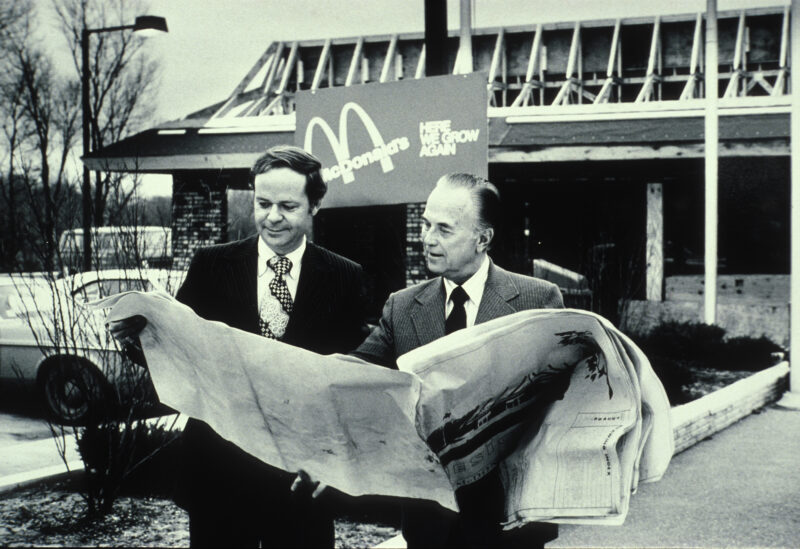
For seventeen years, Ray Kroc sold paper cups, learning lessons he would later apply to McDonald’s Corporation. Yet, hardly anyone talks about that important period despite it being rich with examples of why he later became so successful.
For several years, in order to keep an eye on system capabilities and where I think the societal A.I. investments are going (especially as it may or may not represent a threat to the existence of moats for long-term investments), I had a series of tests – low-hanging fruit – I’d run to gauge the total cost, efficiency, and repeatability of output. The advances, as you know, have been staggering in recent quarters so we might as well be talking about ancient history at this point. By the time I write this on August 28th, 2026, these tests are basically child’s play to the more capable models but they were important guideposts along the way.
For the past two or three weeks, I’ve found myself experiencing a strong sense of déjà vu. So many aspects of the world, and capital markets, today feel similar to the period following when Aaron and I graduated college; the time during which we built our early economic foundation. Housing prices. Mortgage rates. Conflict in the Middle East, particularly Gaza. Spikes in gasoline prices. Value stocks getting more and more attractive.
One of the questions I get constantly, both in-person and online, is how we went about arranging our household once we became parents. We put so much thought into it, and it’s clearly of interest to folks, that I thought I’d take a moment over my morning coffee and write a brief high-level overview of how we approached this if only for a quick reference guide in the hope it is helpful to someone. It’s also partly my way of paying it forward since both Aaron and I were, and remain, so grateful for the other parents who shared suggestions, ideas, and recommendations about the journey we were about to undertake.
The Legend of Zelda, the Berkshire Hathaway shareholder letter, technology upgrades … all the making of an excellent weekend.
As a big fan of different sub-genres of folk music, I was thrilled with Avi Kaplan’s new release, Peace Somehow. I’ve had it on repeat throughout the day.