

I believe in wild, autonomous levels of individual freedom. Provided you aren’t harming anyone, neither your neighbors nor the government have the moral authority to prevent you from seeking your own happiness. It is immoral for parents to force their children into marriages, as still goes on in parts of the world. It is immoral to force someone to work for slave wages as they starve to death and sleep on concrete floors so you can sell trinkets. It is immoral to have children work in coal mines, stripped of the ability to consent due to crushing poverty. It is immoral to steal from your neighbor. You may decide you don’t want to eat ham for religious reasons, but demanding that others abide by your convictions is a form of violence.
That is why I strongly subscribe to a model known as the horseshoe political theory. It posits that there is no such thing as “the left” or “the right”. Instead, there is a spectrum. Along this spectrum, the two horseshoe ends, that are nearest each other despite being polar opposites, represent the people and organizations that will use violence and other means of control to force their will on others. That is, there is no difference between a secular communist who destroys all library books that disagree with his philosophy and a religious zealot who demands women be forbidden from working outside the home. Both have convictions they think are right for themselves, but they are not content to live their life by them. They want to force everybody else to live how they want.
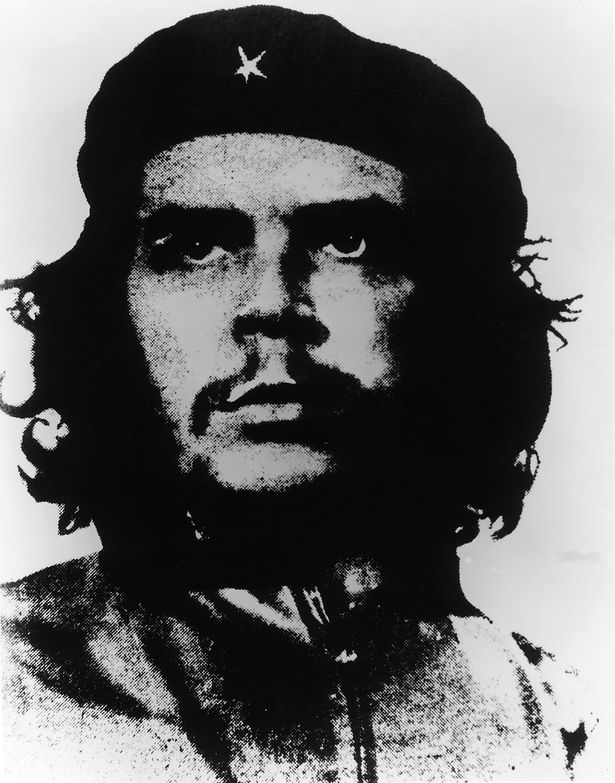
The past few years, I’ve noticed a handful of 18 to 22 year olds who are otherwise wonderful people, who have the right priorities (protecting workers rights, advocating for affordable education as an investment in the next generation, standing up for free speech, protecting individual property, etc.) walk around wearing Che Guevara shirts or have Che Guevara posters on their walls.
I do not understand the mental disconnect. To a lot of people, doing this is akin to walking into a Hebrew school wearing German regalia or displaying your Confederate Flag at an All-Black Historical College.
This is a man who banned music, burned books, hated blacks, was an antisemite, murdered those who disagreed with him, personally oversaw execution squads, and was in charge of a system that imprisoned gays solely for the crime of being gay.
The fact that he thought he was doing the right thing doesn’t count for much because some of the worst atrocities are committed with that justification; an event frequent enough that we even have a cultural saying for it: “The road to hell is paved with good intentions.” At the risk of violating Godwin’s law (sometimes the analogy is appropriate), Hitler was great for the German economy. Life really did improve drastically underneath him for the typical German family relative to the period before his rise to power when reparations from the first world war were crushing the nation. That doesn’t make him any less of a monster. Should we excuse his actions simply because you had a little more cash in your pocket?
One or two good deeds does not make up for wholesale slaughter, imprisonment, suppression of individual freedom, and extremism.
And that’s the irony of the whole thing! Hitler was a monster but he succeeded economically during his lifetime. Che Guevara’s economic reforms turned out to be one of the greatest failures in the entire history of the world. When Fidel Castro apologized for the treatment of minority groups a couple of years ago, saying that the atrocities committed during the Cuban revolution were horrible and misguided, he also, much to his credit, admitted the obvious: Communism had completely and utterly ruined Cuba. The once-wealthy destination had become a wasteland where cars are 70 years old, infrastructure has collapsed, and human capital left to stagnate.
Why did it fail? Because it ignored human nature. Cuba’s economy is decimated not due to the refusal of certain economies to deal with it, but to the inability of such a system to harness human selfishness. That selfishness is embedded in the deepest part of our genetic code. A successful economic system must restrain excess but reward avarice. That is why the income of the typical Cuban family is a mere fraction of what it is right across the water in Miami.
The type of man that will hold a gun to your head and pull the trigger unless you agree with him is not excused by the policies he is attempting to put in place, even if his desired ends are good. The type of man who will decide that you shouldn’t have the right to read what you want, and will destroy the books in your library to prevent competing ideas from spreading, is not fit to call himself human. It is animalistic. It is primitive. It is evil.
Che Guevara was not a hero. He was a murderous tyrant. If you are black, Jewish, gay, or an intellectual, or if you support those who are, confront the bigots who are so insensitive to the atrocities committed by this man that they would show reverence to his image. He deserves scorn, not respect. He was no different than the plantation owners in the south who lynched blacks because they believed they were defending their way of life.
If you want someone to stood up for labor rights, look to Cesar Chavez. The Mexican American activist changed the lives of poor migrant farm workers in California by using non-violent protest to force oppressive farmers to recognize the bargaining power of more than 50,000 fieldworkers. Chavez was every bit as good as Guevara was evil.
Those of you who want to strive for positive social change should study Chavez, Martin Luther King Jr., and Gandhi. Not only are they better men, and far more moral, their success rate obliterates their violent counterparts. Tugging at heartstrings is more effective in the long-run than putting a bullet through someone’s heart.
Reader Comments (37)
Comments are presented chronologically, with replies indented beneath the comments to which they respond.
Jacek Janiszewski
April 20, 2013
Che is a brand that represents rebelliousness and a fight against capitalism. For all practical purposes his biography and accomplishments are secondary to the brand name and his image as a fashion statement. Che is a romanticized image of a lone rebel, Han Solo style, that appeals to young people. I don't think pointing out factual inaccuracies is the best way to take this brand down.
Joshua Kennon
April 20, 2013
Replying to Jacek Janiszewski
Great point. You're right.
On that note, take a moment to appreciate the irony in the situation. He is a fashion statement and a brand. Most people don't even know who he was or have this romanticized notion of what he stood for as they walk around displaying his face. His image represents something that the marketing teams behind it are trying to sell - a package of self-reinforcing identity and ideas - and the shirt profits line the pockets of some of the largest apparel empires on the planet. It's just ... oddly poetic in a Greek tragedy sort of way. He is a product. He, as a man, no longer exists as his true legacy has been forgotten by everyone but historians. Life is funny sometimes. He has become nothing more than a capitalist commodity to be peddled for profit, at least in this corner of the world.
The funny thing about it is Urban Outfitters, which helped start the trend, is influenced by founder and chairman Richard Hayne, who is worth $1.4 billion, making him the 262 richest man in the United States. He is extremely conservative, pro-business, and capitalistic. There had to be some intentional tongue-in-cheek irony going on at headquarters the day the Che apparel line was approved. I can almost see them sitting around saying, "Watch this ..."
I still find it, personally, horribly offensive. It would be like giving children little stuffed Pinochet dolls. With so many positive role models in history, why someone would admire a monster, especially once the truth of the situation has been pointed out, is beyond me.
J.d. Free
April 22, 2013
Replying to Joshua Kennon
The Confederate flag is a similar brand for some people (example: The Dukes of Hazzard's General Lee). Yet we don't tell the black community to "get over it".
Michael Crosby
April 21, 2013
Well Joshua, the more I read you, the more I like what you say. Bravo. Unfortunately, these kids parrot what they learn in college. And most university professors are left leaning, holding Che in high regard.
Joshua Kennon
April 22, 2013
Replying to Michael Crosby
"your reference to Pinochet (in your comment) is probably lost on most."
It's 1 minute past midnight, April 22nd, 2013, I am sitting in my home study recovering from my project today, and I realized, after reading your post, that you are absolutely right. It didn't even cross my mind. This is how I feel now.
(As for Castro, I imagine it's the same reason all men in power don't do the right thing - they don't want to willingly diminish their own influence, wealth, and control. The last time I saw a politician actually put the needs of his constituents before his own career was when a man named Dan O'Leary fired himself after determining his job was a waste of taxpayer money. He gave up a $176,000 salary saying it was an absolute waste of money. That's exceptional.)
Odai
April 21, 2013
"...akin to walking into a Hebrew school wearing German regalia..."
To be fair, wouldn't it be Nazi regalia that's offensive? I imagine German Jews might walk into school wearing something German.
FratMan
April 21, 2013
Replying to Odai
I think Joshua trusts his readers to recognize the synecdoche.
Odai
April 21, 2013
Replying to FratMan
Good point. I just feel bad for Germans today, getting lumped together with the Nazis.
FratMan
April 21, 2013
Replying to Odai
True that. The level of ignorance when it comes to WWII stuff is astounding. But what can you do?
Gilvus
April 21, 2013
Replying to FratMan
Hey FratMan, normally we see-eye-to-eye but I'm making a stand here: I never learned about Thatcher in school either, and I attended a nationally-recognized school and had great teachers. M. Thatcher was one of the "big names" that I'd hear about from time to time, but until she passed away I had no impetus to learn why she was noteworthy.
This is because I chose to deepen my knowledge of math and science in school, and in my free time I studied East Asian cultures and psychology (hence my continued interest in mental models). I guess you could say my deeper knowledge of these subjects was the opportunity cost of learning about M. Thatcher and relevant topics in economics and finance.
So while I agree that most people don't learn unless they're forced, I also think that even curious folks are wired differently and choose to deepen their knowledge of certain subjects (e.g. STEM) at the cost of others (i.e. politics and history).
If it's any consolation, I'm proud of my understanding of math and science, but I also acknowledge my deficiencies and I'm trying very hard to patch them up 🙂
FratMan
April 21, 2013
I think we do see eye to eye! A couple minutes after I wrote that, I deleted it and edited it to something much shorter. You must have either seen it right away or the server has a delay in modifying my comment.
You're right. It's about our passions and opportunity costs. Think about the old Saturday Night Live sketch about the brilliant football coach that couldn't tell you the name of the sitting president or the birth dates of his children. Obviously, that was a caricature, but if you want to get damn good at something, it often comes at the expense of being well-rounded in other areas.
I'm completely ignorant of world geography. I doubt I could locate more than twenty countries on a map, and that is if I'm lucky. I've never had a moment in my life where I felt "I need to be able to identify all the old Soviet satellite states." That never seemed to be the best use of my life's energy at a given point.
So yes, I agree, and that's why I took that one down. Although, I do wonder if we have any kind of moral obligation to reach a certain political/historical level of literacy as part of our responsibilities as citizens in the Republic.
I don't know the answer to that.
Ian Francis
April 22, 2013
Replying to FratMan
I'd say the consternation I expressed to the commenter regarding not knowing who Margaret Thatcher was is not so much to the fact that he never learned about her, but that he had never even heard of her. Sure, there were plenty of historical figures that we learned about in school that I probably don't know very well because my mind was wandering, but if I heard the name I'd at least recognize it. My take from his comment was that this subject did not come up at all, which is concerning. If I misunderstood it, then I take back my earlier comments.
FratMan
April 22, 2013
Replying to Ian Francis
Ian, I had the same impression that you did.
TheLonelyHumanist
April 23, 2013
I have noticed the Che phenomenon in puzzlement myself. I think his "mug" has become a symbol (via ignorance and the "foreign monks are always wiser" effect) for solidarity with people of other countries in the great human struggle for social justice. The irony, and indeed injustice itself, is that Guevera was no patriot of justice.
Pax North
April 24, 2013
Och. You know I love your writing Joshua. However, I don't think one can speak of the Cuban economy without speaking of the military blockade which has been thrust upon it since 1960. And before you say it's only an 'economic' blockade, try investing in a cargo ship of Cohibas and floating it into New York,and see what happens 😉
I also had an unrelated question, can a publically traded or private corporate issue dividend cheques, and claim them as expenses ?
Joshua Kennon
April 24, 2013
Replying to Pax North
You're right about the blockade. That said, if a system truly worked, even in isolation you could have a much higher standard of living. Cuba's primary problem is that it doesn't harness individual selfishness into productive means. If I had been born in Cuba with my personality, I would not have worked so hard early in life. A lot of wealth, and a lot of taxes, have been generated by my own desire for independence and nice things. The incentive system is the primary culprit, in my opinion. The blockade just adds pain, albeit very significant, as you point out correctly.
Dividends are never expenses. They are a distribution of profit. If a company earned $10 million and paid $3 million in dividends, the $10 million is going on the income statement, with $3 million showing up in the cash flow statement and $7 million retained finding its way to the balance sheet.
TJ Hale
May 2, 2013
Wait, how old is Jay Z? Did no one tell him that Che hated black people?? Delicious Irony.
Sunshine43
July 3, 2015
Replying to TJ Hale
Jay Z is one of the most inane of the so-called music industry!
Dave Thacker
July 24, 2013
The left loves Che. I do not see anything inconsistent at all about their admiration. The only apparent distinction is these socialists in America haven't yet achieved the power over people (that Che had) as of yet.
Working class
October 19, 2013
Replying to Dave Thacker
I do not agree with your sentiments Che Guevara was brave and true to his beliefs to the end.Whether you agree with his views or not he was a true soldier who was brave enough to fight for his beliefs and face his enemy in the eye .He could have led a financially secure life as a doctor but choose a path where he fought against imperialism and injustice especially for people who had no great influence or power He knew the odds were against him yet still he carried on ....and always stayed true to his beliefs.The way he was killed has made him a martyr for all time.Take the time to read his quotes and his books and listen to his speeches ...then make up your mind.He was a character who divided opinion and made a difference .His character as a man was likeable,handsome,unhygienic,revolutionary,charismatic,cold,brave,polite,tough,loyal,merciless and intelligent.He was a born leader who was born to lead men.He was a man of his time a true socialist revolutionary leader ...That is why people wear his t shirts ...
Joshua Kennon
October 20, 2013
Replying to Working class
The angels may be interested in motive, but humans are generally more concerned with the consequences of one's actions on those around you. If a man leaves destruction, death, poverty, and misery in his wake, can his life really be judged a success? Can he really be worthy of emulation?
Adhering to a belief regardless of the consequences is not a virtue. Being brave is not always a good thing. Sacrificing luxury does not automatically make one a saint.
There's an easy test for the quality of a man's life: "By their fruits yet shall know them". Che Guevara destroyed nearly everything he touched and brought untold misery to an incalculably large group of people. To ignore that is problematic.
Dave Thacker
October 21, 2013
Replying to Working class
Was Stalin not brave and true when he starved 10 million? Hitler when he killed 6 million? Pol Pot when he created the killing fields? All of these socialists were brave and true to their beliefs as well. Now our current socialist leaders are setting the table for the same kind of murderous shuffling in of "utopia" in America every time they describe the defenders of Liberty as "terrorists". It's the same gutter ideology you have. Ideology over life. Rejected.
Ayush Param
April 29, 2015
Replying to Dave Thacker
Mr. Thacker, comparing Ché to Stalin and Hitler is just about the most ridiculous comparison I have heard in my entire life, and that is in a LONG line of ridiculous comparisons. Are you naive enough to compare Ché to a coward like Adolf Hitler, who committed suicide in an underground bunker to avoid a public trial and almost certain execution? Ché was an extremist who killed perceived supporters of Batista's autocracy. Stalin was a monster who selfishly killed thousands of people to cement his place in the Kremlin. Do you seriously think Stalin and Hitler were brave and true?
Sunshine43
July 3, 2015
Replying to Ayush Param
Amen!
Sunshine43
July 3, 2015
Replying to Dave Thacker
Oh good grief......you are so delusional if you compare bravery to savagery!
Jordi
November 8, 2013
Hi Joshua. I've been reading your blog for a while and enjoy your articles a lot because you try to be objective, look at situations from different points of views and only then draw conclusions. That's what you did (for example) with the article you wrote about Thatcher. You could have written a short article saying she was a terrible person because she supported a dictator who killed thousands of people (which she did, as you mentioned in the article). However, you did a much more thorough analysis than that and I'm glad you did it because reality is rarely black and white.
With this article of the Che Guevara I don't think you've applied the same methodology. Are you sure he did not do positive things too? The article looks very one-sided to me. I'm very disappointed to learn he did the things you wrote about, but I know that thousands of people in South America loved him, so I'm guessing he did some good ones too.
Joshua Kennon
November 8, 2013
Replying to Jordi
When you study controversial figures, it's important to understand why people like them, or how they attained support. In the case of someone like Hitler, for example, he was elected by overwhelming numbers largely because his economic policies were a resounding success. He made day-to-day life for Germans far better than they were prior to his rise to the highest office. It helps solve the puzzle as to why people supported a man who turned out to build one of the biggest machines of mass murder in human history.
Che Guevara, on the other hand, did none of these things. He has no positive body of work, unlike a Hitler who drastically increased standards of living for the German people. He was completely ineffective; a radical zealot with a gun who produced very little offsetting benefits.
Why, then, is he popular? Looking through the historical records, the best I can surmise is it comes down to a combination of two things:
1. His motives. Despite having the exact opposite effect, Guevara wanted to make life better for the poor and starving, to an almost extreme degree. There is a cosmic irony in that he made things far worse.
2. His willingness to die for a cause. At a time when his part of the world was oppressed and treated as disposable, he dared to rebel, giving a sense of empowerment as a symbol much bigger than himself. He became some else, entirely unrelated to who he was, in the minds of people; a sort of brand that represented something.
Guevara is one of the few cases of reading about someone's life, and studying the work he or she did, that I can find almost no redeeming qualities. Unlike my posts on Thatcher, Obama, Reagan, or other leaders, there doesn't seem to be much nuance here. One of the only things he did that was worthwhile was a literacy campaign that had good results.
Thinking that there must be some good in everyone or all ideas is a form of a cognitive bias called balance fallacy. I can't find any justifiable opposing evidence that Che Guevara did anything but lasting harm to the world. His country would have been better off had he never been born.
Jordi
November 11, 2013
Replying to Joshua Kennon
I don't have enough information about your research and the topic to say whether your analysis is complete or not. Instead I'll ask you a couple of questions:
If he hadn't been a communist would you have judged him in the same way?
Are you sure the confirmation bias did not affect your research or the interpretation of the information you gathered? Just as an example, I did a bit of research regarding your statement that he hated black people and did not reach the same conclusions you did. I found sources that say he made racist comments when he was young but I also read that he got personally involved in helping South Africa end the apartheid (http://www.sahistory.org.za/topic/cuba-proxy-war-against-apartheid-1). Therefore, I would not conclude like you did that he clearly hated black people.
In general, books/opinions about him tend to be either very positive (I found many, including some from very smart persons like Sartre) or very negative (there are many too). I have the impression most of them are not really objective (including Sartre) and were written by people with strong feelings in favor or against communism.
You say that his country would have been better off had he not been born. However, his country (Argentina) did not suffer any of his failed policies or violent acts (like Cuba did). On the other hand, he inspired his fellow countrymen to resist against a dictator they had in the 70s so he probably had a positive effect there. I think you're right when you say that he gave a sense of empowerment to a part of the world that was being oppressed and treated as disposable, and to me that is something important. It obviously does not compensate for the bad stuff he did but it's worth being mentioned in an article about him. The fact that it's almost impossible to measure (unlike Hitler's 12 years of economic prosperity) does not diminish its importance.
Regarding your conclusion, I completely agree with you that Gandhi and other pacifist revolutionaries are far better role models than Che Guevara. The world would be a much better place if people did not try to impose their ideas by force on others.
Marissa
December 3, 2014
By calling people who support and view Che as a hero "bigots" and "anti-intellectualist's" you're just making yourself sound like an ass. Unless you've lived, and experienced how people in Latin America view Che, keep your rude opinions to yourself. As an American, who has lived in South America, I can see why Che is viewed as good and evil. I respect your view on him, but you don't need to put others down because they don't agree with you. Next time, back up your facts, too.
Joshua Kennon
December 3, 2014
Replying to Marissa
I appreciate your honesty and candor. Because of that, I'll give you both the courtesy and respect of the most direct response I can.
Personally, I think your view is morally inexcusable. To refuse to call the damage, destruction, illiberal, and hateful actions of this man evil, and shame those who support him despite his good intentions or the understandability of their relative selfishness for holding him up as a symbol given their oppression at the time, is essentially pardoning the worst aspects of mankind for the sake of not hurting someone's feelings. To look the other way, and refuse to speak up in protest when he is misguidedly lauded as a hero, makes you little more than an apologist for one of the most brutal, tyrannical, prejudiced regimes in the history of civilization.
I'm fine with you thinking my words make me sound like an ass because the goal isn't to get you to like me. Rather, it's to get you to remember a simple truth every time you see his face or hear him spoken of with pride, somewhere deep in the back of your mind; that still, small voice that whispers in your heart:
This was a man who thought he had the right to decide what other people could read, write, think, and say; to murder those with whom he disagreed; their blood spilled on the ground; their brain splattered against a wall.
This was a man who, so deep was his complicity in bigotry, helped run a regime that declared gay kids to be decadent, throwing them into what amounted to military concentration camps where they were forced to work by threat of death at the barrel of a gun simply because they were considered sub-human filth; bourgeois.
Fundamental human rights are not a topic on which reasonable people can disagree. It is not an area on which conflicting opinions matter. They are inalienable. The basic human dignity to not have your head blown off because you read the wrong book, or to be forced into what effectively amounts to slavery because you fell in love with another boy, is - if you'll pardon my language as I very rarely curse - pretty fucking basic. It's right up there with not being forced into prostitution or burned at the stake for your religious beliefs. Saying, "Oh, well, you know, it's understandable because their lives were hard and they, themselves were oppressed" is ignorant. It is bigoted. You want me to pretend like it's okay and it's not. It's just not.
A reasonable, well-informed, rational person looks at the life of someone like Guevara and sees the nuance. They do not walk around with his face on a shirt, or hold him up as a praiseworthy example, any more than a reasonable, well-informed, rational white person would wear a Jefferson Davis shirt to a campus tour of Spelman College in Georgia.
To routinely engage in such insensitivity requires either a dearth of knowledge about history, a callousness to the suffering of others, or an implicit support for the actions of the man. None of those speak well of the wearer. To refuse to acknowledge this for fear of appearing rude is essentially giving license for it to continued unchecked in the world, making you who remain silent just as guilty as the person doing it. I think your valuing of social protocol - a desire not to offend by calling out those who would revere such a monster - above the intrinsic dignity of his victims is obscene.
Sunshine43
July 3, 2015
Replying to Joshua Kennon
Accolades to you! What an amazingly profound response to infatuated Marissa.
Peter Aremone
January 24, 2017
Gandhi was a Child Molesting Islamic Jihadi appeasing cowardly evil bigot who called for the Total Holocaust of all Jews, Hindus & Sikhs in order to appease Arab & Indian Islamists.
To that end, Gandhi openly & fanatically supported the Khilafat (caliphate) movement which was ISIS of the day (ISIS is Khilafat part 2) which sought to plunge India into Islamic rule where every Muslim man would be given the right to rape all Non-muslim women under Islamic Sharia & rape rights granted under Quran & prophet muhammad's examples.
Music Man
October 29, 2017
Excellent article. It is indeed a pleasure to read something so cogent. I'm no proofreader but I did notice one thing towards the end where you write, "If you want someone to stood up for labor rights, look to Cesar Chavez. "...I think you wanted "someone *who or that* stood up" rather than, "someone *to* stood up". Don't mean to nitpick.
Gemma
August 30, 2022
I find it ironic that you open with talk of a belief in wild autonomous rights, describing a few of the wrongs of the world such as enslaving and harming other beings, but then go on to suggest that murdering and eating a sentient being for nought other than sensory pleasure is your right and choice and that to prevent someone access to a murdered corpse is somehow violence, when actually the act of eating ham is violence in and of itself.
Violence from the latin - to violate another's rights. Ham, is the body of a sentient animal with the intelligence and emotional complexity of a 3 year old, a someone. A someone with the same rights under natural law that exist for all sentient beings.
Your rights (objectively speaking) are only those things that are not wrongdoings against other sentient beings (i.e: rape, murder, assault, coercion, theft, trespass - these encompass all wrongdoings in one way or another) which means it is not your right to eat someone else's body.
Penny Wainwright
January 3, 2024
Great article. I always think it pathetic when i see people glorifying this monster. There's no excuse for the ignorance. It is a reflection of our failed education system. You HAVE to teach actual history and facts or we truly are doomed to repeat the mistakes of the past.
bob
April 23, 2024
martin luthar king wasn't exactly a saint either. He was a womanizer. Ghandi, he was actually kind of a dick to the people closest to him. Thats not to say those people didnt do great things for humanity, but they were far from perfect.
Jamie Riehl
April 28, 2024
I see no other source make the "banned music and burned books" claim, including on ones highly critical of Che. What is your source?