

Mental Model – Signaling Theory
One of the biggest mental model obsessions I’ve had for the past few years – so consuming that I rarely even mention it in public, and hardly ever on this site as I am still working on fully grasping the implications and mechanics – is something called signaling theory. The gist of signaling theory is that at all times, in all situations, you are broadcasting aspects of your identity, beliefs, personality, and lifestyle to the people around you, often with significant social implications. It exerts such a strong pull on civilization that I consider it second only to the social proof mental model in importance. It interacts with other mental models so efficiently, it often goes unnoticed.
In one of the greatest texts on compliance, Influence: The Psychology of Persuasion by Dr. Robert B. Cialdini, he discusses how people will break the law easier, such as jaywalking during a red light, when a well-dressed businessman in a suit makes the first move. Likewise, the more expensive the car, the longer people will wait to honk at it if the driver fails to notice the light has turned green.
Signaling theory is so powerful that it shows up in the most non-expected of places. There is now some evidence that predators use it subconsciously to identify those can be easily manipulated, as they walk differently from most people (see Psychopath and Victim Selection: The Use of Gait as a Cue to Vulnerability).
Your hair cut, clothing choices, fingernails, fragrance, oral health, speech patterns, accent, nervous ticks, friends, neighborhood, car, education, reading preferences, age, posture, weight, whether you are circumcised or not, arm position, hand movements, cadence, the music you like, etc., all indicate things about you to others. In some cultures, there are certain “in” habits among the rich and well-educated to identify others like them (e.g., the way shoe laces were tied in certain well-to-do prep schools a generation ago). In some areas, there are certain practices that identify you as part of the “in” tribe, often with deep historical or religious significance. The poor or ignorant have certain “tells” as well, making them easy to spot when they are out of place.
You are a radio station. You are always broadcasting. Whether you want to or not, you can’t turn it off as long as you are alive.
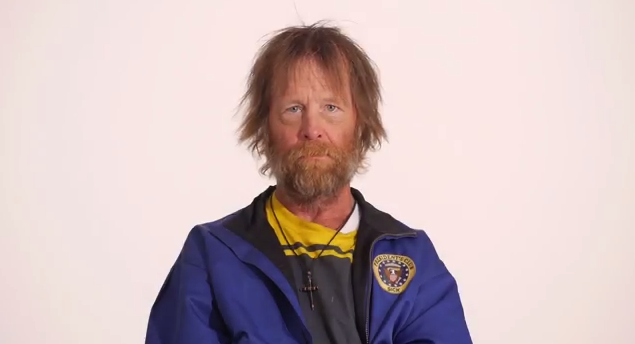
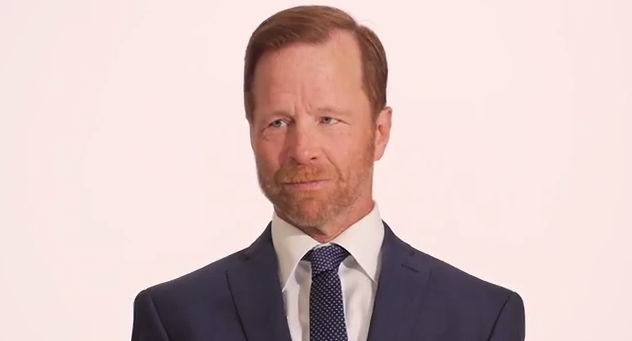
You are also a radio receiver. You are constantly interpreting the broadcasts of others in real-time, making snap judgments. Consider the homeless veteran who was recently made over in a now-viral YouTube clip. Even the most rational among you are likely to treat this man very differently depending on how he appears; a tendency long recognized as a plot device in novels and Hollywood movies when the unexpected-rough-around-the-edges rich guy hides in plain site. Imagine the success ratio difference if he were to approach strangers on the street and ask to borrow $5 or use a cell phone; walk into a nice restaurant or discovered lurking around the front of a store at night.
Let’s use an example of someone who is relatively well known, actor Jared Leto. He will drastically change his appearance for movie roles, putting on significant amounts of weight, getting in shape, changing his hair, and modifying his wardrobe, speech, and mannerisms. If you were to meet an ordinary person out on the streets, how differently would you respond based on his appearance if he were a customer, a potential date, a colleague, or a friend? This is the exact same guy; exact same genetics; identical DNA. The only difference: He is broadcasting different signals.



If you saw these three men, even though they are the same person, you would have built-in assumptions constructed around who they were, what they valued, how they lived their life, and whether you were compatible on a personal, emotional, business, friendship, sexual, or religious level. And your brain will have done it instantaneously, constantly modifying it as new information is received. This will influence the quality of his life. For example, even if job performance were the same, there is significant empirical evidence that the second Jared Leto would be promoted much faster, earn much higher salaries, and be treated much better in the workplace than the first and third. He’d probably sell more, too, if he directly interacted with consumers. It matters, so use it to your advantage like a tool.
The signaling theory mental model, when combined with the mere association mental model (poverty and crime statistics for various sub-demographics, biased news coverage over-reporting certain types of crimes), is the foundation of practices such as racial profiling. It explains how the social crime of “flying while Middle Eastern” or “shopping while black” can even exist in the modern world, sometimes in high-profile locations that should know better; snap judgments are made based on past associations and stereotypes as a way to identify perceived threats, even when unfair or irrational. Successful businesses go off data, instead. Due to its suburban footprint, Target, for example, knows that the most likely person to shoplift in their stores is a middle-age, married mother who has several children with her at the time, college educated, with a higher-than-average household income.
Signaling theory is a huge reason people are able to assortatively self-select peers even in alien environments. It’s how drug addicts can identify each other despite having never met or not saying a word.
Dress too nicely relative to your co-workers, you’re perceived as a pretentious jerk in many offices; dress too poorly, and you’re a slovenly bum who doesn’t care about his career (unless you happen to work in Silicon Valley).
Mom jeans? That says a lot about who you are and what you do with your time.
Signaling theory is what allows con-men to bamboozle their marks. It makes it possible for non-ethical preachers to extract funds from the poor. It’s one of the reasons you need to understand it – to protect yourself and your family.
Signaling theory is the real power behind economic models such as conspicuous consumption or Veblen goods. In fact, were it not for signaling theory, Veblen goods could not exist as the incentive to acquire for social status capital dissipates.
There is a basic body of academic work devoted to how signaling theory evolved from an anthropological standpoint and why it is an efficient mechanism for society and gene propagation (PDF) that serves as a good place to start. It shows up in spider mating dances and bird calls.
Signaling theory is everywhere. It is a framework through which you can organize and clarify so many things. When you look for it, you’ll spot it. The now-famous recent speech given by Wentworth Miller, when he confessed that he had tried to kill himself multiple times because he realized as a teenager he was gay, includes a remarkable example – he talks about “failing the test”, that he was constantly on-guard, in survival mode, because he was going to do something, move in a certain way, speak in a certain way, accidentally hold his wrist at a certain angle, to give away his secret. He touches on it throughout the speech, but that portion, specifically, starts at 5 minutes 35 seconds. This is signaling theory, distilled in a very eloquent way. It’s the single best example I’ve come across in all of my research to date.
Want to see how quickly your world changes if the signals you broadcast shift or if you “fail the test”, to borrow Miller’s words, of having your actual broadcast differ from expectations? It will shock you.
If you are non-religious, start reading the Bible in public every once in awhile and watch the response (flip it if you are religious – skip a few Sundays with the family at church and document the result). People will react very differently to you even if nothing else has changed and you never talk about it verbally.
Not a vegetarian? Purposely remove all meat, without saying a word, whenever you eat with friends. At some point, it will get addressed because the curiosity about the signal changing will be too much.
Live in a conservative area? Put a liberal bumper sticker on your car. Live in a liberal area? Put a conservative bumper sticker on your car. See how differently folks treat you, again, without having said a word.
The brain wants to know. It wants resolution and categorization. It wants clarity. It wants “tags”. It needs them to process more quickly. Signaling theory is all about evolutionary efficiency.
Signaling theory can be used to gain instant social capital, or credibility, with strangers, explaining the use of gang signs or colors, or ex-Jehovah’s Witnesses being able to crack a joke and put others with a similar background at ease.
Signaling theory is why someone with Asperger’s can have such a hard time navigating life – his or her receptor is broken, so it’s impossible to pick up on the non-verbal communication (and almost all communication is non-verbal, or has sub-text not evident in the words themselves).
Walk through your day and begin asking yourself at regular intervals, “What signals am I sending out right now? What does my appearance say about me? What does my language say about me? My conversation habits? The people with whom I surround myself? What does my job say about me? What does my voting record say about me?” Then, follow up with the most important inquiry of all: “Is this consistent with the message I want to be broadcasting?”
Reader Comments (18)
Comments are presented chronologically, with replies indented beneath the comments to which they respond.
Gilvus
November 9, 2013
And intentionally using signalling theory will boost information asymmetry. Stealth wealth is a great example.
P.S. New man-crush on Jared Leto in lamellar armor.
BidAskDividends
November 9, 2013
This is probably my favorite mental model, great article. I especially like the comment of almost all communication being non-verbal...I feel as though people are constantly forgetting that (and how they can use it to their advantage so much more if they chose to do so).
perrdav
November 9, 2013
This subject is an expensive one, to those who don't understand these concepts. Growing up, I went to a private Christian school. We did not have a uniform policy, but we were not allowed to wear shirts with logos, designs, pictures, etc. We had to have a collar and our shirts tucked in. As a kid I hated being told how to dress. Now that I am older and can look back I realize how important those rules were in removing barriers in how we interacted and viewed other kids. We were told over and over by the principal that how we dress projects an impression on other people and how they treat us, whether they choose that way of treatment or do it subconsciously. That training was the most valuable for me and is one that I share with my children. As an HR professional I could give story after story of those that did not understand this concept, to the detriment of their future earning power. Good people, with excellent talent, motivation and skill create their own obstacles to success. This story from a few years ago highlights this.
http://www.nydailynews.com/news/national/white-supremacist-gang-leader-bryon-widner-hate-filled-tattoos-removed-face-article-1.969836
This also shows, that we ourselves, need to work hard at looking for the value and qualities of a person, overlooking the superficial adornments. When and how to do this is a fine line that is affected by time, desire and willingness to go the extra mile. When we do that we create relationships that can help us to better evaluate a person on the true merits of character.
PTGDUDLEY
November 9, 2013
Please read BLINK by Malcolm Gladwell. He goes into great detail about how receivers of that broadcast instantly process a signal received. Excellent topic!
Joshua, how do you feel we are doing in our adaption to so much electronic communication? What does our words, diction, spelling, grammar say about us? Everything broadcasts something.
-profile picture
-number of followers
-use of emoticons and acronyms
-speed of response
Even the visual structure of your writing or text says something about you.
Again, EXCELLENT topic.
PTG
Frankie
November 9, 2013
This is a powerful tool, if you embrace it, when attempting to elevate your socioeconomic status.
Signaling through body language is probably the "quickest fix" for someone attempting to learn from the theory. It also has the clearest evolutionary roots, in my opinion.
For example, appearing comfortable, at ease, and unconcerned with your surroundings. These are signals of strength and power. Watch how much differently people treat you when you are say, at a bar or restaurant and lean back, one arm over the back of the chair next to you, sprawled with a menu in hand, making eye contact and speaking as though you had all the time in the world. Then compare it to hunching over the menu, rushing to give your order and keeping eyes on the selection as most do. The difference is apparent.
From an evolutionary standpoint, men who were hunched and on guard lived in fear of physical threat, which is a sign of weakness. A man who is completely at ease in his environment has fewer threats and is perceived as stronger. Ultimately, those attracted to the prior body language reproduced less successfully. Those attracted to the latter reproduced more successfully. It is painfully simple, and now as a result the above body language is subconsciously attractive.
It is a very powerful concept, if you are aware of it! Signaling theory is definitely getting added to my favorites for future reference.
joe pierson
November 10, 2013
Replying to Frankie
Yes but you can't act strong and powerful, you either are or aren't. If you "act" strong and powerful you will immediately be viewed as a threat and tested by other powerful people and put back into your place. That is the way it works in the wild.
Frankie
November 10, 2013
Replying to joe pierson
I don't have this problem but perhaps it's just me. Also, I feel like a demonstration of power in our society is, although perhaps counterintuitive, a total non threatening and at ease demeanor. I'm personally unsure how this could result in being tested. The threatening demeanor that many people incorrectly deploy to fake or intentionally portray power does resultn challenges, though my point was to say that this is actually not a subconscious trigger for being viewed as intended
joe pierson
November 11, 2013
Replying to Frankie
Wentworth talks about it in his video, you can pretend to be someone you not, but eventually you will fail, because you will be tested constantly, and you will fail big.
http://www.youtube.com/watch?v=h-mojsXDN_U
All I am saying if you are weak, then you need to get strong, not pretend to be strong.
Nick Pape
November 11, 2013
Replying to joe pierson
Then the question is: how does one go about becoming strong, as used in this sense (psychologically, socially, etc)?
segfault
November 11, 2013
Replying to Nick Pape
Good question. We're supposed to practice physical fitness and resilience. What are the best strategies for mental and emotional strength training?
Frankie
November 9, 2013
"Millionaire in the mirror" which you recommended earlier this year (great read, very solid career coaching), also hits on this topic. Dress to be associated with the people you want to be a part of.
How do you feel about the law of association? Described once as "the idea that you become like the people you associate with, and even your income is likely to level out as the average of the 5 people you spend the most time with." This, combined with signaling theory to alter your social network, has proven (for me at least) to be very powerful.
Steven
November 9, 2013
I'm bemused by the circumcision comment. In what social situations can one even tell if a man is circumsized? Does it cause a limp?:) What signal does it give?
While I know in some kids are circumsized due to their cultural heritage, plenty are also cut for alleged health benefits also.
Odai
November 9, 2013
Replying to Steven
I was confused by that remark too, but I can think of a couple situations:
- In bed, obviously. In the US, I've heard of people being afraid the first time they see their sexual partner's intact penis, out of fear of the unknown. In other countries, the reverse might be true.
- In countries where male infant circumcision is outlawed (or just not the norm), being circumcised would obviously signal you as being a foreigner/from a certain ethnic background (again, mainly only an issue with sexual partners).
It wouldn't necessarily be a bad thing either; just a non-verbal signal about who you are.
Odai
November 9, 2013
I was just reading the introduction to The 7 Habits of Highly Effective People, and he was talking about Character Ethic vs Personality Ethic, how internally becoming a good person is prerequisite to truly achieving public victories.
Obviously you want to put your best foot forward, and there are situations where being yourself can be dangerous. But except for world-class actors, I don't think people can convincingly act like someone we really aren't.
archont
November 11, 2013
The perception of signalling is not a binary switch - broken or not. Various people are varyingly sensitive to those signals. On the extreme end of this scale are the people with Aspergers and full-blown autism - but it doesn't mean they cannot pick those signals up - just that they have to learn it, just like you'd learn what the various vocalizations and body language of a non-human animal mean. Instead of the subconscious harvesting and non-critical integration of information, people like that consciously analyze and compare. As any deliberately analytical skill, it requires active effort to process. What is the tone of voice, where is the person looking, what is the facial expression, what is the body expression, how is it different from baseline, how tense are the various muscle groups, what words are being used, where euphemisms are used, which words or phrases cause hesitation... Processing all of that information takes effort and leaves such a person mentally exhausted.
This signalling is meant to influence a person's emotions, play on the primal heartstrings. Circumvent rational and analytic thought which in this context only serves to rationalize the emotions instilled by the signalling. Although the perception of signalling facilitates easy social contact, it's also the easiest way to manipulate people. It's the way prejudices are born, dictators and populists rise to power and con artists scam their victims.
People in the autistic spectrum don't have to be socially inept - rather, socially deliberate, possibly even charming - until the batteries run out and they're left either silent or weird, aloof and uncaring. They may well understand the social mechanisms, but don't internalize the emotions the other party is trying to enforce. Rather, they would analyze, on a rational level, why a given person is trying to give off such an impression, while not being subject to it themselves.
A person with autism wouldn't talk differently to the man in your post pre or post beautification (assuming he wouldn't be offensive to the senses). A high-functioning person in the autistic spectrum will pickup the ques but may see right though - the eyes really are telling either way. With the primal emotional autopilot missing, the person has to compensate. This, I believe, can yield interesting insights into the workings of people's minds that would otherwise not be possible. Sometimes those are insights even the people being analyzed aren't aware of.
We, as humans, are animals who just recently evolved a part of the brain that handles logic and thought. I consider autistic people, in particular high-functioning ones, to give a glimpse - but not a definite answer - of how the human mind would evolve if the logical part would continue gaining in significance.
It's a topic for a tome of books, not a post, with lots of interesting aspects - like how the frontal lobe is a calorie hog and starvation, exhaustion and sleep deprivation affect autistic people much more than non-autistics.. explaining how autism is more prevalent in developed societies where those necessities are provided.
Of course, I'm biased, working in IT where you can't throw a stick without hitting someone diagnosed with Aspergers, I don't want to make this sound like an autism ubermensch rant.
Jordi
November 11, 2013
Great topic indeed. I try to be aware of this and minimize its negative effects but I'm pretty sure I do a poor job at it...
I recently read a book by Dan Ariely about internal signaling (as opposed to external signaling, which is what this article is about). He talks about how internal signaling changes our behavior. For example, he talks about an experiment where they gave fake clothes to 50% of a group of people and original clothes to the other 50%. They then saw that the group who had received and and used the fake clothes were more likely to be dishonest than the ones who had received the original clothes. Pretty interesting stuff too.
Nicholas Archer
November 14, 2013
Oh my god man,
I had a conversation about this exact same thing.
I'm gonna get my friend to post on this one. LMAO.
Guest
November 15, 2013
Replying to Nicholas Archer
Before I monologue, thank you Joshua for enlightening the world. I enjoy all of your topics, though I've never felt compelled to comment. I feel like now is a good time, and since I am, I'd like to express my appreciation.
For everyone else, this is an important article to read.
I'm not a psychologist, though I do very much enjoy dissecting and analyzing why and how certain things operate within people, and reduce it to understandable terms. This article explains a fact about the world that I was unaware of for 22 years.
When I had first met my good friend Nicholas Archer, (who showed me this site years back, and posted earlier) I was taught an amazing concept. It was so profound and simple, even life-changing, and he had accomplished its inception into my core mental operating system with only two words.
"Everything matters".
This notion never existed to me before, because in addition to being unaware that I was unaware, I never knew that my living consciousness was the direct reflection of an unforgiving roleplaying society.
I believe I grew up naively expecting that everyone would treat me the way they'd want to be treated. As a child I was intelligent, though naive, and my passive kindness was met by a general, longstanding lack of earned respect by my public school peers. My second-class role in the school social economy had molded and solidified my identity as such until the beginning of my adult life.
I believe the change occurred when my friend observed me interacting with a pretty girl in the local mall food court. After the interaction, he asked me if I was aware of my uninviting posture, my lowered tone of voice, my lack of eye contact, my unflattering sweatpants and overall lack of confidence. The existence he described was normal life for me, and I was playing the role I thought I was fit to play.
What I hadn't known is that these things are powerful forms of communication. I suspect that Nick's list of curiosities was the end result of my having matured under the impression that I wasn't good enough to talk to the pretty girl, and that there was no point in wearing a nice shirt because I simply wasn't worth it.
This article is very important because I grew up with no knowledge of "self
broadcast" or that I could learn, develop, and change the tuning. I suppose I may have been aware at I, at some level, didn't have the confidence or knowledge to know that I should care. Having grown up only in this existence, having not been aware of the cues, I wasn't even sure what example to follow for a change in behavior. My relative success today took a lot of patience and literal, logical direction from my good friend.
This article touches on the awareness that I never had growing up. I feel like this article is as close as I would have got had I never met Nick. These sources of enlightenment are exceeding rare, especially for those who aren't aware that they should seek this knowledge and benefit from it.
The point of my story is to accentuate the fact that the lack of a refined self awareness can be the result of society's broadcast during an impressionable stage. The resulting negativity can cause a snowball effect that could lead anyone to believe and adopt society's subversion, and the resulting low self worth might take outside intervention to reverse.
However, the snowball can be positive too. Since taking command of my broadcast, I've been able to enjoy the confidence to exceed anything I could have imagined 5 years ago. I believe that it is the result of gains over time due to the reenforcement of my positive behavior and image. That is something you have to learn yourself, but it certainly begins with AWARENESS, which you've decided to take the time to write about.
So again, thank you, Joshua for this article. I like to imagine that it brings awareness to another lucky person in the way that I had years ago by a friend.
-Chris H