



Teachers are actually paid more on a per customer basis than movie stars. Image © Getty Images, Comstock, Thinkstock
I’m going to prove that the average school teacher earns more money than Tom Cruise. No, seriously.
In my article Exchange Your Best Efforts for the Best Efforts of Others, I was discussing the idea of Ayn Rand that money is a by product of virtue in a free society where no exploitation or theft exists. That is, a dentist charges money for years of study, which represents his “best effort” and then goes to the best tailor in his town and buys a suit for church which represents the tailor’s “best effort”, etc.
A question, submitted by crabhooves, was posed:
I don’t think it translates as cleanly as that. Is Tom Cruise worth more than a primary school teacher? He’s many times richer than your average school teacher, but he’s not worth more. Society values his efforts less but he gets paid more because we only need a handful of stars but we need hundreds of thousands of teachers so the money isn’t diluted.
[mainbodyad]My answer: It does translate that cleanly. Your economic model is incomplete (toward the end you started to hit on the reason why, so I suspect you are intelligent and understand the idea even if you don’t have the formal term for the concept). To be honest, most people make that mistake. It is so common, in fact, that I almost wrote that exact question into the article but cut it because I thought it was already too long so I’m really happy you brought it up for discussion!
When we spend money, we exchange our cash for value. We pay what we think something is worth based upon our own opportunity cost. A guy making $10 per hour cannot fathom paying $400 for a shirt because, after accounting for income taxes, it would take 57 hours of his labor to pay for it. A woman making $200 per hour wouldn’t think about it twice because her opportunity cost is lower.
The Movie Star vs. The School Teacher
How does this apply to Tom Cruise vs. a school teacher? A school teacher obviously provides a service that is more important to humanity – the ability to read, write, add and subtract. Education is the very basis of a civilized society because it is with that tool we are able to do amazing things such as build bridges, cure disease, or compose concertos.
We need to start with two basic facts as our premise:
- Tom Cruise’s customers are potential movie theater ticket buyers.
- A school teacher’s customers are potential students that will be in his or her classroom to learn
When a parent is looking for a teacher for his or her child, they want someone who can give individual attention and teach a given skill. Studies have shown that parents often pay more for homes in high class school districts despite the higher property taxes (a good school, in fact, is one of the greatest drivers of residential real estate values).
[mainbodyad]One of the hallmarks of a good school is one with a low student-to-teacher ratio. In other words, on a per customer basis, individual members of society are willing to spend exponentially more on a teacher than they are on a movie ticket to see Tom Cruise. This is true even in public schools! Once you get to private schools, where tuition for K-12 can reach into the tens of thousands of dollars per year, it is even more evident.
For Tom Cruise, his customers are only willing to pay $10 for a movie ticket, of which maybe $1 goes to him if he is heavily involved in the project.
That means that an average American is willing to spend thousands of dollars per year on a handful of teachers for themselves and their children, and only a few bucks on movies. They value education much more highly than they do entertainment if you add up all of the school budgets of all the educational institutions in America compared to the value of Hollywood. In exact figures:
- The United States Motion Picture Industry consists of 11,000+ companies with combined revenues of $55 billion per year. This includes the movie businesses of Disney, Fox, MGM, Paramount, Sony, Universal, and Warner Bros. The top 50 companies control 80% of the market.
- The United States school districts alone – not even counting private colleges and such! – spent approximately $562.3 billion in 2006-2007 (the most recent figures I could find), “including about $476.8 billion in current expenditures for public elementary and secondary education. Of the remaining expenditures, $62.9 billion was spent on capital outlay, $14.7 billion on interest payments on debt, and $7.8 billion on other programs (programs such as community services and adult education, which are not a part of public elementary and secondary education).”
As a people, we value education 10-1 to movies, with a much larger margin if we were add in money spent on self-education products, books, trade schools and private universities.
The “Model” You Are Missing Is the Economic Concept of Scalability
How is it, then, that Tom Cruise is richer? Scalability. In economics, scalability refers to the idea that once the product has been made, there is little or no additional cost to produce further units. For Johnson & Johnson, it takes $1 billion or more in research to create the first pill. Every pill thereafter costs a few pennies. That is because their business is scalable.
Cruise is in a business that is scalable, like Gates at Microsoft or Jobs at Apple. He makes a movie and, if people like it, they each are willing to pay a very small amount of their annual income for a few hours of entertainment. He made Risky Business and The Firm once, decades ago. He is still collecting profit from it because someone who has never seen one of the movies can now spent a few dollars to download it on iTunes. The key is: Cruise had to do the same amount of work regardless of if 1 person or 100,000,000 people buy his film.
Your local school teacher is paid far more by each of her customers than Cruise is by his. The only difference is, there is a practical limit to the total pupils she can instruct. If she tried to run a kindergarten with 100,000,000 people, it wouldn’t even be physically, logistically possible. You could not fit that many people into an arena and teach them a subject.
This means that we have discovered:
- Individual members of society value the services of teachers on a per customer basis far more than they value the services of a movie star;
- Teaching is not a scalable profession, so there is a practical limit to the number of students, or “customers” a good teacher can have, limiting his or her earnings;
- Even though movie stars are paid far less and valued far less on a per customer basis, they are able to collect millions of tiny payments for people who find their work valuable enough to entertain them for a few hours. The scalable nature of their work means that lots of pennies from millions of people end up to be more absolute dollars than a lot of dollars from a few people, which is the model followed by a teacher.
Teaching Isn’t a Free Market Profession Due to Unions
The movie star provides less value on a per customer basis. But to society overall, his value is higher because he has solved a “need” for more people. This is consistent with the notion that the more good you do for the most people, they higher your wealth will be in a free market society.
In fact, the average teacher earns far more than the average actor. It would be particularly enlightening to see all of the money society pays teachers, professors and educators and contrast it with all of the money earned by actors and actresses from their primary occupation (waiting tables doesn’t count).
The value of a “good” teacher is often held down by teachers unions, which insist on a seniority-based system that rewards showing up in the morning, not being effective. This is an example of a non-free market system. It artificially inflates the value of bad teachers and punishes those who are excellent.
To illustrate the point: Imagine that you have a child in 3rd grade.
There are four (4) possible teachers your kid will have for the entire year. You know that one of them is a much better educator and that those children who have gone through her class come out much better prepared for the future. Another teacher is incredibly ineffective and everyone knows it. She has been there for 45 years, is biding time to retire, and hates her job.
Now, imagine that a free market system is established whereby parents, like you, have to bid on which teacher they get for their kid. Seriously, just like eBay. You have to go to a school website, and enter a dollar amount you are willing to pay to have for each teacher.
You know what the results are going to be. The great teacher will be earning $100,000+ per year and the bad teacher will be earning, if she is lucky, $5,000 per year.
But the free market system has been hijacked by politically connected unions so the relationship between best value exchanged for best value has been perverted into an abomination that bears little to no relationship to services rendered.
Of course, we don’t want only the children of rich parents to get the best teachers so there would need to be a “pool” or voucher assigned to each parent that they could use to vote on the teacher they want. The teacher who received 90% of the parents’ vote would get 90% of the compensation budget the school district set aside for that year.
This leads us to an interesting human observation: The only teacher that would oppose such a compensation system is one that instinctively knows they are below average and want to act as parasites on their more effective colleagues. They know they cannot compete with the “best efforts” of their co-workers and so demand “equal” treatment at the expense of students. The moral perversion is, they have the audacity to feel superior about their position! They hold a nation hostage by their gross incompetence and castrate their more effective associates.
Teachers Who Are Scalable Earn More Than Movie Stars
Some educators have discovered the economic concept of scalability and earn far more than movie stars because, again, people are much more wiling to spend more money per customer on bettering themselves than they are being entertained.
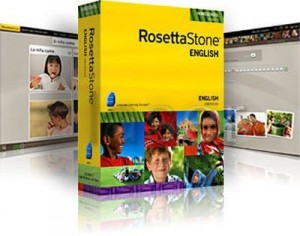
Rosetta Stone is a great example of scalable education. People are willing to pay far more per minute with Rosetta Stone than they are a Tom Cruise movie. There is no practical limitation to the number of students, or "customers", Rosetta Stone can reach because it is in a scalable distribution system.
Take the company Rosetta Stone, Inc. The company was founded in 1992, so has been around less time than Tom Cruise. It teaches people how to speak and read different languages. Only, instead of limiting the skill to a single teacher in a single classroom, the lessons are recorded on video-based software so there is no practical limit to those who can take advantage of the knowledge.
Customers pay less for automated software such as Rosetta Stone than they do for personal instructors (e.g., they may pay $1,000 to $3,000 for an introductory German course but pay $249 for a comparable software package teaching German), mostly due to the fact they can interact with a teacher one-on-one. They can speak to him or her, get feedback, and possibly even learn more rapidly (if the teacher is good).
Today, though, Rosetta Stone has a market capitalization of almost $458,000,000. It generates $252,271,000 in annual sales and pre-tax operating profit of $20,532,000. Fewer people buy Rosetta Software each year than see a Tom Cruise movie, but the fact they are willing to pay a lot more for knowledge than entertainment means Rosetta Stone has a far higher net worth than Tom Cruise does, amassed in a shorter period of time. (Some of this is due to the fact that Rosetta Stone doesn’t rely on a single person whereas, if Tom Cruise died, his movie career for future films is over … unless he played a reanimated zombie.)
The Summary
In short, the bottom line is:
- On a per customer and per family basis, teachers are far more valuable than movie stars and individuals are willing to exchange a much higher percentage of their “best efforts” for the skill of the teacher than they are the entertainment of the movie star.
- Movie stars are less valuable, relatively, but can reach more people due to scalability. As such, they provide a much smaller service for much less money per customer but because they provide it to more absolute customers, they earn higher absolute dollars.
That is: A teacher is far more valued by society on a microeconomics level. A movie star provides more value on an intermediate level. But on a super macroeconomic level, the earnings of all teachers, educators and professors combined would dwarf those of all actors and actresses, including the Tom Cruises, because society has far more gainfully employed educators than it does actors and it is willing to pay the average educator more than the average actor.
As I said in the beginning, the mistake from which you suffer is common because your model was incomplete. On both a microeconomic and macroeconomic level, teachers are paid more and more valued by society. There are a few individual actors and athletes that utilize the economic law of scalability so that their absolute earnings are enormous.
This is in no way inconsistent with the idea that that what we give, in a free exchange, represents our relative value to the civilization. After all, if I were to give up my role as an investor and start sweeping floors, my “reward” from society would be fewer claim checks on my fellow man to exchange for the things I desire. By necessity, the cashmere socks would be replaced with cotton and the Versace eye glasses with a cheap knockoff.
That means when a school teacher buys a $400 necklace at Tiffany & Company and Angelina Joli buys a $400,000 necklace at Tiffany & Company, both are exchanging their best efforts for the best efforts of others. The difference is, the school teacher has provided more value to fewer customers and the movie star has provided less value to far, far more customers. It the teacher can convert her knowledge into a scalable system, like Rosetta Stone, she would likely be richer than the rare success in entertainment who made their money with scalability.
Reader Comments (14)
Comments are presented chronologically, with replies indented beneath the comments to which they respond.
dbrowdie
October 12, 2010
Joshua,
First I'd like to say that I'm a regular reader of your blog and that I admire a lot of what you've done with your life. I'm planning on applying the berkshire hathaway model you've described many times to my own life as well, and hopefully someday I'll be in the same position as you are: very financially secure at a young age and poised to continue huge growth into the future.
I was wondering if you'd be willing to provide your thoughts on improving education in the U.S. You touched on teachers' unions in this article, and I think it could be very enlightening if you could share a more complete hypothetical model of how we could fix all that is broken within our education system. I just graduated from a public high school in June, and over the years I've experienced a lot of what's good and what's bad about public education in the U.S. The problems I've come across seem to be harder to solve, or at least the solutions are less obvious, than those in other segments of society.
Aside from that, I've been meaning for a long time to ask what you specifically think someone in my position- a young person just leaving high school and entering college- should do to end up in a position similar to yours at a similar age (I believe you're about ten years my senior). I'm currently in a special program for mathematics and economics at an elite university, and I've been told many times that my opportunities in this position are enviable. However, a lot of the advice I've read from you has surpassed the more common notions on many subjects, and I suspect that what you may have to say would be more helpful to me than the very conventional advice I've received thus far.
I completely understand if you don't have the time to respond to either of my inquiries, and the second one is admittedly specific to my situation. I apologize for placing that second question in the same message, but it seems to be as appropriate a means as any I could find to submit the question.
Thanks,
Dylan
Joshua Kennon
October 22, 2010
Replying to dbrowdie
Dylan,
I'm working on a response for you. It is half written; I'll finish it as soon as I can.
Joshua
Joshua Kennon
October 27, 2010
Replying to dbrowdie
Dylan,
Here is my response to your last question:
http://www.joshuakennon.com/letter-to-a-young-college-student/
crabhooves
October 12, 2010
Thanks! You explained it well, I was awarecof this concept, somewhat dimly and ineloquently though. I think your original point deserves an addendum for those not deeply versed in economics, it could easily be read as your income directly translating to the value you provide. Without people taking into account some people provide higher value and are valued higher but earn less becausec of scalable economies.
I stand by the second example I gave of a foster parent who provides immense value to people who aren't able to return it monetarily. Though I accept it may be an outlier, I still don't see how that case fits into your economic system. I'd also be curious to read what you think of unions in the future, you've made a great case for performance pay grading, but can unions be valuable in other circumstances? I don't know, I'm still trying to form an opinion on them. I tend to see unions and companies engaged in a kind of tug of war, the unions always want higher benefits and protections for their members and corporations typically want less. So it's about finding a happy medium or the rope goes flying to the extremes of one end. I really don't know though, unions work differently in Australia so I haven't had direct experience with American ones.
Kwame
October 12, 2010
Scalability, I never really paid attention to it in that manner.
Thanks Josh.
The Husband of a Teacher
October 6, 2011
Dear Joshua,
I enjoy your articles and find many of them to be full of useful information. But I feel your premise that teachers get paid more than Tom Cruise is inherently flawed. Your lesson on scalability and macro and micro economics is invaluable, but using it to prove that teachers supposedly make more than famous movie stars is akin to telling a child that TEN cents are worth more than ONE measly dollar, because ten is obviously a bigger number than one. Only very innocent children fall for that.
Actors get paid royalties which is scalable passive income, true, but they also get a paycheck simply for showing up to work and acting, and for Tom Cruise, that paycheck is far more money than any teacher receives for showing up and teaching. Paychecks don't lie, and when you compare paychecks divided by the amount of time spent on the job, it becomes glaringly evident that teachers do not make more than famous actors, or major league baseball players, and many teachers even make less than the cable guy.
And ultimately it is that paycheck, not micro and macro economic shenanigans which states how much our society values, or rather de-values, educators.
As for non-monetary compensation, like say... respect, actors and professional athletes, and even the cable guy, are treated far nicer and with greater deference than the average teacher, by both children and their parents.
But none of this is surprising. Movies, baseball games and cable TV are far more fun than being forced to sit quietly at a desk and do nerdy math(shudder) by some horrible slave driver of a teacher. Something the average person begins to resent in childhood, and continues to resent into adulthood. Since the majority of our society is made up of these, school hating, teacher resenting, math-phobic people, it is no surprise at all that teachers are less valued in our society than even the cable guy.
Our nation is already paying dearly for the low value we place on education and educators in our inability to produce enough skilled technicians and scientists to compete with other nations. And our unwilingness to pay teachers more in order to attract talent into the profession will cause us to continue to pay dearly in the future. Many current teachers are leaving for greener pastures, and those that stay can no longer in good conscience, recommend teaching as a profession to younger generations. But then, maybe a teacher shortage is what we need.
Teachers do not make more than Tom Cruise.
Oh, and acting isn't a Free Market Enterprise either, the Screen Actors Guild, which is a fairly influential union, makes sure of that.
I enjoy your work, and find your personal sucess to be inspiring in spite of my disagreement with this particular article.
Sincerely,
The Husband of a Teacher(Yes, I may be a little biased.) 🙂
The Husband of a Teacher
October 6, 2011
Replying to The Husband of a Teacher
Success...arg...annoying typo...perhaps I should have paid more attention in skool. 🙁
Joshua Kennon
October 6, 2011
Replying to The Husband of a Teacher
Welcome! Glad you like the site.
Economically, both your statement and my statement are true. How can that be the case? You are talking about aggregate compensation. I'm discussing per capita compensation. It is true that Tom Cruise makes far, far, far more aggregate compensation than a school teacher. His per capita compensation is a fraction of that same teacher, though.
Why would I take the time to write and explain this? By not stating the implicit lesson and making people "reach for it", more folks are likely to get it (and when they do get it, it's more likely to stick). Since we are in the comments section, not everyone will see it so I'll just state it explicitly: If want to make more money, sometimes the answer is to take a much smaller form of payment from exponentially more people to drive up your total aggregate compensation, while simultaneously reducing hours worked. Stated more directly: The lesson only appears, on the surface, to be about teachers. It's a lesson in economics and personal income in drag.
I agree with your concern about the state of the education system in this country. I spent several years researching and analyzing it, just as I would an investment or business opportunity, and have become convinced there are a few ways to restructure it so that it works better for everyone. Part of my is persuaded, based upon the evidence, that the existing school system is setup to 1.) serve the financing needs of the political education lobby, and 2.) to institutionally segregate and lock out poor, minority (esp. black) students from the better school systems. (I believe the motivation of the latter is more about culture and class warfare than it is about race, but again, that is just as impression.) The result is the system doesn't serve anyone particularly well except those with a vested interest in the status quo.
Before I tell you how I think the problem could be addressed, you need to understand my priorities. If we don't have the same priorities, the solutions won't matter. Here are my core priorities and beliefs about education:
* There should be no limit on the compensation a teacher can earn. A great teacher might make $200,000+ a year, while a poor teacher might be below the poverty line so they are unable to survive, forcing themselves out of the profession, just like a bad waitress gets fired or a a terrible lawyer can't get clients and has to switch professions.
* A basic education is a core civil right that every child should be entitled to receive regardless of socioeconomic background, family status, race, religion, or gender. Not only is this good for them, it's good for us as a nation. The better educated and functional our citizenry, the lower the crime rate, the higher business profits, and the happier the general population.
* Not every child is suited for analytical, academic intelligence. That doesn't mean they aren't intelligent. If you spend your entire life judging a fish by its ability to climb a tree, it is going to believe it is stupid. That's tragic. Someone who may be terrible at chemistry might be the best cabinet maker or car mechanic in the world. Our current education system makes this person, who has considerable skills to contribute to society, feel worthless and like a failure, forcing them to bide time until graduation (or until they lose patience and drop out).
How do we reach that place?
* We need to create some sort of "voting" system that doesn't rely on arbitrary test results for ranking (otherwise, teachers have the incentive to teach to the test rather than actually teach) where each child in a public education system is allowed to spend a certain amount of his or her respective tax dollars or points bidding on a specific teacher they desire. Based upon aggregate demand, teachers with the most votes get the highest paycheck. This would work because 1.) parents as a group know exactly who the 'good' and 'bad' teachers are; so do the spouses of teachers, most teachers themselves, principals, and community members. Such a system would instantly reward a 25-year-old great teacher that is helping a kid 'get it' but starve a 60-year-old math teacher that everyone hates. The schools would have the best incentive to put together an all-star lineup of great teachers, otherwise they would go bankrupt and have to shut down due to a lack of funds. This also levels the playing field between the rich and the poor in the education system. In most school districts, it's the well-connected parents that can wrangle a spot in a certain class for their kids.
* Each subject should be structured as a stand-alone grade level. It makes no sense for someone who does perfectly fine in everything but social studies to get held back. Instead, you should have K-12 math, K-12 science, K-12 physical education, etc. The college system works a lot better than the system in place now in the K-12 system because the latter was put together for one reason: To mass educate people coming off the farm and into the factories during the second industrial revolution. That time has passed. It is now going to assure nothing but a ticket to the unemployment line, with the kids who study computer programming or engineering doing much better. This would also help great teachers focus by subject. I, for example, would be a good teacher. But I'd be a phenomenal business teacher. If I could earn six-figures, focus on the subject at which I excel, and help make lives better, I would have considered a primary occupation in education. But, frankly, it just didn't pay well enough.
* We need to develop alternative forms of education, such as trade junior highs and high schools, that teach skills and allow students to graduate at 15 or 16 years old so they can begin being productive members of society. On a related note, there is considerable evidence the current classroom environment is structured in a way that benefits girls and punishes boys for what are basic, genetic, and biological traits. This, in great measure, explains the disparity between educational attainment rates by gender.
KansasKate
October 9, 2011
Replying to Joshua Kennon
"Each subject should be structured as a stand-alone grade level. It makes no sense for someone who does perfectly fine in everything but social studies to get held back. Instead, you should have K-12 math, K-12 science, K-12 physical education, etc."
I attended a grade school like that. It was wonderful. Sadly, many (if not most) of those schools closed in the early 70s.
Joshua Kennon
October 6, 2011
Replying to The Husband of a Teacher
P.S. There are a few, key reasons teachers are so disrespected in society. Most are founded in psychology. The core reason, though, is this: The current education system is an anachronism that is no longer a guarantee for a good job. The purpose of education for a vast majority of the population is always going to be the ability to earn a living, feed a family, and afford shelter and comforts. It's a biological imperative. A high school diploma no longer provides that and there aren't a lot of bridges to the higher education attainable beyond high school unless you already come from an upper middle class or higher demographic.
This failure is personified and taken out on the most visible representation of the system: The teacher. No one really hates the DMV worker or the IRS agent. They hate what those people represent. Unless you are wealthy in this country, or happen to live in a very unique school district, K-12 education is an abject failure that no longer serves the needs of its customers. Teachers, personified, represent that failure even though it isn't their fault. To a working family, they are a symbol. To the guy who pays a lot of taxes, he feels like he's forced to subsidize failure because the current education system has virtually no ability to adequately prioritize subject matter. (e.g., It is a waste of time to teach 95% of kids trigonometry or calculus. Instead, they should learn the things that destroy most families: how a checking account works, how credit cards work, how insurance works, how calories and nutrition work, etc.)
It's mostly based upon the "mere association" mental model. It's not the teachers themselves people hate. They hate the system, what it's doing, how much it costs, and the fact everyone knows it is broken but nothing is getting fixed. That all gets projected onto the teacher.
That explains why you don't see this same vitriol, for the most part, in the upper class private schools. There, the idea of growing up and being a professor or working in the educational field is considered prestigious.
Gilvus
October 7, 2011
Replying to Joshua Kennon
"...judging a fish by its ability to climb a tree." I believe that is everything wrong with No Child Left Behind in a single phrase.
How do you feel about autodidacticism? Or, more specifically, encouraging autodidacticism in students. There are many great people who received little to no formal education (e.g. Benjamin Franklin). In fact, from the things you've written about your early years it seems like you taught yourself finance, investing, and economics better than your high-school teachers understood their own subjects.
agorist
November 6, 2011
Excellent article! Brilliant applied economics thinking!
Simple
February 1, 2015
Teachers are a dime a dozen. Successful actors are one in a million.
Jeff
November 1, 2015
FYI: Your link to " Exchange Your Best Efforts for the Best Efforts of Others" is broken.