

Something has been bothering me. I haven’t really gotten into it on the blog, but the case studies I’m doing on the furniture industry make me very uncomfortable. For the past couple of decades, there has been a drastic increase in the percentage of consumer furniture and goods manufactured using a material known as MDF. The average guy on the street probably isn’t familiar with the term, so it is understandable some of you might be asking, “What is MDF?”. It is an acronym for Medium Density Fiberboard.
Technically, MDF contains a mixture of wood solids, wax, and resin bonded together under high temperatures and high pressure to create a uniform wood-like product that is far cheaper than real wood. In layman terms, MDF is sawdust held together with glue; sort of a higher quality (that’s an oxymoron, in my opinion) material that serves as the base for the piece-of-trash furniture you get from office supply stores or certain shall-not-be-named furniture chains. I’ve heard some individual furniture makers say they believe casegood furniture constructed out of a core of MDF might have a life span of 1/10th or 1/4th that of something made from solid wood, properly constructed. To be fair, it also costs roughly 1/4 to 1/10th as much as real wood.
If that weren’t bad enough, a lot of MDF is manufactured using formaldehyde, a known human carcinogen. Cutting, sanding, or releasing particles of MDF into the air might be a high risk and should be avoided. If the furniture isn’t properly sealed, the MDF materials can leak formaldehyde for years, pumping it into your home or office. Why on Earth would you want something like that in your life? Your kids sleeping in it? Your family hanging out by it? Your air filled with it? It’s asinine. Do a quick Google search on the topic to learn more. It’s scary.
Are Manufacturers Purposely Selling MDF Furniture to Unwitting Customers?
Manufacturers and retailers now sell furniture constructed using MDF as a core material, then cover it with a thin sheet of real wood veneer. For complex pieces of veneer work, I understand all of the arguments about using MDF as a substrate for veneering and, fine, I get it. I don’t like it, and I wouldn’t be too keen on buying a piece with it, but okay.
However, I believe that many consumers see the real wood and have no idea that he or she paid thousands of dollars for, what I consider to be, a giant pile of sawdust that could not hope to compare to a solid wood alternative. They are going by brand names of furniture companies that were quality in the past, not realizing that those businesses are no longer selling the same product!
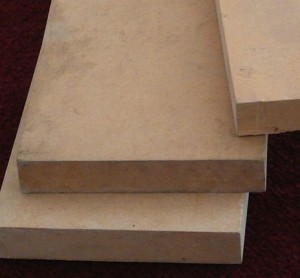
It doesn’t even occur to many consumers that they are buying MDF, a type of engineered wood product, not real wood.
In other words, I am of the opinion that manufacturers of many mid-tier and higher-end furniture brands unknowingly switched their product without adequately disclosing it to the consumer. It would be like if your favorite hamburger joint slowly replaced the core of the hamburger with wood-like filler product, but failed to tell you. Instead, they bragged about using the “real” meat, which is true; they just use a tiny layer of it for the visible parts of the sandwich.
The MDF question gets tricky when it comes to certain veneered furniture. I fell in love with a pair of carved wooden bookcases featuring gold-leaf accented pineapples. I had intended to buy several sets for my office since my primary responsibility is to read and make decision. Bookcases are really the most useful piece of furniture I own, besides a desk.
The bookcases are manufactured by one of the best names in the furniture business, with one of the best reputations for furniture quality. The price tag was not insignificant. In order to alleviate that tiny bit of doubt in the back of my mind, I wrote the company and asked if the bookcases contained any MDF. Their response? The entire thing was built on an MDF core! Sure, it is supposedly a high end MDF product but the idea bothers me. We’re not talking Walmart or IKEA here; we’re talking a furniture company that makes individual pieces more expensive than some cars. Yet, when you’re dealing with a rare, expensive veneerers, there are woodworkers who emphatically insist it is the only way to go, substrate-wise. I still can’t bring myself to pull the trigger on the purchase because the presence of MDF bothers me that much. (They are so beautiful I’ll probably end up buying them, anyway.)
What bothers me more? I find the fact that the use of MDF as a core material wasn’t disclosed prior to me asking completely inexcusable. How many people take the time to write? I think most reasonable people assume that furniture that looks like wood is, in fact, wood. That may no longer be the case. That, to me, is an ethical failing. It may be legal under the current laws, but it isn’t right. It isn’t how a company should behave.
This Isn’t the First Time an Industry Has Tried to Cut Corners By Using MDF
Back in the 1990s, there was a class action lawsuit when one particular company sold MDF as siding on households. Long story short, it began to rot and get infected with fungus once it got wet from the rain.
From a product liability standpoint, I’m shocked that a lot of businesses are willing to engage in the distribution of items containing a lot of MDF. Although I’m not convinced we’re in asbestos territory, even with the formaldehyde cancer risk, I do think that MDF is a ticking financial time bomb waiting to happen in terms of class action lawsuits, especially in cases where the consumer had no reasonable cause to believe that the furniture contained, or was primarily constructed out of, MDF. I think that is true, even if it turns out that MDF poses no safety risks whatsoever. (Do you remember the lawsuits caused by asbestos? People who were hardly sick were able to bankrupt entire companies because of things that happened 40 years prior!). Trying to save a few bucks could end up costing a few thousand. At least, that’s where I see it going in the end. I hope I’m wrong.
To be more blunt about it, I would not be comfortable with a large percentage of my net worth in any company that manufactured or distributed a lot of MDF products. I think there is a contingent liability issue there from dust particles and outgas risk that no one is discussing or acknowledging outside of the woodworking community. Again, I hope I’m wrong.
There Will Always Be Room for Quality
The big question: When did people think it was okay to start producing and selling trash? In the piano industry, Steinway and Bosendorfer have both managed to survive just fine. You don’t see them making the pianos out of MDF. Why do furniture makers take less pride in their work? Why do they think so little of themselves, and their legacy, that they think this is an acceptable compromise?
I think the government should require any product containing or constructed with MDF to carry a notice label. The consumer has a right to know what he or she is buying. Putting a nice veneer on a cheap substrate is like replacing the interior components of a Lexus with an Edsel and still trying to sell it as a Lexus. It goes against my sense of fairness and honesty. For me, it is further proof that buying high quality furniture can save money in the long-run and that you should only do business with companies that are upfront with you.
To learn more about MDF, head over here and skip directly to the comments section.
Reader Comments (108)
Comments are presented chronologically, with replies indented beneath the comments to which they respond.
Don
February 16, 2012
I knew most furniture was made with MDF (although not by that name...), but didn't know of the, to me, substantial side effects of owning such furniture... Has me reconsidering a large desk and bed (110 of each for a Friary about to be built!) purchase!
Thanks for the heads up!
Friar Don, OBR
http://exposeyourblog.com
Gilvus
February 16, 2012
Hi Joshua, I'd like to weigh in on this. Formaldehyde is a known carcinogen only if your body uptakes a certain quantity of it. Below that point, your body repairs itself far more quickly than it is damaged. Take radiation, for example - bananas are radioactive enough to trigger sensitive Geiger counters (I'm not kidding)! But the dose you get from eating a banana every day is so small it doesn't even matter. For as long as life has existed (all 3.5ish billion years of it), there has been damaging radiation from uranium in the ground and UV from the sun, but in most cases cellular life regenerates faster than damage can occur.
You like to cook and bake, right? Then you know about the brown crust on bread, the savory flavor of seared meat, and the brown color in caramelized sugar. These forms of browning are oxidative, which makes the food very tasty, but also creates free radicals (chemically reactive particles). In effect, you're creating carcinogenic materials when you make tasty food! That's why the antioxidants you find in tomatoes, blueberries, etc. can decrease the risk of cancer because they "take one for the team" and neutralize the free radicals' effect. Are you really increasing your risk of cancer by making yummy food? Possibly, but I wouldn't give up the experience and you probably wouldn't either 😀
Going back to the formaldehyde example, you're probably suffering more from gassing up your car because you're inhaling a concentrated dose of vaporized gasoline (which is made of BTEX - also carcinogenic). But we know from experience that periodic exposure isn't bad - just don't huff the fumes. Any formaldehyde left over in the MDF probably comes out at too-low a concentration to do true harm to your body. If you can't smell the formaldehyde, you're probably okay.
TL;DR: formaldehyde won't kill you unless you huff it. That said, I agree that the non-disclosure part about MDF is B.S.
Spingus
February 17, 2012
Replying to Gilvus
As a follow-on, formaldehyde is also produced naturally in our bodies albeit in small amounts (have to get to bed so I apologize for not digging up a reference). Formaldehyde by itself is not evil --it's extremely useful in fact as a preservative in histological applications as well as things like vaccines. It's the dose that matters.
Another similar example is phenol. It's a super nasty smelling burninating chemical that is used in molecular bio labs and various industrial applications. It can be absorbed through the skin and will murder your liver. MSDS: http://www.sciencestuff.com/msds/C2221.html
Now, check out the ingredient list on your lip balm...at least on the brands I have kicking around in my purse and house all have phenol.
There are all sorts of substances in our environment that can affect our health adversely when taken together as an aggregate dose. It's probably a good idea to minimize as much as possible --like avoiding MDF in furniture and sticking with real wood or metal.
Hack Jobaugh
January 19, 2015
Replying to Gilvus
The isotope in bananas that is radioactive is potassium - K40. So yes, all humans are radioactive because we all need potassium. So no need to shy away from bananas because all sources of potassium will contain the isotope K40. And yes, soil normally contains three radioactive materials: potassium, thorium and uranium. And the air that surrounds us contains radon. And yes, our cells are constantly repairing themselves from effects of the natural environment.
Bob
September 6, 2015
Replying to Hack Jobaugh
Just a quick note Potassium aka K40 is just one of the ingredients that cause your heart to beat. So don't shy away from bananas people it just might kill you....not.
KansasKate
February 21, 2012
"The big question: When did people think it was okay to start producing and selling trash?"
I think it began with the Industrial Revolution.
yankeebean2000 .
September 27, 2014
Replying to KansasKate
I don't think people necessarily think it's OK. They just want to pay less and this is why these products sell. Everyone complains the food and services of the airlines is atrocious but they also want low fares. If people insisted on buying only the more expensive real wood products, MDF would die a natural death. Of course the quality of MDF furniture is inferior. But it's cheaper!! Can't have it both ways.
Ian Francis
February 23, 2012
I think you are exgaggerating the crappiness of MDF a bit, though I generally agree with you that furniture made from MDF (especially things like desks and bookcases) is junk. Why is this crap so popular? Because people are willing to buy it. The majority of people who are less fortunate do not understand the true cost of things. They don't realize that buying a cheap bookcase that only lasts a couple years will cost them more in the long run than the expensive one because you will have to buy 2 or 3 or more of the cheap ones to last as long as the nice bookcase. This is why places like Rent-a-Center and Aaron's are in business. Is it really worth paying what amounts to twice the price for a TV so you can have it now instead of in a year? Absolutely not, but people do it all the time because they are impatient and can't wrap their heads around the actual cost of an item. People tend to not care about their future selves as long as it makes their current selves happy. This is yet another reason why the rich keep getting richer and the poor keep getting poorer.
Joshua Kennon
February 24, 2012
Replying to Ian Francis
That sums it up beautifully: "People tend to not care about their future selves as long as it makes their current selves happy. This is yet another reason why the rich keep getting richer and the poor keep getting poorer."
Hey, also - I have a Mail Bag submission question that I'd like you to take a look at sometime soon if you could. I think you might be able to add a unique perspective to some of the trials his family is experiencing right now by virtue of your own life experience. I'll forward it to you via email. Don't feel obligated or anything - if you have a few minutes and wanted to include your thoughts, I thought it might help him. If not, that's fine, too.
garbonzobeenz1
July 6, 2012
I have to agree with you Joshua and disagree with Gilvus(below) on this matter. Eighteen months ago I did a remodel in my house and had custom shelving built using white laminated MDF. It was less expensive than the real wood (although I wanted real wood I was talked into the MDF by the builder) Within 2 days of having it all installed I became sick. I have continued to be sick and have gotten worse. I have been in and out of the hospital and my quality of life has really suffered. Most Dr's know little to nothing about formaldehyde and they cannot find a treatment that helps me (my problems are with my heart & lungs as well as headaches. no cancer. . . yet) Even though the built-ins were sealed (after I got sick) and then finally removed because the formaldehyde gas had filled the room so much that you could smell it and feel it when you went in there. The room has been painted several times,scrubbed & cleaned, filtraition systems brought in and it was sealed off from the rest of the house. I have used NASA reccomended plants to "eat" the gas, and tried everything I can to fix it. So I now have an entire room in my house I cannot enter because of MDF! Not everyone is as sensative to the formaldehyde gas as I am, but I do believe that products should have to be marked if they contain formaldehyde/MDF. On a side note this nasty substance is in so many of our daily products now it is almost impossible to avoid it.
Devin Baillie
August 18, 2014
Replying to garbonzobeenz1
If you removed the MDF, and then ventilated and cleaned the air, and it's still a problem, THEN IT WASN'T THE MDF. Assuming it's not coincidental (which it very well could be: people get sick all the time just by luck, even after they've done some remodeling) there's probably something else going on. Maybe the remodel uncovered some mold, or exposed something else that it harmful (or that you reacted to). If you were really that sensitive to it, you'd never have been able to set foot in a furniture store in your life.
Blaming the MDF and doing your best to remove it may have been logical at the start. Continuing to fixate on it is just preventing you from figuring out whatever the actual cause is, and either repairing it or getting treatment.
Marmar
May 31, 2016
Replying to garbonzobeenz1
I worked with formadehyde in a lab for 3 years in a lab did not have a hood vented to the outside. My papers, shoes, purse all smelled like the stuff for months after I left. People would always tell me I smelled like the lab. I did not suffer any adverse effects at the time (of course, long term effects are as yet to be seen). You may have reacted differently to your exposure to formaldehyde. But I am mentioning my example because it is possible you had an exposure to something else around the same time that could have caused your issues. Worth considering.
Michael Scott
October 10, 2012
Joshua; As a furniture manufacturer importing custom product from China, I would like to challenge a couple of your beliefs concerning MDF. The main reason manufacturers use MDF or particleboard (chips instead of strands of wood) is for stability. Solid wood has a tendency to warp when shipped into disparate climates. Solid wood can be used as a core material, as can plywood, with a slight increase in cost. Veneers eliminate the necessity of hand-selecting the nicest grain patterns, and give the panel the appearance that the customer finds most pleasing.
The formaldehyde can be an issue, however, we have used board that does not contain the substance for many years, and most manufacturers now use formaldehyde-free board.
As far as the use of MDF being deceitful, I find that many people are not aware of it's use, just as many are not aware of the use of plastic laminate on the surfaces of many items, or the use of melamine or, for that matter, the guage of sheetmetal used for the body, or the fiber count of the material used on the seats. Although the use of materials does have an affect on the durability and longevity, It fits the needs and the pocketbook of the customer. It would be very difficult to argue that product using MDF and veneers is somehow inferior to solid wood furniture except in the case of repairability. With solid wood under the veneered edges, it would hold up every bit as well.
I am impressed with the availability of all kinds of furniture in the US market, thanks to imports from other countries, and thanks to hand-craftsmen that use only the best materials and shun the use of power tools. Free enterprise is a beautiful thing.
Les
January 11, 2013
It's really hard to find good, straight lumber these days. So "solid wood" doesn't necessarily mean good quality. The nice thing about MDF is that is flat and straight. On the positive side MDF is recycled sawdust. Hardwood forest is dwindling, and the trees grow slowly. So in an ideal work everyone could have hardwood furniture but that is not sustainable or possible.
KansasKate
June 27, 2013
Replying to Les
Trees do grow slowly. However, most of the furniture in my house, as well as the house itself, is from the 19th C. Yes, a walnut tree was sacrificed to make my bedside table (for example), but in the 125 years since then, there has been ample time for another generation (or two) of trees to grow to maturity.
Will today's MDF furniture still be in use in the mid-22nd century? I seriously doubt it.
Ben
January 19, 2013
Everyone only talks about this cheaply made furniture from places that require you to assemble it at home or large chain furniture stores. MDF can be excellent if properly assembled. I mean really, even a solid wood desk you assemble at home where the only tool required is a screw driver is going to fall apart very fast. I have seen real wood furniture fall apart from lack of glue, nails, screws, etc... It is all in the construction of it. So this blog should be about the poor workmanship and not the poor quality of a good product.
It is like comparing Plywood to OSB. When osb first came out plywood had it beat, now plywood is awful. The layers peel apart and it warps so easily as osb stays straight and together unless exposed to water for a long period of time. I just think your article gives the wrong impression of a good product. Would I rather have solid wood? Of course. Can mdf be as good? It comes very close.
20 years construction experience.
Woodnova
March 16, 2013
We are a MDF manufacturer. I would say MDF has many 3 levels of Formaldehyde: E0, E1, E2. To build indoor furniture it's better to use E0 MDF and E1 MDF.
Even you use E2 MDF, most cases MDF is veneered with papers or natural veneers, the Formaldehyde emitted to air is very limited.
It's a very good way to save the natural resources to fulfill the greed of the Whole Planet.
Wayne Fields
June 26, 2013
To fulfill the greed of the whole planet? Greed is the inordinate desire to possess wealth, goods, or objects of abstract value with the intention to keep it for one's self, far beyond the dictates of basic survival and comfort. whereby, it seems to me, greed can hardly be attributed to the end user, in this case the consumer, because they desire a bed frame, desk, or home that is made of actual wood (vs. wood byproduct). it seems more likely that greed is found in the side of manufacturers who create an inferior product and sell it for the same price to increase the company's profit. its not about natural resources as much as it is about cutting cost.
spingus
June 26, 2013
Replying to Wayne Fields
So maybe you should take a closer look at the comment and allow for the likelihood that English is not his native language. I'm going to say that if you simply sub in 'need' for 'greed' you'll get a better idea of what the poor guy is actually trying to communicate.
btw, this conversation is over a year old and the post you're responding to is 3 months old.
Wayne Fields
June 27, 2013
Replying to spingus
Hmmm.... perhaps that was a typo. I did however read the comment closely, as opposed to brief once-over. The last sentence was a separate thought from everything else. But my point is: The reduction in the use of actual wood and the increase of wood byproduct "quality" furniture is for no other reason than corporate greed. Many of the above posts are riddled with excuses for MDF. And yes, this may be an old post... but somehow, here we are today. 😉
WoodChip
June 29, 2013
Just looked at my lip balm...Phenol 0.4% and is the #3 active ingredient. I have been using this stuff for 30+ years and still kicking!
Sharad
September 5, 2013
Wood & Plywood are tested and tried materials for years and no known health hazards. Why should I go for MDF unnecessarily? Just to save a few bucks??
SDB
March 9, 2014
I agree 100%...that is why I have gone to craigslist to buy all of my nice furniture...I get old Drexel, Henredon, etc and simply wait for what I want and spend 1/10th of new. I bought a very nice looking (staring at it now actually) tv stand....advertised as "solid wood, needs assembly". It does look great, and overa quality is fine. The problem is that is is actually mdf, and the top piece (which feels like it weighs 100 lbs by itself, very thick piece) immediately bowed under the weight of a 50 in plasma TV. THis was for TV's up to 55 or 60 in I believe. The bowing is so significant that the 4 doors underneath do not open/close correctly. I put a support piece under the bottom but no use...it is bowed allready. It sucks that I spent $400 and an hour putting it together, and was actually impressed with the look of the finished product. Of course using the little doll rods and putting screws into the fiberboard just sucks soooooo bad...you know you get one shot and no way its coming apart and then back together again. I got to this page after looking AGAIN for a solid wood tv stand (which I see are actually abot $1300 plus for a fairly nice ornate solid wood one) and see they advertise SOLID WOOD and in the fine print it says "Materials: glass, wood, mdf).
Alan Sloas
March 17, 2014
Have you thought about finding a local woodworker to make custom shelves for you? A local custom woodworker could make exactly what you want out of real wood!
Lipstickinnd
April 27, 2014
I used to agree 100% with you Joshua - until I started picking out cabinets for our house we are building. I thought ALL high end cabinets were made with solid wood. I wouldn't have ever thought there was an option to have that 'pressed wood crap' on something as important as cabinets! Boy did I get educated. I had a quote from a cabinet maker for all wood cabinets. I am going modern, so the doors are slab, nothing else on them, just a slab door. Not shaker style. The bid came in at $60,000. Well over my allowance for cabinets. PLUS - these cabinets came with a disclaimer: The doors WILL warp at some time. I couldn't believe it. So my builder told me to check out a couple cabinet makers that make frameless modern cabinets. I visited those places and learned a lot! Because of my modern style, slab flat panel doors, MDF is the recommended thing. They guaranteed no warping - I loved the style and how they looked. So I totally get what you are saying. It's hard to wrap your head around. There are some top furniture designers that use MDF because they don't want their masterpieces warping! Crazy I know! So at this time I think I'm going with cabinets that use both - solid wood and MDF that will be properly sealed so warping won't be an issue. The price met my allowance and I'm able to use quartz for countertops throughout my house. I think I will love it.
Joshua Kennon
April 27, 2014
Replying to Lipstickinnd
When we were re-doing our house, the furniture companies we worked with told us the same thing about certain designs. If you go with a modern design, especially, it's going to be almost impossible to get most of the layouts you see with wood at any reasonable price, and even then, it will be a mistake most likely because of the warping, which isn't problematic for traditional construction where it is mostly invisible to the eye. Consider the attached picture. The particular cabinet design is so precise that any warping could make it impossible for the other drawers to function, too, plus destroy the entire look. The fact the kitchen won't last 100 years is meaningless because most people redo their kitchens every 10-30 years, anyway. Plus, the MDF used in a construction like this is not ordinary MDF like you find in IKEA furniture, it's a much more expensive, higher quality, advanced version.
So, definitely, a few exceptions exist to the wood-is-superior school. It's a trade-off between longevity and precision/stability. As long as you, the consumer, are aware of what you are giving up in the trade, and are still happy to pay the money, it's a fair deal.
I ended up contacting the company I wrote about in this post, asking them to build the bookcases for me in solid wood, instead. They said they could do it, and it would be a much higher price, but if I wanted the complex use of veneers and finishes on the original, they highly recommended I go with the upscale MDF material core so that it would avoid destroying the veneer, which was grooved into the columns and around multiple corners and joints, when the underlying wood would inevitably warped. That warping isn't a problem on a traditional bed, dresser, or desk, because it's mostly not noticeable. Here, it would be.
I liked the piece so much, I bought it, anyway. I know it won't last 100 years, but it will at least look brand new for the next 25 years.
Most people don't have the luxury of making that decision, though, as they aren't looking at the sort of higher-end MDF you were in your kitchen cabinets or I was in these bookcases; they're comparing something like this IKEA bed to something like this Henredon bed, which is 50x the price but made from solid mahogany with matching swirl mahogany and ribbon stripe mahogany veneers. Those two products are worlds apart. I'd go for the Henredon solid mahogany every single time.
KansasKate
April 27, 2014
Replying to Joshua Kennon
Most of my furniture is 19th century. Off the top of my head, I can't think of any piece that is warped. Of course, it has been in homes, not stored in a barn for 50 years or anything like that.
But I agree with Joshua -- in the end, it's about making an educated decision.
nvtncs
June 22, 2015
Replying to Lipstickinnd
If you worry about warping, you need to first make sure your room has the right temperature and humidity and then use what is called quarter sawed white oak.
MT
June 6, 2014
Even worse than companies not declaring MDF content, which I do believe they should, you can't always trust product listings. I purchased a "solid poplar" piece of furniture that I could tell straight out of the box was exclusively MDF, due to the heavy paint, lack of wood grain, and bumpy appearance painted MDF can have. It became more evident when I saw part was chipped off, revealing MDF already flaking apart. Something really should be done about disclosing MDF content in all products. Even if it eventually proves not to be dangerous, people buying products they believe are wood are getting a lower quality than expected. Thank you for an informative article.
dale allen
June 9, 2014
Quality inexpensive furniture can be assembled using MDF. Unless you just aren't a good maker. We have used MDF on Cruise ships for years with few problems. Fire restrictions pushed us in that direction. Using proper adhesives and fasteners our cabinetry needs to last at least 7 to 10 years depending on a ships refit schedule.
chrisimple
August 3, 2014
I try to test wood by knocking on it and hearing the sound... How does MDF compare for the knocking sound? I imagine the density and lack of reverberation will make it sound different enough to know it is not wood. {This is helpful when buying Not NEW pieces... or any without declared labels}
Store fixture engineer
August 8, 2014
On July 7, 2010, President Obama signed the Formaldehyde Standards for Composite-Wood Products Act (9 pp, 144KB, About PDF) into law. This legislation, which adds a Title VI to TSCA, establishes limits for formaldehyde emissions from composite wood products: hardwood plywood, medium-density fiberboard, and particleboard. The national emission standards in the Act mirror standards previously established by the California Air Resources Board for products sold, offered for sale, supplied, used or manufactured for sale in California.
Nearly 2 years before this article formaldehyde emissions limited so illegal to make, sell, or import MDF and particle board that does not pass these standards.
Andrew P.
April 3, 2016
Replying to Store fixture engineer
Obama to the rescue again! Riiiight.
Mike
August 13, 2014
I know this article is old as anything, but you should look into woodmiser, they make MDF that is mold resistant and formaldehyde free. I'm not saying it should be a preferred material, but if the company that makes the shelves you were talking about uses Woodmiser's MDF it won't hold the risks that you fear for your purposes.
yankeebean2000 .
September 27, 2014
I came across the article below while researching MDF and it's interesting because while, yes there is urea-formaldehyde in MDF, it's the parts per million (ppm) that seem to matter. So far, I have not found that it is banned in the U.S.
Q3. What is formaldehyde and where does it come from?
Formaldehyde is a simple but essential organic chemical that occurs
naturally in most forms of life, including people, some foods we eat and
trees. All products made from wood will therefore emit some naturally
occurring formaldehyde. It is widely used in the manufacture of
numerous products including shampoos, plastics, carpets, clothing,
resins and glues etc.
A range of materials found in the home or workplace may therefore
release formaldehyde. The US Consumer Products Safety Commission
provides the following information on formaldehyde on their website .
Formaldehyde is normally present at low levels, usually less than
0.03 ppm,(parts per million) in both outdoor and indoor air. The
outdoor air in rural areas has lower concentrations while urban areas
have higher concentrations. Residences or offices that contain products
that release formaldehyde to the air can have formaldehyde levels of
greater than 0.03 ppm. Products that may add formaldehyde to the air
include particleboard used as flooring underlayment, shelving,
furniture and cabinets; MDF in cabinets and furniture; hardwood plywood
wall panels, and urea-formaldehyde foam used as insulation.
Similar levels are quoted in the World Health Organisation (WHO) report WHO guidelines for indoor air quality: selected pollutants,
published in December 2010. This states for buildings, some of which
contain wood based panels, ‘levels on the average are less than 0.05
mg/m3 (0.04ppm) in homes and about half that in public buildings’. It
is important to note that these levels are from all sources, not just
building products. Website: http://www.hse.gov.uk/woodworking/faq-mdf.htm.
Des
January 13, 2015
I work for a firm which, in part, delivers joinery to the high-end
commercial and exhibit sector. Most of the stuff coming out of our workshops
will see years of service at usage rates equivalent to decades of domestic use –
and a lot of it is MDF. Proper jointing, substantial member/sheet thicknesses
and quality adhesives and fixings make for durable joinery regardless of
material.
The problem is what is made at the bottom of the market
generally; poor/flimsy construction and cheaper materials tend to come as a package,
hence the reputation of the material (which may be rendered into perfectly good
and highly durable products) is tarnished by association.
Finishes are again a matter of, well, finishes; if the
joinery has good quality, well adhered and polished veneer or a paint finish
carefully applied to thoroughly pre-prepared substrate then it will look good. What’s
underneath is moot.
Bob
September 6, 2015
Replying to Des
Des, you may have a small argument here but regardless of how its coated put it in a high humidity location(such as the gulf coast aka Texas around to Florida) or a place where it may come into contact with the slightest amount of water. You'll soon find out what your missing in this argument. Within days of contact with water or months of humidity the MDF will begin soaking up the water, yes even from the air. The MDF will begin swelling and rotting and growing fungus and who knows what else. This stuff would have to be covered top to bottom 360 degrees around with whatever water sealer you chose to use but of course then the veneer wouldn't stick to it for more than a couple of months tops(I admit I haven't done studies on this just WAG'ing it but I'll stick to my guess as long as I can).
BWie
March 25, 2017
Replying to Bob
There's moisture resistant MDF, Medex, that's perfectly fine for use in wet environments like bathrooms, kitchens, bars, etc.
Bodryn
February 16, 2015
I don't like MDF just because it is so insanely heavy compared to woods like pine, red cedar, etc. Heavy boards are just miserable to work with, for somebody who is used to real wood.
Target Furniture a Heads Up
March 13, 2015
TARGET KNOWINGLY SELLS FURNITURE, THEIR THRESHOLD WINDHAM COLLECTION, MADE WITH MDF. I BOUGHT A TABLE AND IT SMELLED HORRIBLY. WE WERE SICK FOR DAYS FROM WHAT WE THOUGHT WAS VARNISH BUT 1000 TIMES WORSE. LOOKED UP WHAT THIS WAS MADE OUT OF OR PAINTED WITH AND IT CLEARLY STATED MDF. IT CAUSES CANCER!!! AND TARGET KNOWINGLY SELLS THIS TO PEOPLE? UNBELIEVABLE! WE TRY TO EAT HEALTHY, EXERCISE, AND GUARD OUR HEALTH AND THEY SELL US THINGS WE BRING INTO OUR HOMES, THINGS OUR FAMILIES WILL BE AROUND FOR YEARS IN CLOSED UP HOUSES, THAT LEACH CANCEROUS SUBSTANCES INTO THE AIR. IM GOING TO PUSH FOR TARGET TO STOP SELLING THIS FURNITURE UNTIL THE MANUFACTURER CHANGES THE MATERIALS AND HOW IT IS MADE.
bardo
March 23, 2015
mdf has virtually no tensile or shear strength. It has great compressive strength. Do not buy bookcases that use mdf for shelves as they WILL sag in short order. the upright portions will work fine. Ask me how I know- Bob
Jeff
March 29, 2015
What about NAUF rated MDF? This is the only stuff you can legally buy in Canada. Does that solve the problem? I wonder if you have the same mentality about finishes applied to the surface of all pieces of furniture? Are you concerned with that at all?
Bob
September 6, 2015
Don't forget about mascara aka Bat guano.
Shelly
October 26, 2015
Pottery Barn sells this nasty stuff as well. This company would just assume harvest raw materials for building furniture from a nuclear fallout zone if they thought they could make an extra buck.
Andrue LeVestre
November 12, 2015
It's virtually impossible to steer clear of MDF besides cheapie furniture and flooring. It's under kitchen countertops, behind the dash of your car, backing that full-accessory entertainment center... just about anywhere there is a need for a flat, stable surface (let us please choose to ignore the effects of moisture on MDF in our definition of "stable" and stick to the comparisons with real wood products, materials that are dynamic during their entire lifespan in the tree or cut/cured)... you'll find particle board.
The part that I really do not know how to justify, though, within the industries that use the stuff, is how they evaluate the supposed economy. To cut, drill and manipulate wood you need steel-edged tools. For MDF, you need carbide tooling which can cost ten times more than its tool steel counterpart. It also adds to fabrication costs since a reliable bond really can't be nailed, screwed or stapled directly into MDF so are forced to drill pilot holes (well... yes... it IS done, but the bond is weak since those fasteners were designed to wedge between grain or cut threads) or use threaded inserts. So, I must assume a volume manufacturer may get a similar volume break procuring carbide blades and bits but the "casual" designer/builder must invest in expensive tooling just for the few times they must deal with MDF.
But we do kill fewer trees. So... the trees are healthy but the human population must genetically evolve their respiratory system to survive the increasingly-toxic living environment. Perhaps we need to drag all those MDF products outside, live in tents and exhaust the formic levels into the atmosphere? Running out of ideas how to cope, people. Sorry. 🙁
AJ
November 20, 2015
I just ordered a Crate & Barrel bedframe, per the website it is "Solid sustainable mango wood, mango veneer and engineered wood with a clove brown stain with lacquer finish. I emailed C & B and they replied: The only formaldehyde that is in our wood products is what is naturally found in the wood. We follow the highest standards and laws on what is acceptable in those contents. There is nothing else added. My wife is pregnant and I want no potential harm to the fetus. We are considering ordering a metal or iron frame instead. Any thoughts?
Rachel
January 3, 2016
Replying to AJ
Unfortunately, "engineered wood" is a fancy way of saying MDF. Crate & Barrel lied to you.
RangeTheLeafHolder
October 12, 2016
Replying to Rachel
I was just looking at a piece of furniture and it said "engineered wood". My first thought was "So, another wood for particleboard or that MDF stuff I've heard was best to avoid". It's sad, indeed.
BWie
March 25, 2017
Replying to RangeTheLeafHolder
Modern MDF doesn't add formaldehyde. The formaldehyde present (very, very little) is formaldehyde that is already present in the wood the MDF was made of.
A E
August 3, 2016
Wow. Mindblowing how dangerous MDF is and it's the only wood I've ever seen used in Resistant Material classes in schools.
crd67
August 4, 2016
You are confusing MDF with MFC! Sawdust indeed!
bryandisqus
August 18, 2016
This formaldehyde thing sounds scary, it's poison! Oh wait, there's chlorine in my water, fluoride in my toothpaste, bleach in my cleaning products and somehow I haven't keeled over yet.
Respect to the scientists and inventors (some of them even work for the evil corporations!) that, with hard research and creativity, come up with options that are as good or better than natural wood at a MUCH lower price point.
An0nym0usC0ward
January 23, 2017
Replying to bryandisqus
Except for the fact that mdf is not at all as good or better than natural wood, for most uses. For one, even without the formaldehyde emissions it's a bad idea for kitchen furniture - it will start to swell and deform within at most 4-5 years. It will be slow and unnoticeable in the beginning, starting in the less visible, less well ventilated parts, and increasingly fast and visible as time passes. As parts swell and absorb moisture, they'll also develop mold. I have yet to see kitchen furniture made of mdf or particle board older than ten years. In contrast, there are countless kitchen cupboards half a century old still in use, where I live, made of actual solid wood.
Mdf is useful for low strength parts which need to be cut along complex contours, and won't be used in highly humid places like a kitchen. Having no grain means it doesn't splinter on the edges when cut, and this allows for nice, clean edges without special precautions when cutting. But that's about it. It's way heavier and way less strong than almost any wood. (It's stronger than Balsa and less heavy than ironwood, if you will. Balsa is too soft for making toothpicks, ironwood sinks in water.) It also wears several times faster - a hardwood floor lasts for quite a while, even in areas with heavy human traffic, using mdf for flooring the same place begs for replacing it every year. There are very few use cases where using mdf is cheaper, in the long run, than using actual solid wood.
BWie
March 25, 2017
Replying to An0nym0usC0ward
MDF is way more diverse than you're portraying.
There's Medex for moisture resistance.
There's ranger for painting.
There's fire rated for hot places.
There's ultralight for wall paneling.
It goes on and on.
If you put a Medex walnut veneered door and a hardwood walnut door behind a commercial bar (a VERY wet place) and finish them the same the Medex will last longer and resist warping longer than the solid wood.
It's an engineered product, and y'all should trust the engineers and professional woodworkers when they tell you it's a better product in some cases. It's not a case of some manufacturers gouging, even the most virtuous and skilled craftsmen will state that MDF used properly is a good thing.
And breaking four figures isn't a lot for a bookcase. If you want to make it out of hardwood it's getting closer to 5...
An0nym0usC0ward
March 26, 2017
Replying to BWie
MDX is typically almost twice as heavy as softwood and even more expensive than some more common hardwood, such as white oak or birch. Properly dried and treated softwood still has an excellent moisture resistance and can look great.
Of course MDF used properly is a good thing. MDF was created for a very specific purpose: make it possible to build cheap furniture fast. That's what it's good for. I'm never going to argue with that. However, I'm not aware of a single use case where MDF is preferable to solid wood due to longer service life.
Bars specifically, besides being high wear places, need to change furniture every few years to stay fashionable. MDF is an excellent choice for such places. But I know quite a few old, long-lived pubs, in a few places in Western Europe, that have furniture more than 100 years old - made of solid wood - that still looks good and shows no signs of weakness. For thousands of years ships were made of wood, and meant to sail for decades, with some of them sailing more than a century. (The USS Constitution was still sailing, a few years ago, having passed two centuries of age, and still having a significant amount of the original material.) Show me a single modern ship made of MDF.
To understand why MDF cannot be more durable than solid wood, rot and other biological degradation left aside, you have to look at the physics of tear and wear in wood and MDF. MDF is tiny wood granules kept together by an adhesive. Typically, the adhesive is less elastic and stronger than the wood it binds. Wood, as a material, is weaker than many other materials, such a steel or stone, but has one property that no other material can match: fatigue resistence. Wood takes a few orders of magnitude more cycles than even spring steel. Even rubber takes fewer cycles than wood. In solid wood, this means extremely long life, provided the wood doesn't get damaged by other factors, such as rot. In MDF, regardless of how it is engineered, the different properties of the wood granules and the adhesive cause microscopic delamination to occur at the limit between the wood grains and the adhesive, or even the wood grains to split midway. Changes in temperature and humidity, a heavy truck driving by, loud music with strong low frequencies, all of these cause the process to advance a bit. For good quality MDF, this is a slow process, not affecting the material's strength and geometry for a long time, further slowed down by proper finishing. However, it's exponential, and much faster than similar damage in solid wood. Once grains become loose or broken, they act as levers on breaking bonds for neighboring grains and causing tear to the microscopic, sponge-like mesh of adhesive, and leave gaps for humidity to spread easier to the material's interior, making the process even faster and spreading it into the material's interior. Once the process has become advanced enough, it starts to be visible, and the structural integrity of the MDF board is affected. By the time that this has happened in MDF, damage due to similar factors in wood is barely measurable.
Fernando Sorensen
April 24, 2017
Replying to An0nym0usC0ward
I don't know in other countries, but in Argentina (at least where i live) hardwood (or good plywood) is expensive. The only thing you can get relatively cheap is some pine. So MDF is a good alternative for non-professionals like me that just want to make some functional furniture without going bankrupt. Of course y will LOVE to make some things with real wood, but if i have to spend too much money, it's a no-no situation.
CaptainKirk6
September 9, 2017
Replying to An0nym0usC0ward
you hit the nail right on the head: ...make it possible to build "CHEAP FURNITURE" , as in cheaply made and unworthy of normal human being....this is why normal 100% wood furniture costs so much. People are just fooled into buying low priced MDF furniture , thus driving price of the real wood furniture up....perhaps real wood furniture would not be so expensive if there were no MDF/particle board "short cuts" allowed....
An0nym0usC0ward
September 9, 2017
Replying to CaptainKirk6
Cheap doesn't necessarily mean unworthy of normal human beings. Cheap is usually brought about by technological advancements. I didn't say MDF is always a bad choice. If you don't live more than a few years in one place, say because you're a constructor specializing in hydro power plants, or part of the military, MDF is absolutely a convenient choice for furniture - it makes no sense to haul solid wood furniture thousands of miles every few years, and this will surely damage it, in time (probably not break the wood but soften the glued joints). So no, people are fools when they buy stuff not looking whether it's fit for purpose, not when they buy cheap stuff.
Shane
April 4, 2017
Replying to BWie
I've yet to see any MDF/HDF furniture hold up as well as wood. IMHO, if you're going to use MDF then the product should be fit for the advertised purpose. This is NOT just Ikea/Walmart stuff.
In my book, unfit means:
deformed shelves and weight-bearing structures without adequate bracing
deformation fo structure under its own weight
delamination and swelling of corners from exposure to normal humidity
peeling veneer/faux finishes (i.e. melamine)
crumbling
Mark
January 19, 2018
Replying to Shane
High Quality MDF furniture is better than low quality wood furniture
middleclassvoter
April 23, 2017
Replying to BWie
Exactly. Sooooo much drama over MDF from people who have OSB for their roofing panels and wall sheathing, engineered fiberglass shingles on their roof, Advantech flooring on their floors, engineered wood products in their flooring systems, engineered hardwood flooring, the list is endless and it makes their homes more affordable, comfortable, less squeaky, stable, and more attractive.
I would like NO PLASTIC in my automobile as well ... except that it will weigh 9,000 lbs and get 4 miles to the gallon.
I have a large table made from a veneered MDF in my kitchen and I've had it for 15 years. It's still doing great with absolutely NO issues. I have no reason to believe it won't last at least another 15 years.
And what's really funny is everyone making claims about off-gassing. 99% of the off-gassing occurs in the manufacturing process. That's just a proven fact (but commenters will claim they know more than anyone because they can find a couple of conspiracy websites on Google).
MDF is flatter, more stable, takes paint better, and if the truth is told, if your home is flooded, none of your plywood or solid wood furniture will make it out in good shape either.
Lose the drama. If you want "solid" wood ... prepare to pay a hefty price.
An0nym0usC0ward
September 9, 2017
Replying to middleclassvoter
In case of flooding, you throw away your MDF furniture, but repair your wooden furniture.
It's not getting wet what kills wood, it's staying humid for a long time, or sustaining frequent wet/dry cycles. In turn, MDF getting soaked usually kills it, even if not instantly.
middleclassvoter
September 10, 2017
Replying to An0nym0usC0ward
Hint: in flooding, you throw out your wooden/plywood cabinets and furniture too. I've seen it happen well over 500+ times.
Experience always trumps theory.
An0nym0usC0ward
September 10, 2017
Replying to middleclassvoter
True that, with experience.
A kitchen cabinet made of wood, owned by a family we've known for ages (small town, everybody knew everybody, and many families lived in the city since centuries ago) survived quite a few floods, and was used for three generations (that I know of - might be older than that).
Another wooden kitchen cabinet, also of painted wood, custom made for my mother by an uncle, stood in the rain once (by mistake), and was still in use twenty years later. Not even the paint was cracked.
How about this? A friend and I we both built book cases for our own use. (carpentry is a pretty popular hobby around here). He used MDF, I used a tiny little bit thinner pine wood. His shelves were shorter. They bent. Mine didn't.
MDF has its place. But there are few cases were it does the job better than solid wood. Use in moist conditions isn't such a case.
Oneauta
May 27, 2017
Replying to BWie
"It's an engineered product, and y'all should trust the engineers and professionals ... "
Sorry that's the argument that was put before us with GP's siding. Did great in the labratory and we approved it for use on homes we financed with some apprehension. Then nature in all her glory said "here's real life" and we began receiving calls from concerned home owners of fungus growing on their homes. Next step was a class action suit against GP and replacement of all of the siding on homes under our mortgages.
There are still homes out there with the "engineered" siding owned by folks who were unaware of the class action and its time limitations. Those homes are are slowly disintegrating and not marketable. Lenders will not finance those homes without replacement of the "engineered" siding.
I would doubt that MSD would stand the test of time as has the wood in The Skirrid Mountain Inn, near Abergavenny, Wales. The oldest continuously running pub in Wales dating back to the 11th Century Norman Conquest.
Michael Waters Glaser
December 1, 2017
Replying to An0nym0usC0ward
uhhh. 99% of kitchens are built with MDF due to its stability. Moisture resistant? That's what a finish is for - also, they sell Moisture Resistant MDF for like .50 sq/ ft more.
An0nym0usC0ward
December 2, 2017
Replying to Michael Waters Glaser
Moisture resistant means the matrix of glue which holds the wood dust together is made of a glue that does not absorb and does not dissolve into water. This won't prevent the wood particles from absorbing and releasing water, however. This, in turn, will cause them to become loose, in time. Once the particles are loose, the glue strains that bind the particles are prone to cracking, if loaded. As soon as this happens, the board starts to decay.
It's not a fast process, and it requires a bit of load. But as long as there are wood particles in the material, there's no way to avoid it, regardless of what manufacturers tell you. Modern kitchens are not affected by this, since they're not meant to last 20 years.
Don't get me wrong. MDF is a useful material, outperforming wood by far in certain classes of applications - like kitchen furniture which isn't meant to last for decades, and where weight is not relevant. But there's a reason why you won't see table or chair legs or boat hulls made of MDF. Or even simple things like cutting boards, where its nearly isotropic structure would be quite useful for avoiding cupping or torsion.
Lisa Raven
August 20, 2016
AGREE AGREE AGREE......... I HATE THAT CHEAP "WOOD" EVERYONE SEEMS TO BE USING THESE DAYS. Bring back quality crafted solid wood pieces that can be handed down generation after generation.
Michael Waters Glaser
December 1, 2017
Replying to Lisa Raven
MDF veneer is 99% of kitchens and it also it much more stable than solid wood. Solid wood will expand and warp unless the doors are all under 2 feet each.
A Flat
October 2, 2016
Agreed. I have never knowingly used MDF, and not because I'm a genius. You see, after WWII my parents, who came from working class poor/Appalachian stock would drive to Pennsylvania Dutch country and buy real furniture.
This was way before "collecting" antiques became a rich person's playground.
All the furniture in the house I grew up in was from a period known as "Early American Frontier" and is an unusual category. If the frontier was Ohio, the local furniture made would be between 1720 to 1830: https://www.amazon.com/Ohio-Frontier-Crucible-Northwest-Trans-Appalachian/dp/025321212X
If Missouri was the frontier the furniture was made between: 1798 (When Daniel Boone moved to Missouri) and statehood in 1821.
As the youngest child, I ended up with all of my parents furniture as my older brother's households had long been established.
I admit to being a bit of a snob about furniture, although I have also made "stitch and glue" wooden kayaks out of 3/8" inch plywood.
The boat, however, does not have kitchen privileges and remains outside.
A recent event has taught me some humility. I became ill, was fired from my job (illegally) and have 0 income. Doing the AIRB&B thing, I needed to put in a new kitchen.
No sooner than I came to that understanding (when my kitchen sink did - sink, that is. Below the shitty countertop). Within 24 hours my upstairs neighbor wrote to me asking me for a "favor". He was going to renovate his kitchen - could I please take the old cabinets off his hands?
I could, and I would (wood?) and I did. And yes, it is MDF with an oak veneer. But here's the beauty part. This "kitchen" was built without a stove on the 4th floor as part of an "in-law" apartment. It basically was installed in 1989 (I helped) and even though folks lived there from time to time, the cabinets look and feel brand new.
No cooking was done. So no grease.
So here's my question to the peanut gallery (my friends!) Do you think these cabinets have off-gassed most of their nastiness in the past 27 years? I'm going to forgo the shelves and use glass shelves given to me by a lovely gentleman having a yard sale.
Best to all - I really dig this blog.
Jehan Nadan
October 3, 2016
Joshua, you have flashed a pure light (because nothing seems to be pure in the 'profit booking' world of humans today) on a dark corner of 'free' enterprise in which worms and serpents lurk. Is anyone surprised that in my part of the world, India, even global giants specify MDF in their catalogs as 'Solid Wood'!
Bill Pugh
November 22, 2016
Ever try to nail or screw this crap MDF stuff. Make you cuss
Ricky Bennett
January 5, 2017
Replying to Bill Pugh
i drill in put real wood screws in the stuff all the time to make it stronger. you have to pre drill the holes for the screws and make sure they are centers or it comes out badly. also the tv stands or shelf's that are sturdy but over time feel like they will break at any moment the key to strength for them is that cardboard backing. its that backing that gives it is strength its only held on by a few nail or staples and breaks free easy. simple fix is to replace the back with a real wood panel it will remain strong for years to come.
Michael Waters Glaser
December 1, 2017
Replying to Bill Pugh
. . . conformat screws
Mark
January 19, 2018
Replying to Bill Pugh
I think you are thinking of particleboard not MDF. Quality MDF holds screws well.
Julia Russell
November 24, 2016
My brother was a cabinet for kitchens used this produce and died of mesothelioma, asbestos..maybe not everyone is a little sick????
alison yc
December 10, 2016
Love what you wrote. Unfortunately I got scammed by a furniture company that was highly rated. I specifically asked if it was solid wood, they said yes, it's American walnut wood. I asked if it's veneer, they said no, it's solid. I purchased it at clearance price, I got it delivered, and as I'm unwrapping it, the underside was completely different texture. I called and asked, they said it's real wood veneer, "wood on wood." I asked whats the wood inside? She called the manufacturer and said its high density fiber board and she did its engineered wood, totally great.
I told her I wouldn't have bought it if it was veneer and mdf on the inside. I was told its solid American walnut. I spent 4 figures on an mdf table that I can't return cause its final sale. And I can only get store credit, and everything they sell is mdf with veneer. I got scammed.
An0nym0usC0ward
January 23, 2017
Replying to alison yc
You should have gotten their statements in email, or written form. Then you could have gone to a lawyer.
Alternatively, you can try to find out if other people were scammed the same way (because to me what happened to you is plain and simple a scam). If there are many of you, and at least one has an email or something, you might still have a case.
Ken V
December 21, 2016
Recently purchased a computer desk manufactured with MDF. Move the sticking desk twice and it fell apart! Screws and connector clips will not hold under any tension and break out the wood. Will never buy another MDF or any particle board product again! MDF - what a waste of money.
roadrunner00
January 2, 2017
I used mdf for years to make speaker boxes in the early 2000s. Thought nothing of it until I made an upholstered headboard and the odor in the bed was so strong I looked for ways to reduce the fumes......And here I am thrown into the realm of MDF and its harmful emissions. I chose it for its strength. For one flat headboard, you cant get anything stronger for the price. It admittedly goes to crap if you join it, drill into it, or get it wet but for a headboard that is not necessary. It sucks that they even sell it if it is as bad as it seems.
Ricky Bennett
January 5, 2017
i drill in put real wood screws in the stuff all the time to make it
stronger. you have to pre drill the holes for the screws and make sure
they are centers or it comes out badly. also the tv stands or shelf's
that are sturdy but over time feel like they will break at any moment
the key to strength for them is that cardboard backing. its that backing
that gives it is strength its only held on by a few nail or staples and
breaks free easy. simple fix is to replace the back with a real wood
panel it will remain strong for years to come. wood glue go's a long was also. wood glue and wood screws go a long way on this cheap crap!.
Mark
January 19, 2018
Replying to Ricky Bennett
I think you are thinking of particle board. MDF holds screws.
Laura
March 11, 2017
I purchased a media cabinet from a High Point manufacturer. immediately smelled objectionable odor. I contacted the manufacturer and was told that the furniture was manufactured in China and that the odor will dissipate I also went into a furniture store that carrys this line and was told that it is manufactured wood. So now I have concerns. I do have an opportunity to return the piece.
Kinder Kate
April 1, 2017
If the MDF is painted and cupboard doors only (everything else is plywood) should I still avoid it? Thanks!
L Koshka
September 28, 2017
Replying to Kinder Kate
Yes. It still breaks down over time and then that stuff is particles in the air. Once it gets exposed to water it's worse. Even if it has a veneer the veneer will start to come away over time exposing the MDF. Yes builders ALWAYS say it's the greatest thing, that's just because it's easier for THEM to cut it into shapes. They don't care at ALL that it's toxic. They will tell you oh it's fine, but they honestly don't give a crap. They just want things easier for themselves. I've finally learned this. It's all about THEM. NOT your health. Please get rid of it.
Karula
April 26, 2017
Wow... what a great post! I was searching for the same form some time ago and found a great service with a huge forms library. You will be surprised how easy it can be to fill forms. Try fillingl CT ED191 through the online sowtware
https://goo.gl/MsaBXMAn0nym0usC0ward
May 8, 2017
I think you're better off with pine than with mdf, at least with regard to durability. Mdf might be cheaper, but it will last less.
Good quality plywood is expensive in other parts of the world too - with good reason, since good quality plywood is comparable in weight and strength to the solid hardwood it is made of, but has better stability, since it has grain oriented along two perpendicular directions.
Moirrainefortruth
May 21, 2017
Biggest problem is finding real wood cabinets and other furniture - none of us here can afford $500 and up for what isn't being built into apartments - storage.
PowerGirl
July 27, 2017
My reason for avoiding MDF is the chemicals in the glues. Formaldehyde and other carcinogens are in MDF and particle boards... Cancer is rampent 1 of every 3 people, that means you or one or more of your family members will likely be diagnosed. Do we really want these known carcinogens in our homes?
Azalea Eve Rummler
October 25, 2017
Replying to PowerGirl
Ma'am, I really have to just say that as a carpenter that builds homes like the one you live in, and having worked alongside many a master carpenter who have done this work for years, we spend sometimes 12 hour days in spaces swirling with particles of MDF and other similar irritants that are involved in construction Every Day- primers, paints, some metals, woods, drywall, etc. If we don't get cancer from it, and you haven't gotten health issues from living in spaces with paints and stains and god-knows what else in your water, food, air, and general environment, then I think you're fine.
GaryGoddmn
November 5, 2017
Replying to Azalea Eve Rummler
I tend to agree with you about health risks being overblown, a kind of religion, but it comes down to *risks* as well. Finance, as in capitalism, is built entirely on risks, buying risks for profit, selling risks, offloading risks. Risk is more than imaginary.
Some people smoke tobacco and drink and live well past their 80s.
Bill Hemphill
December 28, 2017
Replying to Azalea Eve Rummler
What? All those things do give us cancer...( I am also a Carpenter)
Azalea Eve Rummler
December 28, 2017
Replying to Bill Hemphill
You're missing the finer points here. The materials are *cancerous*.....just like most things on this planet. MDF will never be the largest or even a significant contributer to a person becoming overrun from cancer itself. False equivalency there.
PowerGirl
January 23, 2018
Replying to Azalea Eve Rummler
Interesting that you should say that, because I am currently dealing with a cancer diagnosis which is why I have learned the importance of this topic. I have cleaned up my environment and I encourage others to do so as well BEFORE getting sick. As the saying goes, an ounce of prevention is worth a pound of cure. Believe me...it is MUCH easier to avoid and prevent than to cure. I don't claim MDF or any other one factor to be the single cause of any cancer, in fact, as most who understand this topic will say, it is the "total load" that we are trying to reduce. By avoiding MDF along with hundreds of other cancer causing chemicals we can reduce our total exposure and thus increase our chances of staying healthy. My hope is that those who read this will not only consider the toxins in MDF but in ALL chemicals they clean with, use on lawns, in the garage, decorate with, those sprayed on produce and those found in packaged "foods"....there is indeed much to consider. There ARE safer options to use in ALL those categories. Each time we make a purchase or use a product we are taking a stand toward health or disease for ourselves and those we live with. To your health and mine.
Mark
January 19, 2018
Replying to PowerGirl
Most quality MDF is formaldehyde free.
Gilly Fox
September 2, 2017
I think my entire home's furnishing is a lie.
Dan8
September 22, 2017
MDF and moisture don't mix. In time all MDF falls apart.
Dan8
September 22, 2017
Only thing MDF is good for is speaker cabinets. MDF doesn't resonate like wood.
Joshua_Rambles_on_Nonsense
October 16, 2017
Both softwood and hardwood dusts are known to be respiratory sensitisers and may cause asthma and other respiratory problems. Hardwood dust can also cause a rare form of nasal cancer. MDF has good uses as well as hardwoods.
GaryGoddmn
November 5, 2017
I doubt this comment would much help the anti-toxins viewpoint, but I read about hemp -- yes, from pro-weed people -- where long-strand hemp fiber was used as a very inexpensive, very fast growing substitute for glued and compressed sawdust. The fiber strands could be cross-laid like plywood. There's still glue and compression involved, but it would seem that far less glue and less weight, thinner structure, would be needed for the same or better strength.
* I have never owned a hemp board product.
** No, I don't smoke or eat marijuana. I would try it (again), if I was fighting cancer from long-term exposure to toxins.
carlbolt
December 9, 2017
Sounds like a lawyer.
Bill Hemphill
December 28, 2017
Thank you for writing this, it is important people understand that so much of what we consume is poisen...
fordingbridge
January 6, 2018
Replying to Bill Hemphill
Yeah... although taxed to hell to pay for the wars and lifestyles of the super rich we're all for Quality these days, aren't we?
From the Quality Leaders we 'elect,' to the Quality Public Services we do not have, to Quality of Life we 'enjoy' and
Oh yeah ~ the Quality Food we consume ~ but hey! USA hormone fed, chlorine washed GMO lab
horrors and all sorts of poisons aprés Brexit ~ or, as 'president' Trump bellowed ~ Whhhaaat?
Dana Dube
December 30, 2017
We live in a society that likes to change frequently they throw things away and buy new things at a much faster rate then our grandmothers did. To keep up with consumer trends manufacturers have found cheaper ways to build throwaway furniture pieces. For some people this works great; people don't have the funds to buy an expensive piece of solid wood furniture that will last a life time. Instead they buy a cheap piece of furniture that will last a few years and then buy another one when it falls apart.
I don't believe its a failure on the sellers part not to disclose the fact that this furniture is made out of MDF. There are so many things to know about an individual item that it could take years to simply sell you a product in the way you would like it to be sold to you.
As for your reference to it containing formaldehyde, it's true! It can contain formaldehyde! But while you are avoiding MDF furniture do not forget to avoid air fresheners, paper towels, nail polish, nail polish remover, curtains and other upholstery and clothing treated with formaldehyde, perfume, some baby care products, some pillows, poly-cotton blend or perma press bed sheets, some cleaning products, furnaces, heaters, stoves and fireplaces. As all of these items can also contain formaldehyde.
Sam Ferris
January 6, 2018
I absolutely hate the stuff...for starters the price charged for this crap is the same as hardwood and everyone is lapping it up...ive laminated walls counter tops and desks for a top shop fitting firm so it's fair to say I know the stuff.. and I would never own anything laminated.. Can't tell you how passionate I am about this..all these people spending thousands on a an item that's the same quality as ...if it's so usefully please explain for what....... chip board and mdf should be outlawed
Gene Moore
January 9, 2018
I agree with everything you mention - except the part about the Edsel. They were fine automobiles. The problem was Ford spent too much on making them compared to what they sold for. My dad owned one and it was a nice car.
Brenda
January 13, 2018
I have a MDF sewing machine table that was standing on its side in a carpeted room that became moistened by a water spill in the next room. The edge absorbed some water and has a swollen-looking area about two inches along the end of it. I’m not too worried about strength as the machine is not too heavy. But is there mold in there? The side (end) is about 20 inches. If I were to drill some holes from the bottom, would it help air it out? The slight uneven top doesn’t bother me. Should I worry?
Mark
January 19, 2018
Quality MDF is no more likely to cause cancer than wood stained with harsh lacquers. Most MDF furniture for closets and cabinets are made in Canada and the US whereas most solid wood furniture is now made in China. MDF is ideal for CNCs which are automated and therefor take out the human labor factor. Saying MDF is inferior in all cases is like saying fiberglass is inferior to steel. Yes it is , except when it isn't.