

I promised Aaron that if he picked up a small chicken, I would try my hand at the classic Chicken with Two Lemons recipe that is famous for having only salt, pepper, lemons, and chicken on the ingredients list. No fats, butter, or oil, just the juiciest meat possible as a result of the chemical reaction of the lemon juice swelling inside of the chicken as it roasts.
[mainbodyad]With very little work, the roasted centerpiece was done in around an hour and twenty minutes. Its reputation was well deserved as it was the moistest chicken meat I’ve ever had in my life; exactly as everyone raved. Though an Italian dish, we combined it with American farm-style green beans, which involve cooking down the vegetable over very long periods of time with some other preparation. It was delicious. I’ll absolutely make this recipe again as it is going in the permanent collection. The entire meal, which can feed up to four people, cost less than $2.75 per serving.
This dish, more than any other, made me realize what Hazan meant when she said, “[Italian] [f]ood, whether simple or elaborate, is cooked in the style of the family. There is no such thing as Italian haute cuisine because there are no high or low roads in Italian cooking. All roads lead to the home, to la cucina di casa – the only one that deserves to be called Italian cooking.” and “The taste they have been devised to achieve wants not to astonish, but to reassure.” Truth be told, as extraordinary as it turned out in the end, this is one area where French cooking wins out over Italian for me. Here, it was all about the flavor of the meat. It was simplicity itself. When it comes to roasted chicken, though, I love the decadence and excess of a white wine and butter sauce; a cream garnish; a brown gravy. I like it served with aligot potatoes or a few, long, garden-style haricots verts spooned with a red wine reduction. I don’t want reassurance or comfort food, I want hedonism so great it approaches transgression.
Who knew I’d someday demand so much from my poultry? Growing up, I thought chicken was chicken. There were the McNugget kind and the frozen skinless kind.
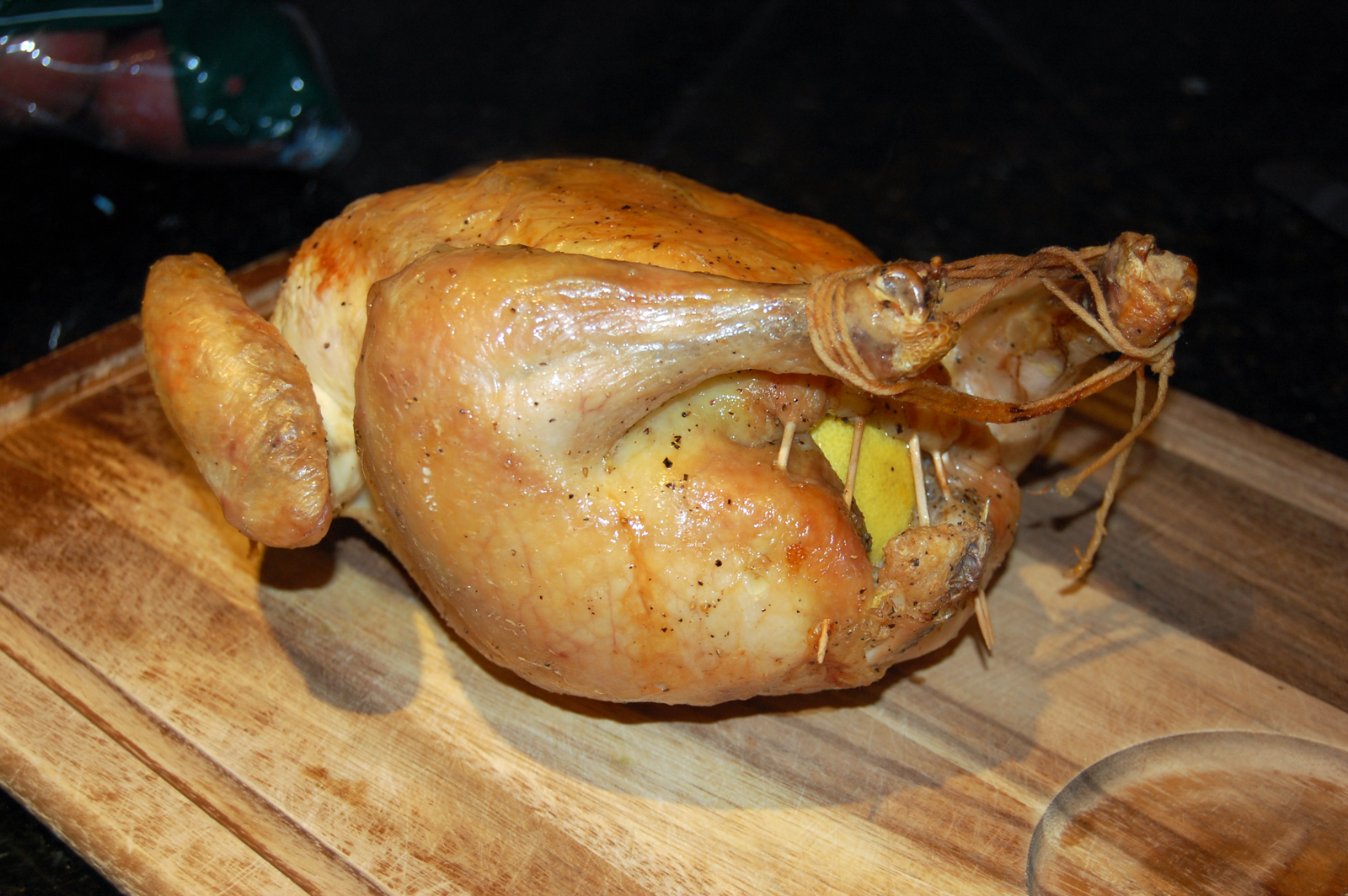
The whole chicken stuffed with lemons takes about five minutes of prep, and a few turns at very specific times and the glorious end result is the moistest, juiciest chicken meat you’ve ever had. There are no added butters, fats, or oils. It’s all about the meat and citrus.
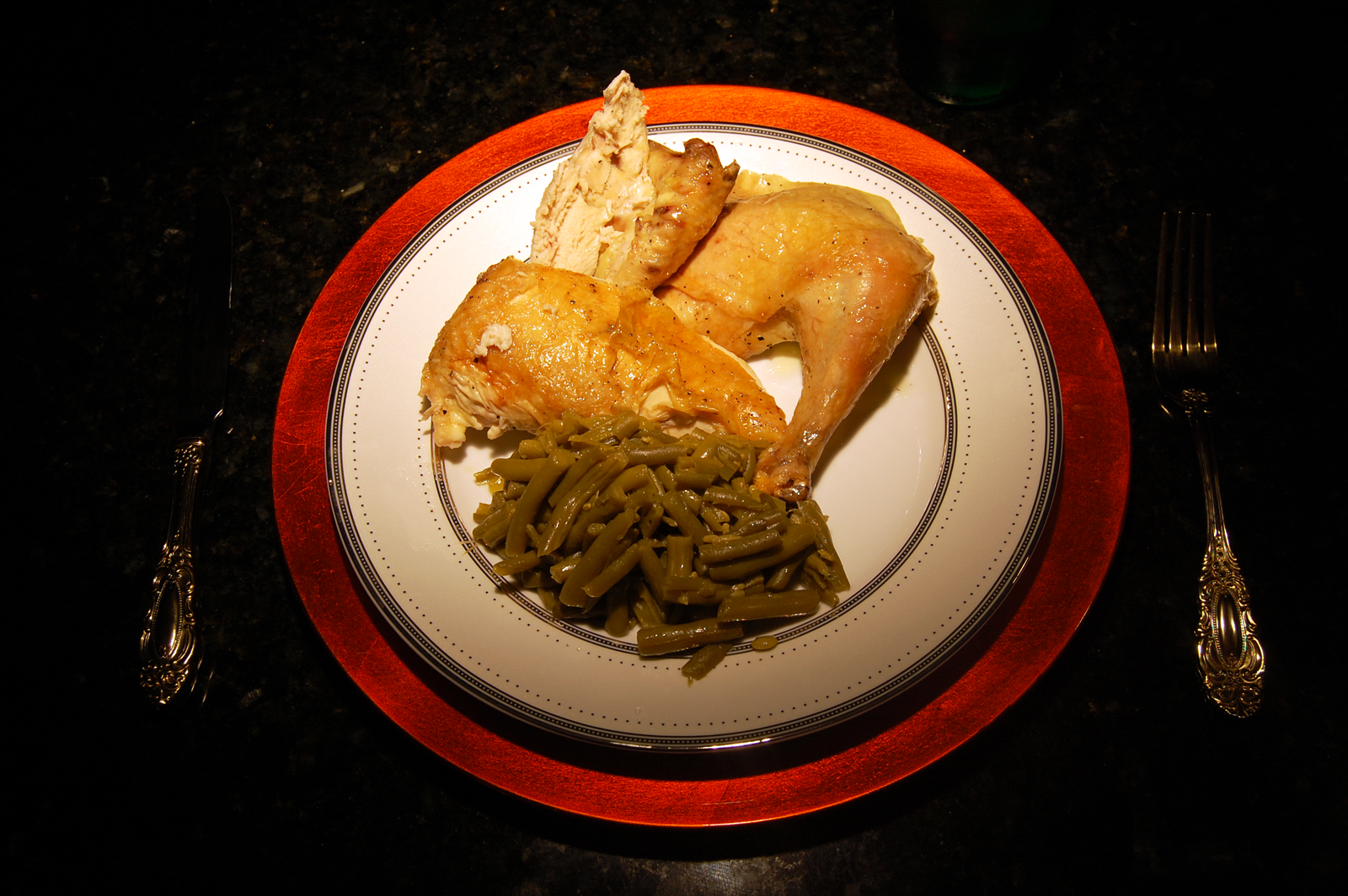
We served it with a side of farm-style green beans, breaking the Italian theme, but throwing in part of the Midwest.
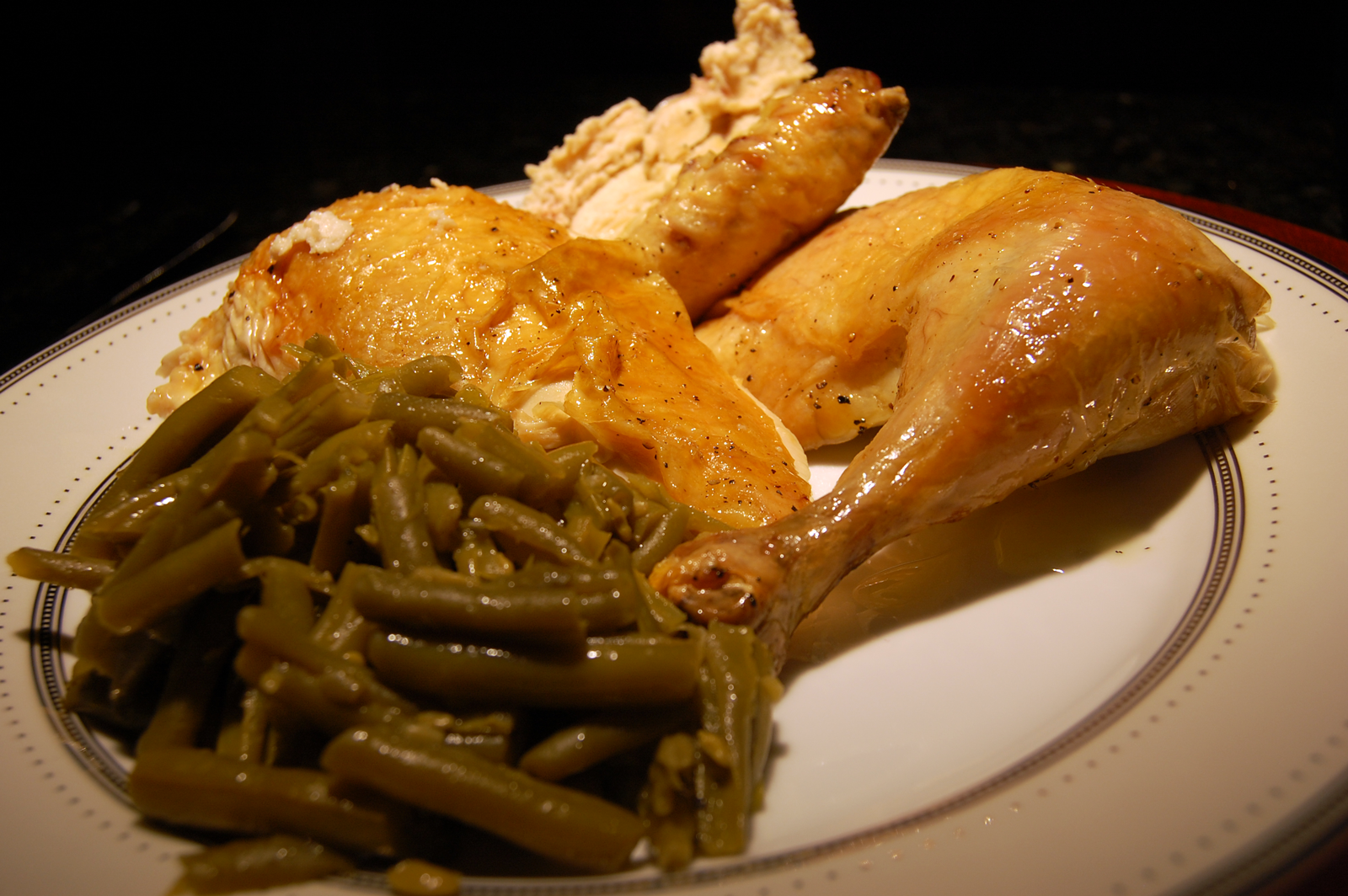
I’ll absolutely make it again. Not only was it only $2.75 per serving, providing very healthy food for four people, it was nearly effortless.
I would like to go to bed, but I need to finish at least two more things on my task list before I turn in for the night. I was hoping to get in some Kingdom Hearts time but I don’t think that is going to happen.
[mainbodyad]
Reader Comments (9)
Comments are presented chronologically, with replies indented beneath the comments to which they respond.
m r
October 8, 2013
I love greenbeans. I like to put seasoned salt on them.
"the mcnugget kind" - 40% meat 60% bone, cartillage, connective tissue, internal organ lining, fat, blood vessels and nerve fibres
http://www.amjmed.com/article/S0002-9343(13)00396-3/abstract
DK
October 8, 2013
I love how economically you can make great meals with whole chickens. We had guests this past weekend, and I fed 10 of us with two whole roaster chickens and some baked potatoes for less than $2 a person. I did mine as beer can chickens (stick each chicken onto an open can of beer and cook it that way...I have a stand that makes it easier).
The best part is that I cooked them on my pellet smoker, which ran for 4 1/2 hours at 275º, but only uses 15 watts of electricity once the fire is lit!
Next time, I'll try doing this with whole lemons, and drink the beer instead.
Joshua Kennon
October 8, 2013
Replying to DK
Amen!
When you try this version, the original has you puncture each lemon 20 times so the juices and pressure create a sort of internal-basting system, then seal the opening with either cooking string or toothpicks. She said to seal it well, but not airtight, because the lemon juice getting released over the time it cooks will cause the inside of the bird to puff up with pressure and if it doesn't have at least a small opening, that isn't big enough for your juice to drain out of since you want all that flavor, it could split the meat (which wouldn't hurt the flavor at all, it just wouldn't look as nice).
I can't recall exactly, but I think she had 20 minutes per pound of chicken. This one started at 350 degrees for 30 minutes, then was flipped upside down for another 30 minutes, then the heat was cranked up to 400 degrees (no more flipping) for 25 minutes and it came out perfectly. I do remember you had to raise the oven wrack so it was in the top 1/3rd of the oven (though this whole process would differ since you're using a smoker). I hope it turns out just as well for your family!
DK
October 8, 2013
Replying to Joshua Kennon
Best way I've found to keep track of cook time vs. doneness is with a remote thermometer. You can use them in a grill or BBQ or oven. Stick the probe into the deepest part of the thigh, and run the cable out to the digital display, and you'll know the bird is done when it gets to about 175º. (After a short rest it'll come up to 180º, which is considered food safe for poultry). For what it's worth, I use a Maverick 732.
Joshua Kennon
October 9, 2013
Replying to DK
I'll have to get one of these; thanks for telling me about them.
Joshua Kennon
October 8, 2013
My favorite sentence from that page: "Striated muscle (chicken meat) was not the predominate component in either nugget."
m r
October 9, 2013
eep. i'd be careful.
http://www.wired.com/wiredscience/2013/10/shutdown-salmonella/
Joshua Kennon
October 9, 2013
And this makes me feel very good about the fact that we never rely on sight or smell alone to determine when meat is done. We have an internal thermometer that gets put into various parts of the bird to make sure it has all reached the necessary threshold to kill Salmonella. (I need to get a wireless / remote one like I was talking about elsewhere on this thread - those sound awesome!)
TheSplash
October 10, 2013
Yesterday my wife told me "Do you know that Firemen have to pay for their own meals?". I said "Yeah, but it can't cost too much (points to Josh Kennon's blog)". She replied "They have to buy the food the same day they cook it, they can't stock up because they never work with the same people on the same day twice". I guess Firemen swap around to a lot of different stations during their work periods so they can't purchase food ahead of time and stock it up to save money for each meal. She told me the Fireman she spoke to said each meal costs around $7 per person when they make it. So now every time I read your (cooking) blog I try to think how a firehouse could put something like that together.
I've also been thinking about maybe putting a meal together myself with my wife and going down to our local firehouse and serving them. I wonder how that would work?