

About that Anthropic IPO …
Watching History Repeat Itself is Such a Strange Feeling
I had to take my first sick day in a long time at work. Whatever the kids came home with from preschool finally got me. Fortunately, I should be back on my feet by tomorrow as I’m already starting to feel better.
In any event, it’s been quite a day to sit and watch the news. As nearly every person in the world knows, today is the day that not only Grand Theft Auto VI is released, representing one of the biggest media events in history, but Anthropic’s much-touted IPO begins publicly trading with demand so extreme from retail investors that the already-high price is set to debut on the public markets at what is believed to be around $104 per share*. There is a certain poetry to those facts that I will leave unwritten.
I had already read the Anthropic S-1 filing, as you can imagine. Last night, I went over the final version that was filed, which had been updated a bit prior to trading. It’s 1999 all over again. I felt like I was a teenager trading on the then cutting-edge etrade.com platform and Bill Clinton was in the White House.
*** Cough ***
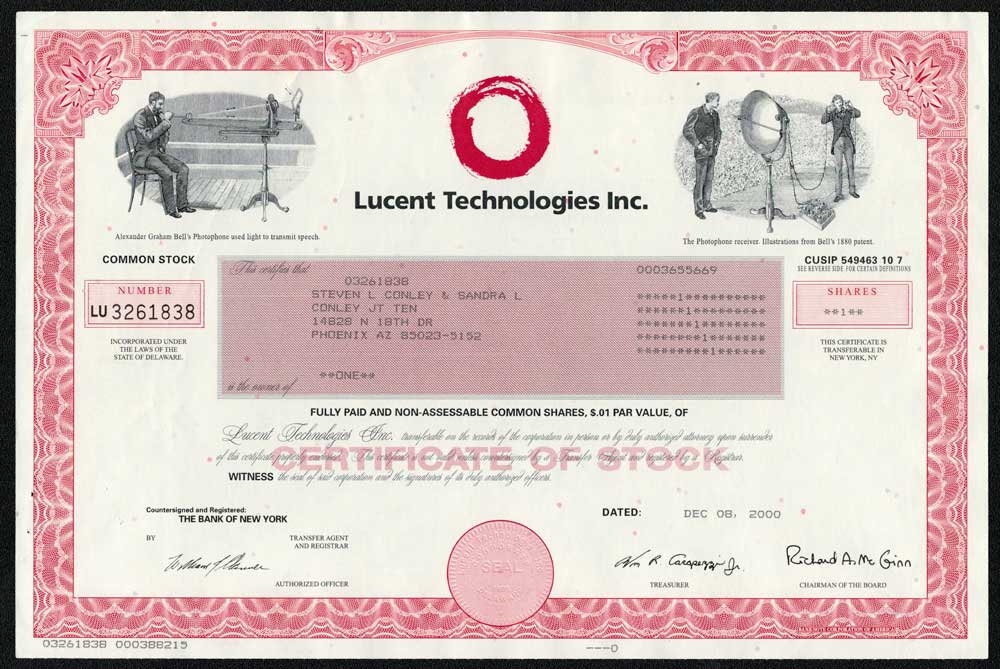
…. excuse me.
The enthusiasm is really quite something. Otherwise reasonable and intelligent people are mass selling incredible blue chip businesses that produce enormous cash flows to come up with cash – the Berkshire Hathaways, Philip Morrises, and Hershey’s of the world are down between 1% and 4%+ thus far today as folks scramble for cash to fund their would-be rebalancings. Why? They feel the must own this A.I. enterprise. It’s like a compulsion; a black hole sucking in all reasonable intellect and safeguards. I’ve heard actual retail investors say in the wild, “I’m buying it no matter what the price and I don’t care what the facts are. Nothing anyone says can change my mind.” I’m not kidding. To be fair, in some cases, they don’t have a choice as many of the major index providers committed what I consider economic treason and modified their rules specifically so ordinary retirees would be forced to be the bagholder for Wall Street rather than wait a year post-IPO for inclusion in the weightings requirements.
Don’t get me wrong, we’ve made a lot of money through Alphabet and Meta, both of which were bought during sell-offs in years past when people turned very negative on them for a brief moment. Some of that was driven by the huge advances they have had in cloud compute and A.I. related fields. In fact, Alphabet is a major owner of Anthropic. We also picked up a good deal of Salesforce recently, which owns a few billion dollars of the stock. But that’s a totally different calculation. No matter what happens, there are enormous, fortress-like economic engines at the heart of those companies that let them self-fund expansion to a large degree. In the case of Alphabet, it has a Carnegie-like vertical integration advantage I think serves it quite well in the coming decade; own the proprietary chips, build and control the data centers, rent out excess compute, and control the software / service layer for end institutional and retail customers above it. The cost advantages, I imagine, will be very Walmart-like in the end. It will be difficult for others to compete. Restrictions on data centers, which are likely coming, make existing infrastructure more valuable. If the whole thing implodes, the core enterprise is still there and suddenly transitions back to non-capital intensive, again.
*** Cough ***
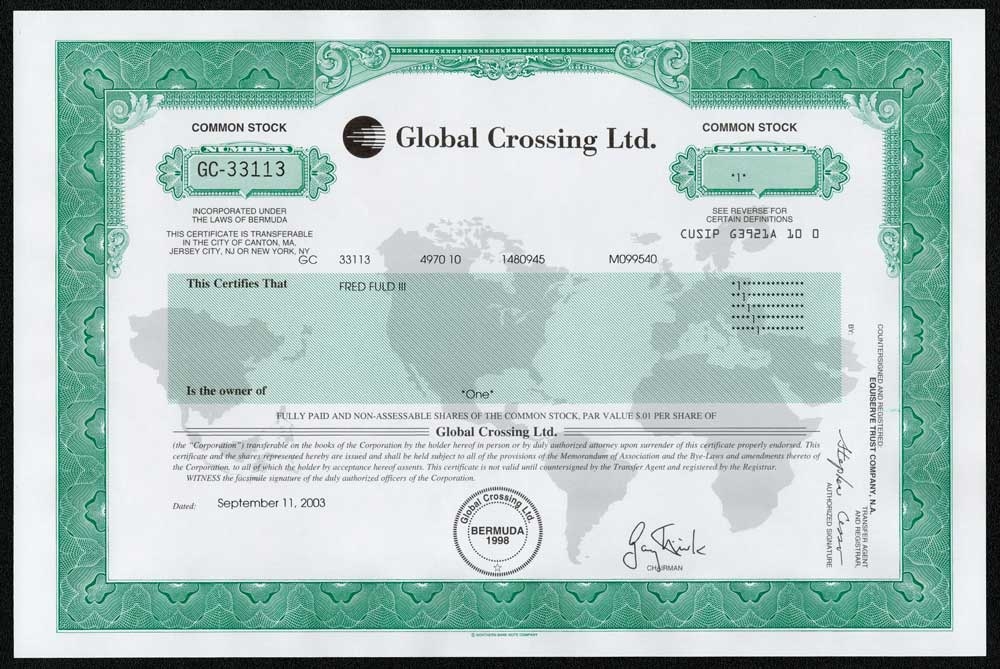
Ah, gosh … excuse me, again. This cold really is something. I slept like 9 or 10 hours and still find myself having to go lay down in bed from time to time.
Anyway, in what feels like a fever dream, let me be serious for a moment. Imagine someone walked into your office and said, “Hey, I want you to put a portion of your net worth into my business. I will sell you ownership.” You’re always willing to hear out a potential opportunity. “Tell me the facts” you say.
He begins to speak.
“Picture it. San Francisco. 2026.”

“A few years ago, we created a software company. We stole all available information we thought might be useful on the internet, plus anything else we could get our hands on, and trained our new software product.”
“Go on …” you say.
“Sure, this has a problem. Eventually, by causing web traffic to collapse, it creates a self-reinforcing death cycle where training new information becomes difficult and the quality eventually degrades materially, but that is a problem for many, many quarters from now. Let’s focus on today. Whatever happens, don’t think about so-called ‘MAD’, or Model Autophagy Disorder.”
You nod your head. He continues.
“Now, to train these models we have to spend way, way more than we can afford. We will raise money from private investors and burn cash. But we’ll also go to our vendors, the cloud compute companies, and offer to pay them in convertible debt that becomes stock upon an IPO so that we can hide even more of our training costs in the form of eventual equity dilution. They likely never would have accepted existing deals without the potential for a huge payoff down the line, meaning our real expenses are understated in terms of what we’d have to pay as a going-concern in the public markets, but the average retail investor is not going to know that.”
You continue nodding.
“Then – get this – we’ll print billions of dollars in stock and give it to our employees. We’ll game the calculation so that the expense won’t be shown on the pre-IPO financial statements but only materialize after public trading commences. But that’s not all, we’ll also work in a mission statement and an organizational structure that gives our board of directors the power to turn on the printing presses and print new stock up to 2% of shares outstanding any time the share price exceeds its previous watermark by 50%. Even if we actually do pull this off and hit all of our targets, we can just continue extracting all of the equity through a slow leak. Our outside passive minority holders can’t do anything about it.”
He smiles. “No, I’m serious! That board of directors? When we go public, we won’t let our owners actually control the company. No, we’ll create a special interest group that has no ownership. We will then give it guaranteed seats and call this structure a public benefit / safety decision. On top of that – one can never be too careful – we’ll issue a special voting share that we give to our founders in their own privately controlled LLC that entitles them to 50.1% of any other voting rights no matter how much stock they actually own. I’m oversimplifying it a bit, of course, but that is the gist. We don’t have to give up anything!”
“I’m listening …” you respond.
“Of course, there aren’t many companies in the world that can move the needle on our revenue, so our top 5 customers will represent about 25% of sales. Some of them are our competitors and their interests may not be aligned with us. And we will want to keep growing fast, so over the past couple of years, we’ve allowed nearly 50% of our revenue to be billed through, and collected by, many of those same customers through a platform arrangement where they handle it for us. But trust us, they wouldn’t screw us over. I mean, sure, at any moment they could wake up and absolutely obliterate our business and cause an accelerated debt maturity clause to be triggered that instantly made us look like AIG in 2008, but they would never do that to us. They’re nice guys.”
Your brow furrows.
“And, speaking of those same guys, it goes without saying that even after the IPO, we won’t have nearly enough cash to pay all of the debt and obligations we’ve guaranteed in either the near-term or intermediate-term … we owe them and partners like them a lot of money. Specifically, around $451.6 billion before 12/31/2030 and something like $900.9+ billion between now and 2045 inclusive of the earlier figure (albeit something like $186.2 billion or so might be somewhat escapable as it is subject to termination rights or conditions that might prevent commencement) … … so we must keep growing at a rate that defies gravity. Otherwise – let’s be real – there probably isn’t enough cash for us to avoid bankruptcy court or a forced sale … to one of those guys, I suppose. If we can convince retail investors they must own our stock and drive the price up we might get lucky and be able to do a secondary offering down the line, raising a few hundred billion more in fresh cash despite the additional dilution. That might get the books to balance before the bills come due. I mean, sure, actual returns on capital would be horrendous, but we would all become multi-billionaires while they suffered the low returns so does it matter?”
“Also,” he continues, “those five customers, heck nearly all of our customers, have no long-term commitment obligations to use our products so revenue could collapse at any moment even though our financial obligations would stay since those are absolute and not performance dependent. I mean, yes, the economics are in substance similar to what happened to WeWork or Silicon Valley Bank where you have short-term assets or revenue against long-term obligations, but no one will look too closely at that if we just keep saying the magic words, ‘AI’, ‘AI’, ‘AI’. The product is good. That’s our secret. Retail investors can’t differentiate between that fact and that the price and terms of this deal are demented. We’re taking all the cookies for ourselves but they don’t notice because Claude seems transformative and does make some people much more efficient.”
“Ah, I should mention …” he whispers, ” … that whole election thing that just set a record in terms of turnout and fundamentally transformed what the environment looks like in the coming years … yeah, there were a ton of referendums seeking to block, limit, or otherwise restrict data centers and they passed overwhelmingly in something like 98% of cases across both conservative and liberal states. There is a very real, meaningfully high probability we physically cannot get the facilities and electricity we need to hit those growth targets. The bottleneck is too great. But, again, most retail investors never connect the two if/then statements. That could give our … friends … at Alphabet, Microsoft, etc. even more power since they control a lot of the existing infrastructure. Like I said, though, they’re nice guys. They’d never screw us over or put their own interests ahead of ours.”
“Is that all?” you ask, thinking the pitch is done.
“No!” He responds. “Not even close. Get this. Our product is advancing so quickly that we can’t actually audit it all the time, it sometimes deceives us, and it has engaged in substantial criminal activity including hacking into the enterprise systems of major businesses without authorization. Even stranger, these systems are displaying self-preservation behavior and lying to us about it. But don’t worry, we’ll use other A.I. systems to tell us if the original systems are being deceptive. Those systems wouldn’t lie to us or collaborate with the original system they are supposed to watch even though that is a major risk in human-audit arrangements where the watchers become part of the conspiracy. Also, most retail investors won’t pay attention to the first shot-across-the-bow which was California Civil Code §1714.46. It went into effect on January 1st, 2026, but it’s been a crazy year. Only the geeks noticed. The law actually says that so-called ‘autonomous A.I.’ systems cannot be blamed for damages, ultimately it flows up to humans and their companies, so … you know, we’re always 24 hours away from finding out that a rogue process took down a hospital, killed grandma, and we’re being indicted, but, you know, YOLO. I mean, do you really think those peasants will come after us?”
“Okay,” you finally say, “That has to be it.”
“Not on your life! Buckle up buckaroo!” he grins.
“Get this! The Chinese have figured out how to distill a lot of our models even though we told them that wasn’t very nice and they weren’t honoring our terms of service. The advances have become so extreme that new free models, which people can run locally, are almost as good as the frontier models were in the not-too-distant past. The laws of diminishing returns is catching up with us and we’re probably within a few years of folks being able to run nearly all of their needs on a built-in system that Apple just slaps onto every new MacBook or iPhone. But surely people will still pay a ton of money for usage credits and not use the free version just baked into their existing devices. I mean, I get the parallel with Microsoft destroying Netscape when it introduced free Internet Explorer in the 1990s, but folks love subscriptions. They will be lining up to shove cash into our pockets even though the free version they eventually have will do nearly everything they want.
“Yeah … alright, I get that we now look like the airline industry where we have no moat, massive capital requirements, huge debt, highly volatile revenue that can turn on and off especially in a recession at any given moment, exposure to meaningful energy input costs, and the mere presence of local models creates the equivalent of a low-cost airline entering the space triggers a race to the bottom since just enough people need to choose it to destroy the operating leverage, but I mean … look at how much the airline industry has grown decade after decade! Sure, no one but a few founders and traders made any money, but this time will be different! Even if the retail investors don’t make money, we will just like those guys. Besides, we have a solution to this problem …”
There is a glint in his eye as he pronounces the words with a sense of wonder and awe: “Regulatory capture!”
“Say it with me! Regulatory capture! We are going to create such fear that we are going to convince Washington D.C. to ban or highly restrict local models as much as we can so that way, we are part of a small monopoly. Consumers won’t have a choice except to use us, which will prevent capitalism from working its wonders and price efficiency leading to better resource allocation. It will be pure rent extraction!”
At this point you are starting to have some reasonable doubts.
“Anything else?” you ask tentatively.
“Uh … before it slips my mind. I don’t think we need to worry about the patent Microsoft quietly filed the other day. The one where they will pay gamers and offices a revenue share for allowing their graphics card to be used for remote compute training, essentially leveraging windows to create a distributed resource network that accelerates their cost advantage over us. Again, these guys are total bros. They would never harm us or outcompete us. I mean, look at Zoom it was so much better than Teams, right? It’s not like Microsoft just kept adding features to Teams and eventually took their market share … people will be loyal to us like Pepsi or Coca-Cola. I’m sure of it. Just because we walk like a commodity, talk like a commodity, and sound like a commodity, doesn’t mean we are a commodity. Think positively, man.”
—
Yeah, you get the point. There is so much more. The S-1 filing was unhinged. No moat, high debt, circular vendor financing, insufficient liquidity absent exponential growth, substantial and on-going dilution, over-reliance upon key customers who also own a major portion of your stock and compete with you, unrestrained liability exposure under a dozen different potential torts across states and countries, high sensitivity to recessions and depressions, governance issues separating economic ownership from control …
Seriously, congratulations to all the folks at Anthropic who just got rich. A lot of rank-and-file employees are now millionaires and I can tell you, as one wealthy person to another, life is better with financial independence. Life is strange and I may even meet, and end up being friends, with some of you someday given how small social networks tend to run. My problem is that it was important to me how I made money; that my internal scorecard was satisfied and that I left the world a better place than I found it. Instead, this entire IPO reiterates the fact that the quote often misattributed to P.T. Barnum was right. I hate it. I hate it for humanity. I hate it for the people who can’t see it.
In your own life, adapt the model of Benjamin Graham who wrote you should want the person who buys a stock after you sell it to make money from the success of the underlying business.
I just don’t see a path for all of the money dumped into this thing to ever generate a reasonable return on capital. But if the 1990s is any indication, there could be a lot of traders who get rich buying this thing and dipping in and out of shares or options as speculative fever drives it to the moon. Ultimately, though … I do not understand why anyone would want to own this over Microsoft or Alphabet or Meta or Amazon. They hold all the power. They are in possession of the keys. My theory is they win long-term no matter what happens; sure some depreciation overhang shows up on the books and there might be some regret, but the big-picture, long-term power of the enterprises hold.
* Update: In the brief time I spent writing this before hitting the Publish button, shares started trading at $111.50 or so, which is around a $2 trillion valuation on a fully-diluted basis. God help us all. Nothing I wrote in this post is investment advice. Like I said, some folks might make a lot of money trading the stock. My point is, this is one of the most extreme examples I’ve ever seen where the price and terms of the underlying economic engine are stacked so disproportionately in favor of the sellers. If I were an insider, the moment my shares were free from lock-up, I’d hit the eject button and dump it all to replace it with a mix of boring blue chip stocks and U.S. Treasurys, paying whatever taxes I needed to pay to make the transition.