

Lessons from Ray Kroc’s Paper Cup Years
I have been thinking a lot lately about how some of the most important case studies in life are the ones that largely remain out of sight. Ray Kroc, in particular, comes to mind. Everyone talks about McDonald’s Corporation, and of course it’s the big win, but the foundation of what led to many of the insights that caused it to scale so rapidly can be traced to the roughly seventeen years Kroc toiled relentlessly as a paper cup salesman.
First, let’s back up and get some history.
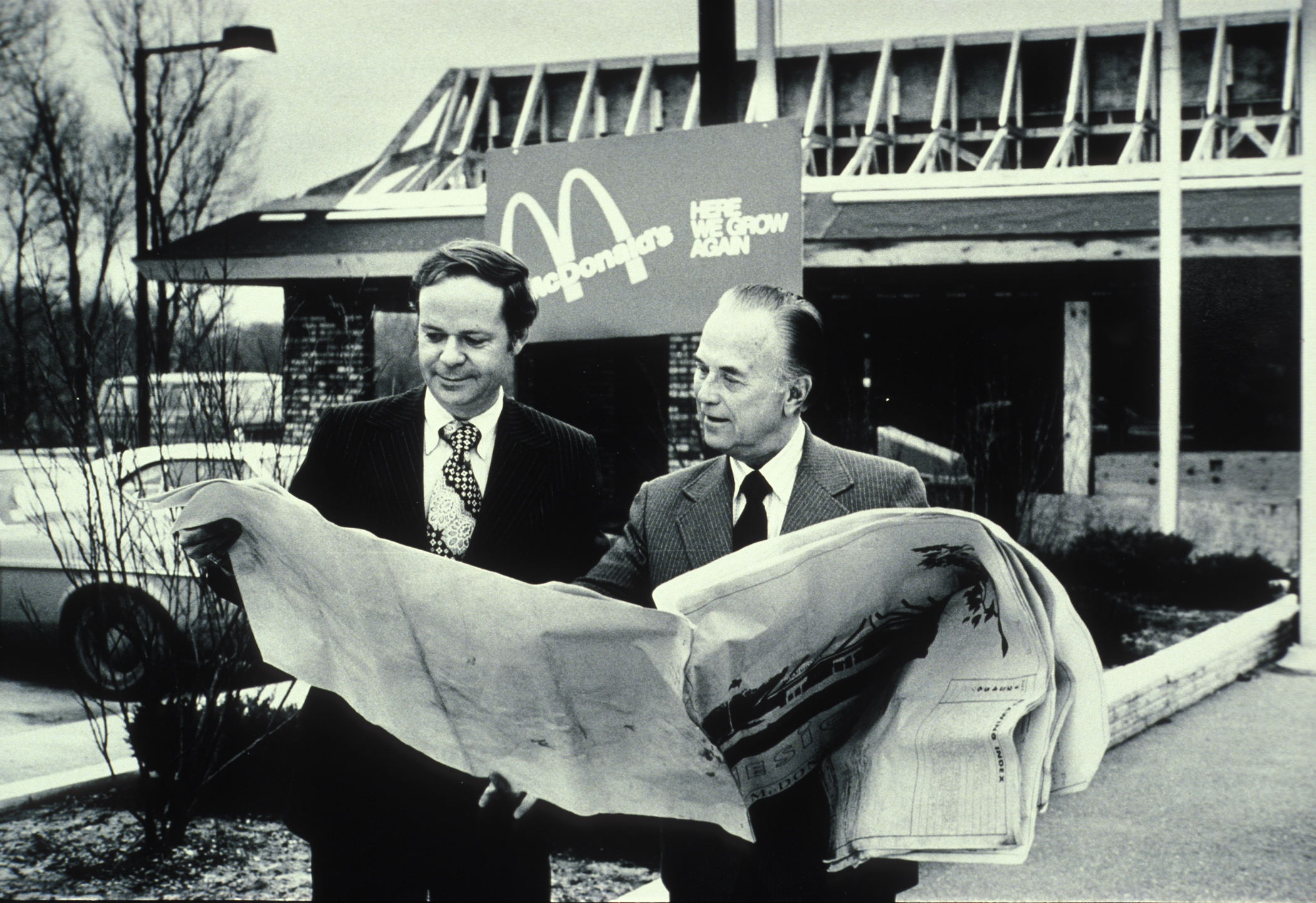
As a teenager, Ray Kroc worked as a pianist, DJ at a local radio station, and salesman, hawking whatever he could to make money. When he fell in love with a girl named Ethel Fleming, he announced to his father that he was going to marry her despite, at the time, being only 19 years old. Kroc recounts in his autobiography Grinding It Out: The Making of McDonald’s that his father responded, “Impossible!” because, his father told him, he “must first have a steady job. And I don’t mean working as an errand boy or a bellhop in a hotel. I mean something substantial.”
Kroc rose to the challenge, saying, “A few days later I went to work selling Lily brand paper cups. I don’t know what appealed to me so much about paper cups. Perhaps it was mostly because they were so innovative and upbeat. But I sensed from the outset that paper cups were part of the way America was headed. I guess my father must have agreed. At least he raised no further objections, and Ethel and I were married.”
Ray referred to the paper cup business as a “bear”, observing that it went into hibernation in the winter so you had to live on what you made during the other seasons as the only profitable customers during the cold months were hospital and medical clinics. He quickly went to work building up such a base of relationships so he didn’t have to suffer a lack of income when the temperature dropped. Never one to rest on his laurels, at one point, before that base of customers was established, he and Ethel took off for a season in Florida, where he worked selling real estate before returning to the frigid Chicago winters. He also figured out ways to increase his paper cup sales, reminiscing, “I was always on the lookout for new markets, and I found them in some strange places. Italian pastry shops, for example, could be sold ‘squat-size’ cups for pastry and spumoni. They would buy a lot of them for big picnics, weddings, and religious festivals. I also learned that Polish places in the old Lawndale neighborhood would buy the same cups to serve “Povidla,” which was a prune butter. Those folks ate an awful lot of prune butter.”
At one point, Kroc had an epiphany that it was better to find a rising tide and let the underlying forces increase your sales automatically and exponentially. This insight came from his interaction with the Chicago-based Walgreen Drug Company, which had begun a period of rapid expansion. It began because he was selling “little pleated ‘souffle’ cups”, which Walgreen used to serve “sauces at their soda fountains. Observing the traffic at these soda fountains at noon, I perceived what I considered to be a golden opportunity. If they had our new Lily Tulip cups, they could sell malts and soft drinks ‘to go’ to the overflowing crowds.” Kroc’s description of the events gives an insight into the mind that built the world’s largest fast food chain:
“The Walgreen headquarters was at Forty-third Street and Bowen Avenue at that time, and there was a company drugstore just down the street. I presented my pitch to the food service man, a chap named McNamarra. He shook his head and threw up his hands at my suggestion.
‘You’re crazy, or else you think I am,’ he protested. ‘I get the same fifteen cents for a malted if it’s drunk at the counter, so why the hell should I pay a cent and a half for your cup and earn less?’
‘You would increase your volume,’ I argued. ‘You could have a special area at the counter where you would sell these things, put covers on them, and take them and the same vanilla wafers or crackers you serve with them at the fountain and drop them in a bag to take out.’
Mac’s face got redder than usual at that and he rolled his eyes toward heaven as if pleading to be delivered from this madman. ‘Listen, how can I possibly make a profit if I go to this extra expense? Then you want me to waste my clerk’s time putting covers on drinks and stuffing them in bags? You are dreaming.’
One day I said, ‘Mac, the only way in this world that you can increase your soda fountain volume is to sell to people who don’t take up a stool. Look, I’ll tell you what I’m gonna do. I will give you 200 or 300 containers with covers, however many you need to try this for a month in your store down the street. Now most of your takeout customers will be Walgreen employees from headquarters here, and you can conduct your own marketing survey on them and see how they like it. You get the cups free, so it’s not going to cost you anything to try it.’
Finally he agreed. I brought him the cups, and we set the thing up at one end of the soda fountain. It was a big success from the first day. It wasn’t long before McNamarra was more excited about the idea of takeouts than I was. We went in to see Fred Stoll, the Walgreen purchasing agent, and set up what was to be a highly satisfactory arrangement for both of us. The best part of it for me personally was that every time I saw a new Walgreens store going up it meant new business. This sort of multiplication was clearly the way to go. I spent less and less time chasing pushcart vendors around the West Side and more time cultivating large accounts where big turnover would automatically winch in sales in the thousands and hundreds of thousands. I went after Beatrice Creamery, Swift, Armour, and big plants with in-factory food service systems such as U.S. Steel. I sold them all, and my success brought me more territory to cover and more possibility.”
The problem: The structure of Ray’s employment. Lily paper cups were manufactured by Public Service Cup Company. That business worked with a distributor business named Sanitary Cup and Service Corporation. SCSC had the exclusive rights to distribute Lily cups in the Midwest and it was for that business – SCSC – that Kroc worked. SCSC’s biggest stockholders were “a pair of bachelor brothers in New York by the name of Coue”.
The difference in how Ray Kroc viewed customer relationships, and how SCSC’s management and the Coue brothers viewed customer relationships, was significant. Kroc believed that if he acted in his customer’s best interest, he would be rewarded over time even if it meant he made less money in any given period. One source of contention between him and his employer: Kroc would often warn his customers if price increases were coming so they could stock up on paper cups at the lower price. He also would look at their sales projections and inventory levels and tell them if he didn’t think they needed any more paper cups, even if they were keen on ordering more. This honesty led to so much trust that several of his customers let him basically write the sales order for them, believing his judgment to be fair and accurate.
Kroc reminds me of the Dolly Parton quote from almost 50 years ago, “Why should I work for hundreds and thousands when I can work for hundreds of thousands?”. The insights were manifold. Treat your customers right. Affordability with quality can lead to volume and volume at scale can be powerful driving returns on equity far faster than high margins alone make possible if the cost structure is right. (That last caveat should not be overlooked as it’s actually possible for growth to cause an enterprise to go broke if isn’t careful. My case studies are filled with such examples.) Tell the truth not only because it’s the right thing to do but because people will remember when you are honest with them; that they can trust your word whether or not they agree with you. Also, make sure you work somewhere that rewards your efforts and aligns with your personal beliefs and style. In Kroc’s case, he found the problems of business interesting to solve. He couldn’t stand being slowed down by others especially when they reaped the rewards of his insight after he had to fight them to adopt them in the first place. He needed to be constantly challenged. He thought in terms of systems. For example, he famously refused to sell equipment to franchisees because he didn’t want the conflict of interest understanding that even if it began as fair, over time it could twist incentives and cause mistrust.
I know I’ve said it over the years, but the surprising things is the book that led to more case studies than any other was McDonald’s Behind the Arches by John F. Love. The endnotes alone are golden, pun fully intended. It led to so many other businesses, entrepreneurs, business enterprises, real estate empires … so many people and fortunes arose in the orbit of McDonald’s each with their own players and lessons. I mean, think about J.R. Simplot who through a handshake deal with Kroc ended up becoming the wealthiest potato farmer in the world and the 89th wealthiest person in America prior to his death in 2008. Through a series of mergers and transactions, the old paper cup company mentioned earlier with whom Ray’s employers had a deal ended up part of Dart, America’s largest privately owned provider of food and beverage packaging. Prince Castle, which made the milkshake mixers Kroc was famously selling when he encountered McDonald’s in the first place is part of Berkshire Hathaway today. There is Golden State Foods in Irvine, California, which prior to being bought out by private equity, was a family-controlled supplier that made the people behind it extraordinarily wealthy. It just goes on and on … so many multi-millionaires, often married couples, created out of ordinary people living in ordinary towns. I’d have to go back a couple of decades to figure out exactly what the figure is since I hold it in so many places, but McDonald’s has been paying dividends into the Kennon-Green family coffers since Aaron and I were barely out of our teenage years; possibly a bit earlier because I can’t recall if I bought my first shares in high school or not. We exchanged some of those early letterman jacket award profits for an ownership stake in the cheeseburger empire. We’ve given cash to buy shares to our own children, as well as nieces and nephews.
That doesn’t mean I always approve of what the company does. There have been significant improvements in the freshness of Quarter Pounders that have paid off. However, I am deeply critical of management’s short-sighted move to make the dining rooms stripped of color and unwelcoming so people get out sooner. I believe, ultimately, someone will come into the executive suite that will reverse course as society is largely tired of gray walls, cold floors, uncomfortable furniture, and the lack of hospitality. Even small details, like the color of gold being incorrect recently on one of their coffee cup designs, is a bit shocking. Still, I think they’ll course correct, the price is reasonable, and they have some inherent advantages that make inflation and a weaker dollar less of a threat than it is to other enterprises even if Wall Street overreacts and sells off due to a short-term profit hit. (To illustrate: Take a look at the beef inflation crisis of the 1970s and how the company navigated it.)
Anyway, I’ve talked about some of this before … or at least McDonald’s directly or indirectly, such as here, here, here, and here to name a few.
Reader Comments (12)
Comments are presented chronologically, with replies indented beneath the comments to which they respond.
MadeItSquare
September 1, 2026
Though Ms. Lowe wrote a couple of great books (I re-read her Charlie Munger biography from time to time), Behind the Arches was Mr. John Love's work. It's certainly a great book, and combined with Mr. Kroc's biography you get a pretty good picture of McDonald's ups and downs. I wish there was a recent book about the company, covering the recent years.
It's great having you around here again, Joshua. Hope everything's great :).
Joshua Kennon
September 1, 2026
Replying to MadeItSquare
Ah! Thank you so much for catching that typo, I just fixed it and it should be live as soon as the cache clears! I really appreciate it! I agree with you, the book needs to be updated for the modern era as so much has happened!
JB
September 1, 2026
TWO posts in a week!?! I feel blessed! Great article as always. If you have any time to post your thoughts on Private Equity in the future, I would love hear what you have to say.
Joshua Kennon
September 24, 2026
Replying to JB
I know a lot of wonderful, brilliant people in private equity who do the right thing, the right way. A lot of money can be made in the space while improving operations and society. I also know of a lot of cases where private equity has destroyed perfectly wonderful businesses by loading up the company with debt, lowering quality or service, then blaming consumers or the economy when bankruptcy eventually occurs. It's a nutty situation that, I believe, was likely amplified by an unnatural zero-rate environment caused by the Federal Reserve. Easy money made things possible that otherwise wouldn't have been likely.
COLOdgi
September 2, 2026
Once again, Thank you so very much for continuing to share your knowledge and thoughts.
.
Joshua Kennon
September 24, 2026
Replying to COLOdgi
Happy to do it! It brings me a lot of joy when it is useful to people!
Brendan
September 2, 2026
Some of my best performing investments have been from large and established companies that have been mispriced due to short term headwinds; it's something that I always keep a cash reserve for in the rare-ish moments that they present themselves. Apple in 2019 has been one that continues to impress me, but Johnson & Johnson, Disney, Hershey, Coca Cola, and a handful of others have all been, to quote Charlie Munger, those ten one-foot bars that I could step over, rather than looking for the one ten-foot bar.
Joshua Kennon
September 24, 2026
Replying to Brendan
As the decades pass, the more and more I realize the truth of Munger's statement. Aaron and I have talked about how the same pattern keeps emerging. The really big money over our lifetime has been made in perfectly obvious things that had some sort of issue at the time where investors just didn't have any interest, or in a few cases, an active avoidance of it. I've got one investment now that he and I are discussing seriously about putting 10% to 15% of our liquid net worth in it. I've begun buying it for private clients now that the pricing over the past 12 months has gotten so appealing relative to what I think it's likely to be earning in ten years. I think people would be shocked at how prosaic it is but I keep coming back to the numbers over and over, again. Not much needs to go right for me to be happy my family owns it by, say, 2036 or 2037.
A perfect historical example, which I'm fine sharing since the headline numbers are part of public filings and it is further in the past: Back in 2017 or 2018 if someone would come on board with a stake in Altria Group or similar, the shares were not nearly as attractive priced as other opportunities we saw. I distinctly remember selling some to what I imagine was shock. A few years later, Covid hits, interest rates basically go back down to a near zero-rate environment, and regulators had somehow allowed four or five tobacco companies (which were transforming into nicotine companies; an important distinction) to consolidate so that by purchasing them, in specific weightings and as a group, you could essentially get a significant majority override on all nicotine consumed on planet Earth each year outside of China. (The Chinese government basically has a monopoly on the industry within its borders so it isn't useful to include it in any analysis.)
Suddenly, you had this basket of companies - four if you focused only on Altria Group, Philip Morris International, British American Tobacco, and Imperial Brands, five if you included Japan Tobacco in Tokyo, though it was really a conglomerate with a packaged food division - offering enormous yields at a time when money was basically non-productive if parked. I'd have to check the specifics but over that period, I think we deployed something like $22.5 or $25 million or thereabouts buying up what I called a "structural tobacco trade" at weighted average dividends yields which I believe were in the 7% to 9% on the basket itself. I did a series of calculations that even if the dividend growth rate collapsed to far below its historical average, each year we took so much money off the table, it dramatically reduced our risk and funded other positions. By year 10, the probability of getting the near totality of our outlay back was enormous by my estimations. Assuming even exceedingly conservative dividend yields at the end of that period would indicate market prices about twice as high as the then-market values. Very little needed to go right for it to be satisfactory. It was a totally different risk calculation. I mean, imagine if in year five someone invented a drug that cured nicotine addiction and the stocks all went to zero. We'd have still taken so much cash off the table, combined with the tax deduction from the loss, the damage would have been modest in the big picture of things.
That one big decision has been an important one, serving as a major source of internal funding especially because the cash dividends were hiked in the aggregate quite notably from those already absurd base values (I mean, Philip Morris just raised its dividend another 8.8% over last year, which is on top of the 8.9% rise we got the year before that. Altria just raised it's dividend by 4.7% ... it's nuts). You look at the holdings in Meta or Alphabet we picked up when investors thought they were doomed to oblivion a few years ago, it's accurate to say for a lot of folks, the tobacco holdings helped cover the cost. I had no interest in buying Meta but then it basically got down to a price so low that I figured it had to be in the single-digit p/e on cost in the not-too-distant future.
The big question around the tobacco operation was the ethics, but it came down to the fact that essentially every investor owns it in one form or another through ETFs and funds, plus, holding all else equal, every bit of scientific evidence I could find indicated that the harm reduction of vaping and smokeless heated tobacco over traditional combustible cigarettes was dramatic. Furthermore, prohibition doesn't work, rather leading to a rise in funding organized crime and tax evasion, so it's better for the industry to be heavily regulated by authorities. There is also the question of proximity. Shareholders of Berkshire Hathaway presumably make an awful lot of money from McLane, which provides cigarettes to a massive amount of gas stations and convenience stores, it simply doesn't get noticed because it is reported with a gargantuan pool of earnings from other subsidiaries including insurance, regulated utilities, and homebuilders. Regardless, at the end of the day, I approved any opt-outs for those who were not comfortable holding the position. I get it ... the idea of holding a stake in a for-profit prison is anathema to me because I can't get to the difference between it and a form of slavery, though if I ever found one that was inexpensive I feel it is my obligation as a fiduciary to notify clients so they can take advantage of it if they wanted to do so.
That's not to say every apparently obvious situation works out. There have been a handful of disappointments, but the thing about compounding is the math works out wonderfully if you think about portfolio structure. If you have, say, two 5% weightings and one goes down 50%, you lose 2.5% but if the other keeps compounding in a fairly dramatic way, it carries all the water. I used to write about it either here or on my old Investing for Beginners site and called it something like "The Home Depot effect" because shares of the home improvement retailer were an excellent historical case study. I mean, take what is going on now on the other end ... the inverse ... no matter how many times I run the numbers, I can't come to any other conclusion than locally-run large language models are likely going to emerge the winners, the frontier models have little to no moat, and the end-user revenues aren't there to justify the capex that has been made. I'm happy to own the Alphabets and Metas of the world but if I worked at OpenAI or Anthropic, I'd be waking up in a cold sweat counting down the days to an IPO. The moment folks can run these on their MacBook in a meaningful way - and we're getting close with things like Unsloth in recent weeks - the same economics that cause airline ticket prices to descend to the lowest common denominator applies here.
Anyway, take it for what you will; some stream-of-consciousness thought with no editing or typos at nearly midnight.
HenryS
September 4, 2026
It's funny that I think of your writing in the most unexpected of circumstances.
In 2024, I was on vacation and touring northern Argentina in a bus while reading Chip War (highly recommended book, shame I didn't act on its lessons) when I came across the passage about "potato farmer" J.R. Simplot rescuing Micron and had to think back to your earlier McDonalds articles outlining the connection as the story rang a bell.
It's so fun understanding how interconnected and (in a sense) small the world really is.
I guess McDonalds and Ray Kroc are arguably at least partly responsible for the AI transformation we experience today.
I'm happy and very, very grateful to still have you around us whenever you can find the time.
All the best to you, Aaron and the kids!
Joshua Kennon
September 24, 2026
Replying to HenryS
That is one of the reasons I love studying businesses. The story of business is the story of people; lives and histories, families, dramas. So many companies that seemingly disappeared are still around, in one form or another, and rippling through history changing the course of everything; the legacy of the people who built them. That, and I love the cumulative nature of it. I look back on some of these posts I wrote 10, 15, 17+ years ago or whatever and decisions I made then, and before then, are still paying me dividends (quite literally) having grown alongside me in my life.
Not every business is a permanent holding, and not every investment works out, but over time, the good decisions really do the heavy lifting.
Peter Jaworowski
September 5, 2026
Thanks for the nice article. I think this statement is very powerful...
"Kroc believed that if he acted in his customer’s best interest, he would be rewarded over time even if it meant he made less money in any given period"
I think too often, companies don't act in the customers best interest and it comes back to haunt them. The last couple of years we've been in a world where companies have leaned far too much into pricing to preserve their margins and we've hit a point where customers have revolted. This happened at PepsiCo with their aggressive price increases on chips, it happened at McDonalds forcing McDonalds to lean more into a value menu, and General Mills has suffered from this in their cereal sales. These are just a couple of examples, but I feel companies need to do a better job of managing their costs and figuring out better ways to grow rather than just hike prices.
Joshua Kennon
September 24, 2026
Replying to Peter Jaworowski
Over time, I feel fairly confident I've worked out most things; the big forces driving decisions and the variables that matter. On a handful of items, though, even though I intellectually understand the reason, I cannot grasp how they continue to happen in society.
One of those is the so-called (forgive the language, but it is the literal term) " enshittification " of products and services. There is so much real, sustainable money in giving people what they want, and treating them like you'd want to be treated. If I were to buy control of a company because I liked the product, the people, and the economics, my instructions would be simple: Don't cut corners and think long and hard before changing anything you believe will cause our customers to feel we haven't given them our best. Trying to swap ingredients to save a few cents might look fine in a spreadsheet but it never accounts for the real brand equity damage that happens, leading to huge opportunity costs, down the road. If you have a beloved product, it's so easy ... all you have to do is what Charlie Munger said, which is to attempt to be "consistently not stupid".
McDonald's is a fascinating case. I, of course, own the stock and have owned it for so long I couldn't even tell you when I bought my first share; it has to have been a couple decades ago. Aaron owns it. We own it together. The kids own it. I have a Christmas tree that goes back to our time in Missouri specifically with McDonald's ornaments; e.g., Mayor McCheese, etc. I love the business. It's been good to us. They've done so many things right since 2018, starting with changing to never-frozen beef then removing all artificial preservatives, artificial flavors, and added colors from a huge portion of its menu to the cooking tweaks that happened in 2023-2024 that improved the flavor and freshness. Yet, over the past few years, they seem to be infected with MBA-think in the sense that they have designed the restaurants with what has been described as "GTFO furniture" communicating that customers aren't welcome to come into the store, get comfortable, and enjoy themselves. They are bringing drinks back behind the counter. They have removed all joy from the color scheme of their architecture. Perhaps worse of all, they don't offer the same price for a cash buyer as someone using their app, which absolutely has the effect of 1.) alienating a lot of buyers who will not download the app and use it since it feels like a huge imposition, and 2.) training others to get used to promotional coupon-clipping behavior.
I think they'll fix it. Few companies have the incentive system McDonald's does, in terms of alignment of interest. I worry a bit that their lean into A.I. based systems versus Chick-fil-A, Culvers, and In-and-Out having magnificent in-person ordering in a process that is like a symphony, could be a long-term misstep. But I think they'll figure it out in the end just as they always have. The share price by any measure of investment value appears quite reasonable, especially for those who want private dividend income, so it has a role in most portfolios, I believe. Just talking academically, here, of course, as this is my personal blog and not investment advice.
I think a company like Chipotle will fall apart long before McDonald's does. My personal spending went from considerable to near zero as I basically do not eat at Chipotle anymore whatsoever absent a few cases. The stores in and around Columbus are insane. I walked into one a couple of weeks ago I think it was - in New Albany proper - and the floors were sticky, the food guard was absolutely filthy to the point I cannot believe a health inspector hadn't shut them down, the trash was overflowing, the staff said they didn't bother to make ice tea anymore so you couldn't order it (presumably too much work when that literally was the item that caused me to pick Chipotle over everything else and, of course, has a massive markup) ... I was in a hurry and against my better judgment ordered something before promptly getting food poisoning, which was brutal. (I actually had a bit of a case study going on it for awhile because I know several people who have had some weird experiences with them that makes me think they probably need to send in their internal audit team. Something just isn't right and I have my suspicions about what it is.)
Yeah, definitely need to get to bed, this response was a bit all over the board ...