

Bank of America Has Lost $40+ Billion Since Acquiring Countrywide for $2.5 Billion 4 Years Ago
It has long been said that it’s more important to avoid bad investments than it is to find good investments. “A single bad deal can wipe out a lifetime of work,” or so the sentiment goes. There is a great truth in that. It was the first thing I thought of this morning when I read the Wall Street Journal coverage of the Bank of America / Countrywide Mortgage merger four years ago.
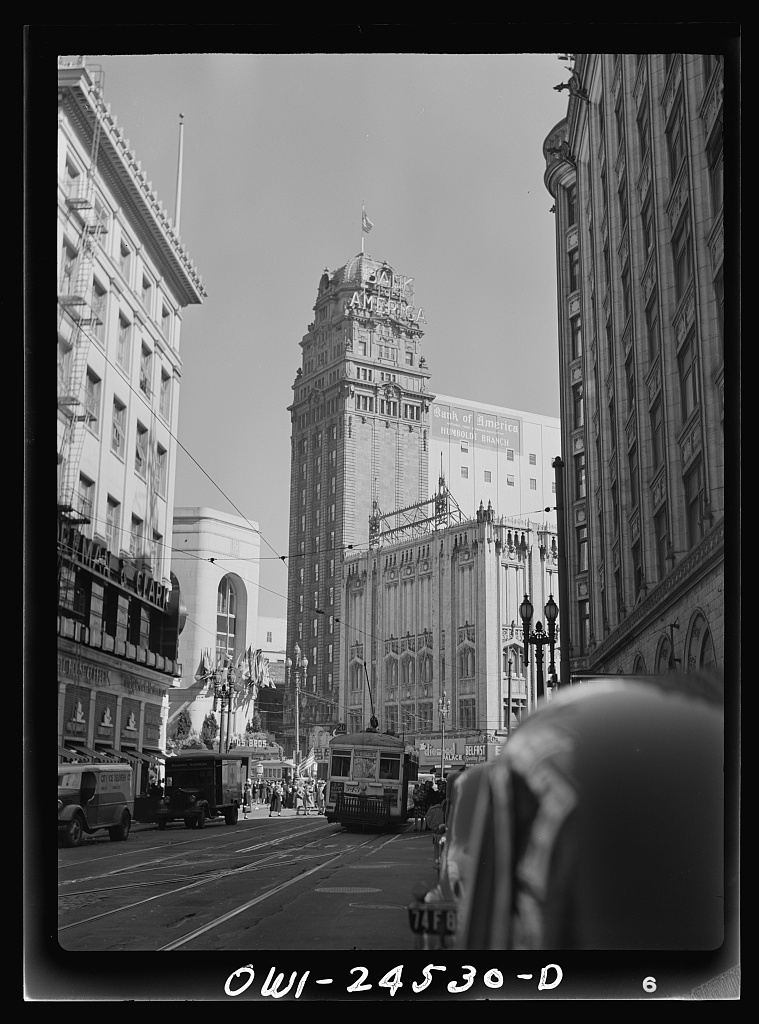 Let’s put the lesson in stark numbers. It won’t be hard to see why University of North Carolina at Charlotte professor Tony Plath called the Bank of America and Countrywide merger, “the worst deal in the history of American finance. Hands down.”
Four years ago – that is only 48 short months – Bank of America was a financial fortress. It decided to buy distressed mortgage lender Countrywide, thinking it was getting a bargain. It paid $2.5 billion. That decision has resulted in such horrifically large losses, that the bank has been forced to write-off $40 billion.
Think about that. They spent $2.5 billion dollars for the privilege of losing $40 billion. They were greedy, naive, or both. With that kind of money, they could have gone and bought a real estate related business like Choice Hotels International, the parent franchiser of Comfort Inn and Econo Lodge, and collected $100+ million in after-tax profit for the past few years, all of which would be sitting in the treasury. Instead, they wanted to build the empire and become the largest mortgage underwriter in the United States. It was ego. I think the management of Bank of America was seduced by the idea of having scope and scale virtually unprecedented in domestic banking.
The Lessons We Can Learn from the Bank of America Deal
What can we learn from it? When considering a business deal:
- Examine the worst possible scenario outcome and decide whether or not you could live with it. If you can’t, don’t pull the trigger, no matter how tempting the deal.
- Don’t short circuit your thinking by acting in haste.
- Structure your positions in such a way that if one asset or company goes down, you can put it into bankruptcy without touching the parent entity.
- It is possible for a stockholder to own a business that survives disaster, but be so diluted in the process that they still experience drastic, permanent capital loss.
Avoiding bad deals is more important than finding good ones. Remember the famous and oft-quoted “rules of business”. The first rule of business is never lose money. The second rule of business is to remember rule number one.
Reader Comments (5)
Comments are presented chronologically, with replies indented beneath the comments to which they respond.
Anon
July 1, 2012
Hindsight = 20/20
Joshua Kennon
July 1, 2012
Replying to Anon
Personally, I don't think the adage applies in this case for several reasons.
If I recall correctly, before the deal was closed, the government announced a widespread investigation of mortgage fraud into Countrywide, calling into question the legality of its practices and behavior. Management barreled full steam ahead, regardless because the spirit seemed to be, "damn it, we want this acquisition."
Beyond the fraud investigations already taking place, home affordability relative to median household income had become so unsustainable that articles had been appearing for years in major publications such as the Los Angeles Times and The Wall Street Journal, some of the best real estate investors in the world had sold their primary residences and moved into rentals, the private bankers at UBS were writing in the newsletter to ultra-wealthy clients that construction magnates had come into the office, liquidated their entire real estate exposure, and told the investment advisors to put everything in cash and bonds, without exception and regardless of how low the yield was, bank equity and reserve levels were at near all-time lows, the equity that was on the balance sheet wasn't sitting in Treasury bonds or anything, it was exposed to credit default swaps and a myriad of securities that the most respective, successful analysts and investors in the world had been denouncing as a disaster waiting to happen - people like Chris Brown at Tweedy, Browne, Warren Buffett and Charlie Munger at Berkshire Hathaway, Martin Whitman at Third Avenue Asset Management, Bill Gross at PIMCO, etc. Commodity prices had been fueled to cyclical highs as a result of the leverage, which was being discussed in ernest at value investing panels around the world.
Everybody, even those in the industry down to the secretaries, knew idiots were taking on adjustable rate mortgages with little or no money down. None of this was a surprise. It didn't just pop up out of the ether as a black swan event.
I think the list of adjectives in the above comment by Konstantin is far more accurate in describing the situation: "overconfidence, arrogance, ignorance, blind greed and, if you excuse me, plain stupidity."
Personally, my belief is that the former head of Bank of America wanted to be an empire builder. I think he wanted respect in the power circles of New York and Washington. The acquisition of the nation's biggest mortgage lender would have expanded his scope. His eyes got too big for his brain and he made a mistake.
For me, a 20/20 hindsight scenario would be a construction company buying a maker of insulation that used asbestos in the mid 20th century, before any of the problems had arisen. There were little to no warning signs, the event took down otherwise profitable businesses who were innocent in the cover ups of the manufacturers, and second guessing after-the-fact doesn't do any good. The Bank of America / Countrywide merger is not that. It was a bad idea from day one and it remains so today.
Konstantin
July 1, 2012
Joshua, if you didn't read "The End of Wall Street" by Roger Lowenstein - try it. Now, when I see names like Mozilo, Countrywide, Washington Mutual, Greenspan, Summers, etc, they all associate with overconfidence, arrogance, ignorance, blind greed and, if you excuse me, plain stupidity.
P.S. Is it just me or your "Conctact me" form is not working?
Joshua Kennon
July 1, 2012
Replying to Konstantin
Thanks for the recommendation!
The contact form was somehow deactivated. I must have done it in the last round of updates and forgot to turn it back on at the end. Thanks! It should be fixed now.
Cory Tsuhako
July 3, 2012
Although BAC has it's challenges, I'm still a buyer at $7.00 or lower. The book value is about $19 and Warren Buffett and Mohnish Pambrai may still own their shares. I think WB bought at somewhere near $7 and Mohnish at $8 a share. I'm long on BAC and own the shares but your thoughts are very interesting and thought provoking. I bought at around $7 so rule #1 is still in effect.