

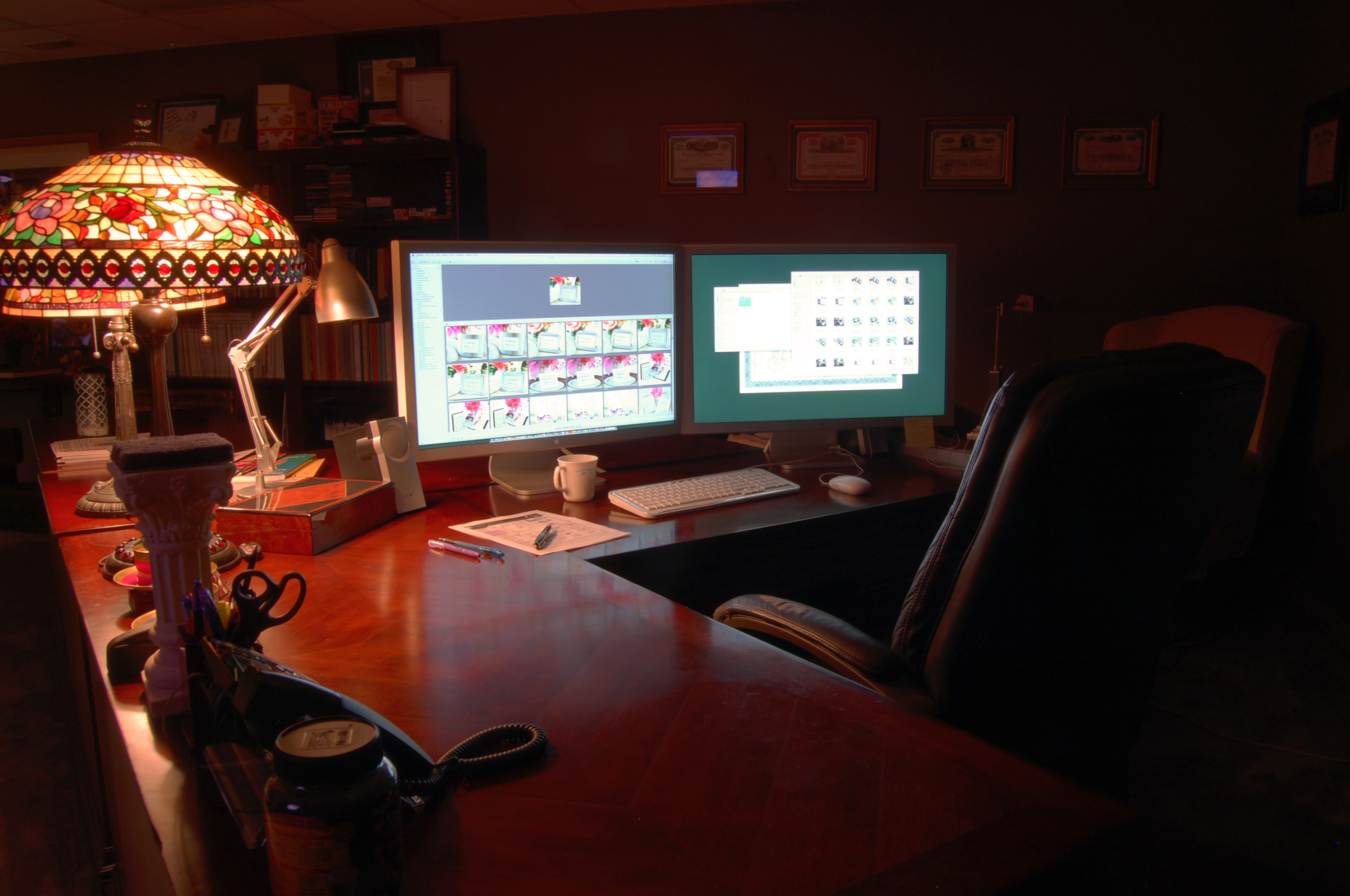
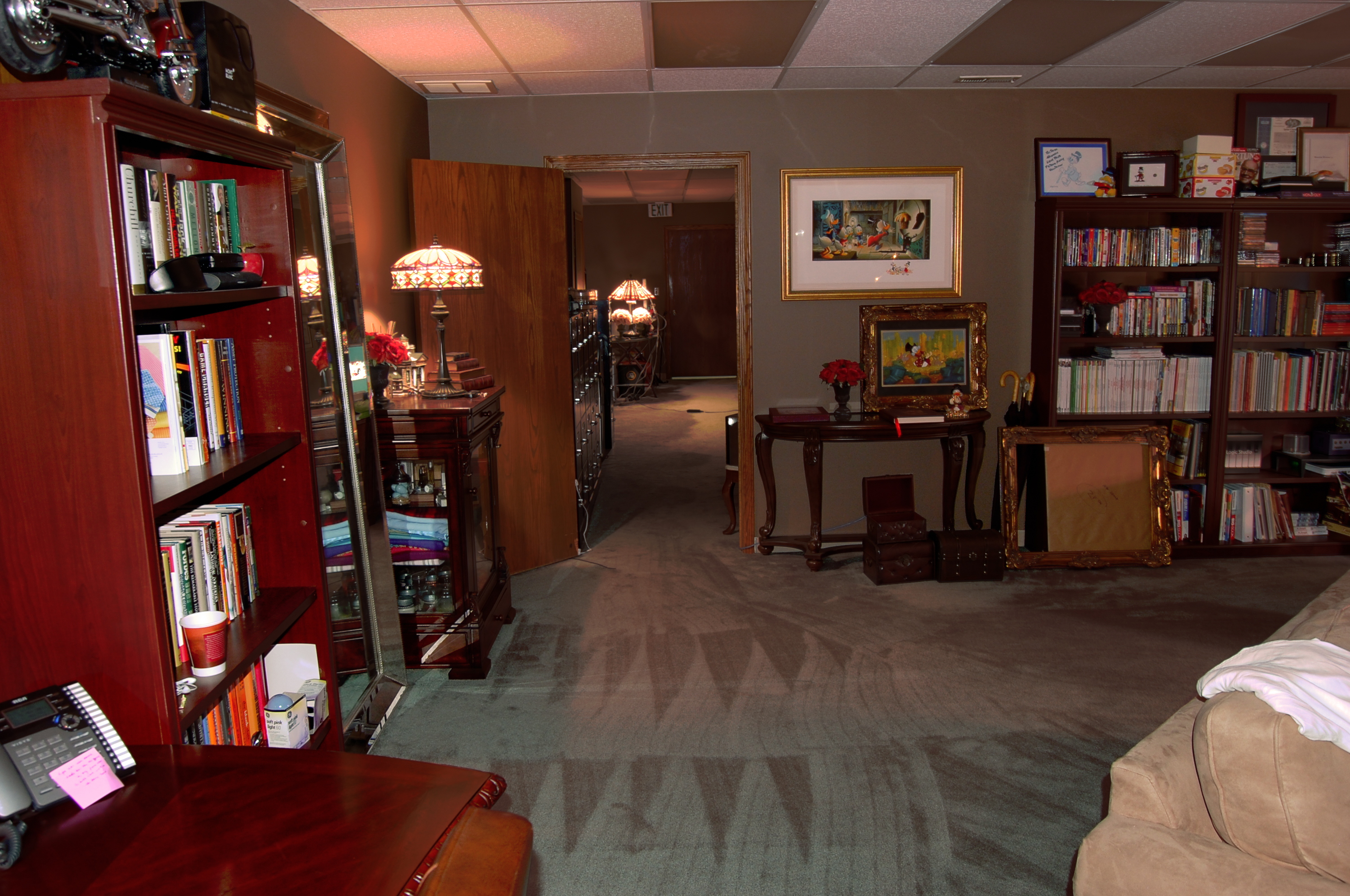
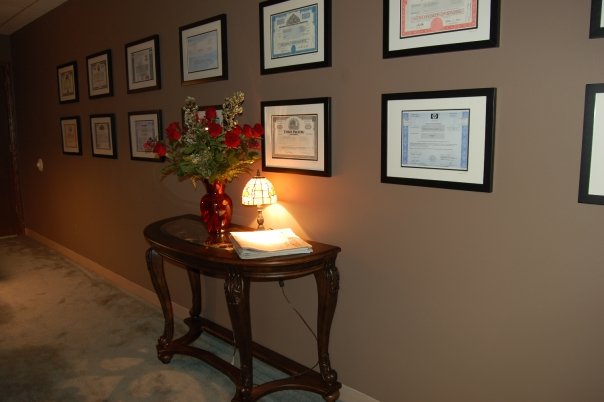
I came across pictures from years ago of the very first office Aaron and I setup when we came back to Kansas City from New Jersey. It brought back fond memories. Other than problems with the temperature (the office was always too warm for my taste), it was a great space.
Of course, being an investor, all I remember is how much capital I associate with everything. For example, looking at these pictures I immediately think:
- It cost us only $8,400 per year to lease, which was a great bargain because the landlord covered all of the utilities, taxes, etc.
- The company spent between $5,000 and $10,000 putting in new carpets, blinds and other upgrades, mostly because of my habit of sprawling out on the floor to read
- The company spent $13,000 to $15,000 on furniture and other items to make it enjoyable and comfortable
- The company spent $30,000 on software and computer systems, going entirely Mac. We worked with a business representative at the Country Club Plaza store in Kansas City, who got us a discount on the purchase and bundled everything together so it arrived smoothly without any glitched. I was apprehensive about the switch at first but it turned out to be one of the best things we ever did. (Sorry Bill Gates – I still admire you tremendously.)
- Unlike almost all other Internet start-ups at the time, our company paid for it all out of profits, not raising capital. That made us very, very proud.
The problem is, I only found pictures for the main room, not the other areas. I’ll have to try and find them. But this at least gives you somewhat of an idea how I spent my first years home from college as we built our company.
Of course, I much prefer our current office but, still … seeing these made me nostalgic because it was a time when we had just started to have some real success with the businesses, we were buying our first stocks through the company brokerage accounts, and taking a crash course in everything from merchant banks to search engine optimization. This was the year we got Aaron a new, black Lexus as a bonus. There is perhaps no greater joy that starting a venture and watching it prosper and expand.
I hope I come across more of these; they were just in a random folder on one of the Mac Pro systems. They were taken with a high resolution digital camera that we used for product images, which is why they still look so clear today.


Reader Comments (6)
Comments are presented chronologically, with replies indented beneath the comments to which they respond.
Kwame
October 28, 2010
I will like to know why you decided to switch entirely to mac. You said that at first you were apprehensive about the switch but it was one of the best things you ever did?
I was thinking about trying out a mac for myself but i am still not convinced that it will do me any better than a windows 7 pc.
What makes the mac so special that makes you choose it over a windows pc in your line of business?
Joshua Kennon
November 4, 2010
Replying to Kwame
When we started our first company, we were building websites. The software like Dreamweaver, Photoshop, etc., worked so much better in a Mac operating system that it saved us hours of effort each week. The tools became intuitive - I could run the automator program and have it resize, rename, and resort thousands of images in a single folder based upon some rule structure I came up with all in a matter of seconds. The iDisk service let us save documents to it directly from the desktop, and then access them anywhere we had Internet service by going to me.com which is owned by Apple. They hardly ever crashed. They just WORKED. We got two as an initial test run and within a few years, had switched the entire business over to them. The Kansas City factory is still all PC but that is because the software necessary to run it is Windows-only. Otherwise, I'd have switched them over too.
Once you become familiar with it and stop trying to make it do things like Windows, it is just ... better. It's just better. I'm not sure how else to explain it. When I have to work on a Gateway system at the office, I want to scream half the time because of update notifications, freezes, hangs, and general clunkiness.
Joshua Kennon
November 4, 2010
Replying to Kwame
P.S. Here are some thing in the operating system we found useful that most people don't know exist:
http://www.apple.com/pro/tips/
Frat Man
October 30, 2010
Nice digs. Joshua, did you come across the news story the other day about negative interest rates on US bonds? That's crazy- I know the lenders are banking on impending inflation, but still, I did not ever think I'd see the day people would actually be paying to lend money. I know that happens in underdeveloped countries with weak banking infrastructure in exchange for security, and I understand the limited cases when it might make sense to do so, but still. Wow. Paying interest to lend money. All things considered, I still find that to be insane.
Joshua Kennon
November 4, 2010
Replying to Frat Man
Don't think of it like that. Believe it or not, not all institutions that were buying Treasury bonds at negative returns were being irrational. Here is why:
When the markets were falling apart and it looked like the entire banking system was going to collapse within a matter of days, if not hours, no money at institutions would have been safe. The only way to protect yourself and your shareholders would have been to park all excess cash with the Treasury itself because then the government is responsible for it and has to repay you.
If you were a manager of an insurance company looking for a place to store $500 million when the world was melting down around you, and you saw that you could put them in Treasuries for a 1% guaranteed loss, or $5 million, you'd do it for one simple reason: You were effectively buying insurance. The 1% loss was the premium you were paying to take your funds out of the hurricane and put them in the sheltered cave of the richest government in the history of the world. It paled in comparison to the probability of losing the entire $500 million without any hope of ever recovering it.
Today, when the bond rates are effectively negative after inflation adjustments, what is really happening is the Federal Reserve is printing money and buying the bonds from the Treasury, transferring money from the nation's savers to the government as a backdoor tax. This is known as "monetizing" the debt. The government is doing it because the idea is, the longer interest rates can be forced down, the more time it gives banks and corporations to recover. And there is no doubt it is working, even though the hangover is going to be hell. Corporate cash reserves now stand at nearly $1 trillion, or 10% of market capitalization, one of the highest levels ever recorded. In our own case, the little amount of debt we carry is now worth more than equity in terms of funding costs (e.g., some of our student loans are at 2.75%, we get a tax deduction, plus you have inflation so the real cost is negative.) If someone would loan me $100 million at 2.75% I'd take it in a HEART BEAT if I could lock in the interest rates. If my companies were public, I'd be issuing bonds right now and hoarding cash.
It is one of those situations where truth is stranger than fiction. The goal is to give institutions and families more time to rebuild their balance sheets (credit card debt is plummeting for the average American family) and the collateral damage, if you will, is a negative real interest rate.
Donna Bayley Lovett
August 30, 2017
MUST.HAVE.CLOCK.COFFEE.TABLE! It's perfect.....!!!