

In the late 19th century, a man named Benjamin Franklin Thomas decided he wanted to be rich. He became obsessed with business, investing, and finding a single opportunity that would set him up for life, allowing him to live off his capital. According to Constance L. Hays in her book The Real Thing: Truth and Power at the Coca-Cola Company, Thomas defined success as “something inexpensive that appealed strongly to the general public,” that “could be used up quickly and then repurchased.”
He tried everything – becoming a lawyer, working in a bank, becoming employed at a rock quarry, operating in real estate, and even doing time in a hosiery mill. While his capital grew, true wealth eluded him until he came up with an idea during military service at the time of the Spanish-American War. He saw Cubans walking around with bottled carbonated pineapple drinks and realized that people in the United States would want something as convenient. Being from Chattanooga, Tennessee, he immediately thought of a relatively young American soda company called Coca-Cola, which extended throughout the south from its home base in Georgia.
[mainbodyad]Rounding up his friend, a lawyer named Joseph Brown Whitehead, the two made their way to the office of Asa Candler in Georgia, who had acquired the entire Coca-Cola Company from its inventor, John Pemperton, for $2,300; a transaction that very well may be the single greatest financial investment ever made in all of recorded human history. Candler transformed this little operation into a brand, making Coke the first dominant national sparkling beverage company. The men convinced Candler to write them a perpetual contract that gave them the right to buy Coca-Cola syrup concentrate at $1.00 a gallon and rebottle it throughout almost all of the United States (the few areas they didn’t control belonged to other Coca-Cola customers who had begun bottling as an experiment or had other unusual circumstances). With the technology in place at the time, every gallon would produce about 400 Coca-Cola servings when reconstituted with carbonated water and sugar.
Candler thought the two would go bust, and couldn’t imagine bottling individual servings would be successful. Coca-Cola was so closely identified with crisp, clean soda fountains and nice pharmacists in blindly white coats that it was hard for him to see past what had already made him a very rich man. He agreed, signed the contract, and didn’t think much about it because even with his resources, bottling had proved too expensive, too technically difficult, and too messy. Failure, Candler presumably thought, was all but guaranteed, but he still decided to support his new clients with marketing.
Setting Up Their First Bottler, Thomas and Whitehead Realized They Didn’t Have Enough Equity to Maximize the Potential of Their Coca-Cola Bottling Business
Thomas and Whitehead went back to Chattanooga and setup their bottling company. They realized very quickly that Candler was right – bottling was a hard business that required a lot of money. They knew they could never make the most of their opportunity due to a lack of equity capital but an idea occurred to them: They would seek out motivated businessmen throughout the United States and license exclusive territories under their master contract, controlling these terms. That way, they could retain ownership of their Coca-Cola distribution coup without having to sell stock, while still benefiting from the equity of others.
(Note: This synthetic equity approach is one of the easiest ways for those who don’t have a lot of money to become rich in a short amount of time.)
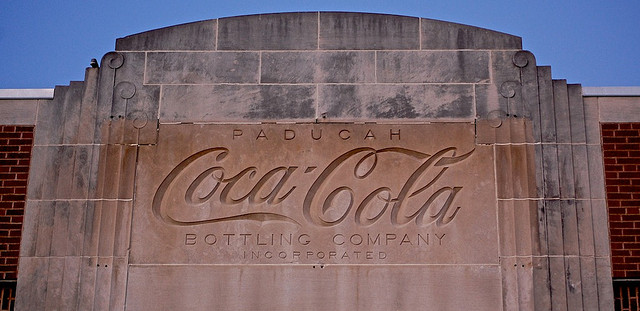
The Coca-Cola master bottling agreement fundamentally reshaped the business for more than a century, and resulted in explosive growth as the company was able to expand using the equity and debt capital of thousands of entrepreneurs who risked their own family’s fortunes to sell Coke in local territories.
From VistaVision Under Attribution-NonCommercial-NoDerivs 2.0 Generic (CC BY-NC-ND 2.0)
The two began to sell licenses over exclusive territories to motivated business-savvy people, who setup their own corporations and partnerships that raised money, built plants, and hired employees to distribute the goods. The new licensees had all the benefits of being an entrepreneur as they got to keep every penny of profit they could create by selling Coke in their territory. It was a goldmine and everyone got rich from it. Back in Atlanta, Asa Candler was selling a lot more syrup to the boys in Tennessee, who were now selling it to a wide range of independent companies that bought from them as a distributor, who were putting it on store shelves in tiny farm towns and major metropolitan areas, alike.
The bottlers who had acquired contracts from Thomas and Whitehead became “Coca-Cola Kings”, with their children and grandchildren inheriting the often privately-held common stock in the local bottling companies they created. As school teachers and bank presidents alike demanded the convenience of bottled Coca-Cola, these Coke Kings built mansions in their communities, employed locals, and became huge presences in their counties, funding everything from little league teams to helping pay for the new library. Even in the most unexpected of places, you can still find these estates on established streets, not realizing their bricks were acquired with cash made by the dark sugar water. There’s a Flickr group dedicated to pictures of these individual Coca-Cola bottling companies.
This three-tiered system meant that there were many ways to become rich from Coca-Cola; literally hundreds of companies or partnerships through which one could do it. Even today, there are several families that hold staggering fortunes from their “Coke” stock, that isn’t actually the Coca-Cola you buy on the New York Stock Exchange. Take Coca-Cola Bottling Company UNITED, Inc., which traces its roots to 1902. It was originally started by a man from Chattanooga named Crawford Johnson. He bought a license for Birmingham, Alabama from Thomas and Whitehead. The family kept buying more territories, and pouring their profits back in for expansion, to the point that it is now the largest privately owned Coca-Cola bottler in the United States. You can hardly buy a Coke product in certain parts of the south without putting money in the owners’ pockets. The descendants of Crawford Johnson hold the non-traded shares of CCBCU, and collect millions of dollars a year in dividends.
Other families took their bottlers public. The Coca-Cola Bottling Company Consolidated is one example. It was started when J.B. Harrison got his licensing contract in 1902. Today, some of the shares are in the public’s hands and it trades under ticker symbol COKE with a $641 million market capitalization.
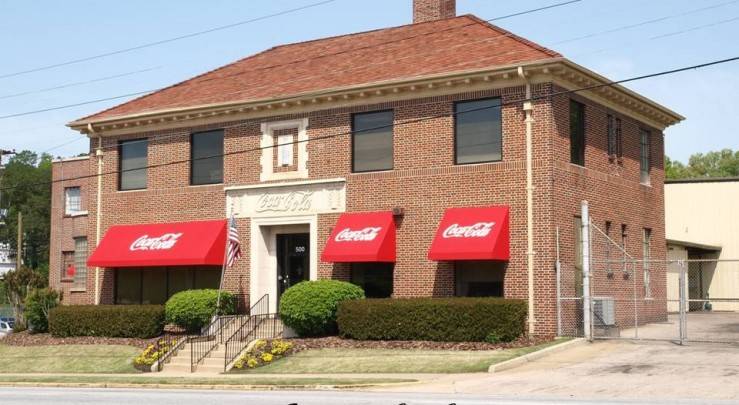
Some of the independent bottlers who acquired the rights to territories went on to expand over the generations, eventually having IPOs for their own companies. This building is owned by a company called Coca-Cola Bottling Company Consolidated, which began in 1902 when J.B. Harrison got his hands on a licensing contract for North Carolina and began manufacturing in Greensboro. Today, it trades under ticker symbol COKE, and has a $641 million market capitalization.
Thomas and Whitehead Split Their Company In Two and Go Their Separate Ways After a Disagreement on the Bottling Contracts for Their Licensees
In short order, Thomas and Whitehead, who had been earning enormous sums on the equity capital of others (Candler’s investment in The Coca-Cola Company supplying the syrup, and the thousands of bottlers beneath them who had built the factors), had a disagreement. Whitehead wanted his bottlers to get the same deal Candler had given them – the right to buy at a fixed price in perpetuity. Thomas, however, was a much smarter businessman. He knew that they had locked Coca-Cola into a $1.00 a gallon price, regardless of Coke’s cost, with no way to end the contract. As time went on and retail prices were raised, Thomas could keep charging his sub-bottlers more while they passed on those price increases to the retail customer, both of them getting richer. Thomas also wanted to grant only 2-year contracts so he could get rid of bottlers who weren’t up to snuff and / or raise prices depending on the environment.
[mainbodyad]The two friends decided to go their separate ways, dividing their master Coca-Cola bottling contract into two businesses. Whitehead took on a new partner, J.T. Lupton, and setup the (southern) Coca-Cola Bottling Company, which had ownership over almost all of the Southern United States along with a new plant they had built in Atlanta. Thomas setup his own (northern) Coca-Cola Bottling Company and had ownership of Chattanooga, plus fifteen Northern and Western states. Both companies operated on different models, with each man getting what he wanted.
Later, Candler sold The Coca-Cola Company in Atlanta, the parent business with the rights to the name and concentrate syrup supplying the entire empire, to a group of bankers who couldn’t stand these contracts. They took the company public in an IPO, with JP Morgan and SunTrust bank underwriting the deal. JP Morgan took its $100,000 fee in cash, while Sun Trust took its $100,000 fee in Coke stock (almost a century later, in 2010, the executives at SunTrust committed a transgression so great they deserve to burn in capitalism hell. They sold the position, which was worth more than $1,700,000,000 and produced $52,800,000 per year in cash dividends for the bank stockholders, because they were more interested in how the accounting looked than the well-being of the owners). A war erupted between the now-public Coke and the bottlers, causing the $40.00 per share offering price to collapse to $19.00 shortly thereafter as investors worried over the sustainability of Coca-Cola’s profits. Court case after court case was filed for many years, explosive fights were had, and wise bottlers who benefited from them would indoctrinate their children to never agree to any change in the Coke bottling agreement because as long as they could pay only $1.00 per gallon, they could continue “printing money” for the family, which held the stock in these private bottling groups.
Meanwhile, average Americans began buying the public shares of the parent Coca-Cola Company, with towns like Quincy, Florida, creating hidden caches of Coca-Cola millionaires, many of whom never set foot in a bottling plant. This was the era of the legendary Coke president Robert W. Woodruff, which deserves its own post at some point in the future.
The Candler Family Loses Its Coca-Cola Fortune
The Candler family took their proceeds from the sale of parent company Coca-Cola to the bankers – $25,000,000 in cash on that $2,300 cost basis – and expanded Asa’s existing real estate and banking empire. He built office buildings in New York and Atlanta, gave to charity, and put what amounted to almost $338 million in today’s inflation-adjusted dollars to work so his children and grandchildren could live very well.
Unfortunately, they were not good at business. Though some branches prospered, a big chunk of the large fortune Candler left his heirs was lost in the Great Recession of 2009 as a result of mismanagement, too much leverage, and personal failings. According to Elizabeth Candler Graham, “Ten of Candler’s 22 grandchildren became alcoholics, and six died over their addiction.” The leading heir blamed their losses on America’s “ruthless economy” and insisted that the banks didn’t have to lend him the money on which he defaulted, wiping out one of America’s greatest empires.
And yet, that is why standards of living keep rising – that ruthlessness rips capital out of the hands of those who can’t use it productivity and flows to the most efficient uses. It’s why the Candler family is wiped out and new fortunes have been made in Silicon Valley, which is now providing more value to the civilization. It’s a virtue, not something that deserves castigation.
Today, according to management’s most recent conference call, the average cost of a serving of 8 ounce Coca-Cola at retail in the world is $0.25. That is up over 5% from two years ago, and over 10% from three years ago, which is better than the domestic inflation rate. It’s this pricing power that is the secret to Coke’s compounding rate. People always want to know what the “next” Coke is, and the answer is simple: There is no “next” Coke. There is only Coca-Cola. If I were to go into a coma for 50 years, it is one of the only businesses I’d entrust with my entire net worth (Nestlé being one of others on the very short list). Every generation, it mints more millionaires, but it happens so slowly that no one notices, thinking that the ship has already sailed.
I’d go so far as to say that anytime it is even within striking distance of intrinsic value, a person who is thinking about inter-generational wealth for children and grandchildren, and who is capable of holding for 25+ years, should consider writing checks. I expect it to be around long after behemoths like General Electric and Berkshire Hathaway have disappeared. It’s simplicity is its strength. It hides in plain site because everyone knows about it, and people grow tired of hearing the name when blue chips are discussed. It’s one of the few things in life where the odds of winning are overwhelming; where market crashes should make you dance as you are able to pick up more as even slightly overpaying for Coke is probably going to work out better in the long-run than getting a huge discount on another stock.
Reader Comments (33)
Comments are presented chronologically, with replies indented beneath the comments to which they respond.
poor.ass.millionaire
December 9, 2013
Yeah but doesn't Coke hedge it's bets by owning a whole lot of other bottle/can drinks? Including some of these healthy/vitaminy types? You seem quite confident that in 50 years people will still want their sugared water. But growth is mostly in 3rd world countries (wishing to emulate America), but there is only a finite supply of third world countries to conquer. Maybe Cuba and North Korea are holdouts, but Africa will be done in the next 20 years (already stealing China's lunch on the cheap manufacturing front.)
How reliant is the company on its flagship product? I dunno, but I'm guessing, a lot. I smell risk long term there.
Joshua Kennon
December 9, 2013
Replying to poor.ass.millionaire
"How reliant is the company on its flagship product? I dunno, but I'm guessing" ...
You haven't read the 10k disclosures or analyzed the financial statements and you have an opinion on the business?
I'll leave this right here...
poor.ass.millionaire
December 9, 2013
Replying to Joshua Kennon
Mine is an educated question based on existing knowledge. It's not an asset class I invest in, so I don't spend a lot of time on it. My question is valid, and besides, I thought that's why we have you here 😉
Paarthurnax
December 9, 2013
Replying to poor.ass.millionaire
" I thought that's why we have you here ;)"
That's a bit out of line, don't you think? He's here because he wants to be here. He has a passion for the things he talks about and enjoys sharing his passion with others, in hopes that they will do well for themselves as well.
Sure, like most any blog really, earning a bit of income through advertisements, affiliates and such is a perk. But come on. His reply to you was a push for you to educate yourself further and hopefully grow as an individual to gain further opportunities.
poor.ass.millionaire
December 9, 2013
Replying to Paarthurnax
Bro, aren't we a bit uptight this Monday morning?
I'm merely trying to engage in meaningful discourse, as the blogger is keen on. Reading the 10k; A- assumes I have a serious interest in coke. I don't as I don't invest in it. B- assumes I'll just take their quasi-marketing-investor word for it.
My questions were regarding general market observations on drinks, food trends and globalization. No reason this is not valid discourse.
Paarthurnax
December 9, 2013
Replying to poor.ass.millionaire
Reading your post again, I see how differently the light in which I read it was, compared to how you intended it. My apologies. I'll chew on my foot for a bit.
The Blades
December 9, 2013
Replying to Paarthurnax
You do that. Stupid dragon.
Paarthurnax
December 9, 2013
Replying to The Blades
😉
poor.ass.millionaire
December 10, 2013
Replying to Paarthurnax
No worries. I know I can come off a bit prickly, but I can't help it. Apparently it's part of my DNA 🙂 (plus it can make for entertaining blog reading, along with interesting perspectives, hopefully.)
I'll also take a minute to give Joshua praise for his blog. I must admit when I ran upon it a week or so ago I was highly skeptical. Most private people that write about wealth are usually trying to sell you something, or at best are inflating their wealth. But in this case I think Joshua is telling it straight, and honestly likes to share his investment philosophies. Probably some part is an enjoyment to expound, some part helping others, and another the dialog and exchanges. No smoke and mirrors, and it adds up for me 🙂
Joshua Kennon
December 9, 2013
Replying to poor.ass.millionaire
Coke's story is not one of sugar water in isolation. It's a network of bottlers and efficiency that could not be replicated by any existing pool of capital on Earth as it would cost over $100 billion to reproduce. With existing margins so high, even if human biology were to somehow change and cause large non-cyclical drops in soda consumption (something that hasn't happened in a century-and-a-half given the addictive nature of both sugar and caffeine and stimulants), the returns on capital are so extraordinary that in the event of the unthinkable, Coke would be able to continue diversifying away into other beverages, like it already does with Minute Maid juice, POWERADE sports drinks, Honest Tea, Odwalla juices and smoothies, Gold Peak tea, Simply Lemonade, bottled water, etc. And there wouldn't be much risk in it given that this is their area of expertise and something that fits perfectly with the business model that has been in place for more than 120 years.
In fact, Coke was supposed to be the one to buy Quaker Oats and diversify into packaged foods, not Pepsi. There was a board meeting when management had the press waiting, and the executives told, rather than asked, the board of directors about the transaction. The rumor is that Warren Buffett, who owns around 9% of the company and sat on the board at the time, flipped over an envelope, scratched out a few numbers, said something like, "You're paying far too high a price for this - no matter how good the business is, you can't do well on these terms. No." And the executives, who were humiliated (rightfully so) had to go tell the press to leave and break up with the Quaker Oats management who had no idea they hadn't had the authority to be negotiating the merger. Pepsi swooped in and bought it, instead.
Coke has the pockets to buy whatever it wants were it necessary. There is so much cash being produced, so much wealth generated every quarter, that if a decline happened, it would be visible enough on the horizon that management would have more than ample time to react through diversification, which they've been doing for 20+ years, anyway. They'd end up with something that could work with their existing distribution system, which means the high-return packaged food or beverage industry, or they'd be bought out by someone else.
Think of it like the cigarette industry. Sugar doesn't face nearly the problems it did, and the tobacco giants have absolutely blown everyone else out of the water over the past 50 years despite massive lawsuits, declining consumption, etc., because the returns on capital are so insanely high. The more depressed investors got about it, the lower they drove valuations, while the returns on capital stayed high. So there is a precedent for that sort of worst-case, highly unlikely scenario and it still bodes very well; much better than the average company.
Interestingly, in Coke's case, the true power of the company - those enormous returns on capital - are masked by the accounting for acquisitions involving the bottlers (you can't really get to the heart of the business by glancing at the financial statements and comparing net income to the asset base), but it's still there, hidden underneath the write-up of goodwill, etc.
Joshua Kennon
December 9, 2013
Replying to poor.ass.millionaire
P.S. I know your preferred bailiwick is tangible property, but I would still highly encourage you to learn how to read, analyze, and tear apart a 10K. The things you can learn from the disclosure rules are not minor and relate directly to your field. Many years ago, I once learned about a very interesting real estate structure by reading the disclosures of a teen apparel company that had the founding family setup a side real estate empire involving lease-back transactions that allowed them to collect rents with very little equity capital of their own invested. It's all business, and all connected.
You may not invest in the common stock of the enterprise, but the enterprise itself - the business proper that is described in the 10K - transcends asset class. It is real estate, operating machinery, bonds, cash flow management, profitability, etc. In fact, even if I had no intention of ever buying shares of Coke, I'd still read the 10K if I were going to do business with them, or lease them a warehouse, or park money in their bonds. Those are not just for the stock investors.
Matt
December 9, 2013
Replying to Joshua Kennon
In which 10k did you find that real estate structure? I'd be interested in learning about it.
Joshua Kennon
December 9, 2013
Replying to Matt
Off the top of my head, I think it was the 2002 or 2003 American Eagle Outfitters 10-K filing with the SEC, plus some of the referenced disclosures not included (you find them in the appendix and have to pull them separately).
The founding family had created a separate real estate holding company. They then infused money into it for equity, then entered into complex lease agreements with American Eagle Outfitters, that caused them (the family) to collect large rental income. This allowed them to avoid paying a dividend (at the time - they do now) on the common stock, while still providing big sums of cash for the family each year. It also gave them some added strategic control without requiring a separate class of common stock as they had ironclad contracts on the distribution warehouses and other buildings that were necessary for the retailer to conduct business.
It wasn't evident at first because the men running it had different last names than the controlling family, but they had married the daughters of the founder. I vaguely remember a flow chart breaking out the entire structure of how they had put it together because I used it to work out exactly how much money they were extracting without having to disclose it on the proxy statement. It was brilliant (especially since the company had to pay rent to someone, anyway; who better than the folks who want to see the business succeed and would be more likely to care for it?). It wasn't in the annual report, though, I somehow found it by going through the 10K real estate holdings, then cross-referencing it with the appendix disclosures. It's been 10 or 12 years, but I'm 95% certain that's where it is if you want to research it yourself.
poor.ass.millionaire
December 10, 2013
Replying to Joshua Kennon
Thanks for the recollection. Yes a lot of corps use real estate in creative ways, and learning about their particular set ups is always interesting.
For the record I don't dismiss 10k's by any means. And I'm a big proponent of reading tangential information, for normally the most interesting ideas are not the most obvious ones.
The one thing I have found as a major, and natural, advantage to real estate investing is the tax treatment. This is especially true for long term buy and hold (or for 1031 exchanges.) the tax advantages almost encourage you to hang onto high quality property; perhaps akin to your desire to hold coke stock for the long term (not from a tax advantage necessarily, but from an appreciating asset POV.)
So imagine you buy a building and you get to depreciate it, offsetting the income stream. But in reality, the building is appreciating in value. Now IF the property you buy is solid and stable enough to hold for many years, you have little incentive to take a huge tax hit by selling it. Instead, as I do, you can leverage it and borrow against it. But the key is that you can keep the property because it's a strong asset, based on its intrinsic value (and not just because you don't want to take the tax hit or you need it's leveraging power.)
I suppose there is some similarity to certain stock picks. My analogy is more to do with setting up a successful long term position than stock vs. real estate, which is pointless as they are very different animals. What I think is interesting is the mind set an investor creates. I know plenty of RE investors that spin their wheels wheeling and dealing, buy/sell, flip, etc. to me it's all a terrific pain in the ass! If I can somehow set a property up to grow from its initial state of value, once it reaches a certain critical mass it almost perpetuates itself. And that what I like.
Breathaholic
December 9, 2013
Joshua,
This is bit personal question and I figure I would ask knowing you can leave it unanswered if you wish to.
Even through the example here, looking at the grandchildren and heirs and how sad their lives turned out. And I am sure you have read many more cases of great generational wealth not necessarily helping heirs live fulfilled lives, why do you still insist of leaving fortunes to your grandchildren and great grand children? Do you not think achieving things by your own labor, your own brain, own sweat, dedication, showing kindness and respect for folks around you is a better model than living off the millions of your ancestors?
Would you rather your great grand dad leave you huge fortune, or would you rather have the life you had and achieved what you achieved yourself(with loving family, friends and all but largely yourself)?
I think you would choose latter, why not give your great grand children same opportunity to make their own way in the world? (give them funds for education purposes and let them loose to do their own bidding?)
Joshua Kennon
December 9, 2013
Replying to Breathaholic
That's a great question! Here's how I think about it at the moment.
1. I hope to build a huge fortune over the next 50+ years and leave most of it to charity, not my children or grandchildren
2. The wealth I do leave to them? I have a lifetime, God willing, to shape, mold, and influence who they are to the extent that is possible. And I'm good at it; it's in my skill set. I know how to make people see the world differently and get to the heart of a lot of things. The money shouldn't ruin them. Even in the Candler case, some branches of his grandchildren are thriving right now, way better off, living much more successful lives, because they were smart about the money. To punish them, in a sense, because of their failed siblings or cousins seems unfair.
I'm also going to be very precise about the structure. In the trusts for my future children, for example, beginning on their 25th or 30th birthday, the trust will distribute up to 3% of its value each year, but only on a dollar-for-dollar matching basis with their taxable income. Let's keep it simple and imagine a scenario. You have a daughter. You put aside money for her in a trust so that, by the time she is out of college and working full time, there is $1,000,000 sitting in it. She gets a job as an elementary school teacher earning $50,000 per year.
In this case, every Christmas, she'd get a check for the greater of 100% dollar-for-dollar matching on her gross income from her own work or 3% of the trust value. In our scenario, the latter would be triggered, so she'd get a check for $30,000, minus Federal, state, and local taxes, leaving her with around $23,000 depending on circumstances.
That's going to be a wonderful augment to her life without any chance of becoming a significant problem. You wouldn't be exercising any discretionary control over it, so there could be no possibility of using money as a way to influence their behavior. It distributes dividends, literally, for living a self-sufficient, productive life.
Any larger amounts wouldn't come until they were in their 40's or 50's and we could see how they turned out as people. By that age, money isn't going to change much.
Beyond that, what if, despite careful planning, somehow you do get a bad Candler heir? They lose it all? Their temperamental and biological problems cause them to constantly fail? In that case, that is the strength and wonder of capitalism. It will rip the money from their hands faster than they can imagine and find its way to more productive uses, to men like me when I was younger, who are providing goods and services that the civilization wants. I would consider it a virtue that they ended up broke. I would rejoice that the cash is back out there in the economy going to whomever deserved it most. The money certain wouldn't have destroyed them - they would have likely been just a big a failure without it, only in less comfortable circumstances.
Paarthurnax
December 9, 2013
Replying to Joshua Kennon
"the trust will distribute up to 3% of its value each year, but only on a dollar-for-dollar matching basis with their taxable income." - Concept totally just blew my mind.
I haven't looked into trusts much yet, because, frankly, I'm probably one of the poorest people who visit your site lol. But, I hadn't realized you could set up such limitations or that you had that much... customization ability to mold a trust to work in any manner you wanted. That's pretty cool!
Joel
December 9, 2013
Replying to Paarthurnax
Oh, yes, you can customize them. My income is below the American average (although my wealth is at or slightly above), and hope to someday set up a charitable trust. Here is a great article Joshua wrote on a hypothetical $50,000 trust: https://www.joshuakennon.com/creating-huge-wealth-with-trust-funds/
Joshua Kennon
December 9, 2013
Replying to Paarthurnax
Yeah, trusts are awesome. When I first started studying them, I hadn't realized how useful of a tool they could be for all sorts of situations. Provisions like this fall under a category of "incentive trusts". They can be great but you have to be careful because if it's not written correctly, it can cause problems; e.g., what happens if you said the trust will only pay income based on a specific GPA and the child is in an accident that results in brain trauma? This is a really interesting read on this topic (PDF): Incentive Trusts and the Inflexibility Problem.
The flexibility is huge. Courts typically only set aside trust provisions if they violate some law or are "contrary to public policy". That seems vague but it's a hard test to pass.
The most famous example of an incentive trust dispute at the moment is the case of a Manhattan judge named Robert Mandelbaum. The facts read like something out of a soap opera; you'd have to try and make something up like this:
1. He is married (to a man, his husband, Jonathan, who is a lawyer/MBA specializing in tax laws) and they have a child, Cooper, who was born through surrogacy using the judge's DNA.
2. This judge's father built a fortune in the business world after founding Intelli-Check. He setup a trust fund for the grandchildren - I think it was like $180,000 or something.
3. The provisions of the incentive trust state that Cooper will only be entitled to inherit a portion of the trust if his father (the judge) marries the woman who is his "mother". (That presents an interesting problem - How do you define that - Egg donor? Surrogate?)
The judge is contesting the trust provisions as being contrary to public policy because it would require a Constitutional violation of his fundamental right to marriage (which the Supreme Court has upheld something like 14 times in the past century or two) as it would require him to divorce his existing legally-wed spouse, it would then require him to marry someone of a different gender, which is contrary to New York's marriage equality law that treats the marriages the same (meaning it should be thrown out just as if the trust would only be inherited it had stipulated he married a white woman, which isn't permitted), and finally, it requires the judge to enter into a "sham marriage" solely for the purpose of financial gain, which is illegal.
I'd probably bet 2-1 the judge wins and the trust is invalidated. So there are limits to what you can do or even should do. You can almost get away with anything but it's not so clean cut as, "His money, his rules." if it's considered grossly unfair or abusive.
Then again, it's a crap shoot. The famous so-called 'Jewish Clause' was upheld by the Illinois Supreme Court. It allowed a fundamental violation of free religion by disinheriting anyone who didn't convert to Judaism within one year.
Paarthurnax
December 9, 2013
Replying to Joshua Kennon
If I am able to leave a trust to my families bloodline, my thoughts are very much along the lines of the post mentioned above in comments on your 'Christmas Trust'. As I was reading your post on it, I kept saying "yes, exactly!" in my head.
My family is mostly working middle class. My mom was a stay-at-home mom and my dad worked at a lumber mill for 34 years. I don't think he ever brought home more than about $45,000 in a year. He never invested any of his money until his mid 50's. But he got a good pension out of it - his take-home pay is almost 50% higher in retirement compared to when he was working.
Quite opposite to how my parents are - I'm very interested and motivated in investing and business. As hard as it is with two kids and no college degree, I've been saving a few hundred a month into a Roth IRA, and am working (~20 hours a week) on building some writing content that I hope will start to yield some descent royalty income to further invest in the years to follow.
Once we move and are settled by next spring, I'd like to return to college and earn a degree. Anyway, that's all far in the future, but I still think about it a lot - it adds to my motivation. With persistence, hopefully I'll be able to pass on a trust to my boys that can help them in life.
david
December 9, 2013
Replying to Joshua Kennon
wouldn't the 30k be the lessor in this example?
Joshua Kennon
December 9, 2013
Replying to david
Yes, it should have read lesser, not greater, so the child could never extract more from the trust than he or she earned in a career (the math was right, the word was wrong). I changed the example halfway through and didn't catch that error; thanks for telling me! I fixed it in the previous comment.
Breathaholic
December 10, 2013
Replying to Joshua Kennon
Thank you for the reply Joshua. That is a very thoughtful approach.
The last sentence is what I grapple with. I have seen many families use money as a substitute for time spent, love and affection for the kids, they use gifts and buy things to sooth emotional needs, bribe of sorts for not being there. Kids emotional repertoire is pretty slanted and by association feel that if they have tons of cash it will fix all the problems. I am not sure if those kids had loving and affectionate parents (with money or without) they would have had same problems - setting a right example how to raise a child and how to spend time with them seems to be the best life skill they will have.Money is just a gravy after that. My own thinking is not crystal clear on this issue yet, still massaging and pressing it to try and distill it into a workable and rational philosophy. It helps that I don't have kids yet:) Thanks again and have a good one.
Paarthurnax
December 9, 2013
Hey, thanks for the link (and thanks Joshua for having wrote it). That's the kind of information my brain loves to soak up!
Paarthurnax
December 10, 2013
While on the subject trusts - any book recommendations, Joshua?
Joshua Kennon
December 10, 2013
Replying to Paarthurnax
For a great lay-of-the-land view that explains different types of trusts, provisions, etc., and would give you enough to explain to an attorney what you wanted at some point in the future, The Complete Book of Trusts, 3rd Edition by Martin M. Shenkman. It's now out of date (published in 2002), especially on the tax laws, but a lot of the basics haven't changed, so it gives you the terms you need (e.g., incentive trusts, QTIP trusts, etc.) to research further on your own, which will lead you down a rabbit hole of several weeks of non-stop reading online as you find papers written by attorneys or guidance published by law offices.
Then, once you are done with that and want to go onto the level of complexity like we talked about when we went over the Royal Dutch Shell corporate structure, get a used copy of Cases and Materials on Gratuitous Transfers (new, it's expensive but there are some left for $5 in the used section), and cross-reference it with the book that was written to make it sensible in plain English, Examples & Explanations: Wills, Trusts, and Estates: Fifth Edition, which has specific reference sections in it pointing to the first book. It has all sorts of new case law including things like what happens when a child is born from frozen embryos after the parent is deceased. You read the second book first, and it has visual aids and charts that point to the text in the first book. They're meant for law students but some of the best reading is from places like that. This wouldn't be interesting to about 99% of the population, but I find it fascinating.
Come to think of it, you're probably one of the only other people here that will appreciate this. You can buy bound copies of regulations, statues, court cases, and other things that are interesting.
Paarthurnax
December 10, 2013
Replying to Joshua Kennon
Definitely going to purchase those for Christmas presents to myself this year! I appreciate your suggestion on the first book to start to get my feet wet. And I'm also surprised you remember talking to me about RDS lol;
Are the links affiliate? If so, I'll go through them to purchase the books when the time comes.
I bookmarked the website and will check it out further over the next couple days. I appreciate the information, and I always love it when you share the depth that you do - I'm surprised more people don't seem interested in all of it O.o
al
December 11, 2013
From the Coca Cola 10-K:
"Bottlers that accounted for approximately 0.3 percent of total unit case volume in the United States in 2012 operate under our oldest form of contract, which provides for a fixed price for Coca-Cola syrup used in bottles and cans."
Is this referring to the original Candler-Thomas-Whitehead contract?
Joshua Kennon
December 11, 2013
Replying to al
That's the one. It was modified by a court case in the early 20th century that allowed Coke to raise the price based on the cost of sugar, but it still means that those few remaining, tiny bottlers are essentially making Coca-Cola for free and printing dollar bills in their territory.
Jay Tank
December 11, 2013
Once again, another wonderful case study; please don't ever stop posting these - they motivate, illuminate, and educate as well as entertain.
I had a related topic about this: what resources do you normally peruse to gather and integrate your information? As in, what medium do you read, and what specific sources do you use for your case studies? I'm trying to study some companies on my own as a start, and aside from the financial statements and websites, don't have any other sources to go off of.
Joshua Kennon
December 18, 2013
Replying to Jay Tank
Anything and everything I can get my hands on if I think it will be useful. Biographies, old newspaper articles, trade journals, Congressional hearing testimony, real estate deeds, probate filings, inter-family lawsuits ....
Today, I had a 30 year old out of print book called "Mr. Anonymous: Robert W. Woodruff of Coca-Cola" show up on my doorstep that details the life of the legendary Coke Chairman. I'm about to finish "The Real Thing: Truth and Power at The Coca-Cola Company", but before I do, I'll likely go through the footnotes in the back that pointed to the original research, track down the most interesting tidbits, and then go from there.
Everything. All of it. Whatever I can get my hands on, in whatever form I can find it. When I get obsessed with something, I become insatiable. Sometimes I'll even write or call people I've never met and ask them about it if they were involved or know someone who was.
Ryan @ Impersonal Finance
December 13, 2013
Joshua,
Long time lurker, first time poster. Thanks for always providing such informational content. It's an inspiration, because as you always say, it only takes one great idea to create great wealth. I think Coke's main power comes from it's brand recognition. There will always be soda... and that soda will be Coke. It's simply amazing.
Joshua Kennon
December 18, 2013
Replying to Ryan @ Impersonal Finance
I would say welcome to the site, but it seems you've been here for awhile, haha! Nice to (virtually) meet you, anyway =)