

Get ready to add yet another secret millionaire to your case study files. Ronald Read passed away last June at 92 years old. The Brattleboro, Vermont man, who had no college education and drove a Toyota Yaris, always made a point of living below his means. He spent many years working as a gas station attendant and the rest of his career a janitor for his local J.C. Penney department store.
Read was a near perfect archetype of the academic research done by men like the late Dr. Thomas J. Stanley at the University of Georgia and Wharton professor, Dr. Jeremy J. Siegel. Like the super-majority of Americans who are in the top 1% of wealth, Ronald was stealthy about it, keeping his money a secret from even his own children and friends. They knew he enjoyed investing but were reportedly shocked to discover upon his death that he had a safe deposit box with a stack of stock certificates five inches thick.
This was in addition to the nearly dozen-and-a-half direct stock purchase plans in which he was enrolled via electronic registration to take advantage of the lower costs they offered now that stock certificates are expensive to order out in physical form. Read also had a modest brokerage account which contained a relatively small percentage of his portfolio.
The estate, with the help of Wells Fargo & Company, is adding up his holdings and trying to ascertain the extent of his fortune but at last count, they know he owned at least 95 businesses representing $8,000,000 in market value. Assuming a 3% dividend yield on the weighted assets, he was probably pulling down $20,000+ a month in dividend income before taxes on top of the roughly $12 an hour job he held.
His largest stock positions were:
- Wells Fargo & Company = $510,900
- Procter & Gamble = $364,008
- Colgate-Palmolive = $252,104
- American Express = $199,034
- J.M. Smucker = $189,722
- Johnson & Johnson = $183,881
- VF Corp. = $152,208
- McCormick = $145,055
- Raytheon = $142,970
- United Technologies = $140,880
How did Ronald Read get so rich?
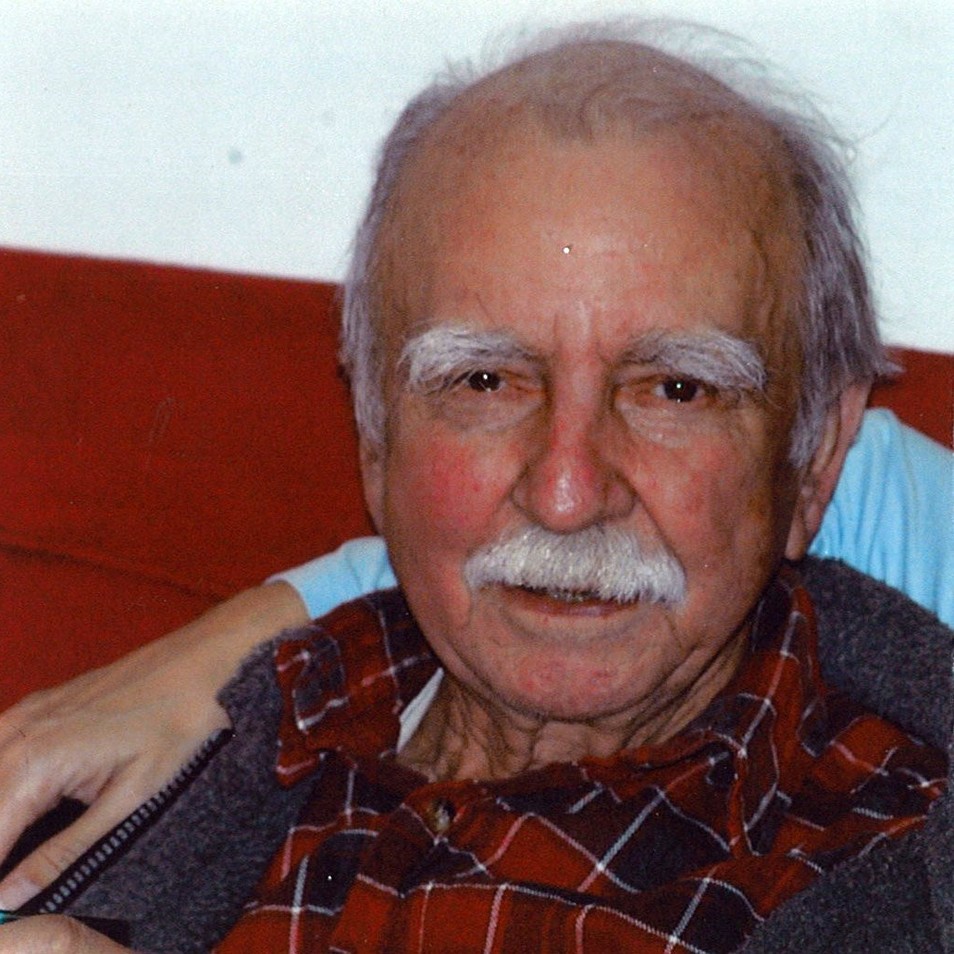
Ronald Read, a janitor at J.C. Penney, left behind a portfolio of at least 95 companies with a market value of $8,000,000+. He would research stocks at the public library, acquire ownership stakes, and then sit on them for decade, even if some of them went bankrupt along the way, trusting compounding and diversification coupled with low (in some case, non-existent) costs would work its magic. He then left most of it to charity.
Image from Estate of Ronald Read
- He started small. According to The Wall Street Journal, the trades go back to the 1950’s and began modestly. They provide one illustration. On January 13th, 1959, when he would have been around 37 years old, he bought 39 shares of Pacific Gas & Electric for $2,380; a trade with an inflation-adjusted total of $19,200 or so in today’s purchasing power equivalent.
- He spent the last 60+/- years quietly, patiently, and regularly accumulating equity in some of the most successful businesses in the world, across a wide range of industries. He owned railroads, banks, credit card companies, industrial conglomerates, dish soap and toothpaste empires, packaged foods giants; you name it. Multiple times, he would have seen his portfolio value decline by 50% or more on paper but he just plugged away at it with discipline, acquiring more ownership of productive assets despite multiple wars, inflation, deflation, numerous changes in the tax code, the threat of nuclear annihilation; didn’t matter.
- He only bought ownership in businesses he knew and understood through first hand experience.
- He only bought ownership in businesses that paid him a dividend so he could physically see the check arrive in the mail, which he would then deposit and use to buy more shares, the goal being growing his stream of monthly passive income.
- He was like the super-rich Vanguard clients John Bogle discusses who buy individual stocks and never sell a damn thing. He largely eschewed turnover, with multi-decade holding periods. This guy was a true buy-and-hold investor. He understood the danger of activity, the advantage of deferred taxes, and the wealth-destroying nature of high fees.
- He grasped the math of diversification because he’d continue to hang onto his shares even if a business went into total bankruptcy; e.g., he held a stake in Lehman Brothers, which was wiped out in the Great Recession of 2008-2009. He relied on an intelligently constructed, diversified, representative list of common stocks that was arranged in such the inevitable losses were swamped by the growth and income of the other holdings.
I find the media’s response to Ronald Read’s death fascinating. Two examples:
First, in the original WSJ article, he is referred to as a “stock picker”, when he hardly resembled anything of the sort. He was a broad, buy-anything-of-permanent-value equity accumulator and stocks were merely a mechanism. Stock picker largely implies, and is almost exclusively used in the context of, people who buy shares of some hot business at one price to turn around and sell at a higher price. That was not Read’s method of operation. He wanted ownership, and to live off the money his assets pumped out regardless of subsequent stock performance.
Second, in a follow-up WSJ blog piece called Should You Invest Like Ronald Read?, he is called a simple-living Vermonter who enjoyed – and I quote – “playing the stock market”. Again, he wasn’t playing anything. This was not a guy sitting around staring at stock charts and trying to figure out an exit point. He appears, by all accounts, to have been totally agnostic to share price movement. He just wanted to grow his stream of income with each passing year, both through reinvestment and organic growth of the absolute dividend rates the firms themselves provided.
Perhaps I’m mistaken but I feel like that sort of loaded, misleading language gives the wrong impression to those who want to build a conservative, long-term portfolio.
Equally as interesting is that his life seems to make some people upset. Reading the comments around the Internet, you’d think that Read’s habit of not spending money by doing things such as wearing old clothes (why buy something knew if you can use a safety pin?) was a personal affront or failure of some kind. One person going by the name Thomas Nadeau wrote:
What a sad story of a life lived for a tomorrow that never came. This article makes his life sound laudable and virtuous when this should be a cautionary tale…
I think that is a gross oversimplification. Yes, I’ve warned you multiple times that your goal is not to die with the highest net worth possible, but rather to maximize the utility of your net worth to give you the life you want. Money is a tool. Nothing more. Nothing less. It has to be factored into trade-off decisions and measured against time, emotional costs, and all sorts of other variables that matter to you, personally. That said, by all accounts, it looked like Ronald Read was doing exactly what he wanted. He seemed to enjoy his life. He loved the process of investing. He liked watching his money grow. He didn’t need a lot of stuff to make him happy. He was living that advice. Those criticizing him without looking at the details which paint a picture as to his motivations are falling into a cognitive error. Believing that everyone wants and needs the same things you do to be happy is a mental model found under the theory of the mind group.
In fact, like many members of the top 1% or 2% of net worth who amass much larger-than-average estates, Read appears to have been motivated, in part, by altruism. He gifted nearly all of his money back to society, leaving legacies for a local hospital as well as the public library he regularly visited to research investments.
Reader Comments (55)
Comments are presented chronologically, with replies indented beneath the comments to which they respond.
innerscorecard
March 27, 2015
I think just the fact that Ronald Read lasted until the ripe old age of 92 alone shows that he was in fact enjoying life. If he was really mentally suffering, I doubt he would have held on that long.
Muhammad
March 27, 2015
Joshua, any idea about when he started investing in his life? as in at what age did he make his first investment(s)?
Rob
March 27, 2015
Replying to Muhammad
Hi. I believe the Joshua's article states 37 years old.
Todd
March 27, 2015
I had a Ronald Read in my family he was my Uncle Darly. His wife is still living she is 85 she is still holding on to the 28 stocks . His first stock was Walgreen which he bought in November 1965 and still holds today along with, Phillip Morris since the mid 70s and all the spin off too like kraft. He started me out with KO and WBA in 1988 I was the only one in the family he would talk about investing. My aunt showed me her investments going back to 2009 her bond portfolio income is the same today but her stock portfolio income has double.
Rising Dividends! The Trust wants her to sell some stock but she told them that Darly told her to never sell any stock. It has been a blessing to know my Uncle Darly.
Jimbo
March 27, 2015
Another thing worth pointing out about this story, that I think the general public may have missed, is that most of that net worth would have been built up late-in-life. He may have been worth less than one million dollars when he hit normal retirement age. The miracle of compounding is most miraculous near the end. Someone less lazy than me may want to do the math on his major holdings.
Nick Pape
March 29, 2015
Replying to Jimbo
Yeah this is a big thing that really bothers me when people criticize these prodigious accumulators of wealth: a lot of them are really REALLY old.. Like, in 1993, these people were still already past normal retirement age. These people just had low costs of living their whole life (probably based off conditioning and experiences really early in life) spending at basically the same levels. If we make a basic assumption that he had $8 million when he died, and he mostly spent dividends, that was probably at $4-5 million during the '08 recession, and I would guess he probably had maybe one or two million back in 1993. That's a major accomplishment, but it's not like he had $8 million sitting in a bank account his whole life that he never touched.
People are irrational and envious.
James
March 27, 2015
Ok so this comment is somewhat off topic but I'd like to talk about chocolate.
My wife and I were on our weekly grocery trip about a month ago and as we walked down the candy aisle I took note of how much shelf space Lindt/Ghirardelli had. I mean it was a noticeable change as we go to this store all the time. It was seriously like 7 feet tall and about 7 feet wide with all their products. It was a beautiful site.
I couldn't wait to get home to see if Lindt was publicly traded. It is! But as I dug into my research I found it was selling for close to a 40 p/e and one share is like $60k but they do have another class of shares which is priced at $5k. I was dejected.
So I started looking at Hershey in a new light since the price paid seems more reasonable. I finally started a position in Hershey and with my recent Nestle purchase we will almost have cornered the chocolate space. If I could just buy Lindt we would be making $ off almost every piece of chocolate sold (sans Mars).
Then last week my wife came home from her job and said "I have a treat for you!" I thought it might be a birthday cupcake as her kids (she is a 2nd grade teacher) are always having birthdays. But instead she pulled out two individually wrapped ghirardelli pieces of chocolate. I was pretty excited and asked where she got them.
She said every teacher received two pieces in their mailbox along with a coupon that read "You're work day just got a little sweeter" on the front and a $1.00 off coupon on the back.
That is some pretty slick marketing; now I really want to buy the company. Talk me off the ledge Joshua!
Eric
March 27, 2015
Replying to James
Yes! Buy LDSVF. If you buy now you get a small currency headwind, as the dollar is roughly on par with the Swiss Franc, which hasn't happened in years.
Eric
March 27, 2015
Replying to James
Don't forget Cadbury, Tootsie Roll, Barry Callebaut, and Sees. But yes, Lindt & Sprungli (plus Ghirardelli, Caffarel, and Russell Stover) is the best. All others are imitators.
James
March 27, 2015
Replying to Eric
Already have Sees covered and I can't stand Irene Rosenfeld so no Mondelez/Cadbury. Lindt is definitely the best chocolate out of all of them though for sure.
pilover314
March 27, 2015
I love stories like this. I also have some dismay at assumptions that this person was miserable without spending loads of money. Stories like this encourage me-I have a household income of around 35k USD/year and support 4 people and some significant medical costs with it. At the same time I usually have 10-15k left over at the end of the year. My savings have increased as my income has voluntarily decreased, as I choose to work at an NPO doing something I enjoy in working with displaced children.
I mention this because comments such as the one cited demonstrate societies general projection of avarice unto others. I don't care if someone wants to buy a brand new Porsche while making 80k/year, however people regularly comment that I am "too cheap", "too frugal", etc. As with Mr. Read, I intend to donate much of my savings. And as with your linked piece to the DRIP programs I intend to break a multi-generational cycle of voluntary poverty through excessive consumption.
This is a rambling post, in short to say that I love stories such as the op. For many, Buffet included in so far as he indicates, a life of luxury is simply not the goal. Enjoying your life is a dividend in itself, and one that pays out through the ever-depreciating asset that is life. For me, I'm taking those dividends while growing my net worth, but the net worth is a byproduct.
Joshua Myers
March 27, 2015
I wonder what his original motivation to invest was. I know that it is brought up in this post (and repeatedly on this blog), but I think that sometimes we forget what our underlying motivations are for investing. I'm a huge proponent of stealth wealth and living below your means, but as my means grow I intend to do more with my life. This story is as much a cautionary tale for me as an inspirational one.
That said, I can't know everyone's desires and motivations. Maybe Mr. Read was living the life of his dreams and had accomplished everything that he desired in life. I sincerely hope that this was the case. Personally, I would feel a great deal of regret on my death bed if I had never used that money to change my life.
lnt90
March 27, 2015
Replying to Joshua Myers
At some point there comes a time when you don't need any more money.
The only reason to keep investing in stocks, real estate or whatever is because you truly enjoy what you do. Even if I had a million dollars I'd still go through Valueline tear sheets, books and 10K filings because I enjoy the work so much. I can't explain it, it's just like a fire is lit inside of you to keep doing it no matter what cuz you enjoy it so much.
Joshua Myers
March 27, 2015
Replying to lnt90
I get that. I plan to invest and grow my wealth for decades, and I couldn't imagine living beyond my means. There comes a point though when your money and wealth should serve a purpose other than just being money in an account. If it serves no other purpose then it becomes a means unto itself, or possibly an addiction. Money and wealth should be a tool to help build the life you want. It shouldn't be the reason for living. Hopefully Mr. Read used his wealth to build his dream life, but it's certainly not a life that I would want for myself. As my wealth and income streams continue to grow I plan to make very good use of them.
Alex
March 27, 2015
Replying to Joshua Myers
"If it serves no other purpose then it becomes a means unto itself, or possibly an addiction."
I disagree. Most people have a certain lifestyle level they would like to live their life at. For some that may be beluga caviar and Charvet ties, but for most it is simply an intimate middle class level. People who decide to amass wealth above their desired lifestyle level are either 1) trying to leave a large amount of wealth to charity or to offspring 2) enjoy the art of amassing wealth so much that it is a form of entertainment, sort of like playing an instrument or sport 3) doing so purely for vanity, a sort of "score-card". I would imagine most are doing so for multiple reasons because, from what it seems, Mr. Read was amassing wealth for reasons #1 and #2. To him, a fugal life was enough. That WAS his dream life. I personally do not plan to live such a frugal life myself, but I recognize that he was extremely happy and enjoyed his time on earth. To be honest most people should envy him. He had a long life filled with many happy experiences and relationships with great friends and family while indulging in hobbies he enjoyed. That to me sounds like a wonderful way to spend the few years we have.
Joshua Myers
March 27, 2015
Replying to Alex
I agree and disagree with you at the same time. Obviously if this WAS his dream life then he was wildly successful. Niether of us know that though, so I'm left thinking about the lessons that this case study has for my life. I'm not happy with an "intimate middle class level," and I don't think that the majority of people are really happy with that life either. People save money and invest in order to make their lives better. If the thing that makes them happiest is is amassing wealth for its own sake (or as a scorecard), then that's what they should do. To me that seems like a waste of life's precious time and resources. It's important for me to understand the reasons that I am being frugal and investing. I don't want to lose sight of that.
lnt90
March 27, 2015
I'd like to think that Reed probably could have retired decades ago and stopped investing all together but never did because he truly enjoyed being a business owner and seeing those dividend checks pile up. A true investor through and through.
He lived through the 1974 bear market, and 2008 recession the two worst events by far since the Great Depression and never sold a thing. When you see the studies that say 90 out of 100 people could never do such a thing because of emotions and greed Reed was in the ten that could.
He saw the assassination of JFK, Vietnam, Watergate, through 9/11 to Katrina but that never shook his faith like it does for many. He lived through the 70's inflation/oil crisis, the S&L crisis of the 80's, the tech bubble collapse, the collapse of many once proud american companies like Pennsylvania Railroad, Lehman Brothers, Bethlehem Steel and that never scared him either.
Truly he is a prime example of ignoring the noise means.
Paul
March 27, 2015
Joshua, do you recommend index funds or dividend stocks, assuming they'll both be held for decades?
Paul
March 27, 2015
Replying to Paul
Or an index fund of dividend stocks, such as the Vanguard High Yield index fund (VHDYX)?
Corey W
March 28, 2015
Replying to Paul
if you have to ask, do the index fund. If you really like it,study for a couple of years, and you'll be able to answer the dividend question.
(Only if you really like it though.....can't stress that enough.)
Eric
March 27, 2015
Joshua, do you think this approach is superior to founding/growing your own business and investing capital into it? Every finance book I read says the path to wealth is through your own business, which more or less precludes taking the round Ronald Read did, doesn't it?
Adrian Burns
March 27, 2015
Replying to Eric
Eric, have you seen this post by Joshua: https://www.joshuakennon.com/the-joy-of-cash-dividends/
He's talking about dividends but he also sort of compares "The Millionaire Next Door" method (essentially what Mr. Read did) with earning a high income and owning a business.
Joshua Myers
March 27, 2015
Replying to Eric
I know that this question wasn't directed at me, but I wanted you to know that this question is answered many times in previous posts. If you take some time to search through the older posts you'll get a very clear answer to your question.
david
March 28, 2015
Replying to Eric
Not Joshua either, but the truth is that there are a disproportionate amount of private business owners among the super rich and rich in general. If you want to get to that level, owning a business is pretty much the only way outside of working in high finance at the highest levels or becoming a CEO or CFO,etc of a major company. The reason is because you can capitalize the earnings. The real trouble with the - isn't business a better path - question is that you are dealing with a variable, the individual, that is highly unpredictable. Certainly, the problems of dollar cost averaging into index funds have the behavioral problem as well, but at least you can say -"if you do x like a robot, then there is a high likelihood you will have 6x wealth in 40 years".
On the other hand, there is no such perfect guidance for becoming a successful business owner. If you just follow the steps with continued stock investing over your lifetime, you will be wealthy eventually. No such guarantees can be said of business ownership. So, the real question is, are you as an individual, competent enough to play at a level above the average person starting a business. And, have you chosen a high potential business that will be worth something beyond a 2x multiplier because it isn't just a job the next guy is stepping into? Of course, you also don't have to sell a business to become wealthy. If you can find a business that is very much like a job, but allows you to earn a very high income that you sock away into investments outside the business, that can be a very good situation as well.
Joshua also didn't risk it all (from what I can tell), by putting up his hard earned investments or other valuables as collateral for a business loan. I suppose the best way to test the waters is to do it in a way that has low downsides and does not require a lot of capital to start. Then, you will know with some accuracy, based on your record of running this new enterprise, whether you should be able to handle bigger things.
So, it is very much a personal question, based on your opportunity cost, skill-set, and track record of running an enterprise, that will determine whether or not it is a prudent choice. Let's just say that if I was a guy making 50k a year, I would be spending every waking moment learning about operating a business and identifying a business I could setup for a very low investment. Every aspiring person in America should give themselves a shot at testing their business capabilities to see where they fall in the distribution curve. Heck, a lot of these kinds of businesses can be run with a day job, lowering the risk further.
Thoughts on capitalization value of a business
https://www.joshuakennon.com/the-tootle-lemon-bank/
Are you a business operator question
https://www.joshuakennon.com/how-does-someone-start-creating-passive-income/
why go into business question - see his first comment
https://www.joshuakennon.com/does-successful-investing-mean-you-have-to-live-like-a-pauper/
other interesting info
https://www.sba.gov/sites/default/files/advocacy/January%202010_Research%20Summary.pdf
ibrclark
January 12, 2017
Replying to Eric
Ronald Read succeeded at investing because he loved what he did. As such, he invested his time to learn about and become proficient at it in a way that PLEASED HIM. Yes, the enjoyment he derived from pursuing a passion was the key to Mr. Reads' success. Many who attempt self-employment are not prepared for the education that accompanies starting and running a business, confusing the "idea" of owning a business with having "passion" and having to come to terms with the reality. I'd like to share some insight on the "idea" of owning a business. I've been self-employed for over 25 years in the service sector and feel blessed as a result. Running a business is independence and self-reliance of unprecedented magnitude, however, it is not for everyone. If you make it past five years, you'll most likely get past the next five. How much wealth one accrues, (a very subjective term, but from your post, I assume you mean "'money") depends on a multiple of factors, many of which are beyond your control-recognizing that your customers (the market) not YOU, determine the key elements of the business, changing market conditions, economic factors, personal factors, your own motivations to continue for the long term in the pressures and sacrifices business owners live with. To briefly touch on this last, but critical element of pressures and sacrifices. A select few, myself included thrive on them (likely due to some un-diagnosed masochism and/or a defective gene) as it's an expression of our creative / survivalist nature where we see problem solving and regard conflict and financial stress as energizing opportunities to rise above. This is no exaggeration. As for goal setting, I chose to go down a path that met my personal needs, achieving wealth was not one of them, a comfortable lifestyle with time with my family including vacations was. The sacrifices of time and the added stress that higher volume, contract work, along with the very real likelihood of future litigation from contract/employee issues (lawyers have to earn a living too), that achieving a multiple of revenue increases would entail, all factored into that decision to accept a more modest lifestyle. For all intents and purposes, I've ended my cleaning service and headed into another phase of life. I've been an active investor for a little over a year. I am dedicated to growth equities and am contrarian by nature but by no means reckless. My long positions are starting to come around and am fortunate to have had one acquisition - Virgin Air. I am up around 20% over the past 14 mos, a figure I am comfortable. I also day/swing trade. That had a much more difficult learning curve as daily price swings in small cap stocks can be humbling to the novice, as I was and still consider myself to be, but wiser for my lashes. Minus some early and (looking back) reckless trades which I'm still hoping to get ahead on, the more recent have netted me just under $5K. I'm happy with that and consider honing my skill at risk calculation along with some necessary technical skills in addition to my primary focus on stock analysis. I have had opportunities where my returns were much greater than anticipated, and have watched as profits evaporated before my eyes, but like Mr. Read, I truly enjoy the act of honing my skills at both at buying and holding and turnaround trades. For a businessman, the stock market offers some familiar concepts which helps some with my confidence, as a student, it provides and endless amount of learning opportunities that bring great enjoyment from my newfound passion. Best of luck at finding and pursuing yours!
Angie
March 28, 2015
Joshua, you have to make your blog mobile friendly so as to not get negatively affected in upcoming google mobile-friendly algorithm. Hope you are aware of this.
https://www.google.com/webmasters/tools/mobile-friendly/?url=http%3A%2F%2Fwww.joshuakennon.com%2F
joe pierson
March 28, 2015
I have to admit I never understood people like this until I realized he was buying stuff, and he was buying it in excess, in his case he was buying his financial security, nothing made this man happier then having financial security, the more the better. Almost undoubtingly caused by experiences during the great depression.
There was nothing a dollar in his investment account he could buy that would made him happier then the dollar in his account!
Eric
March 28, 2015
Thank you, that's exactly what I was looking for. Sounds like having your own business is just one more option, of several, to deploy capital, and you just have to look for the best opportunities at the time. Thanks again.
Joshua Kennon
March 28, 2015
I discussed it somewhere on the site in the past few months (it might have been in the comment section?) since they sent me a message at the end of last year warning me about it. My problem is this: I hate mobil versions of sites. Devices are becoming powerful enough that we're almost to the point when something in your pocket should be running the exact same operating system, and viewing the exact same web, as a site on your notebook or desktop.
It's just one more things in a long line of the Google juggernaut that has me frustrated. My search results are probably at the lowest relevance they've been in the past 5-7 years when I try to look for something technical, even with the advanced boolean operators, because they're basically dumbing everything down so your grandma can flip through Buzzfeed articles of "Top 30 Puppies Playing with Ribbons". I really want to see some competition introduced to the market.
My hope is that if the forum testing ever gets completed, a mobile version of the site would go live right around the same time because it would be part of an integrated overhaul in the theme itself that would give the reader more control over the experience like a magazine or newspaper (e.g., if you only want to read my recipe posts, you could, much easier than now). The only reason it isn't up at the moment is because Aaron and I are booked on projects between now and summer and I want to go over it myself before it is taken live as I don't want to have to re-learn all these shortcodes and everything in the meantime. Last year, some people saw, ever so briefly, the testing templates go live and the feedback was overwhelmingly positive. i still loathe the mobile version, though. I hate it. I hate it, I hate it, I hate it. We're having to implement them at some of the e-commerce businesses for later this summer, too, to make sure it doesn't hurt sales.
I appreciate you sharing this with me, though. I really, sincerely do.
Angie
March 29, 2015
Replying to Joshua Kennon
"It's just one more things in a long line of the Google juggernaut that has me frustrated." But , Joshua, this has nothing to do with Google. They are just ensuring anyone accessing a website on mobile devices [ particularly in portrait mode ] does not have to deal with a lot of horizontal and vertical scrolling. It is all about providing a better user experience.
If you access your site in android portrait mode, you would see those scroll bars horizontal and vertical.
You are not being objective here 🙂 And that is a rarity for you. To see how your site looks to people accessing in portrait mode of mobile devices, use this --- http://ipadpeek.com/ . I would call it poor user experience from an awesome, awesome site.
Sorry for the critique -- i had to get that out of my chest. Thanks, Joshua, for your response. You do not have to respond to this message if you do not want to .
Joshua Kennon
March 29, 2015
Replying to Angie
You're right, I'm not. What would make you think otherwise in a situation dealing entirely with personal preference?
This isn't a case of looking at data to come to an objective conclusion. It's not about examining different social policies to measure the outcome in an attempt to figure out which is optimal. It's solely a personal preference, just like I love black coffee and am not crazy about the color of rust; or how some people prefer vanilla over chocolate.
I loathe mobile websites even on my mobile devices. I hate them. The scroll bars that occur when you zoom in don't bother me. I want the full, identical experience. I go so far as to force my Samsung Android tablet to render all sites in desktop version, even if non-optimized, by modifying the settings. On the recent trip to Florida, I checked my blog sometimes in the car on an iPhone 6+ and was just fine. That's how I roll.
Just like someone can pick the furniture in their living room or the car they drive shouldn't I be able to take my own, personal preferences into account when deciding how I want my blog displayed?
The reason I question it on Google end is because the current algorithm already takes that into consideration when determining rankings by looking at the bounce rate, average time on page, and total page views per session. If readability were a problem, it would influence the metrics as behavior adapted, reflecting the discontentment. This makes the without-exception mobile rule an unnecessary imposition of their own preferences on everybody else.
As a consumer, the idea that my default Google search is now only going to bring up mobile devices on my phone and tablet makes me want to find another search engine. I don't want the Internet filtered for me and this is just one more "personalization" that, in my opinion, detracts from overall quality and experience. I want the same experience, across all devices.
fran
March 29, 2015
Replying to Joshua Kennon
I agree in spades. I hate mobile versions and refuse to use one for my business. As well I hate 3d bar codes that everyone was pushing a few years ago. Not on my business card! The push is over as everyone is realizing they are ugly and not that great. Maybe a parellel here.
SFrentier
March 29, 2015
Replying to Joshua Kennon
Screens are very small on smart phones, hence the utility of mobile sites. Try navigating the full NYT web site on an older (read: small ass screen) iPhone- it blows.
dave (nestle)
March 28, 2015
Excellent, excellent reply!
I spend much time thinking about some of the very things you mention above.(crazy that you mention the "2x multiplier") One thing is for sure, you must desire success in order to attain it.
SFrentier
March 29, 2015
Another way to high wealth gain is via real estate. It's sort of a cross between owning a private business and financial investing. A lot depends on the market you invest in. Generally those that can access/get into blue chip markets (SF bay area, NYC, costal CA, Hawaii, etc.) have potential to make huge gains. It's much harder to do in fly over states, as the appreciation is generally not there. And in real estate investing the big bucks are almost always made through appreciation, not cash flow. Cash flow is something to be managed correctly, but will rarely build you substantial wealth. And don't event get me started on the "appreciation is speculation" naiveté (it is not) so many uninformed like to vacuously throw around.
dave (nestle)
March 29, 2015
Replying to SFrentier
Hello,
First, please understand that I write this with limited knowledge of high scale real estate investing and also lack of all the perfect terminology.
I appreciate your knowledge but would like you to comment on, let's say that not everyone can access the high appreciation/blue chip areas. What would you personally do if you could not access those areas for one reason or another? Would you pass on real estate in a fly over or less rapidly appreciating area? Is there not a margin of safety, as well as a planned reasonably acceptable long term continuous return, available to the investor who bought a property for a fair or slightly below market value price(basing their decision to buy primarily on a paid off scenario of total invested capital(that being the easiest way for me to imagine it))?
ex.lets say an investor found a round number $100K property in a "decent" area(all things considered). They bought it with the Charlie Munger suggested first $100K they scraped up. They wanted to be able to touch and see their investment anytime they wanted so they chose a single unit(I know not ideal, but simple) real estate property. They received a profit of $10,000 per year after all expenses. (not counting the additional tax advantages that their crackerjack accountant found for them because of how they set up their "company") With new capital added, and taking the profits from the property for say the first 3 years, they rinsed and repeated three times over a decade.(slight leverage might be needed, depending). Would they not wake up to a rolling snowball in a short 10 fun years? Also, their 'unrealized' gains of some sort and their paid for properties would always be theirs.Is this a rational expectation to building significant wealth in that person's income level?
It just seems that basing a foundation of investments on that simple thesis of expected profit/return would guarantee me a nice investment with little to no downside risk due to anticipating appreciation of the properties. Also, even if the properties appreciated modestly with inflation, or depreciated slightly for other reasons(which I could make up for with tax accounting ), I would probably intend to hold and live a better and better life over time. Again, allowing me to sleep at night because it's just simple math I am relying on.(again, assuming a decent area with multiple theses on use and how safe the lot is, and a 'fair' purchase price)
I do agree that future appreciation of a property can propel you into much quicker wealth, when realized, but how do you know for sure which house will be the next 'Apple stock', and when might some huge financial catastrophe rock the area you are in? What would you based a fair purchase price in those blue chip areas on? Would it not have to rationally come down to potential return? Also, if you were sharp enough to realize future gains at just the right time, where would you put the money? What about taxes?
I have a small investment like the one I first described, and all I can say is that it gets better every year(purchase price vs. return). I am looking at an idea to start a new real estate company based on a ripe opportunity that I see in my area.(again, IF I pull the trigger... one at a time, paid in full as I go, realistic expectations)
Do you see any downside risk to your mode of operations, as it seems that profit flow is not the paramount issue?
I write this from a much lesser experience/knowledge base, and with complete respect, sincerity, and curiosity.
I believe a hardcore discussion of real estate investing would be a great path to take on this blog. (no disrespect Joshua,)
Thank you!!
Engineer7006
March 29, 2015
Replying to dave (nestle)
If you want some starting points poke around the following 2 websites:
http://www.nononsenselandlord.com/
http://www.biggerpockets.com/
If you want to learn from some mistakes (he is over leveraged in my opinion and speculates far more than I would be comfortable with), you can check out this guys blog:
http://www.fifighter.com/
Become familiar with the 1% and 2% rule. If you live in a "hot" market such as NYC/DC/Silicon valley, run the numbers and see how high you would have to make the rent to be comfortable with having a home empty for a certain amount of time. The 1/2% rule might not make sense at all in those conditions.
Then learn how to screen tenants, high credit scores and income are not enough (I had bad experiences with that).
A
March 29, 2015
Replying to dave (nestle)
Dave,
If you are interested in real estate investing, you should check out www.financialsamurai.com. Sam writes a lot about real estate investing and you can ask him questions and he is good at providing useful feedback.
david
March 29, 2015
Replying to dave (nestle)
Someone whose information I actually trust in real estate is John Reed. If you want to get better understand the downsides, I would highly recommend getting his Best practices for the intelligent real estate investor book.Let's just say that assumptions will kill you and lots of newbie real estate investors go in with poor assumptions regarding the true costs and risks. If you want a 10% unlevered return on a single family home, you're going need to get very good at identifying low liquidity special situations or buy in crap areas whereas your return may look good for a while, but you forgot to count the increased capex needed (yes, there are exceptions).
I guess the way to look at it is to be excited that it is far less efficient compared to traditional investments in certain regards. But, a lot of the lower efficiency may simply be a delusion based on opportunity cost differences and the value of the investor's time compared to investor b. That's the interesting aspect of games that require a labor component. And, always figure in the value of your time when calculating your true return.
dave (nestle)
March 30, 2015
Replying to david
Hey Engineer, A, and David, Thank use' very much!!
I appreciate the advice/references.
I know a few real life real eastate investors, all of whom grew their wealth over time. None of them seemed to follow the same, or any, system. They all put up with many annoyances along the way.
I would just like a simple system which requires very little time and produces high profits with no risk. haha
SFrentier
March 31, 2015
Replying to david
A- you're right about the 10% return on the SFH...good luck getting that consistently and without tearing your hair out. Not a true investment, more of a mirage.
B- john reed is an enigma. Yes, he has decent info and intellectual rigor (as he likes to remind everyone of his Harvard MBA.) but he's also an old hard ass and can't see beyond his own biases. Just because he got burns ~30 years ago buying apartments in Texas (oil bust) doesn't mean every market is like that. Reed made good money (guess where?) on his SFH in the Bay Area. Yet he foolishly refuses to acknowledge that appreciation is a key driver to RE wealth. But he does debunk a lot of crap out there, and his relentless destruction of cheesy real estate gurus is informative and highly entertaining as well.
dave (nestle)
April 1, 2015
Replying to SFrentier
Respectfully, the 10 percent single was just a nice round number, but its easier than one may think to find a close return.(outside of SanFran) Like in stock investing you need to be patient and a true thinker. Its all in waiting forthe right opportunityand then executing . To lead you to an example, the next time you see a new Home Depot being developed take a good look. Stop and talk to the foreman or the tradesmen and see what its all about. Or an even better targeted example would be the Quik Chek company(independently owned by an old dairy farmer) in NJ. Take a good solid look deep into the processes of both companies. I know they are retail business, but thats all I will say. Simple math lets you sleep at night.
dave (nestle)
April 22, 2015
Replying to dave (nestle)
SFrentier has left the building.? Hello to his replacement, "Guest".
Peace.
Joshua Myers
March 29, 2015
"Every aspiring person in America should give themselves a shot at testing their business capabilities to see where they fall in the distribution curve."
I've been slowly coming to this realization over the past year. I'll take it a step further though and add that we should be looking to create something as well. Whether it is a business, product, process, service, or even property development doesn't matter as much as the act of becoming a creator rather than simply an investor. I've had a tendency to focus on frugality and investments as the main path to success. That can certainly give you security and financial freedom over time, but the serious wealth seems to come from a combination of creation mixed with good financial management.
Eric
March 29, 2015
Thanks for the well thought out reply. Yes, it is difficult to generalize the idea of "your own business" because there is a wide, wide range, ranging from one that requires large debts and bankrupts a family to one like Jeff Bezos started that requires little to start and grows at a petri dish rate. I suppose the business that I was thinking of when I asked the question was a simple, predictable system for taking a good and selling it for more than it costs you to acquire. Something like Joshua's letterman jacket business. But again, thank you.
SFrentier
March 31, 2015
Sorry but the 1-2% (or 50%) rules espoused on bigger pockets are basically garbage. Most of the blog eateries are worthless as well. What is useful is following some specific discussion on BP by investors who know what the hell they are talking about. I suggest you search appreciation vs cash flow for starters on BP.
SFrentier
March 31, 2015
Sorry but I think Sam is not well versed on RE investing. And some of his RE ideas are downright kooky. He has some good info on investing concepts and does span broader conceptually than kennon, but kennon is more intellectually stimulating with his approach.
Real estate investing is HIGHLY dependant on location, and your access to capital. It's a world onto itself, but BP can at least offer a broad palette to observe. It's just too bad that 80% of that palette sucks. Find the nuggets of gold that will work for you.
Amy
April 2, 2015
One of my goals in life is to educate 100 children. I think i will probably touch that goal. But what i am conflicted about is whether to start educating them right after i turn 35, or to let the money compound and finally educate a lot more children than i could have done pre-compounding. I just cannot resist sensing the accomplishment of having educated 100 children before i turn 50. If i start educating children after retirement, i might not live when figure 100 is reached.
What do you think, Joshua?
Amy
April 2, 2015
Replying to Amy
By the way, i am 27 now, if that matters. Thanks, Joshua, for all your words of wisdom. Your blog is a treasure 🙂
Kandice
April 4, 2015
I'm catching back up on your blog. I love this story. Such an inspiration. Thank you for writing it -- I hadn't seen this story online.
dtrip
May 3, 2015
I studied computer science during the 90's and did not become rich in the end. Only an employee with a better-than-average salary. I always thought I would make money by working, but now I feel like the world was moving too fast for me to understand in time. Good for him he grasped it = if you stick to the same stocks for 60 years, you will indeed become rich in the end. Simple as that.
mercury
May 6, 2015
I think you missed the connection between your points.
The financial media called him a stock picker and stock player because they operate on the behalf of the investment community which does not benefit from buy-and-hold investors. Not only will the community suffer if they tell everyone to buy-and-hold, the media will also suffer because there is not much to talk about for 24hrs unless people are playing the market like a horse race.
Second, the people who are upset are rightfully upset because in their brainwashed minds, consumerism is the goal and way to achieve happiness. Again, how can you blame them, this is what everyone is taught, especially in the US. Many of these people have never travelled to other countries and don't realize how wonderful life can be without most material goods so in their mind, they think this guy was missing out.
I feel bad for anyone who follows the advise of the financial media and also for those who unfortunately are caught up in the material cycle of life...but caveat emptor.
James Eastman
February 13, 2016
Great article and interesting to learn about this remarkable man's individual investments. His method and portfolio sound very reminiscent of Berkshire Hathaway. As mentioned, amassing a fortune was what made this man happy-living it up and dipping into the fortune he had spent his life patiently building would not have done that. This man wasn't a disciple of consumerism, he was a disciple of old-school hard-work, patience and perseverance. Due to the amount of money he was able to leave his local hospital and library, his community are much better off for it.
Ang
January 6, 2017
Have to post this: $8 billion given away
nytimes.com/2017/01/05/nyregion/james-bond-of-philanthropy-gives-away-the-last-of-his-fortune.html
difff23
January 8, 2017
Replying to Ang
Good read, Ang. Thank you