

A Real-World Illustration of Correlated Risk Lurking Beneath the Surface
Correlated risks that aren’t apparent at first glance can be some of the most dangerous risks to your business or investment portfolio because you haven’t adequately prepared for something to go wrong. That is why I so often mention correlated risk so that you don’t think you’re more diversified than you are in reality.
This afternoon, I was reading through the disclosures of one of my holdings and in the tiny print detailing the various subsidiaries, it mentions the Mad Dog (Green Canyon 782) Offshore Deepware Gulf of Mexico Oil & Gas project.
It is operated by BP but 23.9% is owned by BHP Billiton, 60.5% by BP, and 15.6% by Chevron. It produces 100 Mbbl/d oil and 60 MMcf/d gas. It’s located at 27°12’24” N 90°16’58” W.
That’s an example of what I mean. If you owned BHP Billiton, BP, and Chevron, that’s not diversification in an absolute sense. Yes, it’s better than nothing. But you need to be aware of the intersections between your investments so you are aware of the vulnerabilities or the things against which you need to defend.
Then, there is another correlated risk at Genesis Green Canyon 205 – BHP Billiton owns 4.95%, Chevron owns 56.67%, and ExxonMobil 38.38%. There are many more just like that.
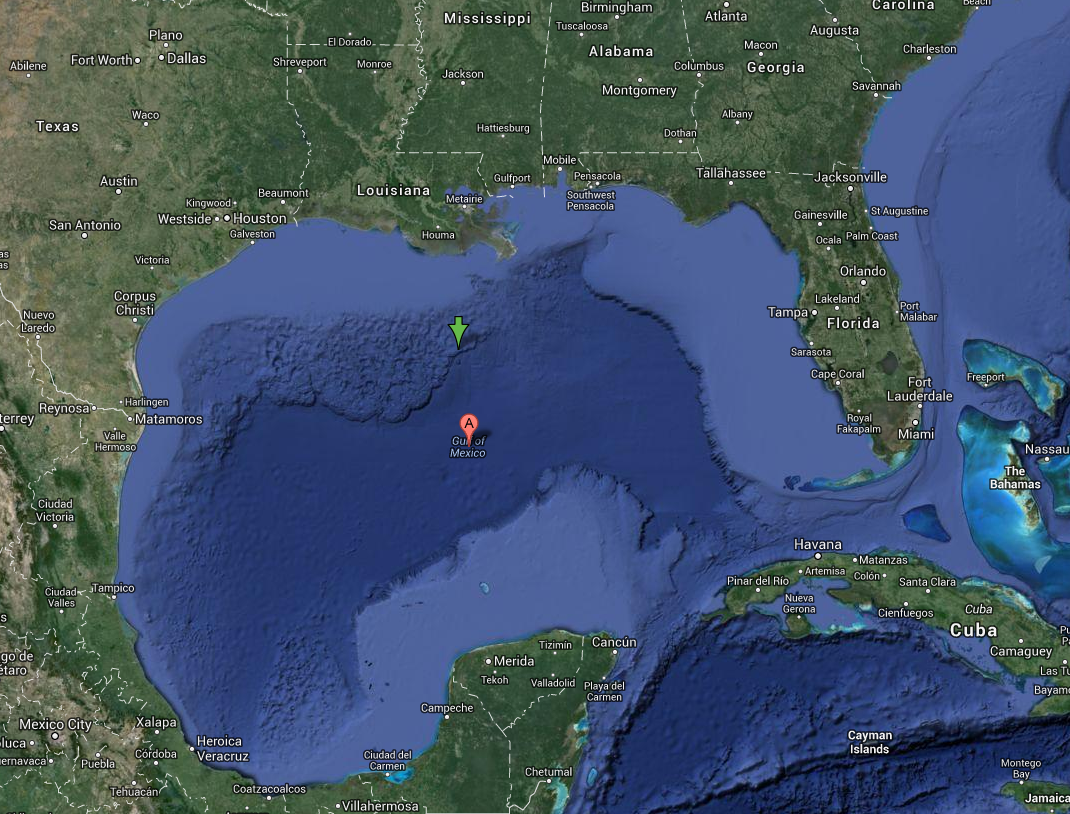
Perhaps there are better examples out there as all these firms are otherwise correlated due to commodity prices, but it should give you an idea of one of the types of situations of which you should be cognizant. It’s like Nestlé owning a massive stake in cosmetics giant L’Oréal. You can’t invest in both firms and think it’s diversification. It’s not. They have similar exposures.
At this particular moment, I have a few correlated risks I am seeking to minimize. They aren’t enormous, but they are enough to give me pause, so they are on the “correction” list for this on-going six-month project that runs between October 15th, 2013 and April 15th, 2014.
Reader Comments (11)
Comments are presented chronologically, with replies indented beneath the comments to which they respond.
Richard Garand
October 25, 2013
One of the nice things about being an index investor is that correlations are much more explicit. I'm diversified enough globally to own a piece of every major public car manufacturer. Not only does it not affect me when one steals a profitable market segment from another, but I don't suffer the illusion that my holdings aren't correlated - I know very well that they are.
Since I hold 3 major stock indexes some people might say that they all act independently, but I also know that the market mechanics can defeat that over the short term as many investors can be forced to sell assets indiscriminately (or enticed to buy). Even bonds can fail to provide diversification if rising interest rates drag down stock prices. Despite all of that I enjoy my simple and foolproof strategy 🙂
Excellent piece on the type of analysis that it takes to actually do better than the index.
peterpatch79
October 28, 2013
Replying to Richard Garand
I also use index investing but in conjunction with value/ dividend growth investing. I always worry that as index investing becomes more popular there will be less protection because most major indexes are market cap weighted. A lot of indiscriminate buying of index funds can put upward pressure on certain components of the index and this pressure is not related to intrinsic value. The same goes for stocks that get removed from big indexes (like the S&P 500) the indiscriminate selling probably forces their prices down in a way that doesn't correlate to underlying fundamentals, could create some good buying opportunities.
Indexing ultimately relies on the market to set prices but if prices are being heavily influenced by the index it becomes self defeating. It has irrefutable empirical evidence but is the theory of indexing sound under a scenario where a large majority of market participants are indexers? Something to think about.
Richard Garand
October 28, 2013
Replying to peterpatch79
There's a funny effect hidden in that. No matter how poorly the index performs, half the non-indexed money in that market always has to do worse before fees (assuming the index represents the market). So it's not just a matter of beating the index, you still have to beat the other active investors and control costs to come out ahead or simply find a more advantageous market (in which case you could use the index of that market).
I recently compared the S&P 500 to VTI to see if it had any performance drag from buying pressure on stocks that are added to the index. The results were very close, within a few basis points (even though VTI has some factors that should lead it to perform a little better) so I didn't see a clear sign that this is actually happening. I like to use the broadest indexes possible since they avoid any bias from stock selection and give me more small-cap exposure.
peterpatch79
October 28, 2013
Replying to Richard Garand
That's a good point. The Dunning-Kruger mental model says that unskilled people often trick themselves into believing they have superior skills then average, you obviously have this under control.
The main thrust of my actively traded portfolio is to have a stream of growing dividends that are paid out by businesses with the ability to sustain them over my lifetime (about another 50-60 years). After reading Jeremey Siegels book "The Future for Investors" I simplified my investing so that the vast majority of my active portfolio is, and will be, in the energy, consumer staples and healthcare sectors. I suspect the KRIP is also heavily biased towards these things as well.
Also I own BP, Chevron and BHP and I am aware that this is a rather incestuous industry. I just don't ever want to get into a "Deep-Water-Horizon" situation where this particular site causes massive contingent liabilities for all those companies. I need to research how liable each of these companies would be in this scenario and ensure that I have downside protection.
Richard Garand
October 28, 2013
Replying to peterpatch79
I have superior skills in convincing myself that I'm not above average. As long as I keep proving that right I can keep it under control 🙂
Ian Francis
October 26, 2013
I was going to ask what MMcf/d and Mbbl/d stood for, but then I just looked it up. Who comes up with these acronyms? I mean /d = per day is easy, and cf I was sure was cubic feet, but why is bbl a barrel and not brl or just b? And since when is M one thousand and MM one million? I am sure there is some great history lesson here, but this seems very confusing. Reminds me of the nonsense acronyms we use in nuclear.
-Ian Francis
joe pierson
October 26, 2013
Replying to Ian Francis
http://seekingalpha.com/article/18636-where-does-that-2nd-b-in-the-abbreviation-for-crude-barrels-bbl-come-from
M is roman numeral for 1000
Richard Garand
October 28, 2013
Replying to joe pierson
M is also the French initial for 1000 (and 1 million, and 1 billion).
Joel
October 29, 2013
Replying to Ian Francis
42 US gals equals 1 bbl. Rockefeller's Standard Oil introduced a blue painted barrel that held 42 gals instead of the more common 40 gals. This allowed for leakage and evaporation in the wooden barrels but yet guaranteed at least 40 gals delivered. So bbl stands for "blue barrel".
Adam
October 27, 2013
You can't really avoid some small level of correlation among major oil companies. They all operate on a "frenemy" model and virtually never own 100% of a project. Exxon, Chevron, Conoco, Shell, BHP and others will all have major, mutual projects.
joe pierson
October 28, 2013
Replying to Adam
Yes, in most drilling units there are many mineral owners, all of which have different leases from different companies, they all share in the production. Very common.