

A Handful of Rare Businesses Enjoy Annuity Streams That Can Generate Cash for Decades
For the past hour, my mind has been on the power of some businesses to capture annuity streams that pay dividends for years, even decades or generations, with very little additional work. When you can get one of these in your portfolio, they pump out wealth as long as you update them every once in a while. They are the closest thing to geese laying golden eggs that exist outside of fairy tales.
Specifically, it’s on my mind because Aaron and I picked up the Wii U Deluxe Legend of Zelda Wind Waker HD bundle this afternoon, but I’ll get to that in a moment.
The most famous case study of this economic concept is The Walt Disney Company. The folks there produce these animated features once that recapture their cost and provide a good return at the box office. At this point, the product has more than paid for itself and made money for owners, but the company releases the film to the home market; no more work, just duplicating the content on a new medium. The inventory is sold, then the film put back into the vault to create scarcity. When a new technology arises, such a VHS going to DVD going to Blu Ray, they bring it back out of the vault for a limited edition release in the updated format, selling it at much higher inflation-adjusted prices. Charlie Munger once described Disney as “an oil company that can put the oil back in the ground after it is done drilling so it can drill it again”.
Then, Disney picks a handful of high quality manufacturers who agree to create merchandise based on the film, with Disney getting veto power, and those companies pay Disney a huge licensing fee on the sales. The theme parks then reinforce affinity for the brands, causing them to remain relevant, resulting in this virtuous cycle that made a lot of stockholders very rich. So rich, in fact, that a single block of 100 shares bought at the IPO 56 years ago for $13,880 without any additional investment is now worth somewhere around $30,000,000. (I’m in the middle of writing a case study on it but the investor relations department won’t clarify some of the historical dividend record for me so I can’t get the specific figure, yet.)
How Nintendo Is Destroying Its Cash Generating Annuity Streams Through Bad Marketing and Software Neglect
These annuity streams are not always as well managed as they can be. Consider the case of Japanese entertainment giant Nintendo. In a lot of ways, for the 50-and-younger crowd, Nintendo’s franchises have just as much annuity power as those found in the Disney vault. The Legend of Zelda, Mario, Luigi, Metroid, and Donkey Kong are as beloved as Mickey Mouse, Donald Duck, Goofy, and the Disney Princesses. Nintendo doesn’t exploit this nearly as well as it could.
Take the release of the new Wii U. Even people who love video games were often under the impression that it was nothing more than a minor update to the existing Wii system, not a totally new console that introduced 1080p HD video, a handheld touchscreen, and many other features; as different as the Super Nintendo was from the original NES. Then, when the first big title for it was supposed to be released, Nintendo waited until the new Playstation 4 and Xbox One were launching, putting it at a needless disadvantage. But those aren’t even the most egregious mistakes, in my opinion. I think the greatest transgression is that Nintendo isn’t leveraging its single biggest source of untapped wealth: That irreplaceable brand equity that took generations to build.
The Wii U Virtual Console allows you to use the Wii U to buy digital copies of your favorite NES, SNES, and GameCube games, with plans to expand it to include Game Boy Advance and Nintendo 64 games; Mega Man, Donkey Kong, Kid Icarus, the original Legend of Zelda, the original Mario Bros, Super Metroid. The nostalgia overload is almost incomprehensible. When you factor in that you can play the game on the handheld tablet while someone else is using the television, which is synced to the Wii U, these should sell themselves, especially to any family with kids under the age of 12 where the parents want entertaining, yet age-appropriate, content.
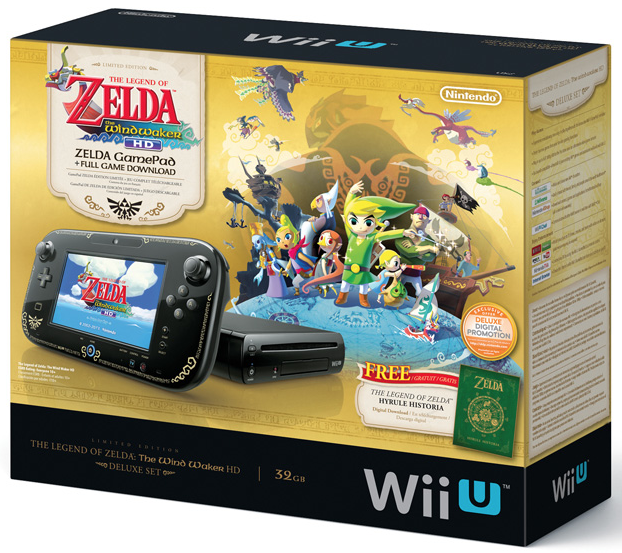 Disney understands this. It runs commercials aimed at parents and grandparents encouraging folks to “Relive the magic,” or “Share the memories with your family”. Yet, stop the typical person on the street who should open their wallet in a heartbeat for the Wii U and you’ll find most have absolutely no idea what the heck it does, or why they should buy one. The decisions involving its launch and marketing are monumentally stupid to the point that both Sony and Microsoft’s new consoles sold more units in 24 hours as the Wii U did in 9 months. The original Wii sales were juiced by casual gamers who will are unlikely to ever buy a console, again, while the more serious gamers were alienated due to neglect. Even now, nine months after being released, there are hardly any games for this new system worth purchasing. “Just a little bit longer …”, “it’s in development” … This is their business. That’s not acceptable.
This is a management problem. They are sitting on an cache of intellectual property that is one of the few enterprises in human history to span multiple continents, languages, cultures, religions, and genders.
The executive failures have shown in Nintendo’s profits. Earnings per share back in 2008 were ¥2,012.13 while they are only ¥279.14 now, a drop of 86.13%. The stock market eventually recognized the declining intrinsic value, with shares on the Tokyo Exchange collapsing from as high as ¥73,200 per share in 2008 to a mere ¥12,820 at the moment (and that’s after a massive increase this year! Imagine how bad it looked twelve months ago.)
(Side note: This is one of the reasons that consumer staples tend to dominate over long periods of time. It would take a genius to destroy that kind of income from a corporation like Unilever, Procter & Gamble, Colgate-Palmolive, or Clorox, while in tech, even smart people can misstep and the fall behind a single launch cycle.)
Further harming Nintendo is its refusal, despite discussions going back decades, to develop a theme park on scale with Disneyland, which could create the same self-reinforcing brand affinity Mickey Mouse enjoys. Were I the CEO of Nintendo, I wouldn’t even try to do it myself. I’d do a joint partnership with The Walt Disney Company with 40% ownership, each, then sell the other 20% through a separate publicly traded enterprise, and make sure there was some 20-year re-purchase agreement so we could turn it back into a subsidiary once it had produced enough cash to pay for itself. They are leaving billions of dollars on the table because they suffer from this delusion that they, themselves, need the expertise to build such a tourist attraction. They don’t. You hire the best people in the field. It’s one of those cases where synergy – the real thing, not the buzzword it has become – between two powerhouses bringing their best assets to the tablet could create exponentially greater results than the sum of the parts alone. It’s not like this is an untested concept. Several years ago, there was a touring Pokemon carnival setup throughout Japan that broke records. The demand is there. People want it. They are happy to open their wallets for it, but no one can meet the demand due to the intellectual property rights belonging solely to to a firm that refuses to do anything with them, while “investigating” the possibility every five or ten years.
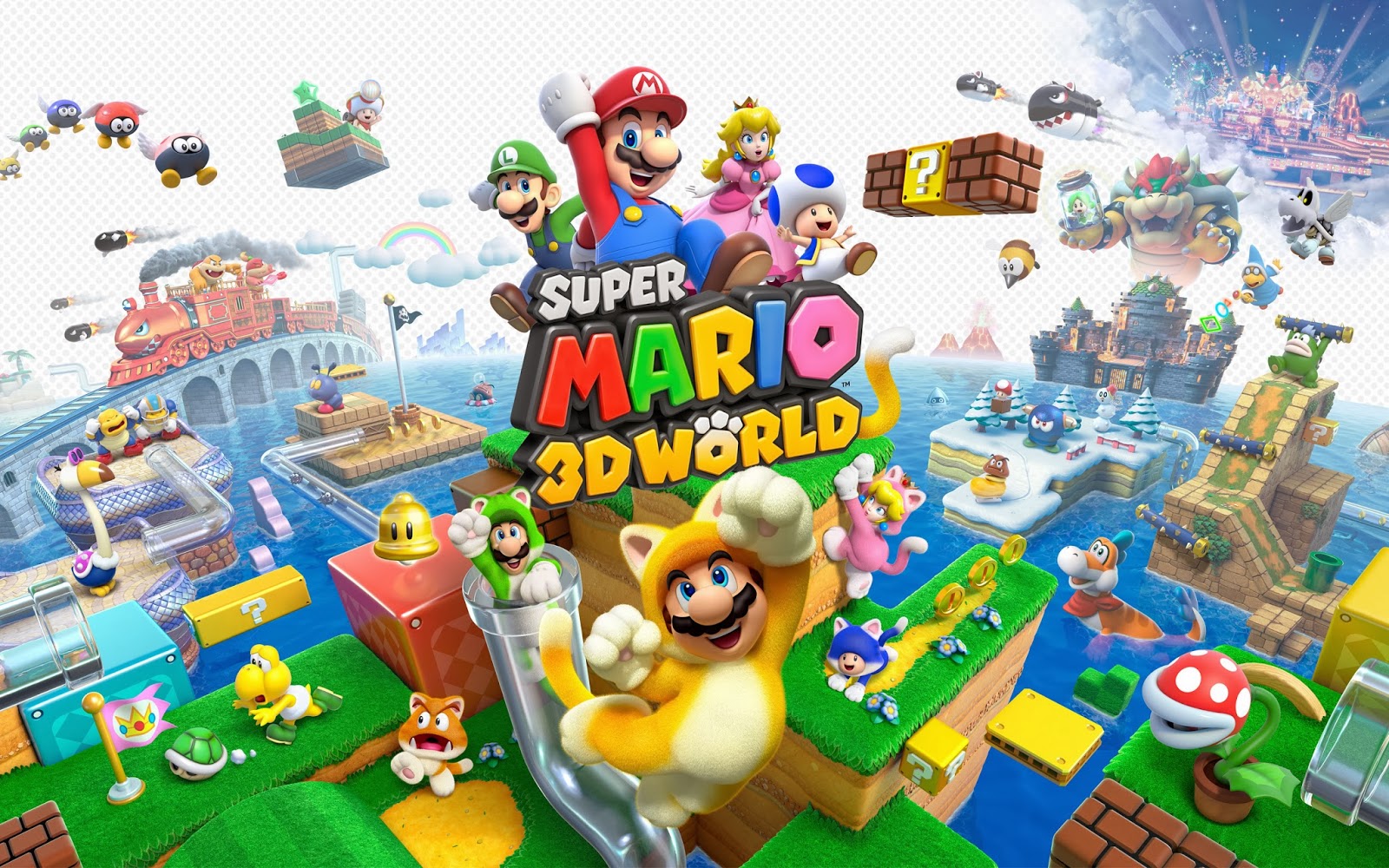
Nintendo does so much right – the new 3D Super Mario World is innovative and fun, the device is backward compatible with the prior generation, it’s affordable, and the exclusivity of its franchises means that if it can solve the problems, it will be able to keep all of the rewards (unlike Sony and Microsoft battling for a cut of the blockbuster games released on both systems simultaneously). At the moment, none of those successes are translating into meaningful earnings for the owners. That is not something that can be tolerated indefinitely. Something needs to be done.
The homework for those of you who want to understand the mechanics of this sort of thing: Read through Nintendo’s historical annual reports. (My own interest in Nintendo’s fiscal history goes back a long way. When I was in elementary school I wrote the North American corporate headquarters out in Redmond, Washington, and asked if the firm was publicly traded. They sent me the information on how to buy shares in Tokyo. I never did, but I appreciated them taking the time to respond to a ten year old with very specific information.)
Reader Comments (20)
Comments are presented chronologically, with replies indented beneath the comments to which they respond.
Adam
December 3, 2013
I've always had similar thoughts around Nintendo IP. Mario and Zelda meant more to my childhood than the bulk of Disney characters.
Andrew
December 4, 2013
Replying to Adam
I love Nintendo. I grew up more with Playstation though. Everytime I see something involving Crash Bandicoot I can feel it in my SOUL haha.
Nintendo (or Playstation for that matter) would make for an AWESOME theme park!
Donkey Kong roller coasters! Or Crash Bandicoot Land! There's an endless amount ideas for rides and areas that people would be able to instantly connect to.
SJDenver
December 4, 2013
Long DIS.
Did you happen to catch today's NYT article about Disney?
Disney = Magic
A Chance to Step Into Disney’s Childhood
Walt Disney’s Chicago Birthplace to Become a Private Museum
http://www.nytimes.com/2013/12/04/business/media/walt-disneys-chicago-birthplace-to-become-a-private-museum.html?partner=yahoofinance&_r=0
http://goo.gl/ltXh5u
Regards,
frederick vaughn
December 4, 2013
It makes no sense, and I agree with you. If you want to play the original Super Mario, you have to go find a used NES that is still working after 20 years. There may be other ways to do it, but like you said, they are doing a horrible job letting consumers know.
Joshua Kennon
December 4, 2013
Replying to frederick vaughn
I know! It's crazy Nintendo isn't using this as a marketing point. Right now, on the Wii U, you can buy a digital download of the original NES Super Mario Bros. from the 1980's for $3.49. How they aren't running commercials with this as a selling feature astounds me given the average age of gamers in their target markets. And even the video showing it makes it look like its on a handheld device, when that is the controller (you can play it on the television or the screen on the controller if someone else wants to use the TV).
Andrew
December 4, 2013
Replying to Joshua Kennon
Still thinking about owning a video-game company one day? Or maybe a console company? (Or both)
Seems like your passion is still strong for the industry. I bet given your passion it would soon dominate the industry also lol.
Paarthurnax
December 4, 2013
Replying to frederick vaughn
Still have an NES hooked up. Ah, the nostalgia of blowing on your game cartridges to make them work.
JW
December 4, 2013
Replying to frederick vaughn
I have previously used nes emulators for playing games on your pc. I am told they are perfectly legal as long as you own the original cartridge games. That's all I wanted anyway for some brief nostalgia of Super Mario Brothers 1-3.
Amit M.
December 4, 2013
When I think of annuity streams that can generate cash for decades, my thoughts go towards prime real estate in elite cities. Like Manhattan and San Francisco. There are properties in these cities that are seldom sold, and mostly just transferred to family members. Both cities are also surrounded by water, dominate critical industries (finance/banking in NYC, Web 2.0 and social media in SF), and have world renowned attractions and cultural amenities.
Investing in cities like these projects a different gravitas than the rest of the nation. It's hard, and very expensive to get in, but once you get a foothold you can make your stake. And usually cash flow is something to be managed rather than optimized for (it is equity appreciation where you make your big bucks.) A testament to the strength of these two markets is that even during the Great Recession there were few foreclosures, and properties still flew off the shelf to a seemingly endless supply of cash rich investors seeking to own in prime NYC or SF. It's a different game than buying in most other locations, but one that can provide long term returns for little effort, once a property is stabilized with good long term financing and is cash flowing positive.
Jay Tank
December 4, 2013
Replying to Amit M.
Excellent point. As a Manhattanite myself, I can attest to the exorbitant prices here and the seemingly endless demand for housing in the city. When I initially moved here, I wanted so badly to purchase a property and pursue the rental investment market, but it's just not possible for most "small investors" like myself without a lot of up front capital or major league financing to help me purchase the first property. I'll buy one eventually, but I thought I should point out that it's not as easy as just buying a property in the areas that you mentioned.
If you have any advice on how to go about financing them without sufficient income, I'm all ears.
Amit M
December 4, 2013
Replying to Jay Tank
I have several suggestions:
1- focus on 2-4 units where you can live in one and rent the others. You can get a dynamite low rate that's fixed for 30 years, and the income from the other units help you qualify for the loan. You'll need 20% down for owner occupied, and you may not cash flow right away. But as long as the neg is manageable (the doctors salary should help), and you have a high probability of appreciation in the next two years, I think the tradeoff is worth it.
2- I'd focus on up and coming hoods. I'm no expert on NYC but I think there is potential in Harlem and certain parts of Brooklyn, where you can get a multi unit brownstone (without paying multi millions.)
3- if you're brave (and have the time), a fixer will give you even more value.
But whatever you do look for a property that will provide long term value. Normally once an area becomes gentrified it rarely reverts back (at least in SF and NYC; YMMV in other cities.) With low fixed rates you might as well keep it for many years. I know many families that built their retirement on one good building.
Ahmad
December 4, 2013
IF only I spoke Japanese and had the direct phone# of Satoru I would deliver a very firm speech about the importance of listening to you.
Please consider contacting them with this idea!
Amit M
December 4, 2013
Are any of the investors active on this site serious about real estate, or only stocks?
Joshua Kennon
December 4, 2013
Replying to Amit M
Only a tiny fraction of the regular readers publicly comment. Given my private conversations, there are many multi-millionaires here who built their fortune through real estate, and still continue to use it as their primary investment vehicle. You might have luck luring them out into the open by asking specific, technical questions about the topic they would answer.
Amit M
December 4, 2013
Replying to Joshua Kennon
Thanks for the tip.
AL
December 4, 2013
Real estate in NYC and Frisco might be a great investment but of course you need quite a large amount of capital--there are a multitute of rules and regulations to follow which are almost always favorable to renters--I prefer dividend paying companies with no tenants bothering me, no roof to fix or plumbing to repair, and if I want to sell shares I can do it in a New York minute. Different strokes for different folks!
Amit M
December 4, 2013
Replying to AL
Yes, you're right about all the regulations and tenant rights- scares off most investors as it sounds like a hinderance. But that's exactly why I like investing in this space. I know it's counterintuitive, but all those government regulations and manipulations cause tremendous distortions in the marketplace, and provide an opportunity to make a lot of money, if you know how 🙂
Take for instance rent control. Not many RE investors would say they like it, and in principal I think it's bad social policy. But, I find ways to get units off RC, or find tenants that don't intend or need to stay in my units forever. RC restricts supply, thus distorts the rental value of non RC units tremendously upwards, as many existing units are "taken" by sitting tenants with low rents. It's no wonder newly vacated units in San Francisco average north of $3000 per month.
The other great aspect of investing in dense urbanized cities like SF or Manhattan is that formerly cheaper neighborhoods get gentrified quickly. There is zero space to build (except infill projects), so eventually all areas become premium. Where else but in SF do you need to pay north of $500,000 to buy a house in a ghetto! The trick is knowing which ghetto is getting transformed by artists or young families that can't afford a $2 mil house in the prime locations.
This type of investing isn't for everyone, and I definitely suggest caution. In my mind it's not casual investing. You have to be all in, and IMO live in that city, and understand all the nuances. Besides, it's more fun that way.
Scott Holland
December 4, 2013
Replying to AL
As someone with an horizon of 40+ years to look for investments across all potential sectors, I am casting my eye towards the Midwest.
I believe that over time, high speed rails, and better airlines, and telecommuting will allow for more and more industries to leave the clogged and overpriced coasts.
There was a recent Forbes article that names several cities in that region as the best spots for young entrepreneurs.
Kevin
December 4, 2013
Hopefully they'll get back on track at some point. I don't know though, the problems you mentioned have been going on pretty much since the N64 days. The phenomenal success of the Wii and DS among casual gamers covered that up, but as you say, they're unlikely to be buying a new console any time soon, especially if Nintendo don't manage to explain what is actually different about the Wii U. Poor business strategies aside, they're also going to have to deal with Shigeru Miyamoto retiring eventually. Supposedly he's been focusing a lot on preparing the next generation of designers to take over, and has been handing over more responsibility to them, just hope everything goes well once he's completely gone.
A Nintendo theme park would be the best thing ever. I can't believe they haven't done it. Or maybe they're just waiting, until biotech advances enough for them to make actual living Pokemon...
I suspect you probably have, but I shall ask anyway: have you ever read Game Over by David Sheff? It's a business history of Nintendo, it was published in 1993 or 1994 I think, so it lacks anything post-SNES, but for anyone interested in either games or business, it's a good read.
David Wang
January 20, 2014
What's your opinion on analyst who wants Nintendo to exit their hardware business?
http://www.bloomberg.com/news/2014-01-19/nintendo-pressed-to-exit-hardware-after-wii-u-flop.html