

Giving in to Practical Reality and Getting an iPhone 6
A year and a half ago, I dumped my family’s smart phones since I was almost always near a physical line. Unfortunately, we have now reached a point where the folks on the business side are in revolt about it. While I’ve enjoyed the peace of being able to go to the grocery store or go out for a walk without someone being able to get ahold of me, the rest of the world didn’t get the memo (the number of angry messages after not being able to get in touch with me for a few minutes is too manifold to count at this point – people forget that it wasn’t that long ago, you had to leave a message and wait for a return call).
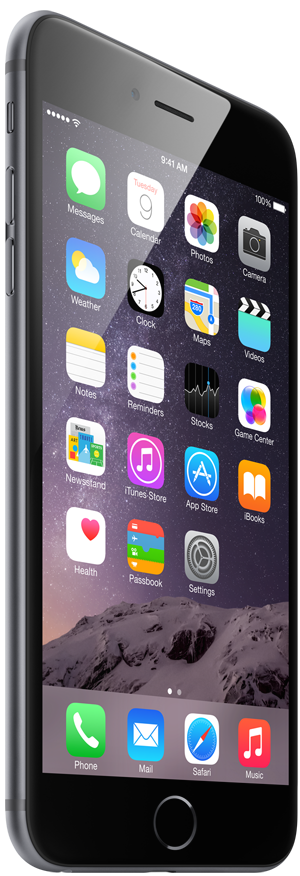
Acquiescing to the fact I need to have one on me for the business (I still refuse to give in personally – if you know me in real life, there is a number that rings directly to the desk in my home study, which is good enough), yesterday evening, I went in to my local AT&T store to have one of the companies setup two new lines on matching 128 gigabyte iPhone 6 Plus phones. Aaron and I will each now have a company line accessible to anyone who needs to call us about something so we are generally more available; a prospect that seems to delight everyone with whom we have regular contact but that I, in my old-man like ways at 32 years old, find unpleasant. Thinking long-term, and making big decisions, requires an element of patience and stillness. The world is too hyper-reactionary about things.
The whole thing got me thinking about the state of the telecommunications business in this country. I’m old enough to remember the telecom boom in the late 1990’s in which shares of even poorly run regional phone companies, which had been slow-growth, stodgy dividend payers, went to 50x or 100x earnings. Employees of phone companies were being handed stock options that made them very rich. The breakup of AT&T into dozens of smaller firms was still close enough that there was a free-for-all in terms of competition as everyone tried to outdo the other. Worldcom, which set the standard in terms of performance, was forcing everyone to compete on price and service, with a CEO so cost obsessed he counted coffee filter usage at headquarters. Sadly, for the consumer, it turned out Worldcom was faking the numbers by capitalizing ordinary expenses. The moment their (partially illusive) efficiency disappeared from the sector, prices began to rise, consolidation began anew, and we have now arrived almost back where we were in the 1980’s with a handful of businesses holding a monopoly over the phone system.
The result is a byzantine labyrinth of offerings, terms, conditions, and prices that puts the United States so far behind Europe and Asia in terms of cell phone service, it’s embarrassing. Consumer pricing disclosures required for things like mortgages and credit cards do not apply to cell phones so poor families, especially, don’t realize they often pay many times the sticker cost of their device.
I don’t think this is going to end well for most people. The rise of these devices are setting the wrong expectations. Family, friends, employers, classmates, colleagues … everyone is going to think they have a right to demand your time whenever they want. Having your email constantly going off in your pocket is not great for long-term focus. The really important stuff, in most industries and most people’s lives, does not take a five-minute turnaround time to get right. Slow is better.