

Mail Bag: Applying Value Investing to 3rd World Countries
I hesitate, strongly, about publishing this response. I’m not sure it is good for me to advocate what I would do in this situation as it might discourage people by making circumstances seem hopeless when hope is what is needed; it might even exacerbate the macroeconomic problem while solving the individual household challenge. Still, it’s the only honest answer I can give because this is what an analysis of the situation leads me to conclude.
hey joshua,
Enjoy your blog really is informative but i do need to state that examples you give really dont fit into the global context especially 3rd world countries. question is how do you value a company like this http://ir.okziminvestor.com/
Profiles/Investor/Investor. asp?BzID=2007&from=du&ID= 63131&myID=11619&L=I&Validate= 3&I= it goes against all the value investing strategies and makes the stock market look like an easy buck( there a lots of companies) like these in my country which i find scary. could you please give your opinion using this company as an example.
thankschristopher
Before I get into my explanation, let me say this: I love Zimbabwe. I love the Zimbabwean people. Though I haven’t had a chance to go there myself, some of the causes I support have been involved in the nation and I keep close enough tabs on it that I’ve been watching the upcoming elections in your country. In that sense, I am more aware of your home than I am most of the places in the world.
It is true that my writings won’t help much in a third world country, at least in an applied way; the philosophy still holds and can be of great value. However, the site is global. You are correct that my focus is on developed markets, in advanced, diversified economies. Those nations, collectively, represent over 80% to 90% of the entire world’s stock market capitalization of $53.2 trillion. The United States by itself holds $18.2 trillion of that wealth.
The formula for building wealth in any of these nations is largely the same, with only minor cultural and taxation differences. Generally speaking, whether you live in the United States, Japan, the United Kingdom, Canada, France, Germany, The Netherlands, Denmark, Finland, Sweden, Australia, Italy, India, South Korea, Spain, or Switzerland, just to name a few, you need to spend less than you earn, generate a surplus, then put that surplus to work pumping out dividends, interest, and rents for you. The laws are mostly fair, the market based system mostly rational, even when things sometimes get out of hand in the short-term (e.g., Spain is going through a Great Depression right now and the Socialist takeover of France, which was stopped somewhat by the French court system, threatens international investment and is causing terrible hardship and unemployment for the young workers).
Sure, in some places the challenges are unique – in South Korea, it’s easier to make a fortune if you are from a well-connected, established family, while in France it can be almost impossible to move up the class hierarchy, which is based on history rather than individual merit like you see in the United States – but they can be studied, understood, and circumnavigated if necessary.
In a country like Zimbabwe, the real world conditions are fundamentally different, requiring a totally unique approach for success that deviates so wildly from what would work everywhere else that it can seem overwhelming. You get into problems of a non-stable currency, inefficient capital formation mechanisms, ill-functioning government regulatory bodies, institutionalized racism and bigotry, and endemic poverty. I have neither the interest nor the inclination to attempt to tackle it because it doesn’t apply to 90% of the readers of the site, and it requires a certain passion for the fight that I lack. In mental model terms, I’m suffering from a reaction based on a psychological phenomenon known as donor fatigue. I recognize that it is happening. I am aware I feel that way.
In fact, I struggled with whether or not to even answer this question because I don’t like discouraging people who are trying to build capital and I worry my answer could do just that unless someone understood my reasoning. But you asked me for my analysis, so here it is.
I imagine myself sitting in Zimbabwe, looking at that document. What would I do? What are my thoughts? What would my strategy be?
Simple. One word.
Emigrate.
I’d get the hell out of Dodge so fast the dust would still be in the air by the time I was over the border.
Why would I waste the relatively short time I have been given on Earth struggling against a range of variables that are virtually impossible to overcome when my same talents, applied in better soil, could produce an enormous harvest? It would be like trying to grow roses in the desert. It makes no sense. I’d research what I wanted to do, and look to the greenest pastures to do it. Human capital can be wasted if it isn’t put to work in a place that nurtures and appreciates it. The same brilliant neurosurgeon who could have saved lives and grown very wealthy in Colorado would have ended up digging ditches in Guizhou.
This raises all sorts of moral and ethical questions about whether one has an obligation to help build the nation into which he was born, or rather he is, instead, a member of the human race and owes his allegiance equally to humanity as much as to a particular plot of land or legal system; about the second and third order effects of reverse adverse selection as the best and most qualified opt out of the default system, leaving behind the remaining citizens. Those are beyond the scope of this discussion. All I know is that I would set my sights on a country like Switzerland, Canada, the United States, Germany, England, et cetera, and flee.
The reason I say this is because one can only work among the structural impediments of a society for so long before he is crushed by them, and my writings often focus on the individual attempting to live a better life. Hence, if one were to remain in a nation like Zimbabwe, the focus should not be on selecting individual securities, which are rife with dangers not present in developed markets, but on fixing the actual structures and institutions themselves. Just as when the United States was young, you cannot build large, successful, financial markets when your country is still in its infancy. I’d be figuring out how to reform the government, not buy common stocks.
To be specific, Zimbabwe is facing a host of variables that radically transform the investing question as applied to securities markets. The biggest problems, and the reason I don’t address investors in that position, are:
- The discount rate is much higher in such a country due to lower life expectancy and health concerns
- The rule of law and property as we know it in advanced economies is ignored or severely impaired
- Human capital is destroyed due to minority and / or racial oppression
Let’s look at each factor individually.
The Discount Rate Is Much Shorter in a Developing Economy
Consider the discount rate we all subconsciously use to determine whether a project is worth the effort and risk. This is influenced by our perceived safety, life expectancy, health, and other factors. Whether you realize it or not, that discount rate – the return you demand for postponing consumption, utility, or pleasure for a future payoff – influences everything you do. It influences whether you think college is worth the effort. It influences if you have children, and, just as importantly for economic development, the age at which it is done. It influences whether you try to build a life or throw caution to the wind. If you doubt it, imagine that a meteor were hurling toward Earth and certain death were imminent. Most people are going to overeat, get drunk, stop going to work, and probably engage in Bacchanalia in the streets. This pattern repeats itself throughout history when a population is threatened. It’s the reason you sometimes see people radically change their life for the better when they get a cancer scare or other terminal diagnosis; they figure they have only so much time and want to begin enjoying themselves now.

The discount rate in your country is much shorter due to a variety of factors that create a self-reinforcing negative feedback loop. One example is that, depending upon the year, as many as 1 out of 4 adults is infected with HIV in your nation, and many can’t afford the viral drugs necessary to suppress it into a chronic condition. Contrast that with a place such as Japan, where the infection rate is 1 out of 10,000. Related, but not entirely correlated, the life expectancy is only 51.24 years for your country compared to 82.59 years in Japan. Is it any wonder the Japanese are better at accumulating capital? The typical baby born in Japan will enjoy an adulthood that is almost twice as long as the typical baby born in Zimbabwe. It’s almost incomprehensible when you think about that. Stop for a moment to really reflect on it. When you are given two adult lifetimes, it’s easier to harness the power of compounding. It’s easier to build the future of a country that your grandchildren will enjoy because the lifespans are longer, drawing an arc over many more decades, providing greater stability.
I talk about “an investing lifetime”, which I consider 50 years. That’s the maximum length of time at which an 18 year old, entering adulthood, could put his money to work and still cash it in young enough, at 68 years old, to enjoy it for 10 years before death at typical life expectancy, leaving a large inheritance to children and grandchildren. The same equation adjusted for life expectancy applied to your country would make an investing lifetime only 23 years. That changes everything. At average rates of return, suddenly $1 won’t grow into $117, it will grow into $9.
That matters to capital formation. It’s going to be harder to develop strong, blue chip companies like Procter & Gamble, that pump out ever-increasing sums of money decade after decade, where investors can patiently wait during tough patches such as the one the consumer staples giant has been going through in the past 36 months.
(In Zimbabwe, the discount rate is shortened by actual death caused by poverty and medical factors. There was a very interesting U.N. report several years ago that made a compelling case the failure of certain economies to develop rapidly despite existing human capital, such as post-war Iraq, had to do with a shortened discount rate caused by violence. Namely, if a person has experienced a violent act of terrorism or corruption that harms his efforts to save more than once within a 5-7 year period, he is likely to throw in the towel and determine it’s not worth it to open a bakery or go to medical school. The spiral begins and the country falls. That is why the single most important thing you can do to develop an economy is reduce violence and increase life expectancy.)
To put it bluntly: The average person in my country has 27,375 days to enjoy life and build a legacy. In your country, it’s only 18,715. That’s 8,660 fewer days on average. That is not inconsequential. It absolutely influences equity valuations, expectations, and market practices.
2. The Rule of Law and Property Is Ignored
Zimbabwe has one of the least free economies on the planet. Tax rates are high, trade tariffs are extreme, regulatory red tape requires 9 procedures and 90 days to open a business (the world average is 7 procedures and 30 days), economic policies are sometimes determined by racial motivations in a constant struggle between white and black citizens, and unemployment has spiraled to unfathomable rates in the past. Perhaps worst of all, the same terrible leader, Mugabe, who has overseen the catastrophic decline of the country openly defies the court system, exacerbating the lack of clarity, while threatening violence against minorities and retaining power for himself.
A Berkshire Hathaway is not possible in a nation like that. A Microsoft is not possible in a nation like that. A McDonald’s is not possible in a nation like that. A Walt Disney is not possible in a nation like that. None of these things can happen until the culture and legal framework are changed to value individual freedom and elevate property rights that create the right incentive system for investors. If you have even a modicum of skill and a decent idea, it’s fairly easy here in the United States to raise $1,000,000 in start-up capital. Such an achievement would be a Herculean task in a place such as Zimbabwe.
3. Valuable Human Capital Is Run Out of the Country, Imprisoned, or Squandered
I’ve often said that you should think of culture like a software program that is running, setting the parameters, for a given society. Activists can work to change, or patch, the software program over time, shifting the paradigm, expectations, and practices, both for good and bad. This is relevant to Zimbabwe because, while the nation has some of the best developed human capital on the entire African continent – the educational and literacy rates are fantastic compared to nearly every country in the area – the culture results in substantial suppression of this human capital for anyone who deviates from outside a very strict view of humanity.
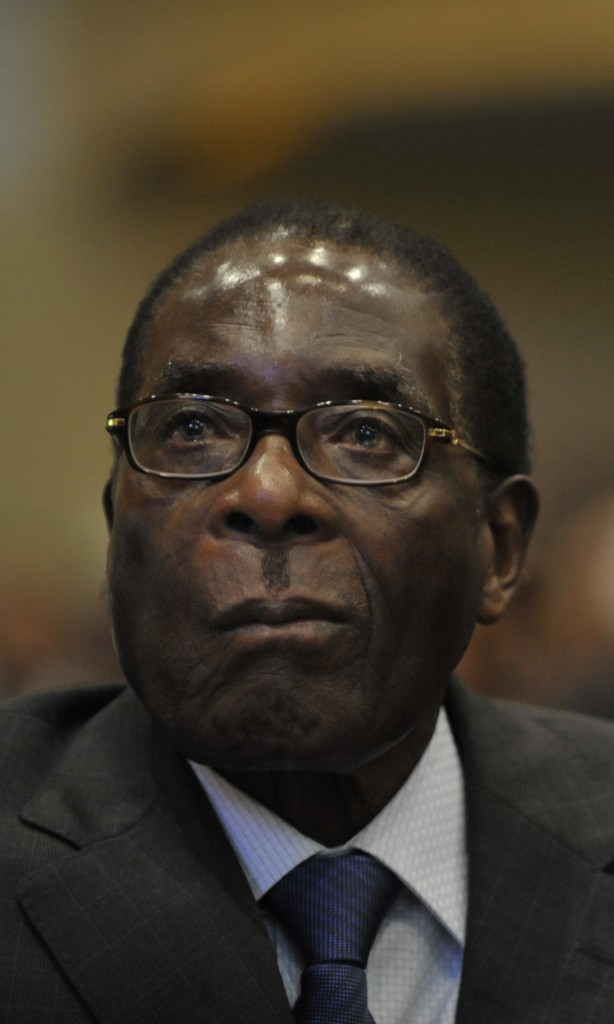
Robert Mugabe’s failed policies over decades have resulted in a social, political, and economic environment that ranks Zimbabwe among the bottom 10% of nations on the planet in most standard of living and personal freedom measures.
That’s a sub-optimal situation if you are interested in increasing standards of living, human happiness, and economic development. Here in the United States, the United Negro College Fund’s famous slogan from the 1970s, “A Mind is a Terrible Thing to Waste”, sums it up perfectly. The more educated, free minds a civilization has working toward its problems, the better its going to do and the harder it is for other nations to compete. This is a lesson the U.S. had to learn the hard way, much to its shame.
Think about someone like Stanford professor of bioengineering, Kwabena Boahen. This man invented a silicon retina that can process images like a real organic retina. It’s a miracle of science and art. How much poorer would we all be if he had been in chains picking cotton? Or if his property rights were curtailed? Or if he were called out and demonized solely for his race?
Even small things … look at Vergie Ammons. She was a black woman who invented a fireplace damper. You take these modern conveniences for granted but how many nights of sleep would have been lost due to fluttering metal had it not been for her work? Could she have completed it if she had been whipped and chained to a post all day? I doubt it.
Yet that is what the political leadership of Zimbabwe does, partly as a strategy to create a scapegoat for its own failings. There is a very real racism problem that is endemic in the society. The Zimbabwean government has a history of forcefully evicting farmers and committing ethnic cleansing based solely on the color of a person’s skin.
It’s a stupid way to behave. You never know who is going to come up with the best ideas and you need to welcome all contributions, from all people.
But it doesn’t just stop with skin color. It gets into religion, gender, and sexual orientation. And it’s not benign, either. Through my foundation giving, I am keenly aware that your society spends its already severely limited resources to prosecute, imprison, and in some cases, execute, gay people. How can you expect to have a stock market that competes with nations where all human minds are put to their best use, producing new goods and services? The most powerful man in the country stated only a few days ago that “we will chop off their heads”.
Think about how self-defeating this handicap is. Tim Cook, the 52 year old CEO of Apple and a man responsible, along with Steve Jobs, for the huge developments coming out of Cupertino, is gay. Tom Ford, one of the most influential fashion designers and bespoke retail developers in history is gay. Nate Silver, the most influential and accurate public polling statistician in a generation is gay. Peter Theil, a cofounder of PayPal and venture capitalist is gay. Chris Hughes, a Facebook cofounder is gay. Barry Diller, one of America’s most successful executives and business investors is gay. Publishing maven and InStyle founding editor Martha Nelson is gay. Consumer product, fragrance, and clothing brand icon Marc Jacobs is gay. Matt Druge, one of the most powerful conservative political commentators in the nation is gay. David Geffen, founder of one of the most famous record labels and film labels in the world is gay. Software and publishing pioner Tim Gill, who founded Quark, is gay and now spends his days giving away hundreds of millions of dollars to charity. Suze Orman, financial adviser to the masses, is gay. Kevin McClatchy, newspaper mogul and former CEO of the Pittsburg Pirates is gay. Jann Wenner, the publisher behind Men’s Fitness, Rolling Stone, and Us Weekly is gay. Jenna Lyons, the President of J. Crew, one of the fastest growing retail chains in the country, is gay. Nick Denton, founder of the Gawker empire, is gay. Robert Hanson, CEO of American Eagle Outfitters, is gay. Megan Smith, powerful Google executive, is gay. The list is endless because you are talking about roughly 1 out of 10 to 1 out of 33 people depending on which data set you examine.
If the United States had the same policy Zimbabwe did, PayPal, Facebook, InStyle, Apple, et cetera wouldn’t exist. All of that money, and success; all of those jobs and technology; none of it would be around anymore.
That’s trillions of U.S. dollars and millions of high paying jobs. They’d be gone. So, too, would be the wealth that then gets recycled back into the economy, spent on cars, furniture, vacations, perfume, televisions, watches, shoes, software, and restaurants.
First world countries reached their status and power over the past century, in part, because they managed to unleash the pent up human capital by liberalizing freedom. Blacks, women, Jews, gays, Catholics … groups that had been oppressed or isolated in the past in the U.S. are now, with a few exceptions, almost entirely admitted into society on an equal basis. If you have a great idea, and the drive to pursue it, you can get rich, live free, and be successful here (albeit while the NSA spies on you – we’re working on that). It matters. It matters a great deal because the rest of us get to live off the dividends of these ideas. If it didn’t, countries like Russia, with vast natural resources, would be as rich as the U.S. Instead, the State of California by itself has a GDP approximately equal to the entire Russian empire.
The Bottom Line Answer to Your Question
You wanted to know how I would analyze the document you sent me. The answer: I wouldn’t.
I’m smart enough to know when to play the game, when to retreat, and when to pick up the board and run. I wouldn’t be employing my human talents or my financial resources in an environment with the risks that are inextricable at the present time to the Zimbabwean economy. I take this same approach to individual businesses.
I can’t win playing the game as presented. So I won’t play. I’d find somewhere where the odds could be tilted in my favor and one unit of work or effort is likely to produce exponentially more rewards. I’d seek out a very rich company and examine the payroll, finding a firm where even the people further down the line are still making obscene amounts of money. Or, perhaps, I’d go into business for myself.
If I couldn’t leave Zimbabwe for some reason, I’d see if there were some way I could legally get my money out of the country, so that I was at least investing in more stable assets in freer economies, away from the government’s ability to destroy the wealth.
That’s not the answer you want to hear, though. And I hate writing it. Still, I won’t be dishonest with you. It would be disrespectful.
Trying to force a bad investment environment to be acceptable simply because it is the only option you have is a fool’s errand.
Find better soil for your money and talent. Then, if you desire, return to Zimbabwe in a few decades and help build the nation using your accumulated wealth. Someday, Zimbabwe may end up rich, and prosperous, and successful. Someday, it may end up being the world’s Silicon Valley or financial center – after all, no one expected New York to take the crown from London (just pick up a copy of the Charles Dickens classic A Christmas Carol – at one point, Ebenezer Scrooge actually describes something as being as “worthless as a United States Treasury” bond, yet now look at us – despite being only 5% of the world’s population we hold around 50% of the world’s aggregate wealth). I hope I live to see the day when the nations of Africa have standards of living and life expectancy levels as high as Japan, Switzerland, or Canada. Unfortunately, that day is not today and you, like all humans, have a limited lifespan during which you can fulfill your dreams and follow your passions. You do not have to accept the reality into which you were born or the borders within which you took your first breath. Change it.
Reader Comments (18)
Comments are presented chronologically, with replies indented beneath the comments to which they respond.
Ian Francis
July 27, 2013
“Patriotism is your conviction that this country is superior to all others because you were born in it.” – George Bernard Shaw
One of my favorite quotes of all time. No one has an obligation to their country to make it better, as much as they might feel they do. You should focus on bettering yourself, your family, and your friends, in that order. If that means leaving your country of birth and taking your family with you, then so be it.
Ian
Austin from TX
July 29, 2013
Replying to Ian Francis
I always like using a twist of that quote in regards to religion.
Oh, so you would be a devote Catholic if you were born in Saudi Arabia? Your religion is correct because your parents' religion is correct? Tell me More!
joe pierson
July 29, 2013
Replying to Austin from TX
You can extend that concept futher to family, you love your famliy because you were born into it, and for no other reason. I suppose the opposite, supporting the nation, religion, and people based strictly on rational reasoning would result in a very unstable civilization. I guess stability trumps rational thought as far as survival of the fittest is concerned.
Gilvus
July 29, 2013
Replying to joe pierson
Blood makes you related, but loyalty makes you family.
Jenna
July 28, 2013
its a dog-eat-dog world. basically. Always keep that in mind. And you already know it too.
Rico M.
July 28, 2013
"Trying to force a bad investment environment to be acceptable simply because it is the only option you have is a fool’s errand."
Agreed. I have the same issue here in the Philippines, but we are a little better compared the the situation in Zimbabwe, I guess.
Thanks for your thoughts, Joshua!
Kat
July 28, 2013
Replying to Rico M.
A little better? I disagree.
We do not have the kind of ethnic discrimination compared to Zimbabwe. Nor do we have institutionalized discrimination of gays. Would you consider Malaysia as Third World? Because the level of institutionalized ethnic discrimination there is nearer to Africa than ours. We also have one of the more favorable environments to be a woman in the world in the sense that I enjoy similar rights as my brothers, my parents do not exert social pressure on me to marry for the family's economic standing, nor was I treated like I was an unwanted child because I was female. In fact, if you check our education data, females tend to stay in school longer than their male counterparts in the country.
As for life expectancy, Zimbabwe is at 57, we are at around 69, and US is at 78, .I am sure that the average life expectancy applies most to rural, tenant farmer/ fisher households and that the lifespan for a professional coming from middle class, college educated household is going to be higher. So the discrepancy in discount rate is probably not as severe in your case compared to someone from Zimbabwe.
I am not writing this out of nationalism. It is the analyst in me that cringes at such a hasty generalization.
What would most apply to us is the fact that we do not have a level playing field for conducting business. That family/ clan connections can capture government offices, which then in turn made our government useless as regulator of private sector. This then makes some of Joshua's recommendations on value investing inapplicable to our country. It is difficult to find a mature company that pumps out regular earnings for the past 50 years since the stock market we have now is around two decades old only. It can be argued that the industry giants we have now only started in 1986, post-martial law.
So unfortunately, our options for public companies to invest in are only 15 years old and most of them are part of a family corporation (e.g. Ayala clan owns at least 4 big players in the 30 companies listed in PSEi which are BPI (banking), AC (conglomerate), GLO (telco), and ALI (property)). Which means even if I diversify stocks across industries, my portfolio is still subject to another kind of risk not present in developed economies. Another annoying thing is that only less than 10 companies in the PSEi regularly give out dividends of more than 3%.
But does that mean the Philippines is completely a 'bad investment environment'? Well, if you are aspiring to be a Sergey Brin, then you really should move. Our country will not launch a Google, or even a Baidu. We will probably also never launch our own brand of automotives or airplanes.
If you aspire to be rich enough to collect luxury cars, live in a mansion, and play golf everyday, there are people here who are actually able to do that aside from the political-economic elites. There are those who worked abroad and came back home to retire young with a lot of money. We are seeing more and more of those here. But a local example for me would be the owners of MGE taxi operations. The formula was pretty simple. Use capital to buy taxi cabs and get franchise to operate from government and charge boundary rates that passes on ALL risks to the cab driver. Keep expenses low, do not innovate or offer better value to clients, and retain all income for yourself. Any business here that relies on labor would have that advantage since a lot of people would take bad employment deals because of a lack of jobs. (I am not encouraging unfair labor practices, I am merely arguing that surplus labor is an opportunity provided you can operate a business well).
The rules are not the same here compared to developed countries. I am not sure if someone of Joshua's background could even thrive here 15 years ago (we're the same age) since Internet infrastructure was just starting then. But I think an enterprising Filipino teenager may have a shot now of building 'engines' of income by creating apps, offering cheap outsourced services to offshore clients, or opening an online store for the local market. It is not going to be as easy compared to a teenager from the US (mostly because they have a bigger market than we do and they would know the market better), but I have seen 20-year olds here earning a lot from online businesses.
I am sure you could quote a lot more anecdotes to counter my claim. And I am painfully aware of the difficulties small businesses face here. I understand if you choose to migrate since I have several family members who already migrated.
But no, we are not 'a little better' compared to Zimbabwe.
Rico M.
July 28, 2013
Replying to Kat
Agreed! Excellent analysis you have there. My choice of words was off but when i said 'a little better,' what I mean is we have way better but still deficient education system, where everyone (ideally) has a chance to have a productive human capital. Should have expounded on my hasty generalization. Btw, happy to converse with a fellow Filipino in this blog!
Von
July 29, 2013
Replying to Kat
Excellent analysis. From the Philippines too. The value-investing approach can still work here, but it cannot be completely true to the Graham-Dodd model. There are macroeconomic assumptions you have to take (that might turn out wrong subsequently I admit), but the general framework still works.
Also, the idea that we do not have a level-playing field is true, but I take exception in your position that the field is substantially more equal in first-world countries (say the U.S.). Political and economic networks/connections exist and are useful everywhere, even (or especially) in first-world countries, but there is no reason why the average intelligent Filipino cannot create those networks/connections themselves. The Chinese taipans, investment giants now, used to be dirt-poor remember? If you read their biographies (probably exaggerated, but generally true), they became wealthy using the rather simple method of "spending less than you earn, and investing the difference".
P.S. I have a website called the Manila Survival Guide (www.manilarules.com) with a Finance section envisioned as a way of providing financial literacy to Filipinos. Consider this an open invitation to write for us. 😀
Joshua Kennon
August 1, 2013
Replying to Rico M.
I agree with Kat, in this thread. I'm generally optimistic about the Philippines, or at the very least the trajectory out to 2050 that most of the world banks and economist seem to think is most probable (though I still don't have a very good grasp of the cultural influences of the country and how they play into the economy compared to somewhere like, say, South Korea or France, both of which I generally understand). I need to add it to my list to study. It may still have a long way to go, but I think it stands a much better chance of arriving at first world status before Zimbabwe does.
It's always strange to me that the Philippines were effectively part of the United States for nearly half a century before we decided to sign the Treaty of Manila in 1946 and grant it independence. How different would history be if, instead, you had been admitted as several different states? It could have happened - around this same time, we added the states of Hawaii and Alaska. Today, Hawaii has a median household income of $61,821 per year and Alaska $67,825 per year. The Philippines in contrast is around the equivalent of $4,700 per year at rough translation rates.
I think it wasn't done, partly, because the population is so large, it would have thrown off the power of the existing states. They would have lost seats in the House of Representatives under the U.S. constitution and probably didn't want to risk losing influence. Still, it's funny to think that, had a little bit of history gone another way - just one or two things changed - we would be citizens of the same nation.
Anon
July 28, 2013
Beautiful analysis. I've always thought the same things, except in very simplified terms.
I agree that the thing to do, especially if you're talented/special/ambitious unlike your brethren, is leave the country. It's part of the reason I can't really blame illegal immigrants that much. I would do the exact same thing since there's absolutely no downside whatsoever.
I think the only solution for Africa is "clear, hold and build." Nothing else will ever work. If/when I have the necessary resources and influence, this will be my strategy to make the African continent a better place.
africansun
July 28, 2013
Love your articles, and I have utmost respect for you Joshua......I completely agree with you, am from Africa,Rwanda, specifically and I chose to come here because of all the reasons stated above, as soon as I read about the United States I knew that is where i wanted to be...I love this country mostly for it's values and it's opportunities.....You guys don't know how good you have it, I would gladly flip burgers at Mcdonalds here than be rich in Africa...I literally shed a tear on July 4th just recognizing how lucky I am... I hope you guys recognize the opportunities you have been given and make the best out of them..
SouthAfrican
July 29, 2013
Replying to africansun
I am shocked to hear that africansun. The flipping of McD burgers part especially. I am a South African living in South Africa nd sometimes in Mozambique, and no I wouldn't wish to flip burgers anywhere, thank you very much.
africansun
July 29, 2013
Replying to SouthAfrican
Hello my African brother, am sorry if my comment sounded a little bit exaggerated but I did that to stress my point....Obviously Rwanda and South Africa have different histories. South Africa is one of the countries that has embraced change nicely and they have advanced exactly because they support most of the free market theories that Joshua Kennon talked about...Mind you there are other countries in Africa that have done the same for example Kenya and Ghana...Mozambique/Malawi/Zambia are also coming up, but all you have to do is read the history of Rwanda to realize how hard it is out there(unfortunately majority of African countries fall in the same category)..so maybe I made an error by generalizing and saying the whole Africa instead of being specific, but I just wanted to stress on the importance of values that encourage human capital...By the way, I don't flip burgers, never have...but I have worked my way up from working in factories/nursing homes to running my own business and I am grateful for the system that has made that possible...We as African's have a lot we can run from first world countries...Thanks for stopping by and we are praying for Great Madiba ( Mandela) to get better, he is one of the greatest men I know...
SouthAfrican
July 30, 2013
Replying to africansun
I'm so relieved...LOL. I only replied to your comment because you are an African. I don't mind about the rest of the people generalizing because most of the world is very ignorant when it comes to Africa. Comparing a continent to a country in most cases but they can be forgiven. But an African cant make that mistake. i know about the unfortunate history of Rwanda. Thanks about Madiba. I think his age finally caught up with him. We are all sad about his ill health. All the best with your business there. Make us Africans proud.
SouthAfrican
July 29, 2013
As a South African living in South Africa, I enjoyed this analysis. I agreed with most of it too.
henry
July 30, 2013
on a tinny tiny bit of comment on South Korea; if you are from a well-connected, established family, you are ALREADY RICH! so those people can choose to not to work for extra wealth. they will be very busy traveling Europe and the U.S.
Scott Holland
July 30, 2013
Currently researching stocks and etfs to invest some capital into a few emerging markets.