

There Is a Great Depression Happening In Several European Countries
Across the Atlantic Ocean, several members of the European Union are experiencing an economic catastrophe that is, for them, on scale with what the United States went through during the Great Depression. To illustrate the depth of the pain using two examples, the unemployment rate in both Spain and Greece now stands at 27.2%.
Following the aftermath of the 2008-2009 economic crash, things would have gone back to normal. Business cycles happen. That’s life. But they didn’t for a handful of countries. One of the reasons this horrible situation is still happening is because of the introduction of a single currency, the Euro.
Consider Spain. If Spain had its own currency, it could depreciate it by running large government deficits leading to inflation. While painful, this would make Spanish goods cheap to the rest of the world, driving up the export volume, decreasing unemployment, and eventually healing the nation. It’s still less than ideal – the best course of action is not to overspend in the first place so you don’t find yourself in a position of having to choose between bad and worse alternatives – but once you’re in a sinking boat, you have to do what causes the least amount of harm and damage. You either accept a devaluation in the currency or you suffer something more horrific: Austerity.
The Euro Is a Disaster Because the Human Costs Are Too High
The problem? I wrote about this before to describe the situation for beginners but it’s time for a recap. These nations have debts denominated in the Euro, a currency which their legislatures do not control. At the same time, the German economy has become such a powerhouse that it is dragging up the overall value of the Euro relative to what it would be if Germany wasn’t a member, causing the crisis to worsen even more in the poor countries which can’t pay their bills. At the same time, Germany itself is being somewhat punished by having a currency that is undervalued relative to its economy, causing Germany to run huge trade surpluses that exacerbate the problem further!
As a result, the German people have been on the bad end of an endless stream of bailouts as their citizens have to ship money off to the countries that couldn’t manage their budgets, understandably causing resentment just like the successful adult who constantly has to get a screwup sibling out of trouble. Meanwhile, those countries are resentful of Germany because not only are they effectively helpless to stop the problem, it is being made worse, from their perspective, by the Germany economy, which keeps firing on all cylinders and enjoys an unemployment rate of only 5.4%.
Great Britain avoided this problem, mostly because people like Margaret Thatcher waged a war against a single currency, warning that the entire nation would end up in servitude to European bankers without any means of controlling them if it were permitted. Switzerland has avoided this problem by maintaining the Swiss Franc. Sweden avoided this problem by maintaining the Swedish krona.
France and Germany have been much less affected by the crisis, despite using the Euro, because their underlying economies are powerhouses. Germany has the fourth largest economy on the planet and France the fifth.
Between the two of them, they are home to Volkswagen, Daimler, Siemens, BMW, Metro, Deutsche Post, Deutsche Telekom, BSAF, ThyssenKrupp, Total, LVMH, L’Oréal, Vivendi, AXA, BNP Paribas, Carrefour, Peugeot, Renault, and Sanofi-Aventis, just to name a few. There are still cultural issues in France that are causing very high youth unemployment but this has to do with the ridiculous barriers the French people have erected to upward social mobility, creating class warfare so terrible that the last time it broke out, they were murdering each other in the streets.
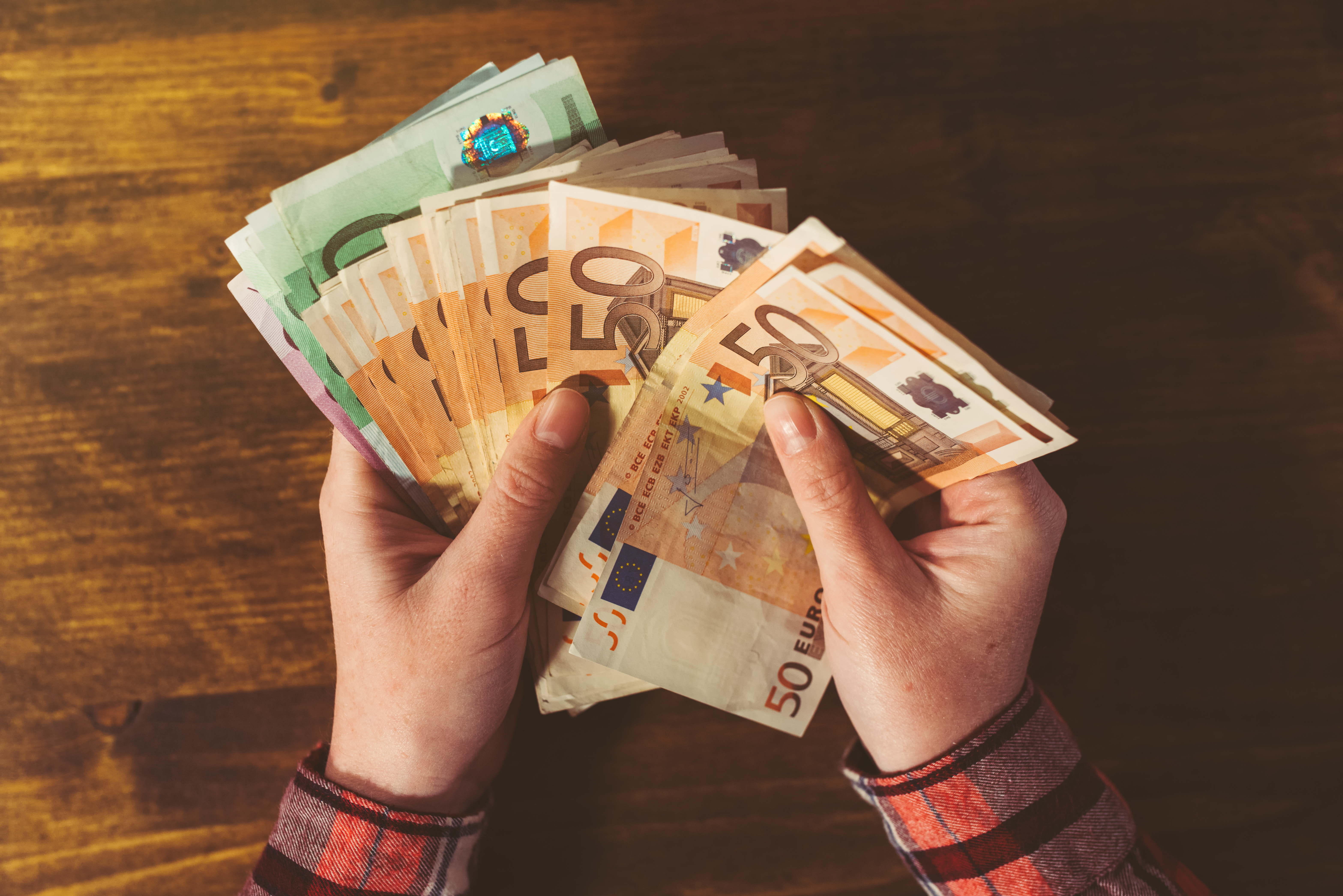
The economies of France and Germany have been much less harmed by the crisis compared to Greece and Spain because they are far stronger.
The Euro is doomed under its present structure. The Central European banks have no ability to force the other nations to live within their means, and the nations that live beyond their means have no way to depreciate their currency, resulting in catastrophic austerity.
The Problem with Austerity
I’ve mentioned austerity twice, so I should probably talk about it for a moment.
Austerity is terrible if not done correctly. A wonderful example of paying off the national debt is what Canada did over a 15 year period. It decided to cut its national debt drastically. For a decade and a half, it kept the national debt exactly the same as a small amount of normal inflation and underlying real growth in the economy increased the value of GDP. The end result was a government debt burden that was half the percentage of GDP it had been, despite not moving hardly at all in overall dollar amount (think of it as having a $10,000 liability and seeing your income go from $50,000 to $100,000; suddenly it’s not nearly as dangerous). It is the perfect austerity model.
If, on the other hand, someone were to try to go into a government budget and suddenly shut down programs, it is possible that you cause a negative feedback loop where the cuts drive down the velocity of money, creating more unemployment, resulting in less tax revenue, which require more cuts, which then begins to amplify on itself as the nation liquidates. Those who don’t understand the monetary supply don’t get this. You can’t treat a nation’s budget like you do a household budget. Cutting expenses can, paradoxically, cause you to go further into debt.
Radical austerity also causes another, bigger problem: It is almost inevitably the breeding ground for totalitarianism. Desperate people turn to radical hate groups, radical religion, radical nationalism, and you end up getting either bloody internal strife or the rise of a dictator.
Reader Comments (19)
Comments are presented chronologically, with replies indented beneath the comments to which they respond.
Bo
April 25, 2013
A monetary experiment that's gone horribly wrong, that's it. Every nation should keep control over its own currency. I live in The Netherlands, all I here about all day, for 3 years now is "Eurocrisis this, Eurocrisis that, Country X is requesting a bailout, Bank Z is being nationalized by the government because they it's about to fail(SNS Reaal bank recently, I don't if you heard about it, it's insane, the government basically expropriated all shares from investors, talk about robbery...), youth unemployment at all-time highs, riots in Portugal, yadayadayada". Sometimes I think to myself, is it ever going te be fixed?
I don't wanna worry about bailing out people 2500 kilometers away with tax money. It doesn't even work. I'm just really happy that I don't live in Greece or Spain right now, poor folks down there. The whole situation sucks, big time. The solution seems obvious, switch back to their own currencies, why aren't 'they' (I don't really know who 'they' are, the politicians in charge I guess) doing what seems obvious?
No country will ever give up its own currency in the future.
Joshua Kennon
April 25, 2013
I think the reason you haven't seen a huge move back to individual currencies is, 1.) it would be very difficult to achieve logistically; not impossible, but difficult, and 2.) you have a lot of very smart people who were vested in this system working who probably don't want to admit defeat so they are going to keep plugging away at it, trying to tinker with the problems instead of addressing the core issue of separating the nation's legislature from the ability to control monetary policy.
Personally, I'd prefer it because I think in the long-run it will result in less human suffering and greater individual sovereignty of nations.
If you don't mind me asking, what has your experience been like in The Netherlands since the financial crisis began, both personally and what you've seen / heard? One of my businesses has several large clients there, and I also have some Dutch investments, but I'm curious as to what it is like on the ground. This morning, I was reading Germany's Spiegel International article detailing the problems with the recovery, and am wondering how the austerity measures are hitting day-to-day living.
Bo
April 25, 2013
Replying to Joshua Kennon
Well, on a personal level, my family is not really experiencing the crisis. But I guess that's because we are all high educated and financial successful. My sister is a radiologist and is married to someone who has in IT business, my father is a dentist he has his own practice which he runs with my mother, he has large amounts of dividend income rolling in. I'm in the field of accounting with a paid off home and a nice amount of savings.
Now what I have heard, here and there,is that's it's quite bad out there. A lot of people getting free food from the "food-banks" (equivalent to food stamps in the US). And especially the home builders are hit very hard, almost no work there. Also the people who live on welfare are getting hit. I heard a lot of small businesses are going under. But the higher income people (40.000 euro and up) aren't feeling anything.
But the banks, oh man, they are waaaaaay too conservative giving loans to entrepreneurs.
A personal story:
The man who renovated my parents house, he's a handy man, painter, home builder, constructs bathrooms etc. He wants to build big storage units 12 of them, which he can rent out for 3000 euro a piece. He already has rent contracts for five years, he got permits to build from the municipality, he got the enough money for materials and labour, he just needed 250,000 euro for buying the ground. He can start building when he gets the loan, the storage units would be up in two months after that, and they would be gushing in rental income. Well all the banks said no thanks, because real estate prices are dropping.
So my dad and I stepped in, gave him the loan at a 10% interest rate. What I want to say with this, the banks are SO INCREDIBLY conservative, that's what bringing our economy to a halt. This bank-behavior all started in 2009-2010 when the financial crisis hit. OUr economy can't grow if the banks just don't write out loans!
Anyway, as long as you have a good amount of savings, a good income, are financially conservative and have multiple income streams, you don't feel anything here about austerity. When you are in the low income bracket, or when you lose your job, lose your business, have no savings and suddenly find yourself living on 1100 euro welfare a month, boy, things are though, and the government wanna cut on those people in the future too!
Oh yeah, and pensions are getting cut, big time. My dad got a letter from his pension manager, he will get 7% less pension than he's promised when he retires. (he's 60 now, retires when he's 65) Good thing he got some investments outside pensions. And the retirement age is getting higher and higher. So will get my pension when I'm in my mid 70" or something. But I'll be financially independent long before that, so that doesn't hurt me.
I rambled a bit, I hope this answers your question. Take care.
William
April 25, 2013
Very well put! These concepts are very well explained in a lot of wonkish posts in the economics blogosphere, but it is rare to see the issues presented in layman's terms. I'm not sure why this is the case. Are macroeconomists simply too tied up in their own worlds that they don't take the time to spell it out for the general public?
Joshua Kennon
April 25, 2013
Replying to William
I think that's a big part of it. You get used to using terms that you don't realize aren't familiar to others, or tied down in the minutia of what is going on so it doesn't cross your mind you've lost a huge group of people who would otherwise be interested in what you are doing.
Chris
April 25, 2013
If I lived there I'd park my money in a German bank, regardless of the country I lived in. If the Euro breaks up I win when my money gets denominated in Marks and the value skyrockets relative to every other country. If the Euro doesn't break up then I'm no worse for the wear.
Joshua Kennon
April 25, 2013
... I like how you think. I'd be right there with you.
Marc KS
April 26, 2013
One thing that gets ignored on the subject of the Canadian Debt situation is that the Canadian Dollar lost a ton of value relative to our main trading partner during that period... It got as low as ~ .65$ CA = $1 US and stayed in that range for a long while.
Essentially we experienced almost exactly what you said the low performing Euro countries can't do (devalued dollar making our exports more competitive)
Also the Federal debt lowered, but it did so on the back of Provincial Debt increasing (which if you add culmulative provincial debt to our federal debt Canada's debt is approx. 86% of GDP)
Essentially a great deal of Canadian Austerity was really Canadian Federal Austerity, while the Provinces made up the shortfall by taking on more debt.
(and funnily enough when you look at internal Canadian politics between the provinces you could make some very strong correlations to the problems the Euro are having, with maybe the oply exception being that perhaps to a higher sense of fellowship with Canadians from other provinces the relative productive Albertans aren't quite as upset about bailing out the unproductive Quebcers
Joshua Kennon
April 26, 2013
Replying to Marc KS
Wonderful point! Some states in the United States have that same problem, while others are much more fiscally responsible. It's going to be really interesting to see how the municipal bankruptcy projections turn out because if investors get spoked as judges allow towns, counties, and states to discharge their debts, it could drive up the cost of borrowing for everything from building schools to establishing new hospitals. In our case, the big culprit is non-funded pension promises. That's the dragon that must be slayed.
Marc KS
April 26, 2013
Replying to Joshua Kennon
Luckily Canada is in a better position with respect to our version of Social Security - from what I understand the CPP is properly funded and well managed (I.E. it isn't just a big pyramid scheme)
Tyler Phillips
April 26, 2013
Replying to Marc KS
I was thinking along these same lines when I read Joshua's praise for Canada. Ontario is a good example of what happened when the federal government cut transfer payments. The province was forced to deal with it and did so using austerity measures. The press and most people at the time blamed the provincial government while seemingly not blaming the feds for cuts to services.
Ultimately in Canada it's the provinces that provide most services, including health care, so when service cuts are made it is done by the province.
AC
April 26, 2013
The US economy is challenged but the central bank's debt to GDP is far worse in the UK, Euro zone and Japan.
Edit: Fixed the typo you caught AC - Thanks for noticing that! - Joshua Kennon
Joshua Kennon
April 26, 2013
Thanks for taking the time to share this!
CB
May 21, 2013
Replying to Joshua Kennon
Not that you asked about Switzerland, but I've been living here since 2006 and it seems like a world apart. I didn't feel the 2008 financial crisis in my daily life nor have I been affected much by the more recent Euro crises. And I work in the public sector! The main *daily life" change I've noticed as it relates to financial struggles is that there are many more Roma beggars now and ever since they opened the borders to European immigrants.
Jacek Janiszewski
April 27, 2013
Switching back to national currencies would mean the end of the eurozone and with that the eventual decline and fall of the EU "as it is". The euro was supposed to be the hard binding factor on many levels - from the loss of control over fiscal policy on a national level to the psychological impact of using an euro-denominated currency by citizens. The euro is the EU's leverage, which is why drastic steps are being taken to save it.
If you want to read more about the potential future scenarios of how this can unfold, here's a very decent read I stumbled upon a while ago: http://library.fes.de/pdf-files/id/ipa/09723.pdf
And 1100 euro welfare??! Living costs are higher there and all but with those benefits I'd be a fool not to trade my codemonkey day(+night)job as a professional unemployed, if I had the chance.
Karina A. Fogliani-Ahmed
April 28, 2013
I can't imagine - meaning I am horrified - Europe going back into the WWII model of dictatorship. Yet this is what your post seems to describe. Sadly, I agree. My grandfather, who was forced to fight in WWI when he was a young boy of 16, and ho deserted to Argentina in 1915, would be rolling in his grave I'm sure.
Nuno
May 17, 2013
I've lived and worked both in the Netherlands and in Portugal, my country. As I see it, the situation of these two countries is quite different. In NL, people are finding it harder to buy new cars or spend holidays abroad. In PT, people find it difficult to find new jobs and pay their mortgages. They're both right in their own reasons, I'm not here to criticise.
In Portugal, we're adapting fast. Since people are scared, they're making huge adjustments in the way they live, work and see life in general. Hundreds of thousands of people (some very well qualified) have already left the country to work in other European countries, like Switzerland (and now Switzerland is imposing limits on immigration), Africa and Brazil. Also, there's a new entrepreneurial mindset taking place. In the Netherlands, people are in "denial mode", resisting to change as much as they can. I think they feel the recession in a different way.
WIth all the points in your post above being true, I still defend the Euro, for the following reasons:
1- It is part of a very long process of unification started after WW2 based on the assumption that if European countries co-operate social and economically, they'll be less likely to fight against each other. Instead, they'll become more competitive internationally.
2- The transaction costs associated with the maintenance of different currencies in Europe isn't cheap. The Euro has reduced these costs significantly.
3- Nobody left the Euro yet, so nobody actually knows what would happen. Perhaps, it would open room for speculators, as weak currencies would rapidly devaluate.
Right now, austerity is killing the economy. As people are afraid, they spend less and banks aren't willing to lend money. The Government is also looking for solutions to reduce costs and raise taxes as much as they can. But looking at the long run, I still think we need this adjustment, a new economy will emerge from this mess.
We have all overspent here in the last decade, we all got drunk and now we're with a hangover.
Miren
May 19, 2013
As European, I found your article very interesting and it is so true. Thanks for sharing your thoughts.
Macfiel
October 9, 2013
Great insights - a true reflection on what is really happening to the world as Europe is what I consider to be one of the drivers of the global machinations. I am not sure whether you still respond to new comments on your blog posts but still I am posting this as your blog on economics and in general is the only great thing i found over the net.
Just a thought has gotten into me to ask for your opinion on this, if I may: What if there's a group of people that would lend to many impoverished constituents in Asia for 0 interest payable up to a certain period of time say 60 months but get their personal data instead to be used on trading like fx or spot stocks or other financial instruments? And the borrowers are given information on how they can emancipate from their bottleneck loans already especially public school teachers and how to start a business or invest that they can virtually restructure their finances? Then when they make their payments, a certain amount would be deducted from their payments to be used as their savings, which will be invested in fx as fx has many advantages over say stocks and does not take too much time. Then the profits (much higher than the bank 3%/year) from trading fx would be given to them as soon as they complete their payments so they have some capital to implement their viable business ideas. All of this is done with complete transparency. Pretty much like the Grameen foundation from Indonesia without the interest.
Crazy idea I know but i just want to know what's your take on this. You see your article made me realize that there's a need to constantly update our financial system to the changing and difficult times. Unfortunately however, many of the economic policies never factor in greed and vested interests by the people in power like bankers. Thus, making the restructuring of the system literally impossible without triggering a domino effect.
Thank you!