

Sometimes, I Feel Like I Live in Oakfield from Fable II
(or “The Utility of Home Ownership”)
In the most recent Berkshire Hathaway shareholder letter, Warren Buffett remarked that the three best investments he ever made included his home in Omaha (the other two were wedding rings). He conceded that he would have had more money if he had instead rented and invested the cash, but the utility of the home far outweighed the opportunity cost.
Now that I am in my late twenties, I understand what he meant.
I woke up this morning with light streaming through the windows of my bedroom, sweeping views of the forest behind my house, with the Oakfield theme from Fable II playing through the speakers. I opened the MacBook Pro that I keep nearby and checked on some of the market orders that had been put in place last night for our equity portfolios. Seeing that they had cleared, I made another purchase of one of my favorite companies for what we refer to as our “permanent capital”.
The past week has been one of substantial change for our investments in that I sold off several major holdings as a percentage of assets and redeployed them into shares that I believe are significantly undervalued. There hadn’t been any major additions or subtractions to our positions since last Autumn, when I was buying oil and tobacco stocks (you knew a little bit about this because a few of the companies made it into the small KRIP portfolio, which is one of the experiments I run, as long-time readers of the blog are aware). Now, though, there are these bizarre areas of valuation dislocation in the market, a result of which I have drastically increased our concentration in a few, core holdings.
It’s like people forget that $1 of earnings is $1 of earnings, regardless of whether it comes from a “sexy” company that is en vogue or a boring company such as one that treats waste sewage. Profit is profit. Your job as an investor is to buy the most profit at the lowest possible price. That is my mantra and the lens through which I manage my financial affairs.
Life comes down to 1.) relationships, 2.) experiences, and 3.) utility. A lot of these are amplified by ritual and tradition. But that is a different essay for a different day. Though, by retirement, I would have had more cash in the long-run had I rented and instead reinvested the cost difference, the utility gained to me through ownership, the ability to modify the property for my own needs, and the joy of having family dinners, playing video games, reading late into the night, and sitting on the porch with old friends as we look out over the water flowing through the trees, on a piece of land that I own far outweigh the utility of extra greenbacks when I’m in my twilight years.
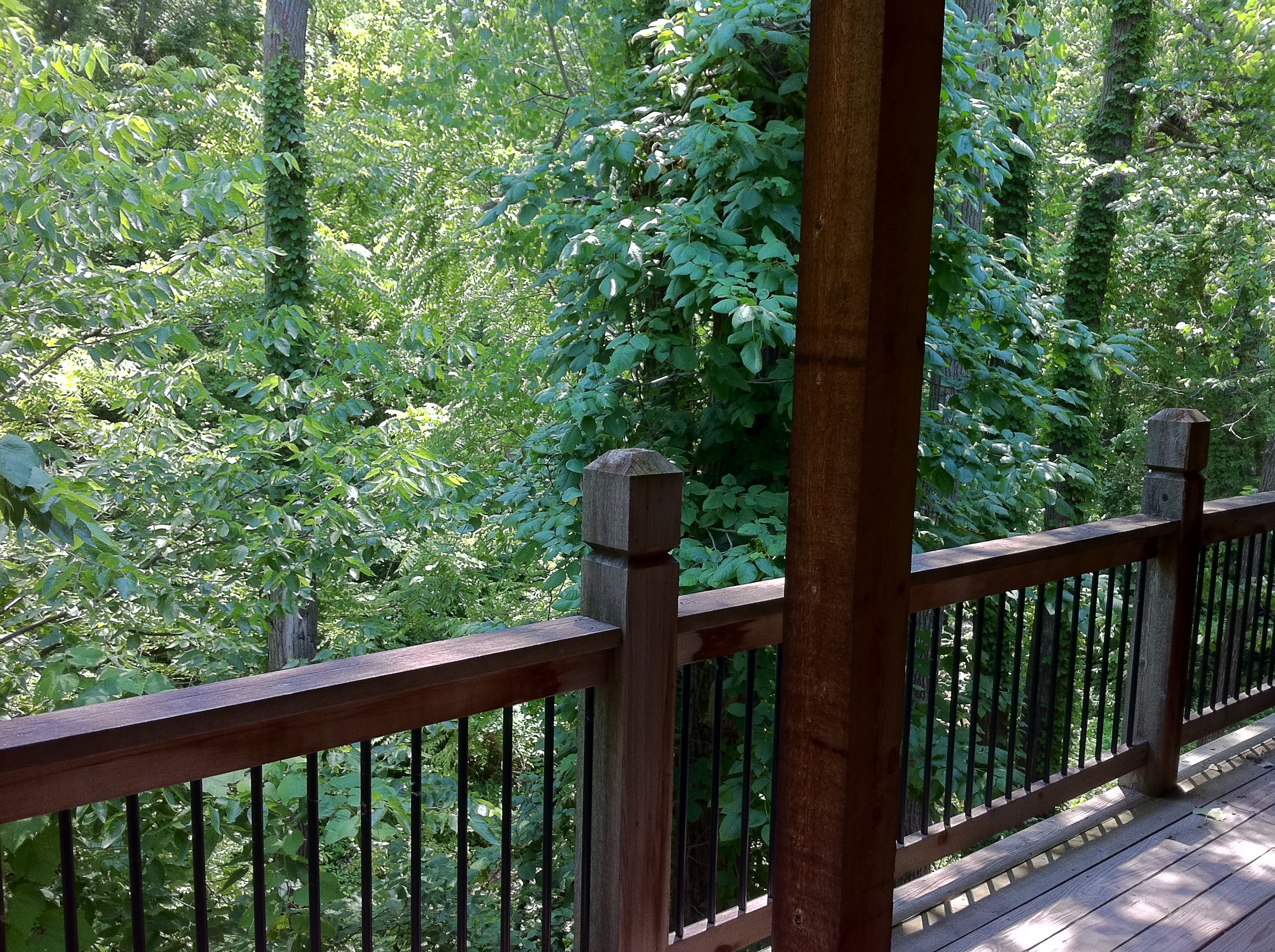
The view from the upper balcony of my house when I wake up in the morning …

The view from my windows in the morning reminds me of Oakfield in Fable II so I have that music programmed into the speakers so I can listen to it as I sit in bed, drink fresh, hot, black coffee, and review the business news.
Reader Comments (2)
Comments are presented chronologically, with replies indented beneath the comments to which they respond.
FratMan
July 2, 2011
Joshua, I had two quick Buffett questions that I could not find out the answers to, and I'm hoping you can help me out as a last resort.
1. One thing that has always blown my mind is that Buffett doesn't own Clorox & Colgate-Palmolive. And to a lesser extent, Heinz Ketchup. Aren't ClX and CL the perfect Buffett investments? They just strike me as something he'd buy in 1984 or 1997 and hold forever, or whatever. Does the absence of these two companies from BRK surprise you at all?
2. And whenever people talk about Buffett, they rightfully talk about KO as his signature investment. And to a lesser extent, The Washington Post and American Express. But I'm curious about Wells Fargo. What is it that Buffett sees in Wells that say, he doesn't see in JP Morgan or Morgan Stanley? In one of your posts, if I remember correctly, you said that Wells Fargo should be 'minting money' in about a decade or so...What was your basis for reaching that conclusion? Or, to pose the Phil Fisher question to you, 'What is it that Wells Fargo does that its competitors don't?'
Joshua Kennon
July 27, 2011
Replying to FratMan
1. No because it's all about opportunity cost at the time. When money became available, the stocks may not have been cheap or he may have needed it to close some other deal. I've loved certain companies my entire life but haven't owned them because there are other uses of the money that had higher priority at the time.
2. It goes back to the conditions when Wells Fargo was acquired for the portfolio. I was a child at the time - it had to do with the big real estate bust out west in the late 80's or early 90's if I remember correctly. A lot of people thought the bank was going to fail and the shares went to near nothing. Berkshire Hathaway bought a ton of it, becoming the biggest stockholder before long. One of my favorite money management firms, Tweedy Browne & Co., actually bought shares at the same time too for one of the mutual funds it manages and talked about how they finally concluded that the bank was going to survive after seeing that Buffett had purchased so many shares. What we call JP Morgan Chase didn't exist at the time - it was a bunch of individual companies such as Bank One, JP Morgan, Chase Manhattan, etc. Morgan Stanley was a competitor to Solomon Bros., which was a big Berkshire holding at the same time and it wouldn't have been okay to own a competitor, too, not in that industry, and not with the trouble Solomon created. So you have to remember: Don't look at the way the world is today, go back and look at how it was when the decisions were made at the time. No other bank stock was as cheap as Wells Fargo then, and many of the existing banks didn't exist as they do now.