

Why Are People Surprised That Savings Bonds Beat Stocks Over the Past 12+ Years?
I’ve noticed an array of articles exclaiming that savings bonds, including both the Series EE savings bonds and the Series I savings bonds, beat stocks over the past ten or fifteen years. Nearly every time I make my way into one of these essays or news stories, I just shake my head because the surprise displayed by the men and women penning these pieces indicate a complete lack of competence. Those of you who have any experience managing money or with history immediately know my objective: No asset class, per se, is sacrosanct. What matters is the price you pay for the asset relative to how much underlying cash it generates.
In nearly all of these articles, the starting time period is 1998 to 2001. It was during this time that stocks, as measured as a percentage of Gross National Product, hit an all-time valuation high. They weren’t just overvalued; they were stupidly valued. When men like Dr. Jeremy Siegel of Wharton would write newspaper articles warning people that they were buying shares at prices that were completely divorced from the underlying economic reality of the enterprises those shares represented, he received death threats.
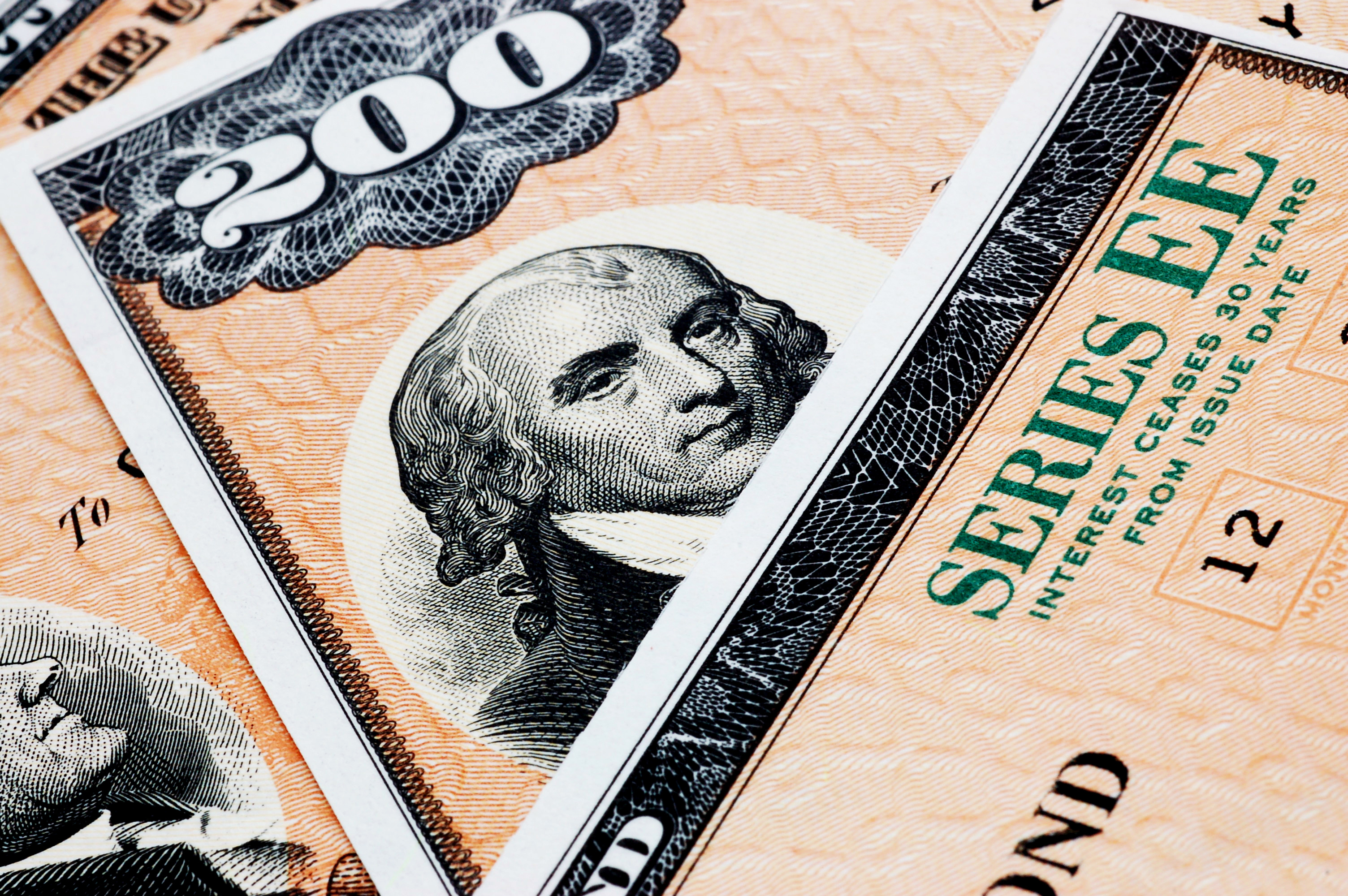
No specific asset class is inherently better than another. What counts is the price you pay for your ownership stake relative to the cash you generate, adjusted for time, effort, inflation, risk, and taxes. Nothing can change that. It is always true. This is why one of the greatest investment minds of all time, Benjamin Graham, taught his students to ask, “At what price, and on what terms?” for every investment that crossed their desk. Adopt that philosophy and you will probably do very well in life, avoiding a lot of stupid mistakes.
Major national publications had pictures of men like Warren Buffett on the cover, calling the notion that price mattered one for the dinosaurs. Telecom stocks with no growth prospects traded at 50x earnings, or 2% earnings yields. Internet businesses that had almost no sales and significant losses would be valued at hundreds of millions, or in some cases, billions of dollars. It was an insane time. In high school, my teachers were talking about the stock market. Suddenly, my weird little hobby had everyone’s attention and for all of the wrong reasons. At the time, though my savings were modest, I couldn’t find anything to buy. The valuation was so dire that the oldest stock in my portfolio was acquired in 2001 in the post-September 11th recession when panicked investors liquidated everything following the reopening of the stock exchange in the weeks after the terrorist attack. I have nothing before that period because there was nothing obvious worth holding on to for long periods of time at the prices that were prevalent
A Specific Look at the Situation in 1998 Compared to 2012
Let’s get into specifics. If you bought $1,000 worth of Series EE savings bonds in January of 1998, you would have locked in an interest rate of 5.59% before taxes. At that same moment, the S&P 500 had an earnings yield of 4.12%. There was no equity risk premium. The “safer” bonds, guaranteed by the United States government’s power to tax its citizens, offered 1.47% in higher yield, zero price fluctuations, and on-demand redemption after the first six months. In a rationally priced world, they would be offering far lower returns that stocks, leading to one conclusion: Stocks were overpriced.
Today, of course, the situation is reversed. Series EE savings bonds are offering 0.20% yields, while the S&P 500 is offering an earnings yield of 6.30%. Stocks, without any growth, offer 31.5x the return as savings bonds. That doesn’t mean stocks couldn’t fall by half overnight – they could. It just means that right now, at the present time, they are significantly more attractive than savings bonds.
Savings bonds were a much better deal in 1998. Stocks are a much better deal today. There is no magic here. There is no vast conspiracy. It’s basic math. The same kind you are taught in 4th grade. If you have $100,000 in today’s Series EE savings bonds, you are being paid $200 per year for your investment. If you have $100,000 in today’s S&P 500, you are being paid $6,300, of which 1/4 to 1/3 is paid out to you in cash dividends and the rest is reinvested or used for stock buy backs.
Whether stocks, bonds, real estate, mutual funds, copyrights, patents, licenses, movies, songs, royalty unit trusts, master limited partnerships, donut shops, retail stores, or car washes generate wealth for you depends on how much you pay for every $1 in net present profit. This is a great truth that has been known to most rational business men for thousands of years. Assets are not lottery tickets. If you buy a farm, you need to calculate how much money it will make you relative to your investment of time and capital. This is not rocket science.
Reader Comments (6)
Comments are presented chronologically, with replies indented beneath the comments to which they respond.
Gilvus
December 27, 2012
The S&P500 has oscillated around the 1000-1500 range for 13 years now, while the CPI-U has risen ~38%. Isn't this a mirror image to the "lost decade" that Japan went through in the 90's?
Joshua Kennon
December 28, 2012
Replying to Gilvus
Yes ... and no. The term "lost decade" is misleading because it presumes one dumped 100% of their net worth into the starting point (in this case, 13 years ago) and then did nothing. A vast majority of real people, in the real world, investing with real dollars, do not behave that way.
More likely, over the past 13 years, someone who bought stocks did so through a 401(k) account at work. They probably got dollar-for-dollar matching. They were buying during highs and lows and reinvesting dividends. Between all of those forces, and the initial tax deduction, which lowered the IRS bill in the year the money was contributed the plan, that time frame has been fantastic for the average investor relative to nearly all other options but it has to do with the structural makeup of retirement systems in the United States (again, Benjamin Graham "at what price, and on what terms?" ... here we are talking about the terms).
But let's assume that someone did that incredibly stupid thing - maybe they inherited a bunch of money and just bought the S&P 500 at a multi-generational valuation high. Let's adjust the figures for inflation. Someone who put their whole net worth into the S&P 500 in January of 1998 would have paid the purchasing power equivalent of $1,372.44. The S&P 500 is now at $1,402.43. In the meantime, they would have collected just shy of $400 in cash dividends for a grand total of $1,802 or so in real terms. Your real purchasing power gain before taxes (we'll assume a tax-sheltered account such as a Roth IRA) would be $430 or so.
Your real inflation-adjusted gain would be around 28.5%. On a compounded annual basis that is just shy of 2% per annum in real terms. That's not terribly exciting but considering you bought in at a time when stocks were providing far lower yields than bonds, and you never took advantage of dividend reinvestment or any of the subsequent crashes to pick up additional shares, and you've never had to think about the position since, it's not horrible by any means. You got what you deserved.
Data Source 1
Data Source 2
Gilvus
December 28, 2012
Replying to Joshua Kennon
Thanks, Joshua. I'll try to think in terms of total return more consistently.
Andrew
July 6, 2013
Replying to Joshua Kennon
That's incredible. Thanks for the analysis.
Mario
December 28, 2012
Josh, what do you think about the valuation approach presented in "Value Investing: From Graham to Buffett and Beyond" by Bruce C. N. Greenwald, Judd Kahn, Paul D. Sonkin and Michael van Biema?
Joshua Kennon
January 28, 2013
I have not read it. I will add it to the reading list.