[vc_row][vc_column][vc_column_text css_animation=”none”] [/vc_column_text]
I could hardly sleep Friday night because of excitement. It felt like Christmas as a kid, when all that joy, happiness, and anticipation are bundled together. Only much, much greater. Imagine you had been waiting on Christmas to arrive for more than thirty years.
Many of you watched me put off this purchase for decades as I prioritized investing over consumption, but it is now here: Aaron and I finally settled on our “forever” piano. We purchased a Bösendorfer 230VC model with the Enspire Disklavier Pro add-on and a custom-inlaid Macassar ebony wood around the soundboard. It is being manufactured near Vienna, Austria for us and should arrive in the next year.
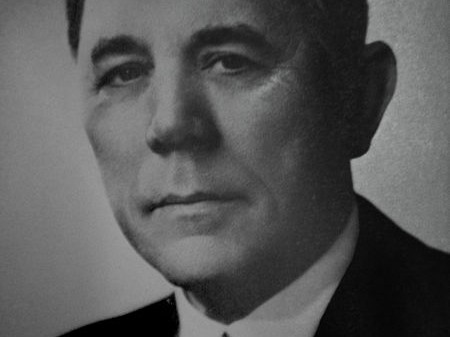
More than generation ago – all the way back in 1996 – the late Dr. Thomas J. Stanley released a book called The Millionaire Next Door that detailed how actual wealth accumulation differed from people’s incorrect assumptions. I think the formula for future generations of self-made millionaires will be slightly different.
One of the major lessons I’ve tried to teach is that building your net worth comes down to two levers: Cash in and cash out. That’s it. That is the entirety of the game when you peer past the distractions and gaze into the heart of the mathematical reality. From a financial perspective, every action you take for your career or business ultimately only matters in so much as it someday serves to exert force on one of those levers so that more cash is flowing in than is flowing out, leaving a surplus. It sounds so simple but when you see things through the focus of this particular lens, you can more quickly identify the actions that are likely to have an outsized effect, both for good or bad, on net worth.
In 1927, Hugh Roy Cullen was approached by Jim West, a wealthy lumberman who had invested in projects with Cullen in the past. On a Saturday, West called Cullen to his downtown Houston office, where he made the following offer: I’ve got $3,000,000 lying around. And I’ve got the West Production Company, which don’t amount…
The most recent statistics on household income, net worth, and unemployment, sorted by education level, are really interesting. Following our discussion about the splits that have emerged along geographic fault lines in the electoral body, I thought it would be important to highlight the economic differences and how enormous the income inequality is for the…
One old definition of “being rich” is when your money earns money. This afternoon, I was writing a piece and reviewing the dividend yields on some of the common stock holdings owned by my household personally, outside of the business, when I began quantifying that in the back of my mind. How much would it…
Shortly after World War I, Raymond Poincaré, the Prime Minister of France, decided against partnering with Royal Dutch Shell to fund the energy needs of the French people. One of his military commanders, Colonel Ernest Mercier, worked with 90 banks and businesses to establish a new oil company called French Petroleum Company (er, technically, Française des Pétroles Compagnie since they weren’t speaking English). The name might sound prosaic but keep in mind this was the era of “General Electric” and “Standard Oil”. The new undertaking began operations on March 28th, 1924. Today, that business is known as Total, S.A. and it is one of the six supermajor oil powers on the planet.
Towards the back of the most recent General Electric annual report is an interesting graph. It shows what an investor would have experienced by putting $100 into three different investments: GE shares, the S&P 500, and the Dow Jones Industrial Average. It assumes that dividends were reinvested in each respective investment when they were distributed. How were you rewarded for six years of patient investing, assuming you added no fresh cash outside of the dividend reinvestment? Take a look.
There are three ways to make a lot of money in business. Typically, most businesses that are successful at making money do it in one by focusing on one of three models. They either: Sell many things at a low price Sell few things at a high price Sell many things at a high price By way of example, let’s look…
As Gene Bedell wisely reminds us, nothing happens until something is sold. That is one of the greatest business truths you can ever learn. Get it engraved on the back of a watch, keep it in your pocket inscribed on a small sheet of paper, or repeat it to yourself silently, but learn this principle so…
[vc_empty_space][vc_column_text css_animation=”none”]
[/vc_column_text][/vc_column][/vc_row]