

Crown Maple Syrup from Madava Farms Should Be In Your Pantry (and a Case Study for Your Entrepreneurial Files)
After my recent semi-annual rant on the sorry condition of the maple syrup industry in the United States, which began with our discussion of the food industry polluting its products last Autumn, it should come as no surprise that, lately, we’ve been on a quest to find the ideal luxury maple syrup; honest-to-goodness, real, from-the-Earth maple tree sap with nothing else added that will become our go-to syrup for enjoying with breakfast, cooking in recipes, or using as a sugar substitute when the occasion calls for something with a different flavor profile. One of the companies that was in the running was Madava Farms in New York state, which has a business built around its flagship syrup, Crown Maple. (This obsession with quality isn’t anything out of the ordinary. You might remember two years ago, we found our favorite honey. We order it at a certain time of year before the inventories are depleted, stocking up on as much as we reasonably can in the pantry.)
The enterprise is unique. Forbes profiled it last year because it operates with an almost reverential appreciation for the artistry of the product in the same way Brown-Forman treats whiskey or a vineyard treats wine. There’s a multi-million dollar visitor center, chef, wedding venue, tasting tour, property tour, and more. Everything down to the packaging was designed with luxury in mind, with the concept developed by Studio MPLS. Even the tagline reflects this, with the official Crown Maple syrup slogan being, “Not all crowns are inherited. Some are earned.” Crown Maple wants to please not only your tongue, but your imagination, as well.
The whole thing is fascinating. You have to read The New York Times profile on how the business came into existence. The owners went from zero to sixty in a few, short years, infusing enough money that they built what is believed to be the largest maple syrup production facility in all of North America (and skillfully, too, which is understandable given the husband is a senior partner at ArcLight Capital, who, on paper at least, looks almost absurdly perfect as if he were freshly minted from the pages of a Tom Clancy novel with an undergraduate from the United States Military Academy at West Point and an MBA from Harvard). I understand it – they were very scientific about it; cold and calculating. I love everything about its history, the thought and consideration put into the startup, the appreciation for the power of a brand, and the fact it created equity value of out thin air. It induced in me a feeling most investors have probably experienced: The desire to acquire ownership (provided the economics actually turn out favorably). It gives me the same sense of joy that the House of Creed fragrance business does.
The Crown Maple syrup line-up consists of four intensities: Golden Color, Amber Color, Dark Color, and Very Dark Color, with 375 mL bottles ranging in price from $16.95 to $21.95. There’s also maple sugar, which you can purchase. We ordered a bottle of each to undertake a taste testing today. Unfortunately, the Dark Color broke but it is being replaced thanks to an amazingly awesome inventory control manager named Tamar who was so incredible at her job, I placed a second, follow-up order of seven additional bottles to give away as gifts, with many more future purchases planned.
Spoons in hand, bottles opened, we were instantly sold on this top-shelf maple syrup, and not just on one derivation – we loved them all. Though, admittedly, I have a preference for the Very Dark Color if you forced me to choose. We’re hooked. We were hooked before we knew any of the background on the business itself, seduced entirely by the quality of the product, but knowing how intelligently it was birthed into this world makes me adore it. I love seeing competence and execution done right.
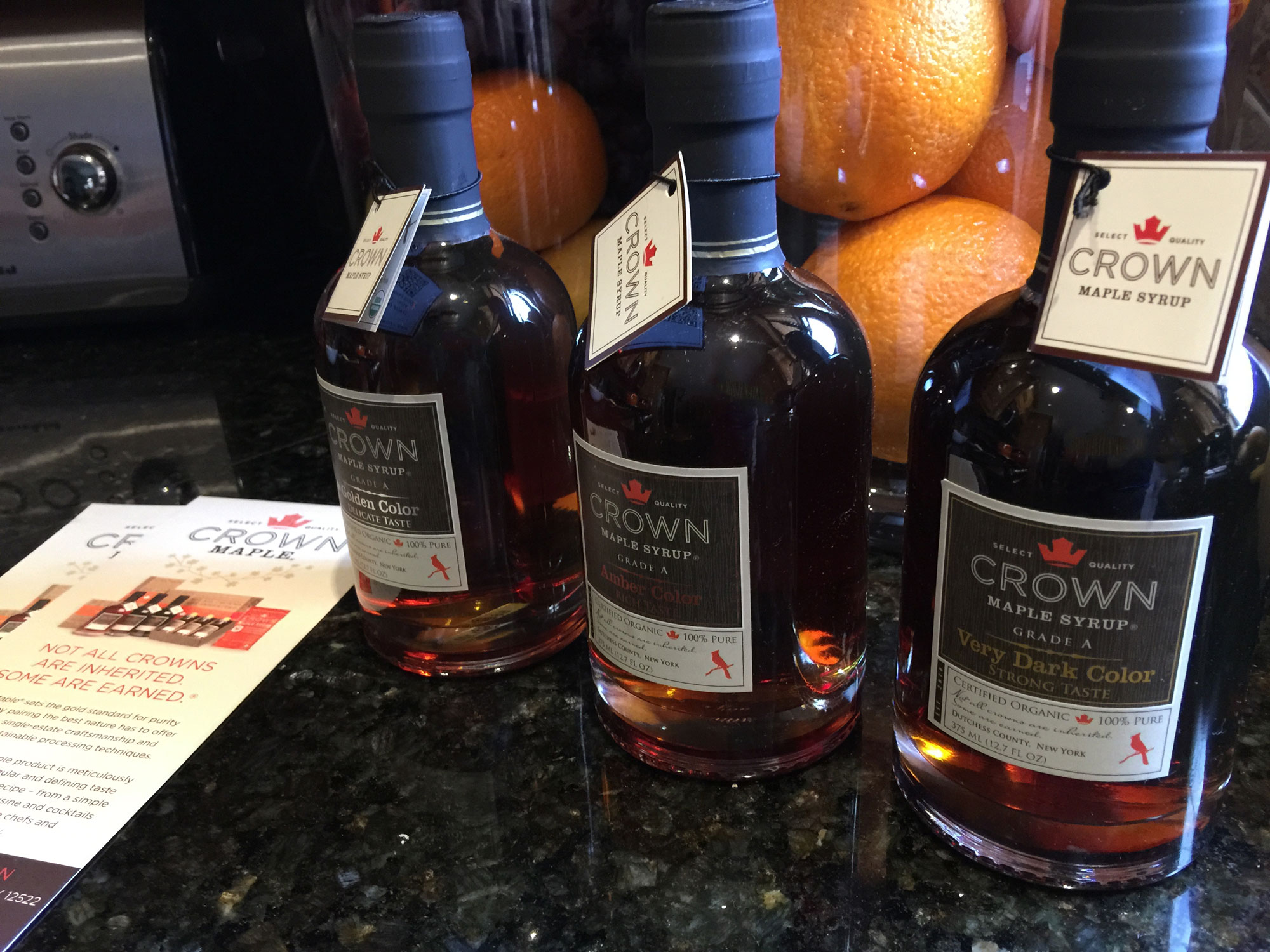
Three of the four Crown Maple syrup intensities. From left to right: Golden Color, Amber Color, and Very Dark Color. The missing one is between the last two, and is simply Dark Color.
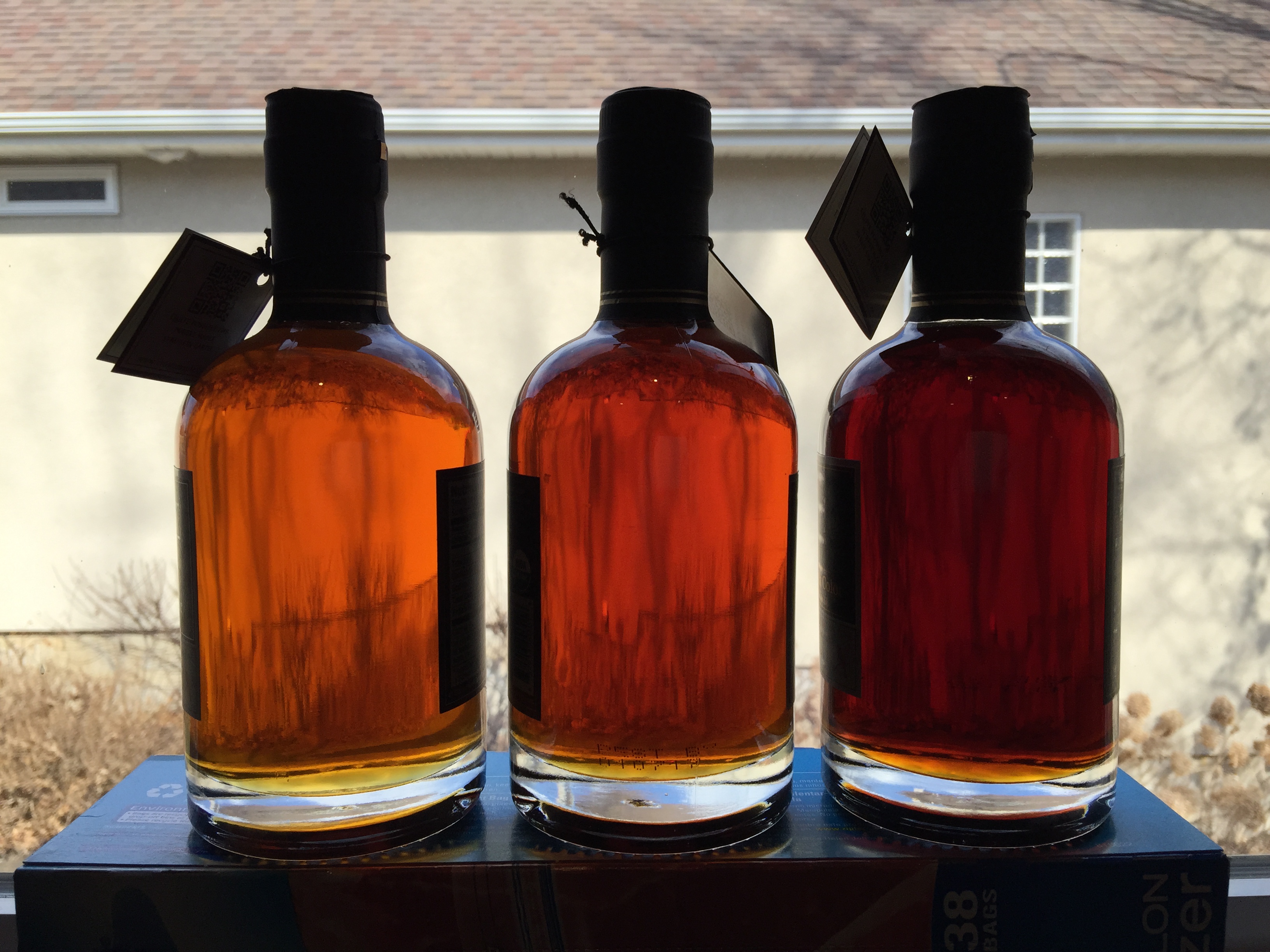
Same deal, from left to right: Golden Color, Amber Color, and Very Dark Color. The dark maple syrup is much heavier and richer. It’s my favorite (but not by much because they’re all delicious).
My goal now is to figure out how to make a recipe that uses it prominently; something akin to the pineapple upside down cake I made after trying to replicate a recipe we had at Club 33 out in California during a trip to Disneyland. Maybe a maple glaze, like the honey lemon glaze for that beehive cake I made a few years ago? Or a dessert bread? I bet I could modify our now-famous Cinnabon replica Cinnamon Roll recipe with a maple flavor profile using this! Jackpot! Oh, and I’ll add pecans like you see in some regional derivations! The official website has a recipe collection, so that’s another possible source of inspiration. They also included a bunch of cocktail recipes for which you can use the maple syrup as a flavor enhancer but that’s not our thing.
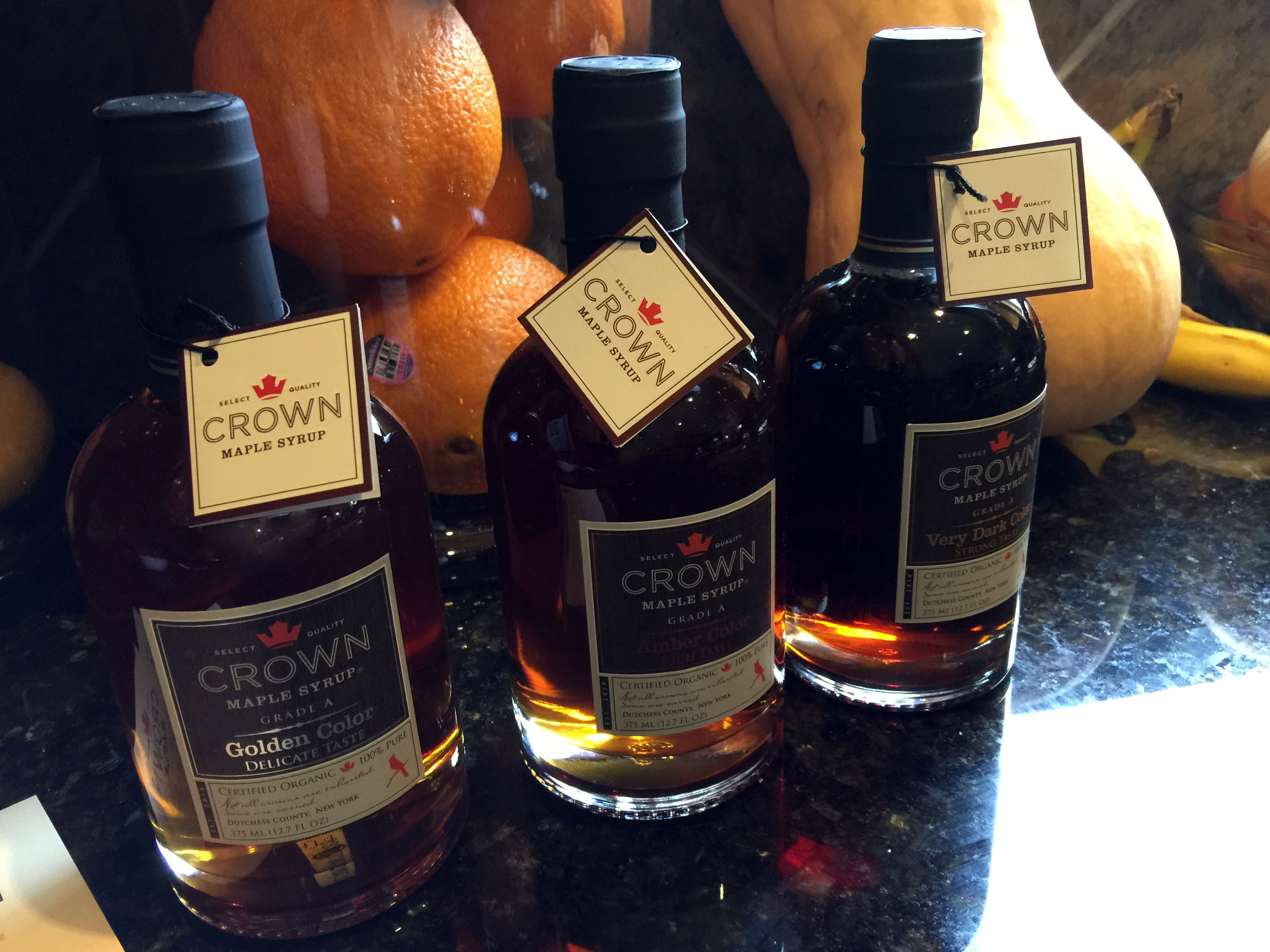
It’s wonderful to have an actual glass bottle, with an actual food product inside. Could a grocery store even survive these days selling the real stuff? Do people even know what they are missing? Whole Foods probably comes closest but even then, it has to stick to very specific demographic areas to get the sales it needs to achieve its return on capital targets. It’s a hard problem.
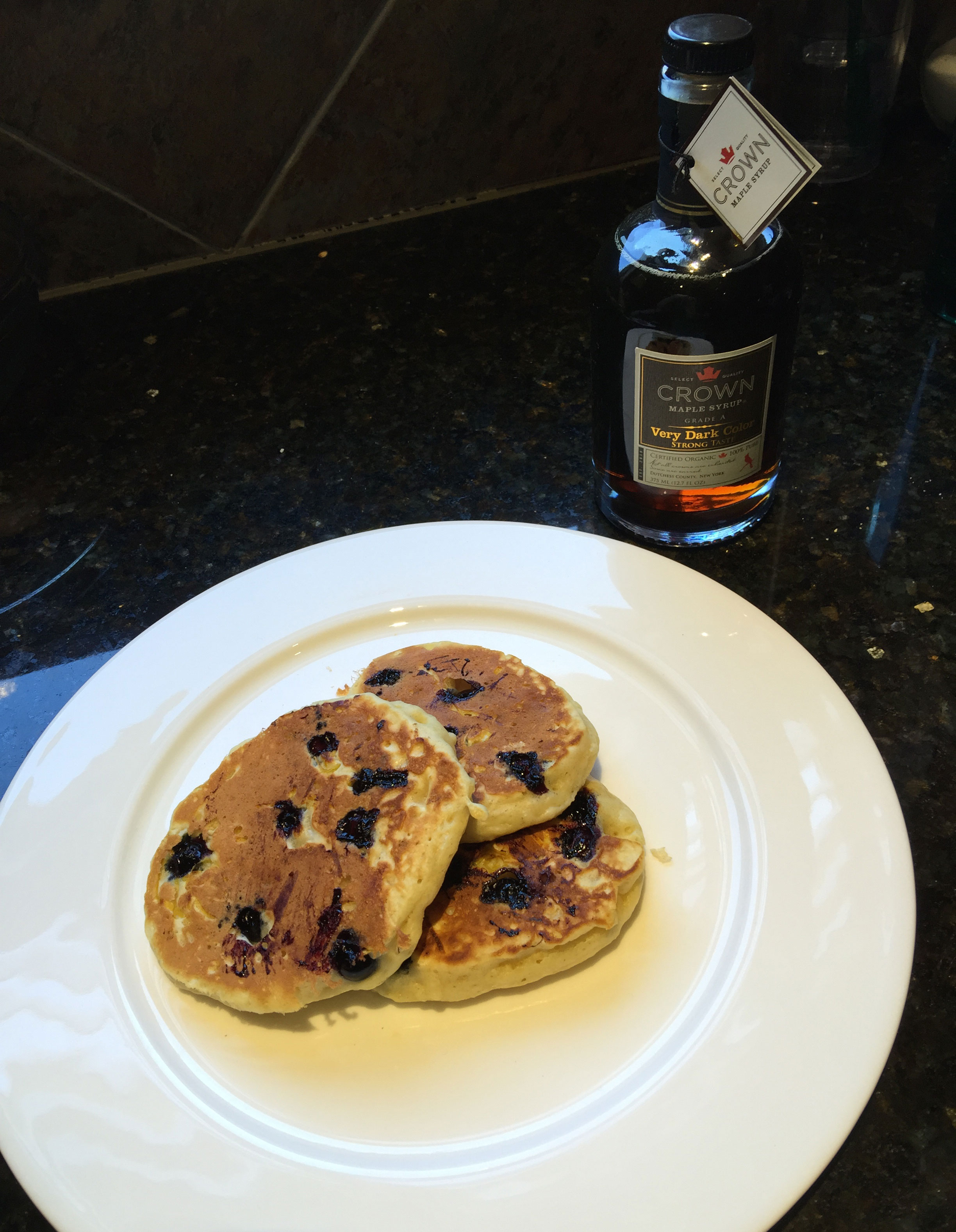
Update: The next day, we tested them on blueberry lemon pancakes.
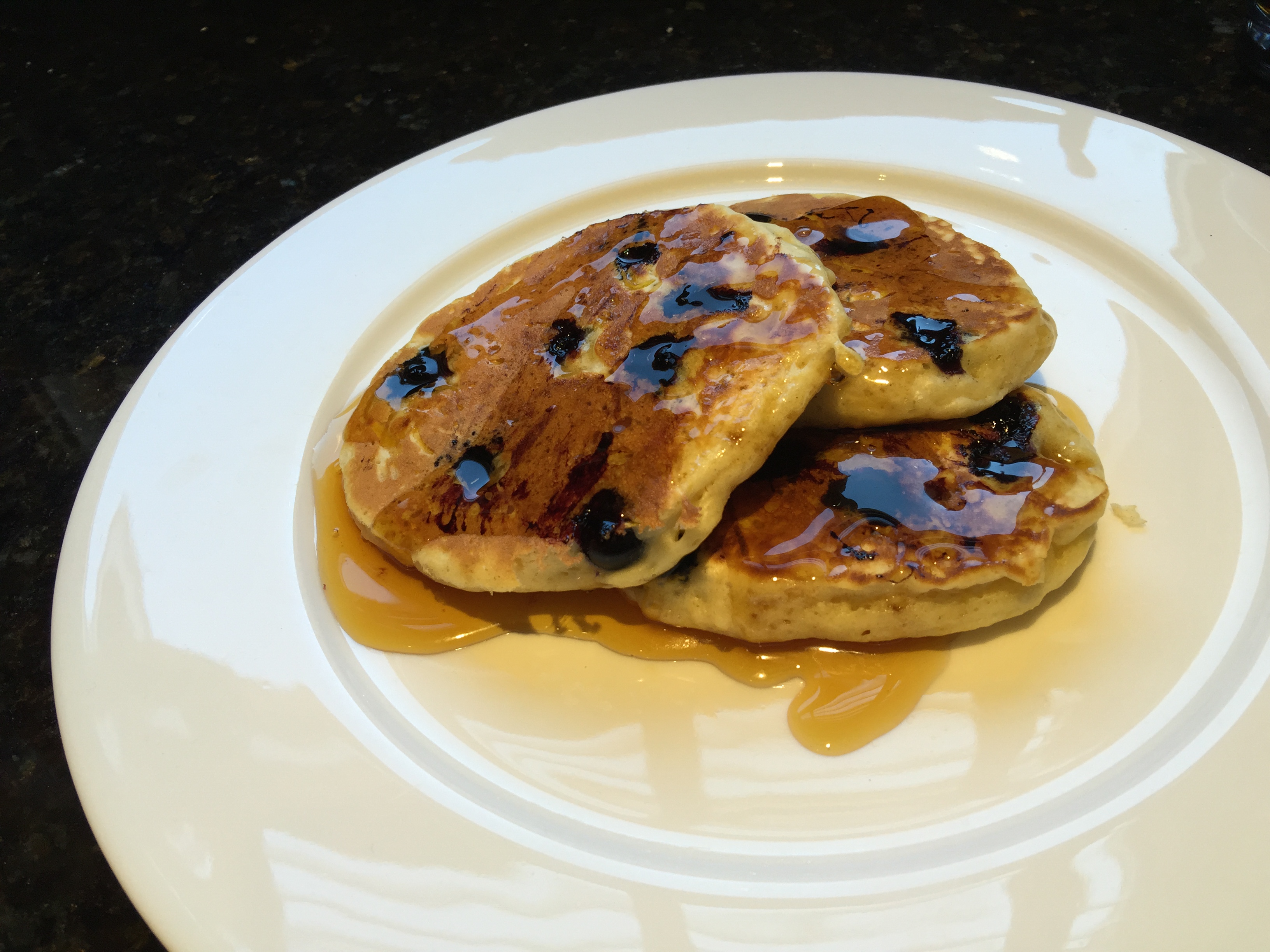
Oh yeah … the Golden Color was better on these (this is the Very Dark Color) because of the sharpness of the lemon and blueberry, but I can tell I’d like the darker color on chocolate chip pancakes. Confirmation will have to wait for another morning.
If you want to pick up a bottle or four for your own pantry (you should), head over to the Crown Maple online store to learn more and place your order. Once you find your preferred syrup intensity, you can buy it by the gallon for a much lower cost per ounce. Give it a try. You probably just found your family’s new permanent maple syrup.
Reader Comments (13)
Comments are presented chronologically, with replies indented beneath the comments to which they respond.
David Wang
March 10, 2015
Do you know whether they distribute oversea? Say in Australia?
Joshua Kennon
March 11, 2015
Replying to David Wang
It doesn't look like the website is setup for it at the moment but it's all just people talking to people. You might want to call (845) 877-0640 to talk to them or send them an email through their website contact form. I'd ask for Tamar and explain you are outside of the United States but you read about it here and want an order shipped to you.
If anyone could arrange it, I'm guessing that'd be your best bet. I had an issue come up (that, in the end, wasn't their fault) but Tamar still took care of it in a matter of minutes. It was impressive.
Scott Pancake
March 11, 2015
Here in Vermont we believe we know sugaring better than anyone (exception for the Quebecois...maybe). It never ceases to amaze me the differences you'll find from one day in the season to the next with regards to color, taste, and sweetness. Not to mention season to season.
My family are small volume producers, (we bottle our syrup in mason jars) on a hobby basis as far as regulators are concerned. However, I know many large scale producers who are doing the literal heavy lifting, and once the collection of sap & evaporation process is complete many are frankly exhausted...using sugaring along with other forms of agriculture to make a living. Thus, they don't spend as much time as they ought to with branding/marketing/etc. I'm looking forward to tasting Crown's product...though I can't help assuming it's just oil-fired syrup in a bourbon bottle 🙂
To me, Crown's most impressive feat is creating a luxury brand while maintaining massive output without aggregation of other syrup producers. Sugarers throughout the Northeast should take notice. Crown could be the tip of the iceberg in maple product branding.
Joshua Kennon
March 11, 2015
Replying to Scott Pancake
I enjoyed reading this. Thank you for taking the time to write it!
I think you might turn out to be right about it being the tip of the iceberg, judging from some of the comments I've come across from those involved who talk about the raw potential being larger than Quebec's entire output, which would certainly be industry-changing on a global scale.
I'm not certain how, precisely, they make the product but there are pictures of the equipment they had designed here. They mention using reverse osmosis to remove 90% of the water so they can get the finished product to a specific sugar content, measured in Brix, which is the same measurement process Coca-Cola uses to standardize sweetness across its global bottling plants, ensuring consistency from day-to-day. They target 66 to 68 brix at the time of barreling, which is one of the things that got my attention. They aren't playing around ... it's full-scale, industrial-grade, spare-no-expense manufacturing. I know they brought in agricultural experts from Cornell to figure out the most intelligent way to ensure consistency and quality; something that wouldn't have been possible if a farmer weren't starting with the sort of net worth the founders were in this case thanks to his career in private equity.
Given your experience, you'll probably be able to understand much more from those pictures than I do being limited at this point by a non-hands on academic exposure to the finance side of food production.
Personally, I get the suspicion the end game here is a global syrup empire. I think if they play their cards right, they could end up with a substantial business that either stays in the family, goes public, or is sold to one of the big food companies. J.M. Smucker started somewhat similarly and look at it now. They were just dealing with strawberries and grapes, rather than maple trees, and ended up using the cash flow to buy things like Folger's Coffee. Even if it hits a growth wall - say there are only so many people willing to pay for quality - it could be a wonderful economic engine for the equity holders. If the returns on capital were only average and there were an IPO tomorrow, I'd subscribe just to support the return to quality food manufacturing.
Scott Pancake
March 11, 2015
Replying to Joshua Kennon
You might be interested in this study...possibly increasing the ease of entry into volume production on a smaller piece of property using maple saplings instead of mature trees:
http://www.uvm.edu/~uvmpr/?Page=news&storyID=17209
Not as romantic, but given the typical tree needs to be a few decades old before you can tap using conventional methods, you need some generations long planning if you intend to develop a sugarbush from scratch, let alone control for sugar content....anyhow, that's crazy future talk, but possibly where things could go, especially considering climate change.
Their current production appears to be around 25k to 50k gallons of syrup per year using my math based on their having 50,000 trees. That is gigantic, and gives them a good testing ground before morphing into "Standard Maple".
Joshua Kennon
March 12, 2015
Replying to Scott Pancake
I love stuff like that, thank you!
If those estimates are right, given that they are mostly direct selling the product at retail (or so it would seem), depending on the most popular packaging size in which they sell it, that would put their maximum theoretical revenue between $4,000,000 and $10,000,000 per annum excluding maple sugar sales, and sales generated by the farm itself (e.g., the cafe, wedding bookings, etc.) I'd be curious to see how much of that converts into free cash flows.
Of course, some of the utility to the equity holder is non-financial. The founder admits in an interview that by converting the 800 acre estate into a working farm, he was able to qualify for tax credits that lowered the cost of the property, so even if it weren't making a lot of money, it's reducing outflows elsewhere, which has value.
thegoblinchief
March 12, 2015
I wonder how it compares to the maple syrup I can buy locally (WI has quite a bit of maple farms). I like very strong-flavored syrup, so some syrup enthusiasts turned me onto the lesser-known "grade B" syrup, which is less filtered and quite strong. I haven't searched around for bulk supplies yet, but at my local discount market I can get it for $7.20/pint. Paying 2-3x that amount seems really steep, no matter how fancy their equipment is.
Joshua Kennon
March 12, 2015
Replying to thegoblinchief
I'd be curious, too. If you ever find out and have a few minutes, please let me know your conclusions. I'd appreciate it. It'd help me gauge how much of the price premium is quality and how much is perceived prestige. (Is this, in other words, a brand like Dolce & Gabbana where the product itself isn't of sufficiently superior product to justify the markup as it is selling an idea, a lifestyle, to people, or is it a Brioni, where the reason it costs as much as a car is because it is absolutely superior to everything else on the market with no expenses spared in quality materials or construction? If so, how much pricing power does that give the company?)
I'm with you on the dark, stronger stuff. I like it better, too! Recently, Vermont changed the maple syrup grades so our "Grade B" is called something else now because people thought (understandably, I suppose), it was of lower quality than light Grade A, which isn't the case at all. It's now called "Grade A Very Dark Color, Strong Taste". Here is a handy chart. Don't panic when the Grade B begins to disappear, haha! It's still out there, just under a different name.
thegoblinchief
March 12, 2015
Replying to Joshua Kennon
I've had a number of large food purchases (CSA, bulk grains, whole pig) but once my cashflow rebounds a bit perhaps I'll do a taste test. I also didn't realize that the Crown syrup is Organic cert. The differences are subtle: http://www.acadianmaple.com/blogs/maple-syrup-blog/4852352-what-is-the-difference-between-organic-and-non-organic-maple-syrup but the price is actually relatively competitive to other organic products I've seen.
Joshua Kennon
March 21, 2015
Replying to thegoblinchief
Thanks for letting me know. I wonder what the additional overhead is; is it all about financial return due to the higher price or is it equally as profitable as the non-organic variety but done for social value reason alone? I should look into this ...
thegoblinchief
March 22, 2015
Replying to Joshua Kennon
Considering that the requirements to meet organic aren't very capital intensive versus standard maple sugaring, but the market price is easily 2x or more, I'm guessing it's done for extra profitability. There's not exactly a lot (or any) pesticides used in maple groves.
The organic requirement just stipulates that only ethyl alcohol be used to disinfect the tap site on the tree, requires food grade gathering equipment, and there's restrictions on what kind of defoamer is used when boiling the sap down. Even throwing in the paperwork and cert overhead, I don't see something that costs 2x to produce. Granted, I'm only a (currently urban, rural in a few years) homesteader, not a commercial farmer, so perhaps there are scale costs I'm not understanding.
Karen
March 12, 2015
When we go up north we buy from a place in the Northwoods, direct from the producer for a very easy price and it's delicious.
FratMan
April 29, 2015
Do you think it's still possible to be...romantically enthusiastic about excellent long-term businesses that are multinationals? In a similar way that you seeing obese individuals inhale McDonalds and chug Coke diminishes your appreciation for the story of the company, stories like this lessen my appreciation for a company like Disney.
http://www.computerworld.com/article/2915904/it-outsourcing/fury-rises-at-disney-over-use-of-foreign-workers.html
Part of the issue is that management teams substitute what is legal for what is morally correct to do, and hardly anyone seems to have the courage to say, "It's okay if shareholders make a nickel per share less if it means we treat people the way we'd like to be treated."
Also, I think the shift to contractor work is going to be a nasty threat to America just like the trend toward automation. It encourages me to seek out passive income sources and pursue entrepreneurship sources as a form of self-protection.
Also, sorry Google's hassling you about your site.