

I really enjoy paradox, especially in areas of science, religion and philosophy. There are all kinds of paradoxes in life – some are paradoxes of logic, some of self-reference, some of mathematics, some of statistics, some of probability, some of decision theory, some of physics. The world is full of paradoxes.
[mainbodyad]
What do I mean? Take a famous story from two of the world’s major religions, Judaism and Christianity. It involves King David of Israel. After coveting another man’s wife, Bathsheba, he had the man murdered by sending him to the front lines in battle. According to the Torah, God was so infuriated that He punished the entire nation and only relented out of mercy.
Adultery? Murder? Theft? Sin? Conspiracy? Yeah, guilty of all of it. But David still married this woman after having an affair and murdering her husband (literally). Yet a child born to them was King Solomon, which turned Israel into the richest and most powerful empire on the planet at the time. It was through this bloodline that Mary was born and, thus, Jesus Christ.
I mean, the irony here is that had David not been completely wicked and sinful, ticked off God, broken His laws, had an affair, murdered an innocent man, and let his lust take control of him, Solomon, Mary and Jesus Christ, wouldn’t have been born – that bloodline simply wouldn’t have existed.
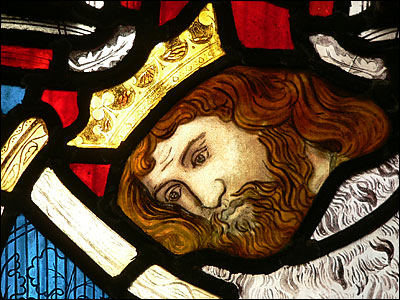
The King David paradox in Judiasm and Christianity is that he had to defy God’s will by committing murder and adultry in order to bring God’s will to pass through the birth of Solomon and his bloodline (Mary and Jesus Christ). Thus, how could a just God punish Him for committing evil when it was that evil that brought good into the world?
The paradox? Imagine that you go back in time and wake up as King David. You know that you have to commit the adultery and subsequent murder, defying God and sinning but it is necessary to bring forth the bloodline of Solomon, Mary and Jesus Christ. Do you do it? The paradox is that the only way to have God’s plan come to pass is to defy God’s will. Then, the paradox expands because now a just God must punish an evil act that is responsible for the ultimate good in the world.
We have certain paradoxes at work today in economics. The so-called paradox of thrift states that, “if everyone tries to save more money during times of recession, then aggregate demand will fall and will in turn lower total savings in the population because of the decrease in consumption and economic growth.”
Paradox is wonderful. Paradox is the unexpected spice in the dish of life – it keeps things interesting.
Reader Comments (6)
Comments are presented chronologically, with replies indented beneath the comments to which they respond.
crabhooves
November 9, 2010
This actually is a great example of how flat out sadistic and devoid of empathy the Christian god is. Punishing an entire nations for one mans mistakes? How unjust for the good people of Israel who endeavoured never to harm others only to be rewarded with another mans punishment
Inflicting all this just because he could and the claiming it was out of "mercy"? that's like an assassin giving mercy to his victims, sure it technically counts but they wouldn't need it if werent for the one offering.
Kwame
November 10, 2010
I think it goes to show that humans will never be able to fully understand the mind of God. All we know is that he does every thing for our good.
Sometimes i think it is just best to keep things simple.
Copt
January 4, 2013
Actually, the child born of the affair died in infancy. King Solomon was born after King David and Bathsheba were married. Also, God's plan comes to fulfillment whether or not we do His will - we have no way of knowing that had King David not done those terrible deeds, Uraiah wouldn't have died in another way and Bathsheba and the king wouldn't have met under different circumstances...
Joshua Kennon
January 4, 2013
Replying to Copt
I realize that. (I never said otherwise. I'll try to make the text clearer so I apologize about that.) The point was that the child was born out of an adulterous relationship.
From a purely theological point of view, the assertion that "God's plan comes to fulfillment whether or not we do His will" is patently non-Biblical. It comes not from scripture (which is full of examples that overwhelmingly refute such a claim) but from the fatalistic 16th century doctrines of Calvinism, which had little basis in historical scriptural interpretation and was instead used by a group of men to justify a long line of immoral, inexcusable, and unconscionable actions, systems, structures, policies, and practices that dominated Western Europe at the time. Predestination and an appeal to the sovereignty of God over the will of man are the shield and buckler of the privileged who wish not examine or consider the consequences of the oppression they mete out by their own, blood-soaked hands. It also dramatically reduces the role of God in creation, who twice in scripture specifically referred to man himself as "gods" in Psalm 82:6 and John 10:34 after saying that he made man "in His image and likeness" in Genesis 1:26-27.
Throughout thousands of pages, the Western protestant Bible (not the other versions of the Bible and the additional books they contain, such as the ones used by Catholics), consistently demonstrates that God respects man's will. Scripturally, it was not God's will for mankind to fall, yet the Earth was given to his dominion and he had a choice. Scripturally, it was not God's will for the Israelites to put a king over themselves but they demanded it (1st Samuel 8). Scripturally, it was not God's will for Ishmael to be born, and it changed the fate of Isaac, whom He had promised.
The list is endless. To believe otherwise would require a complete lack of understanding and knowledge about the role of sovereignty and, by implication, to insist that God is not, in fact, just and righteous in His fairness, which would be anathema.
The Christian God of the Bible demonstrates time and time again that He may love you, and His will may have been for you to become something great, yet he'll respect your free will let you die broke, drunk, drug-addicted, and penniless in the gutter if that is what you want. Even under the new covenant, scripture is adamant that it is the will of God that all may come to Him through His son for redemption, yet Christ hanging on the cross did not override the will of the non-repentent thief who refused to believe.
(On a side note: The conversation reminds me of how powerful culture is in shaping ideals and beliefs. If scripture is to be taken literally, using what we know from modern day technology, every stained glass window of Adam and Eve should show two black people (white people are a relatively young race with a freak gene mutation that allowed the ancestors to move further north where there was less sunlight, as well as consume dairy milk in a world where almost everyone is lactose intolerant). Go into many Sunday schools and they will talk about how Satan tempted man, through the snake, to fall. Yet, the entire notion that this person named Satan was somehow involved came solely from The Book of Adam and Eve, which was thrown out the Bible a few centuries ago. In actuality, the person named Satan doesn't show up anywhere in the Bible except as an errand boy to do God's bidding when tempting Job and, later, Christ in the wilderness. People only think so because back in the late 19th century, apocalyptic preachers began twisting scriptures - such as those about the fall of the King of Tyre - saying they applied to the devil. Nearly all modern understanding of this character came from the Book of Adam and Eve, as well as a merger of pagan gods (the pitchfork from Poseidon, for example). A literal interpretation of scripture also ignores things like the fact Jesus said, "He made them Male and Female", which isn't true. We now have genetics. There are dozens of different types of sex combinations and a minority of people who think they are, say, female with female parts actually have male genetics.)
TL;DR: I don't believe a person can comment on something with substance unless they are familiar with it and have experienced it first hand. I've read the Bible many times. Cover to cover. Front to back. All umpteen thousand pages of it. Multiple translations. Grew up in a private Christian school for a good portion of my life. Engaged in some serious theological work during college. No one can assert that the Christian Bible supports the notion that God's will comes to pass regardless of the actions of humans. That is a cultural idea that is relatively new.
Of course, following my rules about the site, I'm not going to tell you what I believe. This is purely academic theology.
FratMan
March 8, 2014
What's the best reading(s) on the Jesus of faith vs. Jesus the historical person that you've encountered?
FratMan
November 4, 2015
It seems to me that the spirit of Christ’s teachings, as well as the basic premise of natural law, is that we ought to do two things: (1) Do good, and (2) Avoid doing evil.
Under that theory, if I were David, I would not commit adultery. Perhaps David helped usher in the fallen state of man that provoked God to send his Son to save our sins. I would much prefer sinless behavior that does not require God to save us from our sins rather than sinful behavior that does. That lofty ambition could never be realized, and hence, Jesus.
Although utilitarian choices come with benefits (especially when setting up a government designed to promote the common good) it does contain limits--especially when applied to individual morality.
If you had to kill a healthy newborn baby that would one day go on to be the cause of a bubonic plague that took the lives of millions, would you do it? If you hesitate for even a moment before answering, it suggests that there is something we should address beyond utilitarianism.
The hesitation is that people forget that “do good” and “avoid doing evil” are two different commands rather than one in the same. People with a utilitarian mindset would sacrifice the baby because they have “do good” on their mind and forget the “avoid doing evil” command. In order to satisfy both precepts, the answer is--once the baby is infected--to attempt healing the baby. If that fails, quarantine the baby and isolate from the population at large. Use the force necessary to address the risk that has presented itself rather than use extra-force to address a risk that may present itself.
There is also a pragmatic reason for why “avoid doing evil” should be a first principle of government (rather than pure utilitarianism.) Once you establish that killing in the name of the common good is okay, and that is a principle you operate from, where do you expand it from there? You will create a government that exercises the pre-emptive strike against its citizenry upon the recognition of a risk. Is that a country where you want your children to live?
It is difficult for me, given the limitations of my skill set, to evoke in someone the reason why David should not engage in adultery using theoretical language. Perhaps I can evoke the same reaction in you using a different example. If you could punish an innocent man--lock him up for ten years--and had the subsequent knowledge that it would 100% deter him from future crimes, would you do it? You probably wouldn’t. The reason is because we don’t want to engage in immoral act X to provoke good act Y. That’s my answer to the David adultery question.
If I were the devil, I’d first try to convince people I didn’t exist (nod to C.S. Lewis.) Then I would try and convince good men that they must commit evil for some abstract future good down the road. Such incrementalism is the most assured way to turn good men bad.
Sorry it took so long to comment on this situation. I had to think about it.