

The Rise and Fall of Noxzema: A Business Tale
On a recent late-night restocking run to the store, Aaron and I were walking down an aisle when we suddenly spotted something that, outside of a handful of enclaves, has been missing in action or relegated to back corners for decades: A product called Noxzema. For almost three-quarters of a century, the stuff was ubiquitous, found in nearly every home and an absolute must-have on any shopping trip taken by nearly any American family. It’s a greaseless cold cream that reduces symptoms of sunburn by soothing skin and acting as a mild pain reliever. It can eliminate blackheads and facial breakouts in some men, women, and teenagers. It helps women remove makeup with much less effort. It is an incredible moisturizer – approach nearly anyone over the age of 70 who has perfect skin and ask them about it, odds are good they’ll lean in closely and whisper, “I’ve used Noxzema every day for thirty years”. (I don’t mean that as a joke, I mean it quite literally – if you see an older person who has skin quality that appears 10 or 20 years younger than his or her age should indicate is possible, it was probably due to near-religious Noxzema usage. Some who aren’t sensitive to the ingredients sleep in it as a mask). Suffering mosquito bites? Dab a little on for relief. Want a full-body skin treatment? Dissolve a couple tablespoons in a warm bath and you’ll be amazed at the results. Its scent, consisting of menthol, camphor, and eucalyptus oil, is so distinctive that almost anyone exposed to it will recognize it in a heartbeat the next time they encounter it.
Like Colgate toothpaste, Coca-Cola, WD-40, Lava soap, or Tide laundry detergent, the soaring success of Noxzema was one of American chemistry’s great accomplishments; proof that the industrial revolution could democratize quality for the masses. You didn’t have to be a Rockefeller to live like one and everyone from the President on down would have the same experience when they reached for it. Whether they waited tables or had a personal chauffeur, any person, anywhere, could pick up a jar of the stuff and feel like royalty; black, white, male, female, young, old, didn’t matter. Its economies of scale are extraordinary – on a per-ounce basis, the “more expensive” moisturizing version of Noxzema is $0.33 an ounce compared to that La Mer you see at Neiman Marcus going for $170.00 an ounce. If the two were sitting on a counter next to each other, the Noxzema is 99.8%+ cheaper for a product that is, in my opinion, superior and more versatile. Put another way, you could buy 515x more moisturizing Noxzema for the same price.
Somehow, this once-powerhouse that, at its peak boasted 20% market share and had men buying Noxzema brand shaving cream from NFL star Joe Namath, became overwhelmingly associated in younger generations with teenage girls trying to prevent acne in order to seduce boys; a result of a horrible strategic mis-step by then-parent Procter & Gamble, which didn’t have a clue what it wanted to do with the product line following an expensive acquisition for which they paid using newly printed shares. (It isn’t difficult to understand how this association came into existence. Exhibit: P&G ran awful television advertisements such as this one and this one to juice short-term sales while apparently not realizing or caring that the long-term effect was to 1.) alienate anyone outside of that particular demographic and, 2.) cause them to stop using it once they made it past puberty and didn’t need to worry about breakouts any longer.)
The result? This near-miracle product, which should be sold to dads helping their kids recover from a day at the beach, executives who want to look naturally younger as they age, women who don’t want to fight removing their cosmetics at night, and, yes, teenagers who want to prevent breakouts, was instead slowly discarded by the public; “that’s not relevant to me” the subconscious thought that displaced generations of dominance. While, in a rational world, everyone from vain men in their bachelor pads to elderly grannies sitting at their vanities should be applying the stuff in circular motions at night, humans largely run on codes. Competitors stepped into the space, elbowing their way for a share of the vacuum left as revenues kept drifting downward, more abysmal as time passed.
How could such a tragedy occur? And, perhaps more interestingly, through what strange capitalistic magic is Noxzema once again making a comeback, emerging as if it were a Phoenix rising from the ashes? Will it succeed or has too much damage been done?
I couldn’t stop thinking about it after seeing the in-store prime shelf display. I had to open a case study file. I grabbed a jar of the gentler moisturizing variety (12 ounces for $3.97), placed it in the basket, and figured I’d get around to it sometime this week. It barely took a day or two before I was buried in old newspaper articles, following charitable donation trails, and examining historical legal structures. I’ve even tested it every night for the past three days before going to bed (it’s fantastic – it’s no mystery why it made so many people so rich and spawned a ten-figure empire, the heirs of which are still living off dividends and capital gains from the buyout). Here’s the summary version of what I found since I know a lot of you are interested in these sorts of real-life business stories like I am.
Dr. George Bunting and the Invention of Noxzema
In the early 20th century, Dr. Francis Townsend of Ocean City, Maryland had been looking for a way to help sunburned tourists relieve their pain. Using his background in medicine and chemistry, he created a formula that he referred to as Townsend R22. Though it was originally handed out to soothe and heal overexposure to sunlight, it wasn’t long before the folks around Maryland started raving about it after discovering it had so many more uses.
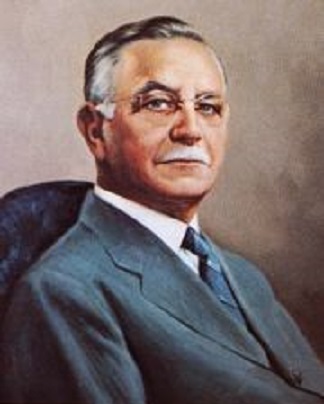
Dr. George Bunting, Believed to Be the Inventor of Noxzema
Thrilled with his creation, Townsend wanted it to spread. By some accounts, he gave the formula to another physician, Dr. George Bunting of Baltimore, who decided to package and sell it in his own backyard. By other accounts, Bunting developed his own version and had no connection to Townsend. (Dr. Bunting himself denied Townsend had anything to do with his product.) Regardless, Bunting was an incredible opportunist and knew a good thing when he saw it. (When he decided to take up a pharmaceutical career following a stint working as a school teacher after graduation from Washington College in 1891, he chose the University of Maryland School of Pharmacy over the alternative in Philadelphia because the Baltimore Orioles offered reduced transportation fare to raise game attendance, resulting in lower moving costs. According to Charmed Life: Getting Creamed by Brennen Jensen, published in the Baltimore City Paper, November 3, 1999, Bunting earned $4 each week operating a soda fountain in a drugstore; a pharmacy that, according to another source, he later purchased.) It didn’t take him long to fully comprehend what he had on his hands; gold in a jar. In 1914, he setup a factory in a house located at 102 East Lafayette Avenue, using a coffee pot to mix the original batches.
Dr. Bunting and a woman named Elizabeth Buck formulated, combined, poured, and packaged the medical product for several years as the business wasn’t, yet, able to support a proper workforce. It began selling like crazy. Although it was first known as “Dr. Bunting’s Sunburn Remedy”, it was soon called “The Miracle Cream of Baltimore”. In what is now a well-known legend, one customer told Dr. Bunting, “Your product knocked out my eczema!”. Realizing he had a brand name, he repackaged it as “Noxzema”. Though the public didn’t pronounce it in that spirit (it sounds like “nocks-zeema” rather than “no-eczema”), the new product packaging debuted along with a formal organization. Around 1917, the Noxzema Company issued shares and moved to 1817 North Charles Street, picking up production as sales climbed higher. Consumers realized it worked not only for sunburn and facial cleansing, but as a makeup remover and anti-aging cream, too.
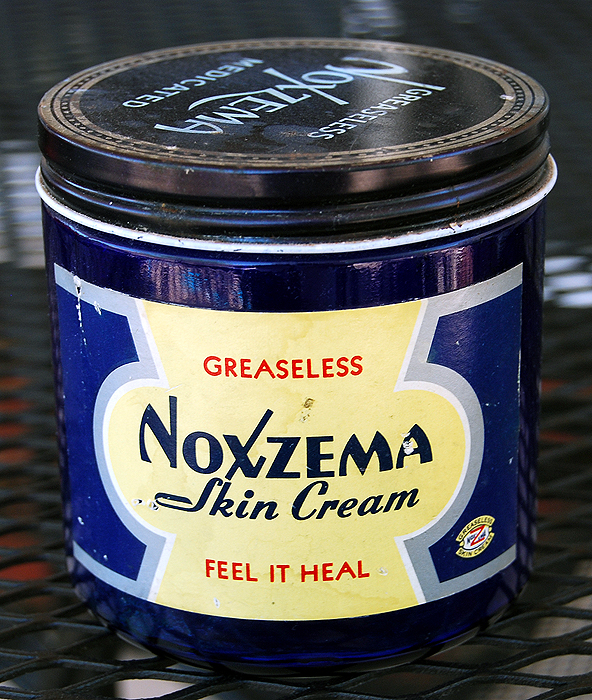
Noxzema Skin Cream, 1940’s by Roadsidepictures on FLICKR, Attribution-NonCommercial-NoDerivs 2.0 Generic (CC BY-NC-ND 2.0). [Source]
It was in the 1960’s that the company changed its name to Noxell Corporation, presumably to represent its expansion beyond the core activity for which it had been known (much in the same way Google announced earlier this week it will now be known as “Alphabet” with Google but one operating subsidiary underneath the parent holding company umbrella).
Procter & Gamble Acquires the Noxell Corporation in 1989, Only to Turn Around and Sell It Almost Twenty Years Later
On September 22nd, 1989, The New York Times ran a story announcing that Procter & Gamble had agreed to acquire the Noxell Corporation for $1.3 billion. Noxell stockholders received a windfall that represented “nearly 25 times 1988 earnings” at a time when sales growth had begun to falter relative to its breakneck record due to the near ubiquity of the products it sold – you’d have been hard pressed to find a home in the country that didn’t have one of the famous blue jars stowed away in a bathroom or vanity. Specifically Procter & Gamble agreed to pay the owners of Noxell 0.272 shares of P&G for every Noxell or Noxell Class B share they held. The deal came after 1988 results revealed $521 million in sales; a year during which revenue increased 7% and net earnings 17%. Procter & Gamble funded the deal by issuing new shares of stock, diluting existing owners, banking on its ability to rationalize the two empires into a more efficient, streamlined, profitable undertaking. The entire thing was completed tax-free, allowing the Bunting heirs to enjoy a much more diversified portfolio of subsidiaries while collecting dividends from the Ohio-based consumer staples giant. Interestingly, the merger came out of the blue. Noxell wasn’t for sale at the time, it was Procter & Gamble’s executives who came knocking and offered a price so attractive the controlling family couldn’t say no.
The transaction went smoothly and the Bunting family publicly talked about how wonderful it was to have P&G largely leave them alone, allow them to focus on the business, and not have to worry about things like quarterly numbers. Over time, as the brands were brought further into the orbit of Cincinnati, the Buntings turned their attention to philanthropy, donating tens of millions of dollars to worthy causes, including a $10 million gift to cancer research at Johns Hopkins. P&G began disassembling Noxell to fit within the overall hierarchy, selling off Lestoil to Clorox, where it now produces earnings for shareholders of the bleach firm.
Years, then decades, went by and Procter & Gamble didn’t know what to do with Noxzema. Executives stumbled from here to there, treating their high-priced trophy as if it were some sort of enigma after the next generation of Buntings found other interests. When P&G acquired Gillette, it all but let the Noxzema shaving cream brands die, the packaging looking as if it hadn’t been changed since sometime between Jimmy Carter and Ronald Reagan being in office. No, really. This is what Noxzema’s once-famous shaving cream line looks like these days …in 2015. Really.
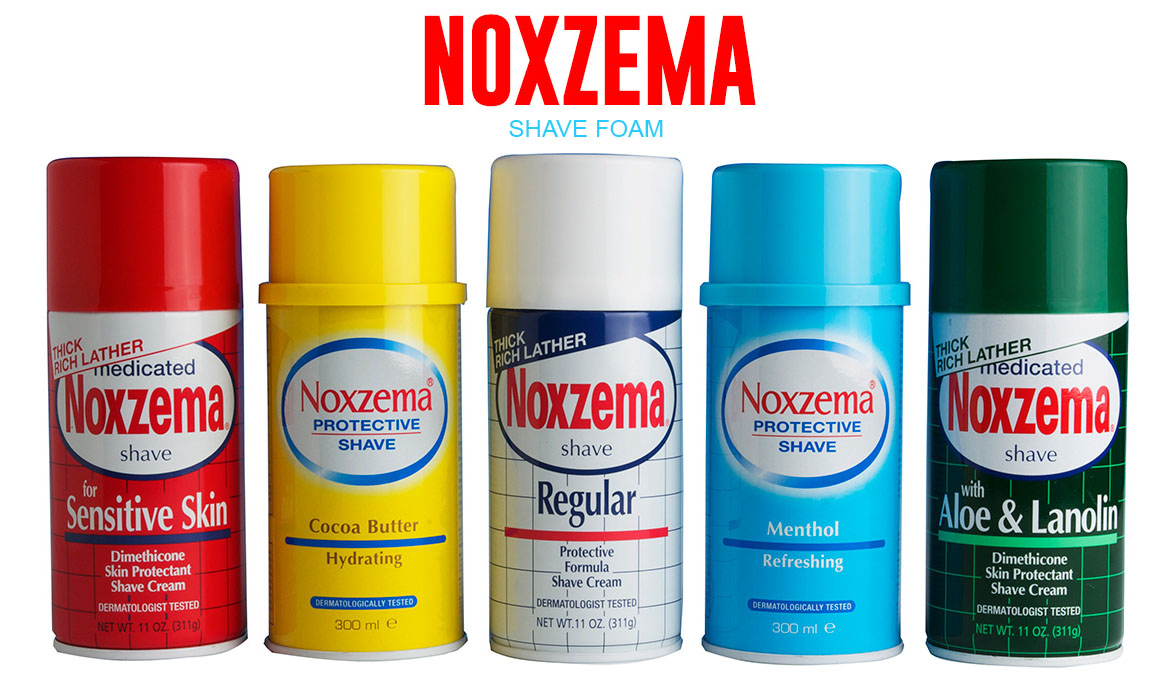
The best analysis I’ve seen of the whole debacle, and the one with which I most agree, is written by Jack Neff in Advertising Age. The first paragraph sums it all up flawlessly: “Procter didn’t love [Noxzema] enough.”
In 2007, Procter & Gamble was ready to call it quits on Noxzema’s main facial cream line. It began looking for a buyer but couldn’t find one at the price it wanted. In 2008, Alberto Culver emerged, convinced the management team had the skill to revive what had once been a money-printing operation. It paid $81 million, while P&G retained portions of Latin America, the shaving cream, antiperspirant and deodorant lines, body wash, and body soap business in parts of Western Europe. Following the sale, the executives at Alberto Culver were horrified by what they found: They insisted that 1 out of 5 products in the Noxzema distribution centers were visually defective, that P&G had defrauded them, and as a result, they had grossly overpaid for the acquisition. Lawsuits were filed.
Alberto Culver was determined to pump money into the marketing budget to revitalize the intellectual property. It began marketing tests and discovered the extent of the damage: While name recognition, especially for older people, was still off-the-charts, Noxzema had overwhelmingly come to be seen as a girl’s anti-acne treatment during middle school and high school; such a stupid, unnecessary outcome. Procter & Gamble had destroyed what took generations of Buntings to build into a must-have consumer staple. It is some consolation to know that the Buntings, as well as another of the early backers in Baltimore, a family that had large holdings of Noxzema’s shares, enjoyed prodigious wealth thanks to all of the stock they received in the buyout and Procter & Gamble itself, due to the strength of its overall brand portfolio and ability to manage mainline mega-brands, has ranked among the best investments a person could make for much of its history, including the roughly twenty year period following the transaction, provided that person regularly dollar cost averaged and reinvested his or her dividends. While it might have personally hurt to see Noxzema fall into relative obscurity, the doctor’s family members were drowning in a gusher of dividends from things like Tide and Crest; enough greenbacks to wipe away any tears they shed. (Any shares held through the present day, assuming no dividend reinvestment, would be worth 13x to 15x their initial value on a total return basis.)
Alberto Culver Is Acquired by Unilever, Which Is Leading Noxzema’s Current Attempt at a Comeback
In September of 2010, shortly after the Great Recession meltdown decimated stock markets around the world to prices not seen in ages, Anglo-Dutch consumer staple giant Unilever used the opportunity to take out its checkbook and pay $3.7 billion in cash for Alberto Culver. It was the firm’s biggest acquisition in a decade. Less than two years ago, in September of 2013, Unilever relaunched the entire Noxzema line. It served as one of the brands taking advantage of the MuCell® Technology Unilever’s engineers had developed in conjunction with ALPLA and MuCell Extrusion and to which it waived exclusivity rights to encourage competitors to adapt to help reduce environmental resource usage. This technology makes it possible to produce packaging with 45% less plastic.
Now, thanks to Unilever’s financial and marketing power, Noxzema has begun receiving prominent placement on the shelves of retailers like Wal-Mart, again. To differentiate the psychology of the products, three versions have been introduced, each with a unique color for visceral identification: The “anti-blemish” for the acne control crowd (orange), the “classic clean” as a unisex face wash (blue), and the “classic clean moisturizing” unisex (purple). (The latter is the one you want to go with if you are over the age of 25 and not prone to breakouts because it’s hands down the best out of all of them. Your face feels ridiculously smooth after using it, like you went and got a spa treatment.) Even the new official website underscores the now-unisex approach to the product, nary a teenager or female in sight as the original Baltimore miracle cream is brought back onto market in a big way. Here’s what they look like …
Will the turnaround work? I don’t know. I hope so. I say that not only as a shareholder of Unilever, but as someone who hates to see good businesses die. Noxzema was an American success story. A gifted doctor, with a scientific background, made a great product that worked. He sold it at a price anyone could afford. In the process, he made life better for countless people, enriched his employees, and built a jaw-dropping stream of income for his heirs. With the help of the British and the Dutch, it can become one, again. It’s better; a case of fame and fortune being well-deserved due to intrinsic quality, not merely slick marketing or empty promises. To watch it fade into obscurity is, for this capitalist at least, a little heartbreaking.
Reader Comments (27)
Comments are presented chronologically, with replies indented beneath the comments to which they respond.
innerscorecard
August 12, 2015
I wish you could get affiliate income for IRL purchases. For example, I am heading on a flight back to China tomorrow and in the hour before I have to leave for the airport, I will go to Wal-Mart and buy a small unit of Noxzema (along with a few other things I need to get). It would logical for Unilever or Wal-Mart to give you a commission if I was willing to enter a Joshua Kennon code at checkout (for a 5% discount or some incentive like that). Of course it's so hard to do compared to online affiliate linking that this sadly won't happen.
In other news, your choice of quote on Twitter for the Chinese devaluation was fitting, given what just happened again in the currency markets. We're obviously not happy given that we have some RMB that is still sitting in a Chinese bank account (we legally converted all we were entitled to at the time, but did not want to resort to the gray market to convert more), but it's a nice backdrop to moving out of the country, which we will do very soon.
crispy
August 12, 2015
Replying to innerscorecard
Strange, I was just thinking the same thing. I have been in China for 5 months and am pining for reliable, trustworthy personal grooming products. Bring a few more and drop them in Shanghai? We can mail a few kuai to Joshua as thanks for the referral and the site.
Stephen H
August 12, 2015
Now I want to try it.. Haha, the Joshua Kennon Effect.
lauren
August 14, 2015
Ooh, the new page header photo is pretty!
TheSplash
August 14, 2015
That's amazing! I was sunburnt a few months ago and was looking for a cure to the pain. Never even thought of Noxzema! And now that you've reminded me, I do remember all those commercials back when I was a kid. It's really interesting how Noxzema just sort of fell off the collective consciousness of consumers once P&G stopped advertising it.
I gotta go pick up a jar now for the next time I get sunburnt.
Kandice
August 14, 2015
I actually did use this as a teenager although I was fortunate not to have acne then (adult acne is, apparently, a thing). I had totally forgotten about it until I read this post. And I didn't know it helped with sunburn pain. Guess what's going to be on my shopping list this weekend?
Karen
August 15, 2015
First off, I love the cover photo on your page! Is that in Kansas City? And, I was reminiscing over Noxema, the last time I used it was in college. Why did I start buying anything else? The smell was memorable, but that is OK.
William Michaels
August 15, 2015
http://www.dailymail.co.uk/femail/article-2418153/Claire-used-1-Nivea-cream-half-face--105-Cr-la-Mer-The-results-VERY-revealing.html
Abe
August 16, 2015
I bought a jar of it today. Will update on the results =P
Abe
April 30, 2016
Replying to Abe
So, it's been about 8 months of on and off use. In short, it works
great! Honestly, I noticed improvement after only one day of use.
Disclaimer: I'm not a dermatologist, so I wouldn't be able to pinpoint what exactly it's doing but I do notice:
- Smoother and more even skin. (And it's perceptible both to touch and sight)
- Less oily skin. (Now this is interesting because before using Noxema
I would always have a soft sheen of oil/sweat buildup radiating off my
forehead, nose, and cheeks after working for 4-6 hrs. While it does
still occur on my nose, there's less buildup on my forehead and none on
my cheeks.)
- No acne break-outs. (This is contingent upon me being consistent. Breakouts do occur when I stop use)
Thanks again for the recommendation, Joshua!
kobachi
June 5, 2016
Replying to Abe
Which version are you using?
Joshua Kennon
August 13, 2016
Replying to Abe
I hadn't seen this update. Thank you for taking the time to post it!
A 42 Year Old Man
August 17, 2015
I feel like a nervous blushing teenage schoolgirl when I apply my Noxzema!
JB
August 21, 2015
Josh, I just bought a jar of it earlier this week because of this post. Side Note: why is it so expensive on Amazon? Drugstore.com has it for $3.82 for a 12oz jar and its over $6 per 12oz jar on Amazon???
Stephen H
August 28, 2015
Do we know how close this is to the original? Ie, has it been watered down over the years?
LN McGregor
August 29, 2015
Josh, I'm 50-years-old and I have used this product since I was 12-years-old. My grandmother introduced me to it. Most people think I'm in my late 30s. It really does work.
art school dropout
September 3, 2015
This was an inspiring article Joshua! Ideas and innovation really can spring from just about anywhere.
It certainly seems possible that Noxzema can make a comeback. We'll see.
kobachi
June 5, 2016
Great article. Thanks for the history.
Angela Silverman
January 18, 2017
I'm the person not "over 70" but nearly 70 (67) who has used Noxzema for -- not 30 years but 50 years. (And my father did before me). Apply daily after showering in the morning, and after washing before bed.
For the first time in 50 years, the new jar I bought burns my skin.
My last jar (not yet empty) says Alberto Culver. New jar says Unilever.
I noticed at least one ingredient change : no camphor in "Unilever" product.
The "Alberto Culver" jar was purchased new less than 6 months ago. What's up?
[email protected]
February 4, 2017
I've earned 104000 dollars previous year by working online from my house and I did it by working part-time for 3+ hours /daily. I’m using a business opportunity I stumbled upon from this website i found online and I am so thrilled that i was able to make so much extra income. It's really newbie friendly and I'm just so blessed that i found it. Here’s what I do... STATICTAB.COM/msxjhtx
Deanna
February 6, 2017
I have used Noxema as my face wash and sunburn soother for 50 years. I also just finished my last jar of the Alberto Culver formula and started the Unilever jar. The product DOES NOT feel or smell the same. Looking at the 2 ingredient lists, the Unilever product has dropped the camphor and menthol, among other chemical changes. "Fragrance" has moved much closer to the beginning of the ingredient list (it used to be last on the list). I hope the company did not think that it would perfume the lotion in some way to disguise dropping those 2 vital ingredients. I called the customer service number for Unilever and gave them my comments, the rep erroneously told me they now use eucalyptus to replace the camphor and menthol. I pointed out to him that eucalyptus was already in old formula. This is just another product that I was loyal to for decades, that got changed up by a new owner (I'm guessing to cheapen up the production of it) and has now lost loyal customers.
rosearbor
April 18, 2017
Replying to Deanna
Same story here. I used Noxema daily for 40 years, always fearing that someday it would be "improved" and no longer do the wonderful things for my skin that it always had done. Well, that day is now here and I no longer use Noxema. Not only has it lost the ingredients that enhanced circulation to the skin (that reliable "tingle" when applied); on my skin it now actually causes pimples where once it helped them shrink and rapidly disappear.
So very sad and disappointing.
Jay W.
May 16, 2017
Noxema works the best on my skin. Keeps my face youthful.
Dixie Nutt Taylor
June 24, 2017
I am 63 years old; my friends rave about my "no wrinkle face" and have washed my face nightly with Noxema since I was 12. I had a mild case of acne as s young teen and Noxema kept it in check. Good stuff.
stelz
July 1, 2017
The article says Bunting made the early batches in a coffeepot. It can't be too difficult. If anyone duplicates the authentic formula with the camphor, menthol, and the old Noxzema texture, I'll buy it. Every now and then I comb through sites like Etsy and look for it.
Even just finding the old recipe would help. Unilever doesn't even make real Noxzema, so it must be legal to share the formula. I'll make it myself if I have to.
Joshua Kennon
August 16, 2017
It's not very long for Procter & Gamble, which is the firm we were discussing. Companies in the food industry, such as Kraft, are notorious for playing musical chairs with their brands. If you forced me to guess, I think we're on the verge of another round of such activity; e.g., McCormick acquiring French's being the most recent manifestation. There is a strong argument in favor of the notion that this stability - the refusal to trade subsidiaries as if they were playing cards - is one of the reasons companies like P&G do so well over time. It forces management to figure out how to generate return from actual cash flow from the operating businesses, driving intrinsic value higher, rather than going after one-shot gains. Certainly, strategic decisions involve portfolio shifts from time to time. The sale of Folger's to J.M. Smucker comes to mind. I'm still not convinced that was a wise idea on their part. Slow growing, but highly profitable, businesses are not the end of the world. Sometimes, management needs to just tell the owners, "This is the deal. Be content with your hefty dividend checks. Get your growth somewhere else." Human nature gets in the way, though.
Steven coppolino
August 19, 2025
I’ve used Noxzema since the late 70s now at 63 I’m so happy with it. I love the smell. I’ve been told in average. I look at least 15 years younger than my current age all the time I contribute largely by not smoking not drinking long-term use of noxzema classic clean moisturizer twice a day