

The Worst Business Advice I’ve Read In a Long Time
One of the projects on my personal study plate is examining the various business models of multi-level marketing systems that rely, in part, on referral businesses paying tiered levels of commissions on sub-distributorships brought into the enterprise by existing dealers; companies like Amway, Mary Kay, and Herbalife. In addition to the data itself, I’m going through both positive and negative commentary written by proponents and adversaries. It’s one of those areas of the economy I’ve never given much thought so it seems like I should be aware of the models employed, if only to have a future mental reference when analyzing certain firms.
A passage in a book from the mid-1980s made me laugh out loud at my desk in the middle of the night like I haven’t laughed in a very long time. It was talking about how Amway distributors were encouraged to clear out the “Negative” in their life, including competing products.
“When we were new in the business, my sponsor came to our house and went into our bathroom, and found my tube of Crest. I didn’t like Amway toothpaste, and I decided that I wasn’t going to use it. And she wrote on the mirror with the Crest, ‘I love Amway toothpaste.’ Then she came out and said, ‘I want you to go look in your mirror.’ Well, that day I learned my lesson.”
“Tide won’t put your kids through college. Tide won’t buy you a Cadillac and a new home. Tide won’t give you a retirement income. So get rid of it.” (emphasis added)
I haven’t laughed at something that absurd in a long time. That was 1985 and talking about events going back to the late 1970s. The case study I did on Procter & Gamble, Tide and Crest’s parent company, covered a 20-year period starting in 1991. A single $100,000 investment grew into $1,182,131 assuming no dividend reinvestment on the $243,461 in cash you were mailed over the years.
With the dividend hikes since I posted that case study, you’d have collected almost another six figures and your projected 12-month cash income from dividends alone would be around $37,355. Not to mention you’d still be sitting on seven-figures worth of shares in your bank vault. And you wouldn’t have had to do a bit of work; the professional management in place is paid to show up and figure out how to sell for you as you provided the money.
If someone who said that in the 1970s had bought shares of Procter & Gamble, their results would be many times the wealth creation from that 1991 case study because of how compounding works. Add another 15-20 years onto the timetable and crazy things happen. Their grandchildren would be paying for college from their share of the inheritance and the original owners would be retired on a beach somewhere. Markups and commissions are nice, but owning the enterprise itself is better if the business is a good one with high returns on capital.
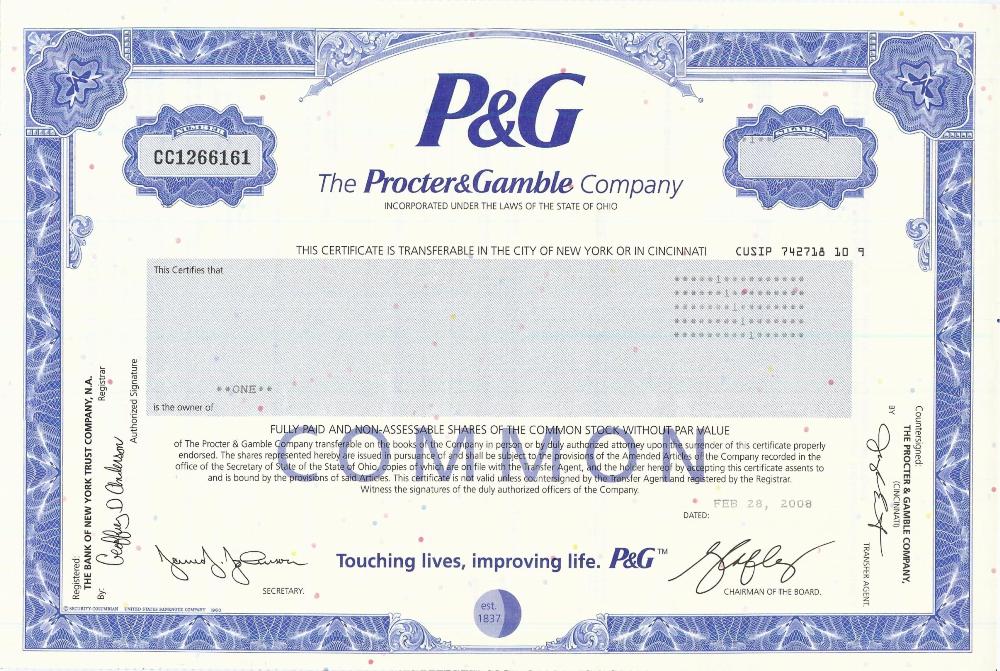
When talking about a good business, I’ll take true ownership in the form of this any day, and every time, all factors equal:
 Over a non-ownership stream of these coming my way:
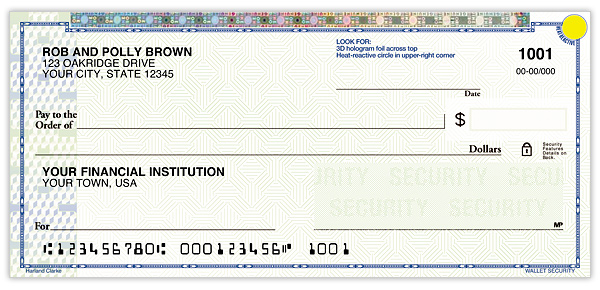
The former produces checks to which I’m legally entitled without having to do any selling myself, let alone by putting pressure on friends and family. I make money from people I don’t even know; billions of folks across the planet I’ll never even meet. They don’t have to like me. In fact, they can outright hate me, and I still get their cash because they aren’t thinking about me when they walk into the local convenience store and pick up mouthwash or window cleaner.
But the real advantage is that true equity ownership accrues a capitalized value to that earnings power base. If I were going to sell toothpaste, I would either buy ownership in the toothpaste company, or setup a toothpaste company and issue shares to myself. I want equity profits unless the business generates sub-par returns on non-leveraged capital, in which case I want to take my cash and run. I want to own the toothpaste trademark. I want to be the one hiring the sales people. That’s where all the real money is. If it’s a real business, earning real profits, valued at a good price, put my name on the front of a stock certificate instead of the front of a check.
“Tide won’t give you retirement income” …. I can’t stop laughing! On the other hand, the ignorance is almost painful. I feel bad for the guy who believed this. Give me Clorox. Give me Colgate-Palmolive. Give me Procter & Gamble. Give me Unilever. Give me Coca-Cola. Give me Nestle. No, they are not guaranteed to do well – any company can lose money or get wiped out – but if they all collapse permanently, life as we know it has ended, anyway, so on a group basis they, and companies like them, are probably the closest thing to a good 25+ year bet you’re going to find provided the acquisition cost is fair and the holdings diversified.
Reader Comments (29)
Comments are presented chronologically, with replies indented beneath the comments to which they respond.
Caleb Hutson
April 24, 2014
Just a suggestion, look up Lyoness and tell me what you think. If you want that is....
Niket Dhruv
April 24, 2014
Excellent justification. You will never own a Amway..but you can always own a Nestle or a P&G. Well done..
weixiluo
April 24, 2014
Just curious, Joshua, what is the book that you're reading?
Joshua Kennon
April 24, 2014
Replying to weixiluo
I've got a huge stack I need to get through, but this particular passage came from a book I'm reading for critical views; counter-evidence. It's called Amway: The Cult of Free Enterprise. He was sharing quotes he had heard from people who had bought into the system; made it their entire lives and lived, breathed, and ate it.
The author clearly has some bias issues and takes his own prejudices to logical conclusions that are more a reflection on his value system than a proper indictment of Amway itself, so take it with a grain of salt as you can't accept everything he says at face value. For example, you can tell he has the utterly absurd notion that somehow compensation is tied, or should be tied, to anything other than performance when he says about being presented the plan to join the system for the first time:
Likewise, he spells out his objection to the materialism of the meetings for one of the Amway distributors, disgusted by the people being driven for the desire for a new car, bigger house, furs, vacations, focusing nothing on the biggest questions in life. I'm not sure what he expected given it was a meeting to encourage people to sell soap. In the 19th century, some were motivated to sell soap to give poor people a much better chance at longer, better lives, but now that it is widespread, the primary motivation for selling soap is entirely money. He seems to have a subtle, seething disgust that isn't properly tied to Amway itself, but exasperated by it as the type of people he finds loathsome were apparently drawn to the company. At least that is my impression.
TheLonelyHumanist
April 25, 2014
Replying to Joshua Kennon
Another way to interpret that quote you shared is that he may feel like the Amway system rewarded superficially successful behavior without creating the depth of meritocratic selection that would reward people who, he believes, made the better choice to work toward being wiser and more educated.
Scott McCarthy
April 24, 2014
The strength of your negative response surprised me given your affinity for synthetic equity. Certainly getting a share of the profits without doing any of the work is preferable to doing all the work and still only getting a share of the profits, but I would've thought you'd like (theoretically) scalable commission-based ventures.
Richard Garand
April 24, 2014
Replying to Scott McCarthy
A lot of commission-based ventures are only scalable if you use unrealistic assumptions. A single MLM person isn't going to set up an e-commerce site that sells to people all over the world that they don't even know. And if they did, that doesn't mean every member of that program can do the same. Either way it's unlikely because the parent company could just do that themselves.
At best an MLM program is a way for the parent company to monetize a member's personal relationships to sell their product (which is marked up a lot to pay the commission). At worst it's a pyramid scheme.
It's an easy misconception to profit from because the wrong answer sounds so intuitive. In a similar way (and as much as I would encourage people to start a business if they have an interest, for the experience in nothing else) a lot of small businesses are just a job with less long-term commitments. It takes an unusual perspective to actually create something scalable, whether it's a new business or an expansion of an existing one using synthetic equity.
It never stops though. As I had this post open an ad started playing on youtube for some real-estate flipping seminar. Within seconds it reminded me of the ad shown in The Wolf of Wall Street talking about penny stock riches. The long-term rewards of passive ownership sit in a major blind spot.
Scott McCarthy
April 24, 2014
Replying to Richard Garand
Yeah, that's why I put the "theoretically" in there. MLM can be scalable if you're a really good HR/recruiter type, and can establish yourself as a gate-keeper to a network of similarly excellent HR/recruiter types. The problem is that somewhere down the line, you need to recruit actual salespeople, who tend to lose focus when they figure out that the money is in the recruiting side, rather than the sales side.
Gilvus
April 24, 2014
Replying to Scott McCarthy
Scott - sorry to derail this conversation. Are you going to be in Indianapolis for the convention this weekend, by any chance?
Scott McCarthy
April 24, 2014
Replying to Gilvus
I am not, sadly - I didn't even make it out to SHOT this year.
Gilvus
April 24, 2014
Replying to Scott McCarthy
BOOOOOOOOO. I was going to invite you to dinner and range time.
And maybe hookers. But mostly dinner.
Richard Garand
April 24, 2014
Replying to Scott McCarthy
I remember a discussion in a business class talking about different distribution methods and where MLM could be valid. Now I find it hard to think of a situation where it's really good for a company that is selling a well-positioned product. It inevitably has to involve recruiting and managing a lot of inexperienced and untrained people with little supervision who are often doing it for the wrong reasons.
Other than being at the top of the pyramid I can't see that being the best option for a business or even for the good members/recruiters. Maybe there are couple of examples where a business had a really great product that was well-priced and they couldn't have distributed it without MLM but I don't know of them. Maybe it was more useful before e-commerce.
Scott McCarthy
April 24, 2014
Replying to Richard Garand
MLM isn't fundamentally different than most distribution systems. It's just a question of what does the business incentive - actual sales, or growing the sales force.
Franchises often employ something approaching a MLM system by using area developers, who turn around and sell smaller territories to local developers and franchisors. You see this with restaurants, especially. That's how Panera grew so fast. Noodles & Co. (who recently IPO'd) are doing the same thing (they're just not as far along the growth curve yet).
MLM turns into a pyramid scheme when two things happen:
1) the company delegates too much decision-making ( general vetting and final approval/rejection) for the actual boots on the ground, public-facing sales force, and
2) there is no separation of powers - sales people are allowed to recruit instead of just selling.
Recruiters selling doesn't generally pose a problem, as the goals remained aligned (brand strength and integrity, etc.) if their primary role (and profit driver) is still recruiting.
Even in a typical distribution model, you have the manufacturer selling the product to an importer, who sells it to distributors, who sell it to retailers who sell it to customers. Things don't get messy until the distribution system starts flowing the wrong way.
But even when they do start to get messy, it can be better for the manufacturer to allow several layers of commissions on top of commissions, rather than have to price in half a dozen layers of profit. The problem with tall MLM systems is that it's impossible to retain actual sales people (who are the revenue drivers for the manufacturer).
FlowJo
April 24, 2014
Replying to Scott McCarthy
The above comment is very interesting.. but I have to admit some level of ignorance as far as MLM or pyramid schemes go. I guess my only question is, if everyone is incentivized to recruit new sales people and they are successful then at some point the market for new sales peole is saturated. So then the company will have to rely on income from people actually using the products instead of recruiting. Has anyone ever actually known anyone on the planet who uses these products without the intent to sell them? That is to say a case where someone has purchased them without having some prior relationship with the sales person? I certainly haven't.
Richard Garand
April 24, 2014
Replying to Scott McCarthy
I think that's exactly why (consumer product) MLM has a weakness. It's an attempt to cut several layers out of the distribution and marketing system. On its own that could work. But it does this by recruiting an inexperienced front-line and focusing them on the wrong activities, assuming the goal is to sell profitable products to real customers.
Franchises do deliver real profits to the end operators, who are carefully selected, trained, and supported. I'm not sure how often someone with no experience signs up to be an area developer with a plan to only do it on evenings and weekends but I don't see any franchise succeeding with that kind of people.
Scott McCarthy
April 25, 2014
Replying to Richard Garand
Yeah, I mean I'm not really a proponent of MLM systems, but there's nothing inherently wrong with having a tall distribution chain, if there are strong anti-cannibalization protections built in.
The pyramid-scheme type systems are virtually guaranteed to fail, because as soon as someone actually brings in a good salesman, that salesman looks at his check, and sees that he can double his sales commissions if he recruits X-many other sales guys. It tends to turn good sales people into horrible HR people, who inevitably burn out and return to a normal system selling pharmaceutical supplies, or insurance, or anything else - a good sales guy can make money selling anything.
FlowJo
April 27, 2014
Replying to Scott McCarthy
I find labels like "MLM system" and "pyramid-scheme" carry too much baggage so let's just say business.
True, a business can have as many layers/levels as it so desires as long as it can pay its bills. So the next question becomes how does it pay its bills? If it can actually sell the products that it makes then great. On the other hand, if the business pays its bills by "recruiting new staff" who in turn pay the company to "license a territory" or for some "starter sales kit" or what not, then we are back to the original issue I posted. Someone needs to sell something, and the only thing I see being sold is the dream of building your own business and making a lot of money by selling products. But if no one really wants the products then it is just a dream and nothing more. Snake Oil.
You make the argument that "a good sales guy can make money selling anything". That may be true. We've all heard it enough times that it sounds true. But at what price and on what terms? I've seen plenty of products from MLM companies for sale on eBay for less than the MLM distributor sells them for. A fire sale.
Joshua Kennon
April 26, 2014
Replying to Scott McCarthy
I can see how that would appear to be a contradiction. Here's my problem: It is a mathematical truism that the system itself can only deliver a majority of income to a majority of its distributors from markups made on actual products, which the distributor must purchase and keep in inventory, requiring a real cash outlay that must be funded with the distributor's own equity or debt. This means the synthetic component is inconsequential for most distributors. To make it otherwise by focusing on recruiting requires a level of effort that could have delivered outsized rewards had the distributor set up his or her own company in the first place. So by the time you get to where the synthetic equity would have mattered, a basic opportunity cost analysis would show you that you'd have been far better off setting up your own firm in the first place, not only in the form of a higher income, but the fact that you could then sell that cash stream for 5x, 10x, 20x its value.
There are certain people, in certain demographics, at certain times, in certain situations, who can make money from these types of arrangements, but the synthetic equity kicker is not the primary reason. I mentioned in a response I just wrote to someone else that a Mary Kay distributorship can actually be a good deal for the right type of individual. The revenue sharing arrangement for selling $1 worth of lipstick through them are far more favorable, in my opinion, than selling $1 worth of toothpaste through Amway.
joe pierson
April 24, 2014
You have to admit though,direct marketing firms, they are great to own directly (Berkshire owns Scott Fetzer which owns Kirby). Only problem is have to able to look yourself in the mirror every morning.
kmica
April 24, 2014
Dear Joshua,
I would like to thank you for all the knowledge and information you have shared over the internet through your various sites (I really cannot thank you enough!!). I am a 24-year old male, coming from a tiny island in Europe (Malta - most people around the world do not even know we exist :)). I work as a part-time waiter, whilst attending University during the day (another 3 semesters left). I manage to save the majority of my pay, and after some years of being in a hard-saving mode I purchased in the beginning of the year a block of shares in Unilever. It was a really great learning experience, analysing and viewing the accounts in the annual reports. Also, receiving dividends for the very first time was a very uplifting experience for me :). I plan on building a small portfolio of blue-chips from around the world in businesses that I can understand, and owning them for the long-term.
Once again, thanks for everything!
Yours, Karl
Joshua Kennon
April 26, 2014
Replying to kmica
Congratulations on buying your first investment! History demonstrates that the approach you are taking - building a diversified collection of ownership in blue chip firms that you hold for a long time, ignoring the year-to-year price fluctuations - has been one of the best ways to generate significant wealth.
Unilever is one of my personal favorites. (I have shares in my own retirement account, as well as in the retirement accounts of my extended family.) It's got a great collection of brands including Noxzema, Q-tips, Hellmann's, Vaseline, Country Crock, Dove, Lipton, Suave, and Ben & Jerry's. It enjoys very good returns on capital. It's paid out a lot of money in the form of dividends over the years.
The biggest challenge I see new investors facing once they know how to spot a good long-term holding is avoiding panic when stock prices fall by 30% or 50%. It will happen. As a matter of fact, given your life expectancy, you will see it many, many times. It's just part of the nature of equity markets. If the company itself is still profitable, think of stock crashes not as causing you paper losses, but giving you an opportunity to buy more profits at a cheaper rate. I actually have my spreadsheets setup so the market value of my holdings is greyed out and barely visible - the numbers I focus on are my share of the net earnings and dividends, which I'm constantly working to grow.
Angie
April 25, 2014
So you think Bill Ackman's bet and his campaigns against Herbalife, inadvertently, are going to be helping the public ?
Joshua Kennon
April 26, 2014
Replying to Angie
Not necessarily. In isolation, disappointment from unrealistic expectations alone is not something that requires regulation or public protection, whereas the mitigation of tangible loss is. As such, there is nothing inherently wrong with multi-tier marketing systems if the system itself is capable of generating a profit for distributors on product sales alone without sub-distributors and the potential cost outlay can reasonably be expected to be recouped by turning the inventory over 1-2x times.
You may find it was a waste of time, or that it couldn't provide the level of income about which you dreamed, but it's not like you were swindled. If you sell the soap, toothpaste, or vitamins, you'll make money. There's no fraud there, unlike some people maintain due to the pyramid nature of the referral bonuses, which they mentally associate with pyramid schemes, which have very different consequences for those involved and are far more evil.
Moniba
April 25, 2014
The advice is stupid for sure. But one should refrain from using the "retrospectoscope." It would have been very very difficult to have predicted in the 1980's that Tide and Crest would be blockbuster brands by 2014. Who is willing to bet that the Apple iPhone would be a blockbuster brand by 2034? For that matter, who is willing to bet that Tide and Crest (and Procter and Gamble) would be making everyone happy in 2034?? Joshua you are a very smart guy, but you should realize that hindsight is always 20-20.
FratMan
April 25, 2014
Replying to Moniba
Yeah, it's not like Tide and Crest were market-leading brands (under a corporate umbrella with an eight-decade record of paying uninterrupted dividends) in the 1970s with advertising budgets eclipsing even Colgate-Palmolive back then or anything.
http://www.youtube.com/watch?v=wh9xytX6Q04
http://www.youtube.com/watch?v=w68S6RQRjT8
Joshua Kennon
April 26, 2014
Replying to Moniba
Some things don't require hindsight because you are betting on probabilities of success based on projected future cash flows. To think that an equal handicap must be applied to all firms when analyzing equity investments is a considerable mistake. Variability in earnings power is not a universal constant, which is the presupposition of your argument.
For example, I don't have a clue who the biggest software company in the world will be 20 years from now, but I can damn near guarantee the non-alcoholic beverage market will be controlled by a triumvirate, two of which have a high degree of probability of including Coca-Cola and PepsiCo. The infrastructure costs required to duplicate their distribution chain would cost north of $100 billion, which almost no one on the planet can afford. Projecting a reasonable range of market size and earnings power is not as difficult as it may seem, especially relative to other sectors. Comparing that to the given market price for an ownership stake in either firm is easy once you understand the relationship between the price you pay and the future returns you generate.
I don't have a clue who the dominant airline will be 20 years from now, but I can be almost entirely certain that a vast percentage of the chocolate industry will be controlled by a group of firms, including Hershey's, Nestle, Cadbury, Mars, Lindt, and Barry Callebaut AG, along with a few region-specific manufacturers.
I don't have a clue who the most profitable steel mill will be 20 years from now, but I can intelligently wager that the odds are good the consumer staples markets for hair, shampoo, body gel, laundry soap, bleach, baby powder, and trash bags will be controlled by a coterie of firms that include Unilever, Procter & Gamble, Clorox, Colgate-Palmolive, and Johnson & Johnson.
The reason you've never seen my project the value of a firm like Apple is because there is an inherent problem from a long-term investment standpoint of comparing a tech product that changes every 1 year with a stable product that has had the same few companies controlling the market for 100-120 years. I can't tell you how much Apple will be making in 2018 yet alone 2034.
That's why you've never seen me try. It cannot be done in a way that offers a high degree of certainty.
In other words, the situation is not analogous.
Joshua
April 26, 2014
Replying to Moniba
"For that matter, who is willing to bet that Tide and Crest (and Procter and Gamble) would be making everyone happy in 2034??"
This guy right here 😉
KansasKate
April 27, 2014
My question is always this: if your product is so much better than anything else on the market, why not let the whole world have a chance of buying it without the pyramid and the meetings and the motivational b.s.?
I don't care how great your detergent or vitamins or makeup is -- I'm not interested in it if I have to be in a cult-like atmosphere. I just want to order it from Amazon or buy at Walgreens.
peterpatch79
April 27, 2014
Around the year 2000 my boss at my part-time fry cook job was constantly pressuring me to join an Amway affiliate that was pushing web based grocery delivery and some sort of turn key e-business selling Amway goods. He thought that you could become an overnight millionaire from the Internet through Amway. He was evangelistic about it, he really believed it was his ticket to a better life. He wanted me to go to a seminar, he said it would convince me. I think he was being heavily influenced by social proof, all those people at the seminar with the same beliefs, it must have had a big influence on him.
Also In retrospect when fast food kitchen managers were lauding Internet business models it was probably a good a sign as any that we were in a massive Internet stock bubble. At the time I didn't see it. My college professors kept telling me that there was a high chance I would be working at Nortel in the next year. I have to laugh thinking about those times and how wrong so many people were. I wish I knew then what I know now.