

Margaret Thatcher and the British Coal Miners’ Strike
Margaret Thatcher has died. She was one of the most influential figures of the past century, and one of the most powerful women in history. Born the daughter of a grocer, she began her career as a research chemist who helped discover soft serve ice cream (the next time you go to McDonald’s or Dairy Queen, you can think of her contribution to the invention), later becoming a lawyer and entering politics.
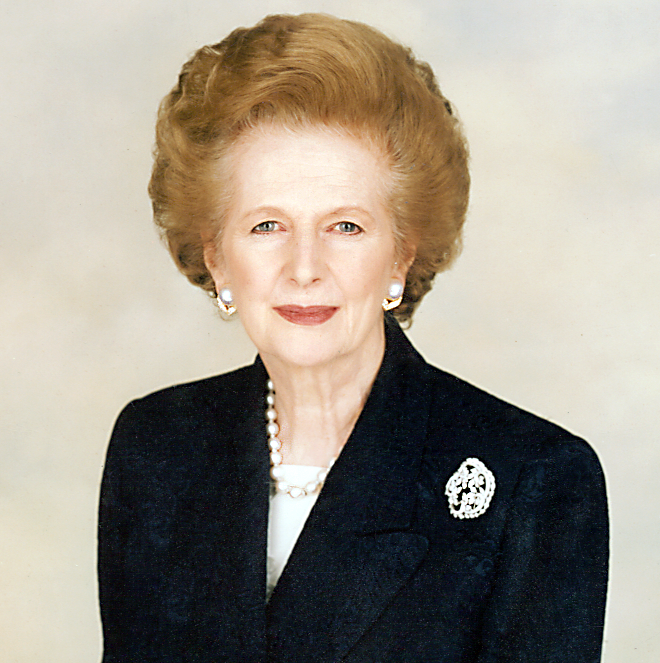
Margaret Thatcher was one of the first women to shatter the glass ceiling, helped invent modern soft serve ice cream, and worked with Russia and the United States to end the Cold War. To many lower working class people, she will never be known for anything other than her actions in 1984 as related to the British coal industry.
Not only was Margaret Thatcher voted into power as the first female prime minister in Great Britain, but she was the first British prime minster in history to be voted into office three times. Generally speaking, she, and her government, were wildly popular with most of the country, despite the vitriol and hatred she inspired in the Northern parts of the empire, especially Scotland.
Why, specifically, was she so hated? Why are you likely to see people actually rejoicing in her death? In the United States, the last time a politician was so reviled requires traveling back in time to the 1880’s when Southerners rejoiced at the murder of Abraham Lincoln. That is how deep the hatred for this woman goes among some parts of the United Kingdom.
Though she got some things wrong – she was strongly anti-equality for gay people and passed something called Section 28 that her conservative party later apologized for allowing – she got a lot of things right. It’s easy to underestimate how important her influence on the end of the Cold War was by insisting to the West that Mikhail Gorbachev could be trusted. It’s easy to forget how truly horrible the British economy was prior to her rise to 10 Downing Street.
At the core, it is her economic policies that cause so much love and hatred. (Though, her unpopular “poll tax” was also partly to blame.) To understand the reasons, you have to go back in time to the utter nightmare that was the Britain economy in the late 1970’s and early 1980’s. When Thatcher took over, most of the major industries were state-run monopolies (as one British paper points out, if you wanted an answering machine, you couldn’t go to the store to buy one, you had to put a request in to a bureaucracy and have a unionized worker come out and install it for you).
It was so bad that British government spending as a percentage of the entire economy was an almost unfathomable 44%, giving the crown way too much power and influence. To provide a contrast, here in the United States, we become damn near apoplectic if government spending exceeds 22%. All the hatred for Obama? It’s partially because government spending is a bit over 25% of GDP now, which is 3% higher than we are comfortable accepting, historically. It is not an exaggeration to say that if the spending levels during peace time had been as high in the United States, there is little doubt that we would have been engaged in a civil war.
One of the biggest offenders in the cornucopia of waste was the coal industry.
A Look at the British Coal Industry Prior to the Miners’ Strike
In a normal free market environment, supply and demand determines success. In the United States, for example, individual people, acting in their own self-interest and according to their own personal enjoyment, decided that it was better to live in the suburbs and drive an automobile. As a result, the inner-city retailers, like Kmart, lost market share, and suburban retailers, like Walmart and Kohls, gained market share. At the point Kmart wasn’t supplying society with enough value relative to what it was demanding in wages for employees and dividends for owners, it faced economic death. We sat by and allowed it to happen, as Kmart entered bankruptcy, stores were sold off, and employees given pink slips. Though it was not a pleasant thing at the time, it freed up both capital assets and human resources to focus on industries and businesses that were benefiting others.
One way to avoid this very good, though painful, outcome, is to intervene politically. In the long-run, such action is almost always a bad idea. Yet, that is what the British government had done with coal. The coal industry was unprofitable, bleeding red ink from the treasury and surviving solely because of the taxes levied on the British people, which were then thrown into the never-ending black hole that was the mining industry. This wouldn’t have been necessary but the coal unions refused to let the British industry do what was happening in the United States – namely, lay people off and replace them with machines. As the rest of the world modernized, lowering the basic cost structure of competing coal operations, the British losses grew ever-bleaker as labor, relative to revenue, was wildly out of balance with the rest of the global coal industry.
In 1983, Thatcher appointed a man named Ian MacGregor to the National Coal Board, which controlled the mines. He was famous in Britain because he had previously taken over the steel industry and, in a period of 24 months, transformed it from one of the least efficient sectors into one of the most efficient by reducing payroll and putting in productivity improvements through modernization.
On March 6th, 1984, MacGregor’s National Coal Board issued a statement that it would be closing 20 mines, and laying off 20,000 workers, to begin the process of bringing the British coal industry up to competitive levels.
Despite the generosity of the taxpayers in accepting the unprofitable coal drain on the broader society, the coal miners continued to negotiate for and demand pay raises, and threatened to strike in the heart of winter, cutting off heat for the majority of the British citizens just as the snow began to fall.
Thatcher decided that enough was enough, and if the coal industry were to survive, it would have to do it without the special interest group taking cash out of everyone else’s pockets. She also wouldn’t allow them to take the entire nation hostage in what amounted to a form of domestic extortion. She warned them to go back to work during negotiations, or she would stop the subsidies and let the free market determine the price of energy, even if that meant that every coal miner in the country lost his job.
The coal miners struck. She warned them. The coal miners ignored her. So she utterly crushed them to powder, bringing the entire industry to its knees, cutting off the subsidies, shutting the mines, and putting in place a plan to keep “a permanent stockpile of at least six months’ supply of coal, increase coal imports, build more oil-burn, nuclear and gas-fired power stations and encourage development of more opencast mines” (Source) so that the British people could never again be taken hostage by a small group that controlled the nation’s energy supply.
Her actions essentially came down to, “If you can’t survive in a free market economy, you don’t deserve to survive at all.” She refused to give into what she called the rule of the mob, and said that the rule of law must prevail; that individual people could not be subdued through the threat of violence and intimidation. (Two coal miners had murdered a cab driver who took a strike breaking employee to work.)
Without the coal mines, the communities that had been built up around them, that were staffed with undereducated, working class men, were left destitute. These were not doctors, lawyers, scientists, entrepreneurs, or engineers. They had no other marketable skills, and were not the type of people inclined to move across the country and try something new. Many remained in the now-broke communities, began drawing government benefits, and spent the rest of their lives blaming Thatcher for the fact that their families had gone from prosperity to total destitution; from a new car in the garage to barely being able to eat.
My personal belief is there was a significant degree of misogyny in the opposition to Margaret Thatcher. You had a group of poorly educated males, in a very patriarchal social structure, fighting for their pride and livelihood only to have a woman, who was part of the intellectual elite with whom they had nothing in common, utterly destroy them. This was a time when, even in the United States, it was unheard of for a woman to be in power. Kathryn Graham had only become the first CEO of a Fortune 500 company a couple of decades before, and that was solely because she was the controlling stockholder and didn’t have to worry about a glass ceiling! You wouldn’t have seen nearly the same degree of vitriol had she been a man. When Thatcher would enter the House of Commons, some of her opposition would chant, “Ditch the bitch” and they referred to her as “Atilla the Hen”.
The Privatization of British Industry
Along with the coal strike situation, Thatcher began to have government businesses go private, raising money for taxpayers and inviting competition. The productivity gains were impressive.
(Side note: Great Britain has experienced the same phenomenon we saw here in the United States. Industries such as manufacturing are far more profitable and successful today than they were in the past, yet it doesn’t seem like it because the productivity gains from automation and technology caused the output per worker to skyrocket exponentially, resulting in fewer people employed in the sector. According to the United Kingdom Office for National Statistics, manufacturing output has increased in 35 of the 50 years between 1958 and 2007, with 2007, the year before the Great Recession, representing an all-time high that, in inflation-adjusted terms, was twice that of the 1958 levels. At the same time, other sectors have grown much faster (e.g., huge software, video game, and computer hardware companies were much rarer back then) so that the overall percentage of the economy has been diversified and manufacturing now makes a smaller percentage of every dollar of GDP. You sometimes see those without a particularly strong math background interpreting that latter figure – the one showing manufacturing declining as a percentage of GDP due to the diversification of the British economy – as being a “decline in manufacturing” in the sense that the layperson thinks of it, which is totally inaccurate since manufacturing itself is twice its former size in real pounds sterling.)
The Most Important Thing Thatcher Got Right
The single most important lesson we can learn from Margaret Thatcher is that everything must eventually be traced back to individuals and families. Specifically, one of the most brilliant quotes she ever gave:
I think we have gone through a period when too many children and people have been given to understand “I have a problem, it is the Government’s job to cope with it!” or “I have a problem, I will go and get a grant to cope with it!” “I am homeless, the Government must house me!” and so they are casting their problems on society and who is society? There is no such thing! There are individual men and women and there are families and no government can do anything except through people and people look to themselves first… There is no such thing as society. There is living tapestry of men and women and people and the beauty of that tapestry and the quality of our lives will depend upon how much each of us is prepared to take responsibility for ourselves and each of us prepared to turn round and help by our own efforts those who are unfortunate.
That is life changing. It’s the same as Charlie Munger’s “Little Red Hen” philosophy from the famous children book of the same name. If you apply it in your own life, it can help you achieve enormous things.
Thatcher On Non-Elected Government Power
Thatcher loathed government power and did everything she could to undermine it so that individuals were given more freedom of choice, even if that meant they ended up with terrible lives (after all, freedom means having the freedom to fail). When certain members of the government were calling for Great Britain to surrender its sovereignty to a European currency, a European court system, a European executive, and unelected commissions with ever increasing powers, she gave her famous “No, No, No” speech.
Thatcher on Income Inequality and a Unified Currency
Thatcher also didn’t give a hoot for income inequality as long as the overall level of living standards was rising so that everyone was absolutely better off, which is a position I personally find agreeable and rational. She also ruthlessly fought against having Britain join a single currency in Europe, which is one of the reasons that England today doesn’t have nearly the same troubles as many of the nations utilizing the Euro (by maintaining the currency in a form that the printing presses were controlled, the monetary supply can be increased to avoid catastrophic austerity). She loathed the idea of a European Central bank that wasn’t accountable to the British parliament. She knew that if you gave the bankers control of the monetary supply with no means to constrain them, you’ve destroyed yourself. She saved England from the fate Spain and Greece are suffering now.
The Bottom Line on Margaret Thatcher’s Legacy
Economically:
If you are a member of the middle class or upper class, with a good education, engaged in some sort of knowledge work where you, yourself, are the asset, and you are responsible, Margaret Thatcher’s policies benefited you enormously. Your life is better because of them. Your shopping choices are wider, your employment options are greater, your opportunity to make a lot of money is expanded. You have more freedom to imagine the life you want, and to bring it into existence through concerted action.
If, on the other hand, you are a lower class, undereducated manual worker relying on government subsidies, Thatcher’s policies were economically devastating in a way that is hard to overstate. You lost your home, your job, and your self-respect. You now exist on an endless stream of welfare checks in one of the numerous villages that are shells of what they once were.
Personally:
Though I strongly disagree with her about certain things, and think her interpersonal style was damaging to her own self-interests, I think that overall, Margaret Thatcher was necessary for the British people at the time. She did what had to be done and addressed the big concerns of the nation. Without her, Britain would have eventually found its way into a Greece-like implosion of austerity so severe that it would make the cuts she put in place look like a joke or inflation so out of control that it would have been irreparable, depending on the path chosen by subsequent politicians in this alternate universe where she didn’t exist. Thatcher was also an enormous ally to the United States at a time when the world was splitting between free and totalitarian government regimes, despite some significant lapses in judgment (e.g., her friendship with Chilean dictator Pinochet). I think that the eventual long-term balancing of Tony Blair as Prime Minister in the new post-Thatcher world was a very good development as he stuck with the parts of her reforms that mattered, but seemed to take into account the human considerations of policy decisions.
To see how individual Britons were affected by Thatcher’s economic policies, see this BBC story that breaks it down in nice detail.
Reader Comments (25)
Comments are presented chronologically, with replies indented beneath the comments to which they respond.
weixiluo
April 8, 2013
May she rest in peace and serenity for all the contributions she made to the greater society.
Halkett
April 9, 2013
A good write up. Thatcher was the shot in the arm that Britain needed and I witnessed much of what she did living in Britain. I remember how polarised people were about what she did, it was very much a time of strong Left and Right wing politics, most of which has gone now, no one ever talks of wanting a socialist Britain now, but they did in the 70s and 80s. She closed the book on socialism in Britain and kicked open the door for people to improve their own lives, it was a watershed. People started to question and challenge the status quo.
Sadly Britain is having a rough time at the moment but it is a World away from the 70s and a great many of the reasons why it is in much better condition is because of what Thatcher achieved. Her greatest achievement for me was keeping Britain at arms length from the EU. She was an exceptional human being.
AL
April 9, 2013
You stated that the British government was spending at the rate of 44% of the economy and she came in and reduced that significantly.
You go on to say that the government spending as a percentage of the economy in this country has been about 22% historically and has now risen to 25% under Pres. Obama a 3% increase. I am afraid it is a 3 percentage point increase, not 3%, which means an increase of 13.6%.
Yes, we are far below what Mrs Thatcher faced, but quite a bit above our historical norm. Let's hope we can shrink it back to the 20%-22%.
Joshua Kennon
April 9, 2013
Replying to AL
That is correct but it's a numbers game and the demographics of this site are smart enough to know the difference without explanation (take a look at the post a few months back - we're vastly overrepresented with college graduates, PhDs, and high income earners).
Yes, going from 22% to 25% is a 3% increase in absolute terms, which is what I said. It is also true that it is 13.63% in relative terms, which is what you said. No one that reads this site is stupid enough not to know that or to appreciate the difference. It doesn't require an explanation, at least with this audience.
(As for shrinking the level of government spending back down to at least historical norms here in the United States - God help us, and amen.)
AL
April 9, 2013
Replying to Joshua Kennon
oh really--we have someone who never heard of Margaret Thatcher and you are talking "relative" and "absolute"--wonder why our finances are the way thay are then your explanation says it all--once heard an intelligent well known commentator rail against those who opposed raising the sales tax from 5% to 6%--"it's only 1%"--no it's really 20% (1% sounds so much better)--and this in metro D.C. with, I believe, the highest educational level of any metropolitian area in the country.
Joshua Kennon
April 9, 2013
Replying to AL
I don't disagree with anything you are saying. The problem is people don't think that way. To pretend that they do is to ignore biology, psychology, and economics; something that a mental model approach won't permit. Doing that (ignoring those other forces) is how you get academic models that don't work in the real world. It's why socialism looks great on paper but fails miserably when it's tried, or why pure "trickle down" theory seems rational until you realize that it does not always lead to an increase in the velocity of money, the Friedman concept upon which it derives its moral claim, because not all taxes influence incentives the same way (e.g., a payroll tax cut is significantly better for the economy than a tax cut on inherited estates).
A scenario: If we lived in a land where there was a 1¢ tax on all purchases and the legislature proposed an increase to 2¢ to build a state of the art school, virtually everyone in the general population is going to use their overall level of wealth as a reference point for how much disutility is being given up in the taxation. That is, they will measure the increase in taxation in absolute terms, then compare the net additional cost to their relative resources. They are not going to think, "My God! They want a 100% raise in taxation! Grab the pitchforks!" Instead, they are likely to do a gut check and say, "It's only an extra 1¢ for every transaction, which is still a small part of my overall income, and the benefits are fantastic, so I'm going to support it."
They are not being irrational or foolish in doing so; to treat them with condescension for behaving in a way that is economically rational for their own household in proportion to the trade-off of resources to benefits instead of in some purely academic construct is - forgive me for saying this, because, again, I don't disagree with your premise - arrogance and hubris. It's also likely to backfire, which I witnessed first hand. If you were to run a campaign decrying a "100% increase in the tax rate!", you'd not only lose, most people would think you were being intentionally dishonest even though you were factually right (this played out first hand on a tax proposal in the suburb where I lived in 2008, with slightly different numbers.)
Lukek
April 9, 2013
Thank you for posting this. As a senior in high school I have never even heard this woman's name. I am looking forward to reading her book(s).
Ian Francis
April 9, 2013
Replying to Lukek
I am not sure what to say to that. Being that you are commenting on this site I would hope you are a relatively intelligent person. While every leader of every country certainly is not going to get covered during high school history classes, I would think that a leader as important as Margaret Thatcher in a country as important as Great Britain would have at least gotten a mention. I hope this is an anomaly in the education system, and not a pattern, though I fear it is the latter. Good luck, and remember to keep going out of your way to learn new things, because your school is obviously not teaching you enough.
Lukek5
April 10, 2013
Replying to Ian Francis
I attend a high school in South Texas that is currently failing to meet the required test scores for the "No child left behind" program.
I took all of my government (civics) and history classes at our local community college as dual credit. These classes (US history 1/US history 2) did not cover many of Britain's major politicians.
To confirm your fears, the average senior at my high school does not know the difference between Rockefeller and Carnegie, Teddy and FDR, or Tesla and Edison. (Edison invented the lightbulb right?)
Shouganai
April 11, 2013
Replying to Lukek5
Hmmm...
One generation's general knowledge is the next's obscure fact. I would be interested to know if the majority of 30ish year olds here are in any way familiar with the name or premiership of Clement Atlee? I mean... I was rather surprised recently when a High School student told me that she didn't know who Michael J Fox was, but I don't think this is indicitive in and of itself of educational meltdown.
The point is that history should be more than simply memorising a list of names and as such is incredibly involved - in order for the name "Thatcher" to actually mean anything to you, you must also understand concepts such as "the cold war", "oil shock", "breakdown of post-war consensus", "monetarism"... etc etc so on.
Personally, I'm interested in history and enjoy learning about these things, but I'm not sure it is necessary for everyone to do so.
Jason Spacek
April 9, 2013
Replying to Lukek
Don't feel bad, Lukek, I didn't even know Jimi Hendrix was black until I was 13 years old.
Joshua Kennon
April 9, 2013
Replying to Lukek
This totally blew my mind today. You shouldn't feel bad about it at all - it is admirable and amazing that you are educating yourself, which is what I had to do when I was your age for most important things - but it astonishes me that the education system has become this useless.
Whether one admired, loathed, or was indifferent to Thatcher, she was one of the few people in history who changed the world, fundamentally reshaping it. The transition to a post Cold War era that she oversaw, along with Russian leader Gorbachev and United States President Reagan, changed the entire global political and economic power structure. For heaven's sake, Germany was cut down the middle into two countries up until a couple of decades ago, with the west a wildly prosperous, capitalist democracy and the east a totalitarian communist hell hole! If you tried to cross the wall, you were shot and killed; it wasn't much different than North Korea today. Do people really not know this? The wall that separated the two German countries before they reunited was only torn down 24 years ago!
(That is one area where Thatcher got it wrong. She was, understandably, worried about what would happen when the wall came down and was willing to allow it to stand - her concern was the British people - but the American President, Reagan, thought it so immoral that it had to be destroyed; that we, as a human race, would deal with the consequences because it was the right thing to do. As with Thatcher, although I disagree with him strongly on certain things, I think it was one of the greatest examples of moral leadership and courage in the 20th century. Reagan knocked it out of the park on that one.)
Speaking of living in a post-Thatcher world. One example: The President of South Korea, Park Geun-hye, the first female to hold the office, is, at this exact moment, on the other side of the world, dealing with the very real threat of thermonuclear war from Kim Jong-un in North Korea, which could very quickly escalate into World War III if China and Russia became involved. She has stated that Margaret Thatcher was her hero and role model, and her policy for dealing with North Korea is based, in many ways, on Thatcher's handling of the Soviet Union. She refuses to negotiate with threats of violence, promising that any attacks will be met directly and immediately, while promising that all peaceful actions, including military drawdowns, will be met with like-minded good faith. It's been dubbed "trustpolitik".
Tonight, the dogs of war are sitting in the Pacific Ocean, the United States military has moved its defense systems to Guam, and systems are on high alert ... and we're still using the Thatcher / Reagan playbook to try and avert it. That's relevance, whether you agree or disagree with the policies! How can someone understand what is happening on the news right now if they don't know the history of why we behave the way we do?
How any high school academic program could fail to have students contemplate the specifics of the policies she put in place, given that they will still be resonating and altering world history 100 years from now, has me dumbstruck.
Ian Francis
April 10, 2013
Replying to Joshua Kennon
" the East a wildly prosperous, capitalist democracy and the west a totalitarian communist hell hole!" I'll forgive this as a type-0, but since there are apparently high-schoolers who don't know of Margaret Thatcher, you may want to correct this.
Joshua Kennon
April 10, 2013
Replying to Ian Francis
Fixed! Thanks for catching the typo. You realize we are having a conversation about correcting it "for the children"? HAHAHAHA.. We're getting older ... I don't know why this cracks me up right now.
Joshua Kennon
April 9, 2013
Replying to Lukek
P.S. So responding to your message accidentally set off this problem.
Not knowing about Thatcher made my brain think about "the Forgotten war" in the United States (aka the Korean War in the 1950's) when the United States sent troops to protect South Korea from North Korea and left 128,650 Americans dead or wounded. That's where the seeds of this whole thing began.
That, in turn, made me think of a very old lounge song from before I was born called "Hello in There", sung from the perspective of a woman who lives with her husband, growing older, after her kids have moved away and one of them, Davy, was lost in the Korean war. It instantly makes me sad every time I hear the opening chord. So now, I keep catching myself singing this as I try to work. It's such a depressing, bittersweet piece of music! I hadn't thought about it in years, and can't remember the last time I heard it since I was a kid in the 1990's but here I am singing the chorus ...
Matt N
April 9, 2013
Thanks for the great article on Thatcher! It's good to see an external perspective from the US. It always amazes me, the hate and vitriol you hear from a significant proportion of the population of my country for this person, when she really only had the country's best interests at heart, and was willing to make the very difficult political decisions that were necessary at the time. Her comments on the EU were incredibly prescient and still highly relevant today!
lokgp
April 10, 2013
From: http://blog.acton.org/archives/53033-what-margaret-thatcher-understood-about-income-inequality.html
- - - - - - - - - - - - - - - - - - - - - - - - - - - - - - - - - - - - - - - - - - - - - - - - - - - - - - - -
The Prime Minister: People on all levels of income are better off than they were in 1979. The hon. Gentleman is saying that he would rather that the poor were poorer, provided that the rich were less rich. That way one will never create the wealth for better social services, as we have. What a policy. Yes, he would rather have the poor poorer, provided that the rich were less rich. That is the Liberal policy.
Mr. Hughes: No.
The Prime Minister: Yes, it came out. The hon. Member did not intend it to, but it did.
As Thatcher might say, those concerned with income inequality many not intend for it to come out, but making the rich less rich is precisely what they want—indeed, it is the only thing that can solve the faux-problem of income inequality.
Consider the example given by Mr. Hughes that, “the gap between the richest 10 percent and the poorest 10 percent has widened substantially.” To simply the math, let’s say the bottom 10 percent in a country make between $0 and $10,000 a year while the richest 10 percent make an annual income of $100,000. That’s a minimum gap of $90,000 dollars.
Now imagine if the incomes doubled over a period of 10 years (and inflation stayed low). The poorest 10 percent would now make between $0 to $20,000 and the poorest would make $200,000. Everyone would appear to be better off yet income inequality also doubled. The gap is now $180,000—twice as much as it was a decade ago.
So is this a problem? It would only be a concern under three conditions: (a) if the income of the rich increased at the expense of the poor (through exploitation or injustice), (b) the increase was due to illegal activity, or (c) if you care about income inequality because you want to make the rich less rich, through confiscation or redistribution of income.
Preventing or correcting Condition B is a primary concern of the State while preventing or correcting Condition A is a primary economic concern of individual Christians. There are numerous Biblical injunctions and warnings against the injustice of allowing the rich to exploit the poor. But if that is not occurring, then Christians have no right to be concerned with how much income another person is generating. Jesus even told a parable about workers making different wages for the same work (Matthew 20:1-16). While the purpose of the parable was to teach us about the Kingdom of God rather than a managerial lesson on income parity, it does show that differences of income—even for the same work— is not inherently unfair.
Thatcher intuitively understood what her opponents were loathe to admit: They were less concerned about the plight of the poor than with the wealth of the rich. Even the liberal British expatriate Andrew Sullivan admits this was true of British liberals and socialists:
No culture I know of is more brutally unkind to its public figures, hateful toward anyone with a degree of success or money, or more willing to ascribe an individual’s achievements to something other than their own ability. The Britain I grew up with was, in this specific sense, profoundly leftist in the worst sense. It was cheap and greedy and yet hostile to anyone with initiative, self-esteem, and the ability to make money.
The clip below captures the left-liberal sentiment of the time perfectly. Yes: the British left would prefer to keep everyone poorer if it meant preventing a few getting richer.
Envy, even when is it disguised as egalitarianism, is a deadly sin. It is corrosive to the soul to envy the wealth of one’s neighbor and destructive to society when we desire the State use it’s power to redistribute the wealth of citizens simply to achieve the goal of more equalized incomes. Ms. Thatcher understood that concerns about income inequality were really about envy. She knew envy was consuming her opponents across the aisle, even though they couldn’t see what was hiding in their own hearts. We need to follow her example and expose income inequality for what it is, before it consumes our own nation as it did Great Britain.
- - - - - - - - - - - - - - - - - - - - - - - - - - - - - - - - - - - - - - - - - - - - - - - - - - - - - - - -
Here's my additional thoughts on the right metric to use to compare wealth and income inequality:
In other words, it is far better to gauge gap in income inequality by using "the 10% rich" median income to "the 10% poor" median income multiple. In the example above, the rich to poor multiple is 10. It means the that the 10% richest are 10 times richer than the 10% poorest. As time passes everyone, and income doubles, while the income gap doubles, showing large differences, yet the multiple remained the same.
Surely, even if everyone is getting richer, and the multiple has remained the same, it wouldn't matter if the richer were getting richer, as long as the poor is getting richer at the same time as well.
But, when the multiple grew to 100, even when standards of living improved for both classes of the citizens, it certainly means that is something wrong with the system. Perhaps cronyism, and favouritism is deep in the society. Someone has to be marginalised for such a large gap (based on the median income multiple) to exist. It would mean wealth were taken from the poor to rich at a far faster rate than the total wealth and value creation of the society.
So, when it comes to questions on income inequality, or wealth gap, - we have to look at the median multiple before reaching a conclusion.
I wouldn't mind watching billionaires become trillionaires, while I become millionaire at the same time. But it would be a problem when billionaires become trillionaires, while I remained as a thousand-naire.
The 2012 poverty level in the United States is $15,130. Those in poverty in the U.S. typically earn approximately forty times more than the world’s poorest citizens.
lokgp
April 10, 2013
I retracted back what I said on the bottom part of the last comment. Since I stopped typing, I had had more time to think about it while sweeping the floor. The median income or wealth multiple is a gauge, but it really doesn't mean that a widening gap is a big problem. If the cost of living is 30k a year, and income is at 100k a year, while billionaire become trillionaires, the multiple will widen. But it really didn't matter, since I am living above my needs. Yes, as long as standard of living improves for everyone, the rich getting richer is not a problem at all.
Actually, the gap between the poor and rich will certainly widen (not matter what yard stick do we use: dollars, percentage, median wealth multiple) due to compound interest, competitive advantage, scale, knowledge, experience, brands etc etc... There is no way a RC cola will ever match Coca-cola in 50 years time due to different rates of retain, and strength of the Coca-cola's earnings. They will be bought out, or made bankrupt by Coca-Cola using its might. We are also seeing strong luxury brand being bought out and consolidated by a company. Its akin to collecting luxury products companies. Unless something changes in the world we live in, their monopolies will just get stronger and stronger.
Anyway, when it comes to wealth and income inequality, I believe we need to look specifically at our own country only in order to keep us sane - selective rationality. If we expand this and look globally.... the real truth is, we live in a finite world. It is impossible to have everyone educated in white collar jobs, without anyone throwing the garbage, working a restaurant. Someone else in other parts of the world will have to do the shitty job such as computer parts recycling at incredibly low pay. Wealth equality for you and me, but inequality for someone/something else we don't see, and we don't know. In a closed loop system, let say a society that does not outsource or import from any other countries, when the income gap measured by the multiple is ever increasingly larger, it would resulted in the poor being exploited for the benefit of the rich, instead we live in a open society, if there is any exploitation, we won't be able to see. But in a way, there is always a balancing force working automatically. Come to think about, first the income gap will widen, the working class complaints about the low pay, they will then force a pay rise by switching jobs rapidly, then as pay goes up, the richer bosses starts complaining the cost of an employee is too high, pension etc, then they increase prices, equilibrium is reached for a while, and then the cycle repeats itself. Labour party comes in, Democratic party goes out, the Democratic party comes in, Labour party goes out.
There will always be something that will keep this in balance, but the length of the cycle can very long. And it is just depends on your luck when you are born.
Shouganai
April 11, 2013
Replying to lokgp
I completely agree with the first part here - with respect to consumption, there is a definite limit as to how much better one person's experience can be... (what's Warren Buffet going to do? Eat a billion dollar steak?) In an ideal world, I think becoming rich could essentially be viewed as a slightly peculiar hobby - it's a score - and those who are interested should feel free to extend their score as far as they like.
However, the proviso is, of course, power. There might not be much difference between the functionality of a rich man's watch and mine, but there is a massive difference if I am forced to engage in a lifetime of unpleasent labour, while he is not.
Concentrating on money can be a distraction from the real issue - which is always power. As such, the legal system and culture of a country, the fundamental rights afforded to its lowest members are all more important than how big the biggest number is.
I think (hope?) you are being a little overpessimistic with respect to the future of work. Not only do I anticipate that dangerous, dirty work will not be performed in poor countries in the future (we could do PC recycling in the West, it is just that the facilities required to make the process safe are more expensive than foreign people's lives) but I rather hope that white collar jobs will also become less and less necessary.
As our work becomes less necessary, the danger is that backward-looking market fundamentism will cause suffering which is entirely avoidable. I think to some extent this is happening now...
Answer: Basic Income Guarantee.
Great wealth is allowed to the extent that it doesn't affect others.
By the way, I think the mechanism described here... "they will force a pay rise by switching jobs rapidly..." might be a little naive. This might be how an individual gains a pay rise, but is this possible for an entire class?
lokgp
April 11, 2013
Replying to Shouganai
The reality is, there is a price for a person life, and the price varies depending on where you live. And because of this price, it determines the cost of certain jobs.
I think the mechanism is oversimplified, and the rich can never get richer without pulling the poor and middle class along with it. How can they sell more cars at an ever increasing price without paying more to the workers? They could not have afforded it. Its a self reinforcing act.
Sure, the rich can get the working class into debt and make tenure of the payments longer and smaller. But sooner or later, they will be unable to service the loans, how will they be able to buy further goods?Their dissatisfaction will then prompt them to force a pay rise. This is currently happening in China. The duration of a complete mechanism cycle can be very long, say 30 years, and a large part of our lives will be living in that cycle for us to notice the difference. Similarly, we spent the past 10 years and perhaps the next 10 years in a commodity price boom and inflation. We will be complaining about rising food prices for 20 years. The last generation enjoyed falling food prices. That's what I mean by a long cycle.
It would be interesting if the world stops giving mortgage loan, and car loans, where everything must be purchased with full cash payment. I doubt we will see increasing house prices and car prices if this happens.
Shouganai
April 11, 2013
Replying to lokgp
"the rich can never get richer without pulling the poor and middle class along with it. How can they sell more cars at an ever increasing price without paying more to the workers?"
This assumes that wealth aquired in the market is a function of other people's satisfied needs. The market is certainly the best way for individuals to indicate what they want and then to get it, but that doesn't mean that the ability to take advantage of institutional/legal power is insignificant, or that rent seeking doesn't take place.
A few days ago, Joshua posted about some chap who invented the tomato ketchup dispenser at MacDonalds and ended up penniless. Compare to the managers who have run their companies into the ground and ended up fabulously wealthy.
So it is possible that the rich could become richer by gaining more control (power) without increasing the overall size of the cake at all.
But, yes, I basically agree with you in that this trend should at some stage be limited by a reaction from the poor against exploitation.
The US operates on a property backed currency - if banks stopped issuing mortgages there wouldn't be any money to buy them! So I guess the price would go to zero...
FratMan
April 11, 2013
This article might take your breath away:
http://thelede.blogs.nytimes.com/2013/04/10/taboo-on-speaking-ill-of-the-dead-widely-ignored-online-after-thatchers-death/
TheLonelyHumanist
April 14, 2013
Nice post. Thanks for the hard work.
Panos
January 28, 2015
I would rather suggest that times served Thatcher rather than the opposite. The Greek paradigm is anorthodox due to different derivatives, but fashionably subtle regarding the economic side effects that would follow. Finally I have to admit it was a very digestive read.
Nwonknu Resu
December 26, 2017
Where did you get this quote?
“If you can’t survive in a free market economy, you don’t deserve to survive at all.”