

I mentioned yesterday in the post about Japanese Gyoza that we had seen Maleficent twice this week in theaters. With time to reflect on the film, I keep coming back to the economic power of certain types of enterprises. It reminds me of a story from a speech Warren Buffett gave two decades ago to a group of college students in North Carolina detailing his worst investment mistake up until that point; a story he first began telling in 1991 when the damage had crossed $1 billion. I heard it when I was in high school and it’s always there, in the back of my mind. I went through books, transcripts, articles, and video clips in those days to try and find more information, assembling a pile of research that, I hoped, would help me in my own career.
In 1966, the entire Disney company was selling for $80 million and had a debt-free balance sheet. Warren Buffett spotted this. He went out to Southern California and met with the Kansas City boy who ran the place, Walt Disney. Disney showed him around the property and talked about the newest attraction they were installing, the Pirates of the Caribbean, which cost $17 million. A stockholder was essentially getting much of the empire (sans that held in WED Enterprises), copyrights and all, for the price of a handful of rides. The reason Wall Street had no interest in the company was that it was earning a lot of money from Mary Poppins but there was nothing in development pipelines so income was bound to fall.
Convinced there was something there, and satisfied with the economics, Warren pulled the trigger. He used $4 million of his partnership capital to buy a 5% ownership stake. His thinking was that the firm had 200+ films in the vault that could be brought out over and over for future profits, they had 300 acres in Orange county where the Anaheim park attracted 9 million customers a year, there was a brilliant executive at the helm who had a lot of his own money invested in the place; a good recipe when combined with a dirt cheap price and a huge margin of safety.
A year later, Buffett sold the stake for $6 million. At the time, he felt good about it. In his mid-to-late 30’s, he’d made his partners the inflation-adjusted equivalent of $14.1 million in roughly twelve months with a single decision. However, in retrospect, it was one of the worst mistakes of his long and illustrious career. Warren’s original thesis turned out to be correct. The Disney company did have a special sort of business model that allowed it to continually profit from old intellectual property over and over, again, just like The Coca-Cola Company has return on capital advantages that make it mint money. As I’ve mentioned in the past, Buffett’s business partner, Charlie Munger, refers to Disney as an oil company that pumps money out of the ground, then puts it back for a generation to return to it when the time is right. The trick is to make sure you aren’t overpaying for the stock. Write the check when the price is too high and it’s like buying a steamship stuck in a swamp. It can take a lot of years for the underlying profits to catch up to the acquisition cost while you sit there mired in the muck.

The 36-year old Buffett controlled 5% of Disney’s company using his partners’ money. They paid $4 million. Around a year later, he sold it all for $6 million, pocketing a $2 million profit for his investors. Today, it would be worth $7 to $12 billion.
Right now, in theaters, Sleeping Beauty is being retold, the same theme song resold … It’s a given that the Maleficent movie is going to make sales of the older, original movie increase, as well as toys, merchandise, backpacks, apparel, costumes, candy, and every other imaginable sundry. It’s a self-reinforcing cycle that strengthens past cash generators with each new expenditure, getting a sort of double-bonus. This drives families to the park, which reinforces their brand affinity, further strengthening the feedback loop. Power builds upon power.
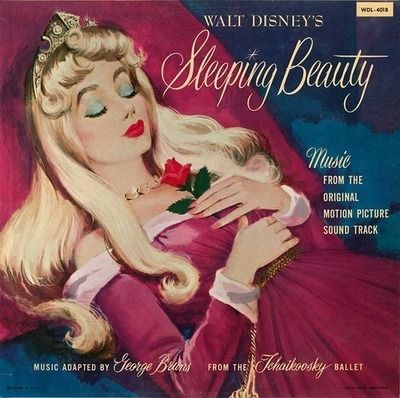
More than half a century has passed – 55 years to be precise – and Disney is still minting money off the expenditures it laid out when it created Sleeping Beauty in 1959.


Next year, the script will be repeated with Cinderella. The brand equity is so incredible it doesn’t even need a movie title on the posters! That is the result of generations of capital expenditures and marketing reinvested into the company so you have grandparents, parents, and grandchildren enjoying franchises together. In my own family, my niece and nephew could easily go see this with their great grandmother. Talk about timelessness and relevance.

In the case of Cinderella, the new installment released in 2015 will come 65 years after the original was made, with stockholders still cashing dividend checks from the brand equity created in 1950.

The new Cinderella posters don’t even have to have the name of the movie on it. Everyone just knows. That’s power.
How bad was Buffett’s mistake? Updating the calculation with a few, quick, back-of-the-envelope adjustments, it looks like the position would be worth somewhere between $7 to $12 billion today, including dividends and spin-offs. Had he opted to plow any and all distributions back into the firm, the wealth would be exponentially higher. The Disney stake would be far more diversified as it now has exponentially more movies, several times the number of theme parks, one of the largest hotel businesses on Earth, the largest sports network in the world, its own branded television channel, and many more studios pumping out content including Pixar, Lucasfilm, and Marvel.
When you understand the implications of this, it can change the way you think about portfolio management. The greatest investor of the 20th century could have thrown in the towel at 36 years old, sat on his behind, and done nothing but hold a block of shares in a company he knew was inherently superior to the typical enterprise. With zero activity for almost the past 50 years, he still would have ended up a billionaire, and created a lot of wealth for his partners along the way. As he points out, this mistake never shows up anywhere. It will never be on the income statement or balance sheet, explicitly identified. Yet, it’s real. To paraphrase his sentiment, mistakes of omission are just as dangerous as mistakes of commission. People fail to recognize this because of a cognitive bias arising from human evolution known as loss aversion.
How Much Is Too Much To Pay for a Good Business?
This poses the question, “How much is too much to pay?”, which some of you have sent me in the contact form and in the comments section. I’ve avoided answering because I’m trying to come up with a mathematical model that can at least approximate how you should think about the problem. It’s really a sliding scale of probabilities with the potential for higher rates achieved the lower the valuation relative to earnings growth. Putting it in a simple, easy-to-digest format, or at least coming up with a narrative that will let those of you without a lot of experiencing internalize the relationships, is one of the things I’d like to get done in the next month.
Disney is, in my opinion, slightly overvalued at the moment. That means you have a situation where there are only three possible outcomes:
- The earnings growth exceeds the rate used in my valuation models, supporting the current price and, depending on how far the excess, potentially driving it to higher levels
- The stock price declines until the underlying profits can support the current number, returning the share price over time to its existing levels
- The stock price treads water until the underlying profits can support the current number
The complicating factor is, for a business like Disney, you might notice overpaying 5 years from now, but you’re not going to care 25 years from now, at least not at the modest level of overvaluation that currently exists. (We aren’t in insane territory like the 1990’s. This is not Wal-Mart at 50x earnings or anything.) Looking forward to the end of the fiscal year in September, we’re still only talking about a 5.5% expected earnings yield with a decent growth rate. Park ticket prices were just raised by double digits, which I plan on using as an economic illustration in a future post.
This is the art side of investing. Nobody knows if Disney shares will be $50 or $125 sixty months from now. What is reasonably certain is that an owner of Disney has a higher than average probability of doing very well over the coming quarter century. This is especially true if you can build up a big deferred tax advantage and then leave the shares to your kids or grandkids, bypassing the capital gains tax rate entirely so none of it ever goes to the government. As long as you’re doing this with a few dozen assets in your life, be it apartment buildings, a private company, or a portfolio of blue chip stocks, you don’t have to watch one particular pot too closely. While you wait for Disney to come to fruition, your attention can be on developing that new set of townhouses you plan on leasing out to tenants or adding to your General Mills stake. Experience has taught me that when dark skies appear – and they always come – the people best able to ride out the storm without a lot of distress are those who have wealth coming in from non-correlated asset classes and projects. It’s a lot easier to watch 70% of your stock portfolio seemingly disappear, and wait out the years it may take for the price to return, when you own the local strip mall and are collecting rents from your tenants.
You Throw It On the “Too Hard” Pile and Dollar Cost Average, Letting the Highs and Lows Balance Out Over the Decades
For a lot of people who enjoy the game but don’t want to work too hard, the most intelligent course of action when stumbling across a company you want to own for a long time is to sign up for the direct stock purchase plan so you buy a set amount through dollar cost averaging every month under the premise that the highs and lows will average out over the years. As long as you don’t stop contributing during stock market crashes, that has proven to be true. A couple of buys at the bottom can undo a lot of damage from purchases made during the peak when things return to a more mitigated normal. In fact, if we were to wake up and Disney be at $40 tomorrow, it should induce cartwheels.
The Lessons We Can Learn from Warren’s Loss
When I study stories like this, it reminds me:
- No matter how smart you are, you’re going to make mistakes. Accept it. Have a sense of humor about it.
- If you keep your batting average good, and avoid wipeout risk, it still works out in the end in most cases provided you live long enough.
- Sometimes, a quick profit can be a big long-term loss. There are only a handful of businesses in the world that are truly exceptional due to competitive advantages that are hard to replicate and difficult to destroy. If you get your hands on one at a decent price, hold on for dear life, through bubbles and bursts, booms and busts, and everything in between.
- Everyone is aware of at least a couple of these exceptional businesses and often will do nothing about it for as long as they live. They’ll spend their whole life knowing what they need to know to build a fortune and never lift a finger to make it happen. There’s a disconnect between the knowing and the doing.
On a non-related final note, once I’ve finished the other 2-3 posts I intend to write using Disney as an example, I’m going to try to lay off it for the case studies, just as I did with Coke last year, McDonald’s before that, and General Electric a few years prior. It gets boring using the same enterprise over and over since I’m so familiar with it already. The problem: I like to try and stick to Dow Jones Industrial Average components when using real world figures so they are companies everyone reading this blog owns (even if through an S&P 500 index fund). That doesn’t leave me many options since some businesses have inherent accounting complexities (e.g., Merck, Pfizer), bizarre capital structures (e.g., Visa), are highly cyclical (e.g., DuPont), or subject to rapid technological change that makes predicting future earnings more than a few years in the future a fool’s errand (e.g., Intel or Cisco). I suppose I haven’t talked about 3M, yet. It’s 112 years old and still selling Post-it and Scotch tape. I’m just not sure how digitization of work processes is going to influence its bottom line over the coming decades, partially because I’m not even sure if office supply businesses will be able to survive at some point. That day may be far off but I think it’s coming.
Reader Comments (46)
Comments are presented chronologically, with replies indented beneath the comments to which they respond.
Angie
June 6, 2014
you stress a lot on positive feedback loop, Joshua. And i understand why. Its power is incredible. What advice do you have for someone who is stuck in a negative feedback loop?
Joshua Kennon
June 8, 2014
Replying to Angie
What an intelligent question ... I'll have to think about that for awhile.
Angie
June 18, 2014
Replying to Joshua Kennon
And if you can write in detail about the same in one of your blog posts, i am sure many of your readers will benefit. Thank you, Joshua 🙂
Joshua Kennon
May 15, 2015
Replying to Angie
It's taken almost a year but I've been thinking about it constantly. It's going to have to come in different, specific posts but the first installment is ~3,200 words and can be found here. I'll try to get the rest in the series up sometime in the coming weeks or months.
Adam S
June 7, 2014
Joshua, nice article. Sometimes doing nothing after ownership is the hardest part. You mentioned Pfizer and Merck. For the reasons you stated and the fact I can never wrap my head around which company will have breakthrough drugs and staying on top of which are coming off patent, I avoid investment. Instead I have focused on pharma distribution companies. Would love to hear your assessment of one of those even if not in the Dow.
Joshua Kennon
June 8, 2014
Replying to Adam S
That's a good suggestion. I'll add it to my notes so if I ever come across something relevant, I can write about it.
Personally, I think the smartest way for most investors with no specific insight into an industry to behave is to index that particular area. Imagine drug stocks were cheap but you had no idea how to value drug stocks. In such a scenario, why not throw in the towel and buy the entire sector; consider something like the SPDR S&P Pharmaceutical ETF [XPH] or iShares U.S. Pharmaceuticals ETF [Ticker IHE]? The expense ratios are still very low and, while you'll miss the lottery-ticket-effect of a huge drug discovery such as Viagra, you are basically buying an entire portion of the overall economy.
Of course, if your portfolio is large enough, you can essentially create your own pharmaceutical index much more tax efficiently; e.g., pick the top 20 firms by market capitalization size and throw $10,000 into each of them in a specifically segregated brokerage account. You could even give the account a nickname, "The Adam S Pharmaceutical Index". You'd just have to be draconian about sticking to the rules you establish (e.g., are spin-off proceeds held or sold and reinvested into the company that distributed the spin-off?).
mattsmith222
August 27, 2015
Replying to Joshua Kennon
" e.g., pick the top 20 firms by market capitalization and throw $10,000 into each of them in a specifically segregated brokerage account. "
Can you explain? 1. why use a brokerage account and 2. Why separate ones for each?
Joshua Kennon
August 27, 2015
Replying to mattsmith222
1. You could just as easily use a custody account at your local bank trust department. Or a retirement account, I suppose, but most people aren't going to have $200,000 in one if early in their career most likely (unless self-employed or something that allows for much higher contribution limits or, alternatively, they rolled over a 401(k) into a self-directed rollover IRA). The reason you'd want it kept separately is so you wouldn't bet emptied to deviate from the rules you laid down a la Graham saying to hold all of your speculations in an entirely separate account. Easier to track. Easier to study. A project unto itself, in other words.
2. I wouldn't open an account for each stock, I'd keep all $200,000 in a single, segregated account set apart from the rest of the portfolio.
Jason
June 7, 2014
Great article. Joshua, I love the Coke, Disney, McDonald's (and other large, blue chip) case studies. However, if you're interested in writing about other companies, I would love to see articles on some of Weschler's and Comb's stock picks at Berkshire. You could examine the picks, why you think they invested/continue to invest in these companies, and your thoughts on those businesses. Examples would be DaVita and WABCO.
Joe
June 9, 2014
Replying to Jason
I second that nomination, especially DaVita. XOM is another large cap that I would love to get Joshua's take on.
Joshua Myers
June 9, 2014
Replying to Joe
He did a case study on Chevron last year that might be helpful in comparison.
https://www.joshuakennon.com/chevron-investment-case-study/
I haven't run the numbers myself, but my guess is that Exxon is in the "as good or better" category in this case. You could plug the numbers from XOM and compare if you really wanted to see.
Emma
June 7, 2014
Hi - was just reading up on Visa the last few days and from what I've read, seems like a great business model, economic moat & pristine balance sheet/zero debt. (Ironic for a company whose business is based on debt). But it sounds like you are not impressed since you say "bizarre capital structure" - how so?
Joshua Kennon
June 8, 2014
Replying to Emma
Visa's economics are among the best of any company in the world at any point in history. It suffers from regulatory risk (e.g., look at what happened in Russia to it earlier this year), but I'd love to own it.
My comment about the share classes had to do with me wanting to avoid a long explanation for new investors of what they are, how they work, and how you'd have to study them. I mean, who wants to open a conversation having to untangle this knot?
Contrast that with Disney's capitalization structure:
The latter is a whole lot easier to teach if I want to get into the gist of whatever it is I am explaining.
DividendGrowth
June 8, 2014
Based on my calculations, if you bought a $4 million stake in Walt Disney in December 1966, and you reinvested dividends, your shares would have been worth $2.4 billion dollars. I believe you are making an error, because you are comparing the value of a 5% stake in 1966 to a 5% stake in 2014. Because of deals where Disney company purchased other enterprises for stock, your comparison is flawed.
Otherwise, good article, and even with the error in the calculation, it still points out an interesting lesson on "mistakes of omission"
Joshua Kennon
June 8, 2014
Replying to DividendGrowth
It's not that simple. You can't pull up a stock quote for the company in 1966 then and compare it today for the same reason it wouldn't work for a firm like General Mills (e.g., see case study).
Walt Disney Productions became The Walt Disney Company, reacquired WED Enterprises, spun-off a Go.com tracking stock at another, spun-off a radio division (that later went bankrupt), merged with CapCities issuing a ton of new shares and warrants, later repurchased a bunch of its own stock, issued billions in new stock for the Pixar and Lucasfilm mergers, then buying back some of it, etc. There's a lot of noise in the numbers.
To get the rough estimate, I used Buffett's own calculated value of the stake position as of the 1991-1995 period then took it from there since he had done the homework for the 1966-1991/1995 periods and is famous for his detailed analysis (which, frankly, saved me about an hour of work for which the additional effort wasn't worth the precision). Depending on how you handled the individual decisions (e.g., did you sell your shares of the radio spin-off? If so, did you reinvest the proceeds back into the original Walt Disney Company? Did you sell your shares of Go.com during the dot-com peak? Hold them? If you did sell, did you reinvest them back into Disney, the parent company? If so, what state do you live in because that will influence whether a huge chunk was taken out in state taxes, influencing the total reinvested amount?), the range outcome was significant. Worst case scenario, you ended up with ~$4.5 billion, best case ~$12 billion.
You can't get an accurate investment history by looking at a stock symbol's trading past in isolation. For example, try to research Wendy's. If you pull up its SEC filings, it's actually not going to give you the same Wendy's hamburger chain that was publicly traded for decades. Instead, it's giving you the present day Wendy's hamburger chain, which was acquired by Tri-Arc, so you'll get that company's history. Pulling up historical stock quotes for Wendy's, as a result, doesn't actually return the right company.
eric
June 8, 2014
Replying to Joshua Kennon
Excellent point. Altria is one of the best examples of using spin-offs to create shareholder value. Sears is another example, with almost zero value in the retail store, but the components that have been / are going to be / spun off hold immense value. Sears Holdings today isn't the same as Sears of even a few months ago, because they spun off Lands End for about $1 billion. Most companies are dynamic, especially over the long term.
Joshua Kennon
June 9, 2014
Replying to eric
I've been meaning to write a case study of Sears for six months now. It's amazing. The stock looks like it's wiped out investors but it's actually beaten the S&P 500 over the past 25 years due to spin-offs. It's a perfect illustration! Thanks for reminding me of it. Maybe I can fit it into the schedule ...
DividendGrowth
June 8, 2014
Replying to Joshua Kennon
That is an interesting response you provided. In the case of Disney, I used the stock prices and dividend information from Yahoo! Finance. It is not perfect, but goes all the way back to the 1960s. Plus it provides adjusted closing prices, which normalize returns by taking into effect dividends, splits, spin-offs etc. It also assumes all proceeds from spin-offs has been sold and reinvested back into Disney stock. Therefore, I believe the amounts you are providing in your article to be grossly inflated ( especially given the fact that you are saying that reinvested dividends were not taken into consideration). I am confident that you made a mistake, which you should correct, and not just double down and throw information at people, which isn't really relevant to the specific point in question.
Some of the points you raised however, raised red flags for me, which indicate that you were throwing information at me that wasn't adding much value, and whose goal was to merely show off.
I am not sure why you mentioned the Cap City in the calculation, since the historical information you see on places like Yahoo! finance show historical Disney information. This is because Cap Cities shareholders received Disney stock. Hence, your mentioning of Cap Cities was not relevant to the point being addressed, which is discussing historical performance of Disney from 1966 to today. If you don't believe me, pull up old S&P or Moody's manuals.
I am also not sure why all of a sudden you started talking about state taxes in your comment. The numbers you point in the article are not including any taxes. Why are you talking about state taxes, when you don't even talk about taxes in the article? This is a second example of an argument you are using to support your number, when it is in fact, not even relevant to the specific discussion of talking about the numbers.
I am also not sure why you are mentioning the fact that Disney bought Pixar with stock, or repurchased stock. This has no connection to the point I was raising, which was how much would an investment in Disney in 1966 be worth today.
To give you some credit, I liked the example on the original Philip Morris, which is now split into Altria, PMI, Kraft, Mondelez etc. However, the legacy PM bought General Foods and Kraft Foods, which was then combined into a division, and spun off as Kraft Foods later.
I did not point out what I pointed out in either comments in an effort to waste anyones time to argue of course. I wanted to zoom in on that particular number of the opportunity cost of selling Disney in the 1960's.
Also, irrespective of the discussion we have on specific performance of a 1966 investment in Disney today, the overall point of the article is good. If WB had not done anything else but hold Disney, he would have done pretty well. Also Disney is a good business, which would likely be there in 30 years, and it has a more diversified earnings base now than say 1966. My only issue is the valuation today for $DIS.
Best Regards,
Dividend Growth Investor
Emma
June 8, 2014
Replying to DividendGrowth
Wow! The condescending tone of your comment just made me cringe. Why can't you just voice your opinion without accusing Joshua of "throwing information at people"? If you can't give constructive criticism without negativity, then please don't. Many of us value Joshua's incredibly insightful and educational post and more than that - the humanity and generosity of spirit that comes through in his writings. No need to make those kind of comments towards him!
John Smith
June 9, 2014
Replying to Emma
Some of the points by Joshua were helpful in his original response. But some did not really add much to the discussion of calculating total return on Disney investment. If pointing those out is condescending, then you and I have different definitions of that word.
I have found Joshua's site to be very helpful, and truly enjoy his writings. However, I do not like to follow people blindly either. I think Dividend's calculations are probably not 100% accurate as well. I think Joshua points some of those below. But people, please, just Let it Go 😉
I think the better question to ask is whether DIS is a great investment to hold for next 50 years. I think it is. What do you people think?
Joshua Kennon
June 9, 2014
Replying to John Smith
I'll repeat verbatim what I said to you a moment ago:
DividendGrowth, don't sock puppet your own conversation thread under multiple fake names and refer to your original post as if you were a third party to give the impression of objectivism. It ruins your credibility.
Disagreement is fine. Lying is not.
DividendGrowth
September 22, 2014
Replying to Emma
No it is not. I stated what I liked and what I didn't like.
It is not about negativity, it is about objectivity.
If you value his opinion that is fine. But if you take everything he says for granted, without checking it for reliability, you are doing yourself a disservice. And if all you get is blindly following someone, then he has failed on educating you.
sedin26
June 8, 2014
Replying to DividendGrowth
Dividend Growth Investor - your comments on this site are consistently negative and, speaking for myself, unwelcome. I've read every article and comment on the site and you are the only poster about whom I can say that.
I derive great enjoyment from the content here and have learned a significant amount in various areas of interest. I cannot say the same for your own site, unfortunately. There's nothing wrong with healthy discourse and disagreements but I would suggest that you look at your behaviour and make some modifications going forward.
John Smith
June 9, 2014
Replying to sedin26
Hmm, you have written only one comment, and the first comment you write is an ad-hominem attack, which tries to discredit DGI, using faulty information. If I didn't know any better, I would have thought that the comment from you and "Emma" above are written by the same person.
If raising a valid question, and asking for information is "negative", then you have really failed to understand what the author of this site has tried to teach you - being that you need to consider both sides of an argument, look at the facts, and ignore emotions. Honestly, you need to look at your behavior.
Joshua Kennon
June 9, 2014
Replying to John Smith
DividendGrowth, don't sock puppet your own conversation thread under multiple fake names and refer to your original post as if you were a third party to give the impression of objectivism. It ruins your credibility.
Disagreement is fine. Lying is not.
DividendGrowth
June 9, 2014
Replying to sedin26
I find it highly statistically impossible that a random reader to this site, who has never commented before, decides to write a comment and write threats to someone else. I also find it very "convenient" that this Sedin26's first comment is for purposes of a personal attack against myself. I really hope I am wrong on this one.
I merely asked a simple question, and if someone has something to say to me, they should say them to me directly, rather than through intermediaries. If my asking questions, and searching for the truth is inconvenient, then that is really sad. I thought this site is all about finding the truth.
sedin26
June 9, 2014
Replying to DividendGrowth
DGI - no threats have been issued - not sure where that's coming from. I'm also not sure what you're suggesting regarding my appearance being statistically unlikely.
My apologies to Joshua for bringing this to the site. It's not my business to police anything so i will crawl back into obscurity and continue to lurk.
DividendGrowth
August 19, 2014
Replying to sedin26
Haha, so how many of my comments did you read. I have posted 38 of them - how many of them were "consistently negative".
Your lack of basic math is and basic cognition is really frightening.
I would hate to have such a person to read my website.
Yes there I said it. Some readers think they can insult authors anyway they want - they can't. You need to apologize to me for being out of line.
Joshua Kennon
June 8, 2014
Replying to DividendGrowth
... I was in the middle of making Korean beef wraps because my family was coming over for drama night to watch Rooftop Prince after they had been away for a week visiting one of my siblings a few hundred miles south. I wrote you, without editing it, off the top of my head as if you were standing in my kitchen with me and you were a friend in the middle of the food prep, coming and going as necessary.
The extent of my thought process was, "Crap ... My mom will be here in a few minutes and I need to get this done ... okay, where was I?", which accounts for me "throwing information". You were witnessing my thought process in near real time as I typed to you and three or four other comments on posts from the past few days.
I see that was a mistake. If speaking to you as an equal, or informally, is objectionable to you, I'll stick to the facts, respond coldly, and give you the data you want without engaging in any other conversation.
To put it bluntly: You are wrong. There are at least three different ways you could have checked your own math instead of wasting time trying to defend your position. Let's look at each of them.
1. Yahoo Finance provides rough estimate historical adjusted prices that are good for approximations in some situations and bad in others (e.g., the Wendy's illustration I provided).
Partly, this arises because it uses two multipliers to adjust the historical price. The first, a split multiplier, is fairly straight forward. The second, a dividend multiplier, involves a quick "cheat" for the Yahoo programmers to guesstimate by taking (1-D/P), where "D" is the cash dividend amount and "P" is the previous day closing price. The company breaks out the math on this reference page.
It's a very good system for what it is but the dividend is based on a historical percentage rather than an actual amount. Yahoo is doing nothing wrong and this is a standard way to estimate historical prices despite its flaws. Those flaws grow over time and include the fact that the model does not account for 1.) the reinvested value of any dividends, or 2.) the reinvested value of any spin-offs or subsequent performance of any spin-offs (including their own dividends / reinvested dividends) held past the separation date. For some companies, this is considerable (e.g., the Philip Morris illustration from earlier). Disney, for example, had two such spin-offs in its history.
In the case of spin-offs, a price adjustment factor is applied equal to P(t-1) / Pt), which has the effect of "freezing the performance of the security on the ex-date". That is, the net value of the newly spun-off company is deducted proportionately from the cost basis of the former, with all subsequent results excluded.
Even using these flawed numbers, we can see that as a result of his impending death, for much of 1966, the rough estimate per share cost of Disney stock was $0.08 per share adjusted for dividends (not reinvested) and spin-offs (not reinvested), which is around where Buffett paid given his habit of picking up at 52 week lows back then and only paying 10x 1966 earnings. Investing $4,000,000 would have bought you around 50,000,000 shares today. The stock price closed at $84.61 on Friday. It's possible Buffett paid a bit more, but also possible he paid even less by buying the block in a private, larger, negotiated transaction as he sometimes did. He never specified so the lack of accuracy is something we'll have to tolerate.
That means that using the rough approximation method, which can result in several pennies per share being off on the cost basis over time (which is very considerable in this situation) the stock + dividends assuming no dividend reinvestment or spin-off reinvestment must be worth at least $4,230,500,000 before taxes. Every $1.00 invested became $1,057.63 over the 48 year period. So even using Yahoo's flawed data, your final number is still off by a factor of 2-1 assuming no reinvestment. Of course, we know, for him, everything in his life was reinvested so the real net effect would be higher.
If you take out a spreadsheet and go back, accounting for those reinvested dividends, you can add several billion dollars on top.
Alternatively, you can:
1. Do the figures by hand and get the real numbers, which are slightly higher.
2. Steal Buffett's analysis from October 20, 1994, given in a speech at the Kenan-Flager Business School, University of North Carolina, at which point he said his $4 million stake would be worth "about a billion [dollars] today". Buffett is notorious for his detailed case studies, often done by hand on ledger paper. He has records going back to when he was a teenager and regularly studies them to improve his own performance. It would take a leap of faith to assume he was correct, but given his track record, he almost assuredly was. He's not the sort to pull numbers out of the air.
When he said that on that date, even using Yahoo's flawed adjusted historical cost basis, the stock was at $10.21 adjusted compared to today's $84.61. So if you consider "about a billion" to be anywhere from $800 million to $1.2 billion, the number today would be $6.58 billion to $9.88 billion, again, assuming no reinvestment of dividends or spin-offs, which actually gets you suspiciously closer to the real hand-calculated numbers; a fact that should surprise no one as the problems with Yahoo's methodology are mitigated as you approach the modern day as there is less time for them to compound.
This is the reason behind my statement in my response, which you call "doubling down", that the range of potential outcomes varied from "~$4.5 billion, best case ~$12 billion". Under no condition, including using the Yahoo numbers, does $2.4 billion even come close.
But even if all of this had somehow escaped you, there remained yet a fourth test you could have applied to spot your error: Of your erroneous $2.4 billion figure, a considerable percent came from dividends with the remaining ascribed to stock value. Think, for a moment, about the staggering level of equity dilution that would have needed to occur to turn a 5% ownership stake into a 1% or less ownership stake. Then reconcile that with the fact Disney has been a net repurchaser of its own shares for a long time, even hastening to buy back the shares it issued to Lucasfilm and Pixar, for example, so that the total outstanding share count has declined by around 15% over the past decade-and-a-half alone, resulting in an increase of more than 18% in equity-per-share as a percentage of overall ownership.
Basic math would have sent up a huge red flag at that premise since the two are not compatible.
On a final note, please consider this: I love when people find errors in my writing because it means I get smarter and improve my thinking. If I find a superior argument, I'll strike my own down in a heartbeat and replace it. I have no loyalty to ideas, only truth and rationality. My ego is not tied to any position I take or assertion I make. I am not in any way harmed, or emotionally upset, if someone tries to counter an argument or premise. Quite the opposite, I find it invigorating and there are quite a few times since this blog started that someone has provided a justification for a position that I immediately adopted as my own because it was much stronger. I can't imagine life without it. I grew up in a family where everything from politics to religion was fiercely debated. Doubling down is not my style.
If I make an error, and you point it out, I'll be the first to cheer you, along with a heartfelt thanks. I'd go so far as to consider it a kindness.
DividendGrowth
June 9, 2014
Replying to Joshua Kennon
Now, when I wrote to you initially, I outlined the reasons why I believed your calculations to be incorrect. The inputs to my assumption included:
1) Adjusted price as of December 1966 = $0.14
2) Belief that this adjusted price accounts for reinvestment of dividends
I might have made a mistake, because Buffett probably purchased the stock at lower prices in 1966 ( I am not sure exactly when), and I am also placing a lot of belief on Yahoo Finance. My "flawed" analysis can be calculated from almost anyone with an internet connection however, and has inputs that while not perfect, are easily auditable. However, since you know how it is calculated, you can poke holes in it, and decide if I have made a mistake or not.
I place a high opinion on Buffett. I also place a high opinion on Joshua. However, I would not take the dollar figure from Buffett at face value, without trying to understand what inputs he used to arrive at this calculation. I think one of the biggest mistakes investors do is blindly follow leaders/create idols, which in my opinion is wrong. I also think this was a mental model that I read in some of Charlie Mungers work; if not then I might be making it up.
For me, I think it would be really interesting to see you maybe make a case study of a 50 year investment in Walt Disney ( if one exists, I would appreciate a referral to it). I have enjoyed your other articles.
Anyway, this conversation is out of control. I enjoy the site, and am pretty sad that someone/s here decided that I am not good enough to ask questions. I respect Joshua's work, which is why I keep spending my limited time on this site since I learned about him last year. But if I am unwelcome here, I would leave. I already have way too much time.
Anyways, it is raining here in Kansas City. I didn't bring an umbrella, so probably would have to run to my car from my office.
Good luck to Joshua and his readers.
Joshua
June 9, 2014
Replying to DividendGrowth
This is disappointing to read DGI. I've enjoyed reading your site and think there is some good information. That being said I find your general tone here to be fairly obnoxious. It's unfortunate to see this side of a person that I thought I respected.
Andrew
June 12, 2014
Replying to Joshua
I don't really agree. His tone isn't THAT bad. He's right in that you shouldn't blindly follow anyone just because you respect them. Ideally you want to question everything, even though that may take more time.
He said he may have made a mistake.
We're all human. We're all flawed. We're all obnoxious at times. If you stopped respecting someone for making a mistake you'd end up not respecting anyone.
Also thank you Joshua K for going into a detailed explanation.
DividendGrowth
August 19, 2014
Replying to Joshua
I have a bad tone? Oh please, boo hoo.
I question everything and everyone including myself. If you are so insecure about yourself that the first time someone questions anything you feel threatened, then you will not be successful in your life. If you do not like to question anything, including yourself, you won't do well in life. This is why I come to this site and this is what I thought this site is trying to teach people - think for yourself, look at things objectively. I don't know all the answers, but I do expect when someone provides a number to have the study there to back it up.
Honestly, my goal is not to be a doormat and be friends with "everyone". My goal is to be successful. If I rub off someone the wrong way along the way, that's fine with me. To be perfectly honest, if you think I am obnoxious just for asking a few questions, then I am disappointed in you.
DividendGrowth
September 22, 2014
Replying to Joshua
To add to your "comment"
How many comments did I post here? How many did you find obnoxious?
Your statistical compass is seriously flawed.
Actually, I find someone who reads one comments, disagrees with it, and calls the other person names, to be the obnoxious one.
SFrentier (formerly poor.ass.m
June 9, 2014
You mention some interesting strategic investing points here, intrinsic value of long standing/generational companies, what is a good price to pay for a good business, and the art side of investing. All concepts that also apply to real estate investing as well- intrinsic value being in highly desirable areas that have very limited new development growth (costal CA, Manhattan, Hawaii are examples), paying a good price (even prime areas fluctuate in price), the art of investing (finding value added properties, neighborhood/tenant profile changes, new business/employment biases, etc.) Understanding these factors and getting them right is the difference, IMO, of making okay investments versus outstanding ones. And as usual, the devil is in the details- your depth of knowledge in the multitude of factors that comprise these, AND your ability to reach the right investment conclusions from all the data (hint: some data is much more crucial than other 🙂
With real estate I have some specific models where I know what the growth rate can be, when you buy, improve, optimize rents, leverage, and purchase additional property from the equity built.
But I'm wondering, let's say someone had $10,000 to invest in 1994 in stocks. Assuming they brought and held, mostly blue chips, and reinvested all dividends, what would be a realistic portfolio value they would have today, about 20 years later? I'm wondering how much wealth could be built up with those numbers (start $10k, duration 20 years). And what if they made great choices- brought only at low values, made strategic shifts in industries, etc. Could someone realistically grow that $10k to $1 mil plus over 20 years? (I'm asking because my knowledge is in real estate, and I'd like some opinions from well versed stock investors. Thx)
Joshua Kennon
June 9, 2014
Replying to SFrentier (formerly poor.ass.m
I've missed almost all the comments today (I'm going to try and catch up on them tonight) but I saw your question come in at the top of the admin panel and thought I'd give it a go during a break. I have work to do but I'm just not in the mood so I appreciate the distraction =)
Check out this link, which I wrote a long time ago to explain the CAGR formula you can use to reverse engineer a given rate of return using the X-Root.
In this case, to turn $10,000 to $1,000,000 over 20 years would require 25.89% compounded. For outside, passive, minority owners, stocks have historically returned around 10% over multi-decade periods when you average the booms and busts together, so you'd be banking on a return scenario that has never happened and is very unlikely to in the future. The only way something like that could happen would be 1.) investing in a high growth company that can replicate its model across the world; e.g., the Starbucks IPO, which is a bit like winning the lottery or 2.) creating a strategic holding mechanism that created a leveraging effect, like the one Buffett did with Berkshire Hathaway where he turned stocks that grew on average at 11% or so into 20%+ compounders by taking advantage of the policyholder float at the insurance subsidiaries, which had the advantages of debt but instead of paying interest, he was paid to use it as it allowed him to hold far more shares than his equity alone would have permitted.
Now, if you could get your hands on enough money to take over a firm completely, sure it could be done. Most of the big fortunes are made by controlling companies because a good operator can leverage his or her abilities and then capitalize the earnings stream (e.g., if you could build a chain of hotels, every $1 you made in additional profit is going to be valued at $15 to $20 in the current market so you could go out, sell shares, and get your hands on more money to plow back into the enterprise, repeating the process. Taking a company earning $5 million a year to $15 million a year would result in an increase in market capitalization of between $150 and $200 million).
In other words, private equity, takeovers, start-ups, etc.? Yes. If you have the skill set or are invested with someone who does. Plain vanilla common stocks not bought during a time of great distress? Highly improbable, though you'll still do very well on a non-leveraged basis and it will be the statistically best way to make a heck of a lot of money over generations by doing nothing. Plus, you enjoy some fairly huge tax benefits in death when you can pass on your shares and wipe out all of the unrealized capital gains taxes so your heirs get a stepped up cost basis. (Of course, you might still be subject to the estate tax if you aren't careful but even that can be mitigated.)
For what it's worth, the S&P has compounded, with dividends reinvested, at 9.46% between 20 years ago and today, right in line with its historical averages. If you opted to spend all your dividends along the way, it worked out to 7.48%. And that period included everything from the dot-com boom to the September 11th recession, the real estate bubble to subsequent worst recession since the Great Depression. Dollar cost averaging over that time would have worked out to a bit higher returns because of the additional shares you picked up during the collapses.
TL;DR: If you want to earn those kinds of returns, you have to control the company and be able to capitalize the profit increases you create through your managerial ability. If you want to sit at home, do nothing, and passively collect dividends, the best you're going to do under most multi-decade scenarios is 10% assuming historical inflation patterns, taxation patterns, etc. hold the future is similar to the past century or so.
SFrentier
June 10, 2014
Replying to Joshua Kennon
Thanks Josh, great info, and it confirms what I suspected, but have not had direct experience with. I actually calculated my CAGR a few months back and it was similar, 28.5%. I think if you want to be financially independent, you pretty much need to go with an alternative investing strategy, as you mentioned, or real estate or have a successful company that you can reliably sustain and grow (fizzling out after 5 years doesn't cut it.) otherwise yes, for most working folks, getting ~ 10% return is very solid, and can provide for a comfortable life.
So I'm kind of out here in a bubble. I'm happy with my success in real estate and the long term returns. I'm still kind of astounded that someone with modest means can grow a small financial start into something that significant. To me it seems like the best deal in the world! (Of course, I perfected a very specific real estate investing strategy that is partial to the quirks of San Francisco, so to me it looks obvious.) But when I look at alternative ways to reaching these results (i.e. CAGR of over 25% for a long period), it just seems very hard. I know most start up companies fizzle out. If they can get to a profitable first year or two, sustaining that in years 3-5 is often their demise, as competitors come in, they screw up their growth, or the market just isn't there long term. And you have zero advantage from capital markets.
With high tech, the big game here, it's really to have something that gets brought out and you get your liquidity event. But even then, the odds are so low. Say you come up with a real decent technology idea. You bust your butt to get initial funding, then you need VC's to go further. And if you end up getting brought out for $100 million, that's a big deal! And what was your stake as founder, after the angels, VC's and top employees get their share? Maybe 5%? Great, you made $5 mil. Taxes eat almost half of that. Making $2.5 mil is definitely nice, but the odds of reaching that with tech start up are very low. No wonder most just stick with the high paying job, exciting work pace, and endless company perks.
As for doing something with private equity, or ability to leverage the capital markets, that seems almost impossible without already having serious money or connections with a private equity firm where you can actively participate in the deals. The old exclusive MBA play. But most of those are just fat salaries too. I have no idea how to have an active stake in private equity w/o bringing in a lot of money to the table.
So I'm back to my real estate. Happy that I can use leverage. Also happy that any increase in income (rents) gets valued akin to stocks in the capital markets, between 12-18 CAP rates. So a $10,000 yearly rent increase gives me $120-180,000 increase in net worth. Being able to invest with a relatively modest cash amount, having advantages akin to the capital markets, while being an investment (and not a crazy 80 hours per week job) seem like pretty unique traits to real estate investing. But I'm open to other perspectives.
How else do you see reaching decent wealth (say $3-5 mil), without A- already having significant money, say $100-300k, to make big investments, B- waiting until you're 70 years old to achieve it!??
joe pierson
June 10, 2014
Replying to Joshua Kennon
So Warren's real stock market rate of return is 11%? That makes me sad (disillusioned really).
Joshua Kennon
June 10, 2014
Replying to joe pierson
If given a small pool of capital, Buffett could easily compound it at 50%+ and he's made no secret about it, but it's going to happen in the micro-cap, pink sheets, etc., where he can actually take huge private blocks and, in some cases, hire a manager to turn things around like he did at Dempster. Some of these companies only have shares trade hands every few weeks and you have to go knock on doors to convince people to trade them; old farmers who bought the local bank fifty years ago.
With Berkshire's huge size, the long-term portfolio holdings have compounded above average but not nearly as high as people think. Buffett's genius includes strategy. The 20%+ returns he earned were every bit as real and the fact he managed to do it by holding some of the biggest, safest companies in the world should make him even more admirable, not less. (At least in my opinion, but others may disagree.)
If you put Buffett and Lynch in a closed mutual fund with identical parameters and, say, $5 billion, I don't have a clue who would come out on top. They are in the same league so luck would play a role. I don't think anyone can definitely say one has more skill than the other.
But, yes, reality is much different than perception. He's actually much smarter than people realize. An illustration: All the bragging about the partnership never having a down year was partially accomplished by him taking control stakes so he could use estimated private market value and insulate the return figures from stock market fluctuations. That requires an intimate understanding of accounting rules and I'm sure he knows it adds to his legend that he never had a decline, which isn't entirely honest. The same thing happened at Berkshire, too (there were years the portfolio declined) but because he had a holding company structure, the new profits coming in exceeded the decline and allowed him to take advantage, buying more as the book value continued to increase.
I wouldn't be disillusioned by it. It would make me want to study his brilliance for getting the structure of a deal right. Buffett's fortune is due just as much to structure as it is to investing.
FratMan
June 10, 2014
Replying to Joshua Kennon
Joshua, would it be fair to say that, in the past seven years, you have become more impressed by Buffett's shrewdness and less impressed by the quality of his intellectual honesty?
Joshua Kennon
June 11, 2014
Replying to FratMan
It's ... something like that. I can't, quite, articulate it.
I respect his shrewdness and intellect even more now that I know how it was done; the special accounting rules in the partnership, the nature of the partnership itself (which was more akin, at times, to a private equity operation), the leveraging effect of float on the slightly above average blue chip stocks, etc. I accept that he isn't going to correct people who misunderstand how he generated his returns because it adds to the mystique (and the returns are real, so it's not like he's lying), even though it's unfair to a manager of a mutual fund to have his performance compared to Buffett when the latter 1.) wasn't bound by the regulatory rules that mutual funds are, 2.) held its own controlled assets that were constantly pumping out ever-increasing sums of cash for redeployment, especially during down markets whereas a mutual fund manager is forced to sell things against his will to meet client redemption demands, 3.) effectively was investing through a super margin account that paid him interest instead of charging it and couldn't be called at the whim of the broker, sometimes extended for decades, and 4.) could take advantage of all sorts of resources available to regular stock corporations and not to mutual funds such as issuing bonds or taking on bank debt to fund acquisitions, holding over a certain percentage ownership in a given firm, etc.
Buffett's genius was that he put himself in that position, and structured the empire, based on this system of sourcing the lowest cost capital possible then putting it to work in the highest returning, most tax efficient way he could. Yes, he's great at investing in stocks but there are at least hundreds, if not thousands, of other people in the world who are at least as good. If you put them all in charge of a pile of $5 billion with the same rules, he's not going to win every time. The fortune came from combining that skill with strategy and fiscal structural engineering. The fact he was obsessed with studying men like Henry Singleton is evidence enough that he knew exactly what he was doing. Money was a game and Buffett wanted to be at the top of the high score arcade rankings. He applied force multipliers to his talent and reaped the rewards.
Rather, my concerns are more personal. I don't like that he has a habit, demonstrated over a lifetime, of discarding those who were once very close to him the moment the relationship hits a bump or there is a major conflict. I'm all for cutting folks out of your life when necessary but it should be an extraordinarily rare thing (assuming you don't just have bad judgment in people). Yet, there's a veritable laundry list of relationships behind him, ranging from former interns to his children and grandchildren, former managers to even his biographer that move from admiration to ambivalence, or in some cases, outright hostility. I don't mean people who were at arms length - their opinion doesn't matter - but those who were intimately in his life for extended periods of time.
I don't like that he effectively lies about his tax rate. If he wants to advocate for higher taxes, great, but I consider how he did it dishonest.
It's hard to say, precisely. I think he's definitely in the top 10% of society in terms of people you want to emulate, but on a personal level, how you conduct your life as a man, a father, a friend, I think there are better examples.
joe pierson
June 11, 2014
Replying to Joshua Kennon
Thanks for the response, I am disillusioned by the commonly held street belief that Warren made his money by investing, not by investing PLUS a clever leveraging scheme using insurance float and re-investment of private equity profits, which frankly speaking few can emulate.
I guess that is why he doesn't write investment books.
SFrentier
June 11, 2014
Replying to joe pierson
Warren + media image = wizard of oz (what's behind the curtain 🙂
Joe
June 10, 2014
Thanks for sharing the link.
DonnieNYCA
November 30, 2014
Hi Joshua! Great post and site. Re $DIS - as soon as I heard about Disney acquiring the rights to Star Wars I took a long position back in 2012. I acted on this news instantly without going through a qualitative/quantitative process. Why? B/c I 'felt' so confident given the news that it was a 'no brainer' that over the long-term (3 to 5 or ideally 10 years) the company will be in an even greater position to earn money. Do I pick other stocks on the whim - no. I make a deliberate effort to stay informed on the stocks that I own, with mainly a basic value investing process with little to no use of technical analysis - I never liked charts. My inquiry here is do you think I was reckless in buying a stock (in this case Disney) based on the instant news of Star Wars? I'm not asking for a direct recommendation just sincerely curious if you ever acted similarly (going with your initial gut instincts) before making an investment. Happy holidays!
Connelly Barnes
September 5, 2015
I suppose you must have seen Dismaland by Banksy. If not check it out!
http://www.thisiscolossal.com/2015/08/dismaland/
https://vimeo.com/136976212